Germany · Lower Class Magazine · 1970-01-01
Cengiz's life is a greeting to everyone who resists - from anti-fascist Gençlik to guerrillas
Deutsch (original) · Auto-translated to English
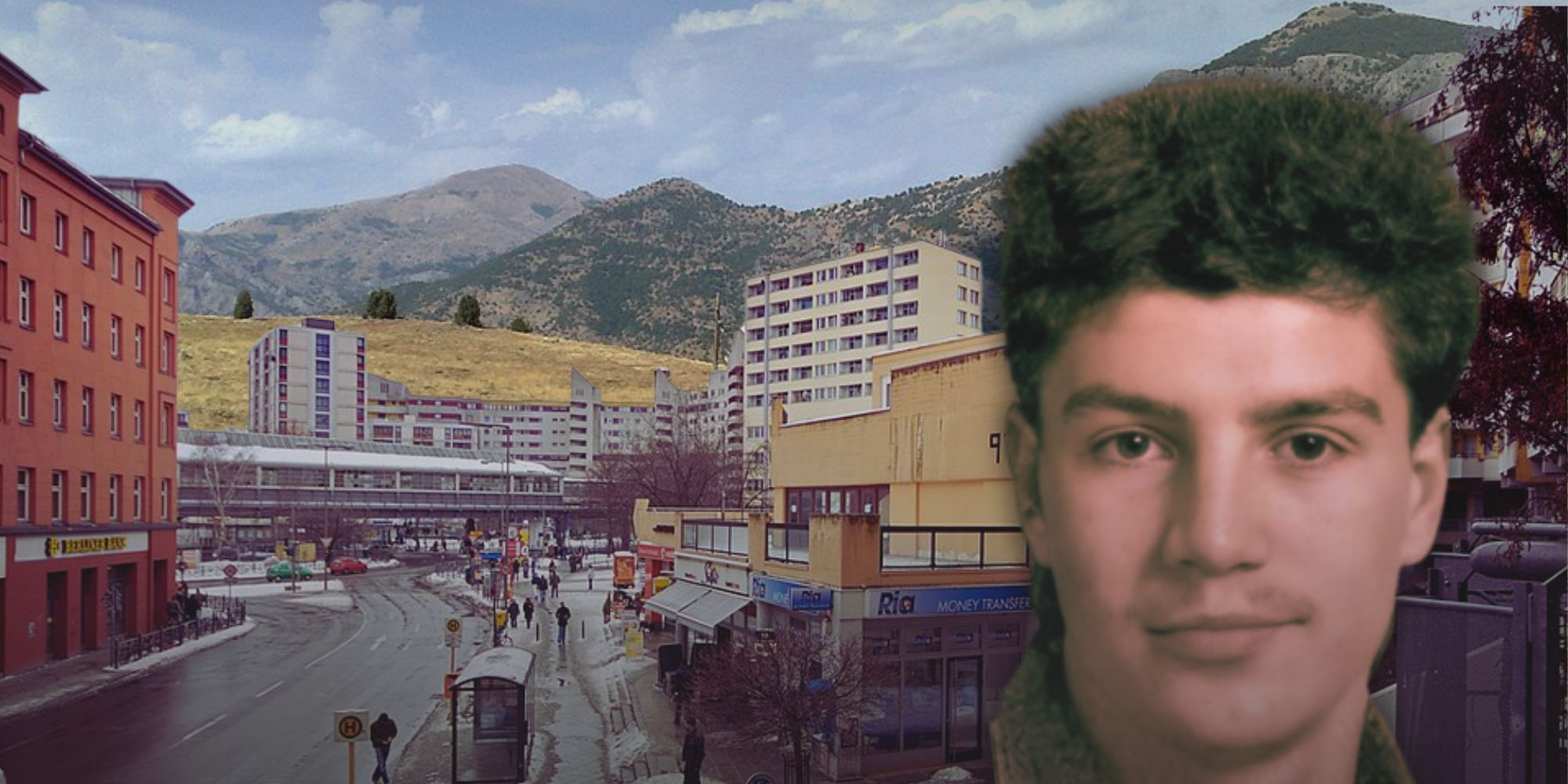
30 years have passed since Cengiz Ulutürk lost his life in the Kurdish mountains. His biography is unique in the history of the guerrillas. He is probably the first Turkish internationalist who joined the Kurdistan People's Liberation Army (ARGK), the predecessor organization of the People's Defense Forces (HPG), from Germany. Against the background of, among other things, The racist murders in Hanau, the NSU murders and increasing right-wing organizing make it all the more important to deal with Cengiz's political origins. Cengiz was an anti-fascist, or more precisely: he was a member of the Anti-Faşist Gençlik, the “Anti-Fascist Youth”, he had helped set it up.
After years in which the anti-fascists Gençlik and Cengiz received little mention, the topic is more present again. In recent years, football tournaments1 have been held in his memory. On July 25th, various organizations are once again inviting people to a football tournament in Berlin-Wedding on the occasion of the 30th anniversary of his death.
Cengiz's family came from Sivrihisar, near Eskişehir near Ankara, but Cengiz grew up in Berlin. In Germany he found it difficult to express himself in an environment far removed from his own values, ideas and feelings. A friend describes that he had a great dislike for his father but a deep love for his mother. He visited them often and talked about them. His family led an isolated and closed life to protect themselves, but Cengiz felt that this was not the right solution in an environment of exploitation and degradation. He looked for a different path and came into contact with anti-fascist groups from Turkey, Kurdistan and Germany.
The so-called reunification of Germany had brought about an extreme nationalist wave. Pogrom-like attacks like in Hoyerswerda2, the arson attack in Mölln3, the attack in Rostock-Lichtenhagen4, the attack in Solingen5 were the most blatant excesses, there were deaths almost every day. Migrants were attacked on East Berlin S-Bahn trains and even thrown out of moving trains. Now known as the baseball bat years, that is probably an understatement. In response, youth gangs and self-defense groups formed, such as Antifaşist Gençlik, the first migrant anti-fascist organization in Germany.
»The organization of self-defense became a central question of political work and daily survival. In this context, Antifa Gençlik emerged, whose main aim was to openly confront Nazis and push them out of central places. Antifa Gençlik was strongly practice-oriented, but there was also an effort to produce analyzes of the conditions in Germany.«6 These were published in the magazine Antifaşist Haber Bülteni.
The group was founded in 1988 in the vicinity of the Kurdish association in Neukölln and in Kreuzberg, where they ran a café in the then occupied building at Adalbertstrasse 6. From 1989 she called herself Antifascist Gençlik. Cengiz also worked. Friends describe him as approachable, warm, helpful and open. He had close contacts with Kurds from the PKK movement, which was not yet banned at the time.
The core of Antifaşist Gençlik was never very large, perhaps consisting of 10 to 15 people. However, the group had a large circle, including Turks and Kurds, Chileans, Greeks, Arabs and also Germans. The largest mobilizations brought thousands onto the streets. Most of Antifaşist Gençlik's members came from organized Turkish and Kurdish structures. »Many on the left have described us as people without ideology who do not follow any political line and are ultimately a kind of gang themselves. The PKK, in contrast, had a different position. They thought that it was better to politicize young people on the street than “in the flower pot” – i.e. drinking tea in a club,”7 is how one activist describes this time.
At the end of the 1980s, gangs of migrant youth emerged in many large cities, e.g. B. in Berlin-Wedding the Black Panthers, the 36 Boys in Kreuzberg, the Barbarians in Schöneberg. The anti-fascist Gençlik tried to bring these gangs together and politicize them. They patrolled the neighborhoods together and questioned the spatial dominance of the right. In 1992, the group organized the event Birlikte Güçlüyüz – Together We Are Strong! 600-700 young people came together in SO 36, among other things to rap and breakdance. At that time, the Berlin Senate had launched a campaign to stop the politicization of the gangs. Apparently the VS (Office for the Protection of the Constitution) had sent an agent provocateur into the hall, and violent clashes broke out. The work with the gangs was destroyed. The self-criticism and analysis in the group led to the conclusion that much more educational work would have been necessary.8
After the right-wing extremist politician Gerhard Kaindl, a member of the German League for People and Homeland and candidate of the electoral group "The Nationals", died of his injuries in April 1992 after an argument with young anti-fascists in a Kreuzberg restaurant, the political environment of the anti-fascist Gençlik and the group itself became suspected. After a year and a half of unsuccessful investigations, a seventeen-year-old boy suffering from schizophrenia turned himself in to the police in November 1993. He incriminated the anti-fascist Gençlik and those around her, as a result of which four young people were arrested, including Cengiz's partner, Fatma Balamir - Devran. Other people wanted with an arrest warrant went into hiding. Devran was isolated and put under massive pressure, but he was determined not to make any statements. Cengiz barely managed to avoid arrest and went into hiding. After some time in various hiding places, he went to the Middle East and joined the ARGK - the PKK guerrilla. Two members turned themselves in to the police in 1994, whereupon they were remanded in custody.
The press, including the taz, represented the line of state security.9 A campaign of de-solidarization by German leftists of indescribable proportions began.10
In September 1994, a trial began in Berlin against seven predominantly Turkish and Kurdish anti-fascists. They were accused of “common murder and six counts of grievous bodily harm.” In November 1994, the defendants were sentenced to suspended sentences ranging from fifteen months to three years in prison; another defendant was acquitted. Cengiz was already in Kurdistan.
In the early 1990s, many revolutionaries of Turkish origin came to the PKK, mainly from universities. At the party school, chairman Abdullah Öcalan discussed with them how the revolution in Turkey could be further developed beyond the dogmatism of large parts of the Turkish left. The chairman suggested that they first set up legal groups in the cities of Türkiye. This happened, among other things, in Ege, Izmir and Istanbul. This is how the Devrimci Halk Partisi (People's Revolutionary Party, DHP) was founded. It spread quickly in Turkey. An ideological magazine called Alternatif with a circulation of 20,000 was published. The group also became active in Germany and opened an office in Cologne.
The Turkish state responded with repression; From 1993 onwards, many members were arrested and given long prison sentences. The aim was to spread fear. The comrades went into the mountains.
When Cengiz joined the guerrillas, it was suggested that he also join the DHP, which he did with great enthusiasm. Cengiz was determined to learn fighting from the fighters themselves and to develop the brotherhood of peoples in battle. Inspired by Kemal Pir11, he initially adopted the battle name Kemal. He became part of guerrilla life and after his two years of training he moved on to the mountains of Anatolia. During his time in the Taurus Mountains, he experienced the hospitality and humanity of the Anatolian Turkmen.
Personally, I met Cengiz twice in the winter of 1995/96 for a few hours. These meetings, although brief, left a great impression on me. At that time he had adopted the battle name Munzur. From my diary: »A friend from Germany passed by us on the way to the logistics point. Heval Munzur is Turkish and grew up in Berlin. It's wonderful to be able to converse fluently in German again. He joined a DHP group (Devrimci Halk Partisi, People's Revolutionary Party). We already met the friends of the DHP at Akademie12. They want to build a revolutionary platform and take the fight to Turkey. Their lessons are in Turkish and the content is also different, as they deal a lot with the mistakes of the Turkish left. Some of them will soon go into practice in areas of Türkiye and Dersim. Heval Munzur understands my difficulties. Kurdish culture was as foreign to him as it was to me when he came a few years ago. In Berlin he was organized in Antifa, so he also knows the problems of the German left. He was wanted in Germany. But that wasn't the reason for joining the guerrillas, it was just a trigger. It is obvious that he is happy with the guerrillas. Munzur exudes an infectious energy and can't wait to head to the battle zones to the north. His greatest wish is to go to Dersim, one of the northern provinces of Kurdistan. There are also guerrilla forces from left-wing Turkish organizations, e.g. B. the TIKKO.What Heval Munzur can give me is his experiences: 'It's important that you never approach things like this: 'No one understands me.' Rather, you first have to try to understand the reality from which your friends come. It's not always easy, but you have to remember that most of them don't know life in Europe." The friends will go into battle in the spring, and Munzur will also be there."13 I took Cengiz's advice very much to heart. He explained to me that there were around 30 friends in the DHP in our area, two friends had died in the fight against the KDP (Kurdistan Democratic Party) in the winter, Mizgîn and Ronahî. In 1997 I met my Turkish friend Güneș from the DHP again in Botan. She told me about Heval Munzur. He fell in June 1996 on the way to Dersim. His group was ambushed.
»We need independent self-organization like Antifa Gençlik, independent of state structures and parties, not in isolation from one another, but on an equal footing. To achieve this, new platforms must be created, new languages, new relationships. In recent years we have become too isolated from each other due to identity politics attitudes on all sides - the German left is also identity politics. We need solidarity. But solidarity cannot be achieved alone. We have to come together and learn to do politics intersectionally and on an equal level,"14 says Garip Bali, a contemporary witness from Berlin. The last bond I had with Cengiz has now been broken due to the death of Devran - Fatma Balamir. Devran reported on the subject of refusing to testify at an event in Hamburg, and later she also wrote about it on Indymedia.15 She sharply and justifiably criticized the lack of solidarity among German leftists in connection with the proceedings against Antifa Gençlik. Devran was also arrested in the Kaindl trial. She was the only one who didn't make any statements. She had been Cengiz's partner before he went to Kurdistan.
Cengiz's life and struggle is a salute to all who resist, to Antifa fighting in the streets against fascists, to the guerrilla resistance of dignity and humanity, and to all who are determined to continue the fight at all costs for a life of dignity.
Photos: https://commons.wikimedia.org, https://commons.wikimedia.org
Lower Class Magazine, founded in November 2013, is an independent media collective. We stand for journalism from below – without ties to corporations or parties. We are only obliged to all those who fight: against exploitation, oppression and humiliation.
Read the full story at the source →
Source: Lower Class Magazine