
Politics Jacobin
Xi Jinping’s Chinese Dream Has Replaced the Maoist Credo
China’s leaders now appeal to the vision of a rejuvenated future rather than a revolutionary past. The new social contract between the people and the party state is a pragmatic one: social stability i
English (original) ·Read in Deutsch ⇄
Since 1978, China has undergone a series of seismic changes in its economic order that have radically altered its citizens’ relationship to both labor and land. They have unmade the socialist working class and are in the process of expropriating the peasantry, transforming both into a propertyless proletariat.
At the same time, China’s political structure has not undergone a similar revolution. Accordingly, the contradiction between its systems of economic and political organization is increasingly acute.
A Single Story
The disjunctive fates of rural and urban China have been part of a single story ever since the establishment of the People’s Republic. It is the impoverished hinterland that subsidized the rise of the urban industry under state socialism.
Unlike in England during its industrial revolution, this development did not require the expropriation of rural land and a concomitant displacement of the peasantry. There, the enclosure movement provided both the capital and the labor for industrial development. In China, in contrast, there was no shortage of labor, and the state preferred to keep the peasants precisely where they were rather than allowing them to flow into cities and coalesce into a potentially explosive proletariat of the kind that had become common in much of the developing world.
To obtain industrial capital, the state simply extracted the economic surplus produced by the peasants while keeping the peasants themselves in place. This was the essence of primitive socialist accumulation. After China’s transition to state capitalism, the countryside has continued to subsidize urban development, supporting not only state capital but also private Chinese capital and global capital.
Urban industry no longer extracts just the product of rural labor but the peasants themselves, albeit on a rotational and provisional basis. This has taken the form of a “floating population” made up of hundreds of millions of semi-proletarianized migrant workers who continue to rely in part on collectively owned, nontransferable rural land cultivated by villagers left behind.
With the enclosure of rural land, China is in the process of converting its migrant labor force into permanent city dwellers, transforming an existing reserve army of workers into a reserve army of consumers as well — making them fully proletarianized. Moreover, it is not only the former migrant workers who are proletarianized as their displacement becomes permanent: the arrival of agrarian capitalism proletarianizes even those who remain in the countryside.
Internal Contradictions
The exploitation of the countryside for industrial development is emphatically not unique to China. Indeed, when viewed from a longer historical perspective, the birth of the new Chinese working class seems rather unexceptional: we have come to take it for granted that people work for wages. However, the sociologist Charles Tilly observes that as recently as 1700, only about 10 percent of the global workforce made their living by selling their labor power — “by selling themselves,” in Karl Marx’s phrase — whereas today, most of us do so.
What is distinctive about the fate of the Chinese working class is the specific way in which state socialism and state capitalism have become conjoined in China, with the former providing the foundation for the latter, as well as the temporal and spatial dimensions of this evolution. Processes of commodification of land and labor that took place over centuries in England have been compressed into just a few decades.
What is more, the People’s Republic of China claims an imperial footprint more encompassing than any other twentieth-century revolutionary state. Because of both the staggering speed of its transformation and its equally staggering size, China plays an oversize role in the development of global capitalism. Accordingly, the incorporation of rural and urban land, as well as rural and urban labor, into a single regime of state capitalism has both local and global implications.
The massive post-1978 reorganization of land, labor, and capital has left China with a series of internal contradictions. Perhaps the most outstanding one is the disjunction between its economic and political orders. The philosopher Jiwei Ci describes it as a contradiction between a radically new organization of desire and a largely unchanged political and ideological structure.
As the state has disavowed its material responsibilities to workers, economic relations have been reconfigured as those of freedom — essentially the freedom of being left alone to fend for oneself. Ci call this “de facto freedom,” a kind of freedom by default. While it is negative in origin, signifying the retreat of the state rather than a result of a social struggle, it has opened the way for seeking the satisfaction of private desires.
To the extent that the state wants China to become a nation of consumers, cultivating this desiring subject has become an economic imperative: while needs are limited, desires are boundless, and only desire can fuel consumption without limits. Ci contrasts this de facto economic freedom with freedom as a positive moral or political value.
Battler Poetry
In the absence of a liberal ideology valorizing it, freedom by default is not capable of giving meaning to material prosperity, even if one is fortunate (or well connected) enough to have prospered in the new regime of economic inequality. It is notable, however, that the dominant language of public critique today is overwhelmingly concerned with “social justice” — associated with labor and land protests as well anti-corruption agitation more generally — rather than “democracy” or political freedom more generally.
This reflects at least in part the fact that the discourse of social justice allows people to appeal to the state in terms of its own professed commitment to socialism. In some ways, this makes it potentially an even more damaging critique than a direct challenge to the political order: the gaping, and growing, economic inequality is a threat not only to social stability but to the very legitimacy of the regime.
At the same time, the turn to the idiom of social justice rather than Maoism is a sign of the diminished nature of Chinese socialism. As a result of four decades of “reform,” there exists today, for the first time in China’s history, a vast industrial proletariat of both urban and rural origin. But despite its unquestionable existence in a socioeconomic sense, it has not yet emerged as a political subject with a collective identity. In addition to material obstacles to labor organization, workers do not have access to an adequate public language in which to articulate their grievances.
Responding to these political and economic contradictions, Xi Jinping’s ascendancy has coincided with the rise of neo-Maoist rhetoric. One of the most notable forms worker protest has taken is dagong shige, a form of subaltern writing by migrant workers, often translated as “battler poetry.” However, its political efficacy remains circumscribed: it is subject to state sanction when too critical, and to state co-optation when less so.
After Deng Xiaoping’s singular emphasis on economic development and the need to allow some people “to get rich first,” Xi Jinping is mindful of the need to balance growth with escalating demands for social justice and environmental protection, stressing the need for “common prosperity” (gongtong fuyu) and the construction of “an ecological civilization” (shengtai wenming).
The invocations of ecological civilization began under Hu Jintao but are now associated with Xi, who wrote the term into China’s constitution in 2018, in symbolic recognition of the damage wrought by rural industry in particular: land and water contamination, soil erosion, environmental disease, declining food safety, the depletion of fisheries, and so on. In the same vein, Xi has made the eradication of rural poverty one of his signature initiatives. In 2021, he declared that China had achieved a “total elimination of absolute poverty,” with every village in China above the official poverty line.
Yet even this victory — partly semantic, given the arbitrariness of any official definition of poverty — relied on neoliberal means, such as teaching electronic marketing to peasants and making entire villages switch to cash crops in order to raise their incomes by the announced deadline. As Ryan Martinez Mitchell observes, what might have been a radical redistributive project turned instead into a campaign “to embed entrepreneurialism as a character trait into society at large,” including rural China.
Selective Deployment
However, the state’s reliance on neoliberal solutions is far from unqualified. Chinese neoliberalism is similar to the North Atlantic variant to the extent that it makes individuals responsible for themselves in economic circumstances that are beyond their control. However, it does not represent a full subsumption of the state by the logic of capital. It is a selective, strategic, and ultimately political deployment of market institutions in the service of the party state.
China’s future is therefore not determined by the dictates of capital alone, nor is the outcome of the rural enclosure preordained. If it so desires, the Chinese leadership can recalibrate its strategies of industrial development and rethink its current trajectory. In fact, because of its centralized structures of political authority, it is able to act more decisively than a liberal capitalist regime. Nonetheless, and despite the push and pull of policy, the long-term trend has been to continue enclosing rural land and commercializing the Chinese lifeworld.
At the same time, it is important to recognize that this trend has improved peasants’ lives in significant ways. Most villages now have running water, electricity, paved roads, and internet, for example. The arrival of capital has helped diversify the rural economy. While there is great regional variation, there are villages that bear a resemblance to middle-class suburbs.
On the other hand, even the households that manage to hold on to their land in defiance of “dragonhead enterprises” and other new commercial actors become fully reliant on buying inputs from the market and cultivating crops for the market. The less fortunate landless peasants who are unable to find rural employment are in turn compelled to join the urban proletariat, even if material conditions improve for at least a subset of those who make it in the commercialized countryside.
Heeding calls by the agronomist Wen Tiejun and others to find a “Third Way,” some villages have sought to return to collective farming. It is indeed the case that, at least in principle, the commodification of rural land need not result in a complete predominance of private actors. If a village chooses collectively not to sell the rights to the use of its land, it can replace cultivation by individual households with a scaled-up agricultural cooperative — one in which each household exchanges its land allotment for shares in a village-based enterprise.
The resulting shareholding cooperative is in some ways an agricultural version of the industrial collectives of rural China that marked the beginning of economic reforms in the 1980s, engaging in commercial farming rather than industrial production. As a form of self-development by the village, establishing such cooperatives is undoubtedly preferable to allowing outside commercial actors take over, yet by no means do they herald a return to the socialist collectives of the Maoist era. Even collectively owned farming enterprises are essentially commercial actors, subsumed by agrarian capitalism and relying on markets both for buying their inputs — including labor — and for selling their output.
Safety Net
In recognition of increasing economic stratification throughout society, the state has sought to build at least a minimal safety net. In this respect, the evolution of Chinese welfare institutions has been broadly similar to the development of poor laws in England, initially enacted in response to the enclosure of the commons and the rising numbers of paupers without any means of subsistence.
At the same time, although the Elizabethan Poor Laws were motivated by an anxiety about the state of the realm as a whole, they continued to maintain a medieval commitment to territorially based charity, funded by local ratepayers and available only to paupers settled within a parish. Under the so-called settlement laws, it became as difficult for a pauper to change his official place of settlement as for a Chinese peasant under Maoism to change his hukou registration.
By obstructing mobility, both institutions thwarted the development of a national labor market even as land was increasingly transformed into private property. In the wake of revolutionary upheaval in France, the poor laws were further fortified in 1795 by indexing welfare to the price of bread — a reform that Prime Minister George Canning credited with having “saved England from a revolution” of its own.
In 1834, the New Poor Law finally abolished the centuries-old parish-based regime and replaced it with a centralized system that limited welfare strictly to the disabled and the ill. The able-bodied poor were left with no other option than the workhouse, so stigmatized and so horrific that only the truly desperate would enter it. Finally, a nationwide labor market emerged, leading to the proliferation of slums in England’s industrial cities.
In general outline, Xi’s urbanization policies and his restricted program of social welfare envision a similar transition — except for the state’s determination to prevent the emergence of slums. Even while calling for a more robust welfare system, Xi has consistently held back on public funding, preferring social security programs financed through employers and individual contributions, to prevent a fall into “the idleness-breeding trap of welfarism.” Welfare as such is for orphans, the disabled, and the very old, whereas the able-bodied indigent must find work, or else rely on family for support.
Performance Legitimacy
In England, however, the abolition of the old poor laws coincided with major political agitation. It was preceded by the Reform Act of 1832, which expanded the franchise to the middle class and opened the way to the eventual inclusion of the working class. China, in contrast, has offered no democratic reforms, nor have they been at the top of protesters’ demands.
On the contrary, even as the state is making its citizens turn to the market for their economic needs, it continues to appeal to the political subject of Maoism, one that is expected to sacrifice for the collective good. At the same time, and somewhat improbably, the state has begun to cultivate neo-Confucian rhetoric as well. In lieu of waging class struggle, the people are called on to build a “harmonious society” (hexie shehui) — the less protest, the better.
In this vein, Xi has promoted the “Chinese dream” (Zhongguo meng) as the most urgent political desideratum of the millennium. This dream is not merely a Chinese rendering of its American counterpart. The American dream belongs to the individual, hearkening to the myth of Horatio Alger, whereas the Chinese dream is that of the nation.
Sublating socialism into nationalism and fed by an intensive cultivation of memories of the so-called century of humiliation that followed China’s defeat in the Opium Wars, it seeks to “rejuvenate” the nation and return it to its rightful place at the heart of a Sinocentric world. The realization of China’s long overdue dream — one that was once a reality and now must be restored — may entail personal sacrifice, including temporary economic inequality, but everyone must play his part. This is a deferral of equality now for the sake of a future dream.
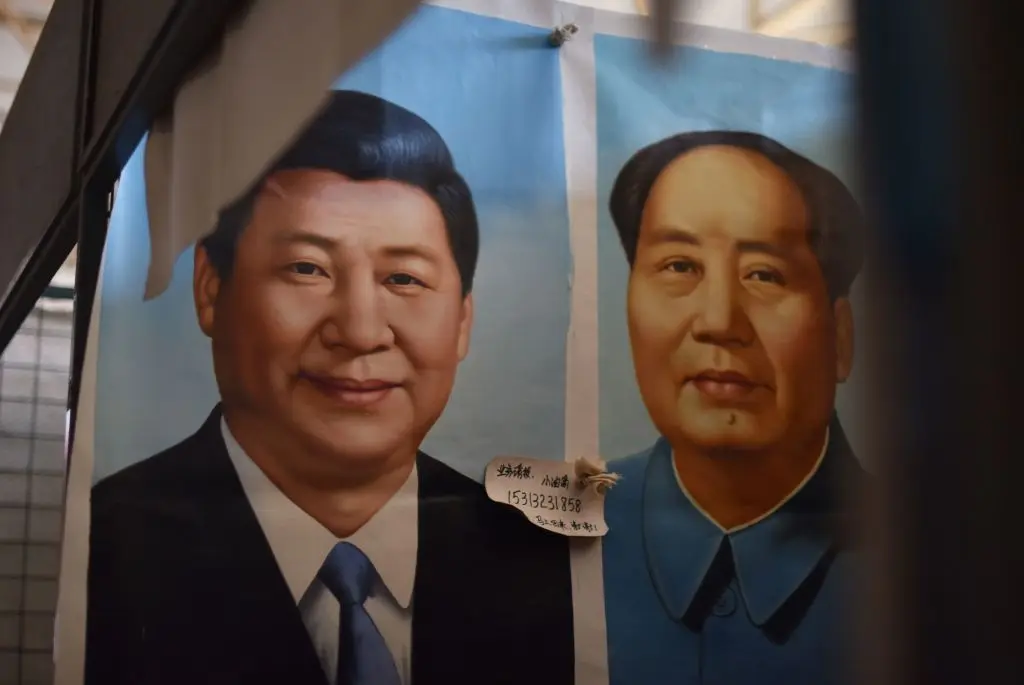
The intensifying personality cult around Xi may be interpreted as an attempt to forge unity in the absence of a political consensus, much as Mao Zedong relied on charismatic leadership to overcome social and political fragmentation. The public promotion of “Xi Jinping Thought” — it has been enshrined in the Preamble to the Constitution, along with Marxism-Leninism, Mao Zedong Thought, and Deng Xiaoping Theory — has a similar aim, although its ideological vitality remains questionable.
The anthropologist John Osburg characterizes China as “a post-belief” society. The People’s Republic of China officially remains, and must remain, a socialist state, but its credibility in claiming that label is eroding by the day. At the same time, the party is losing its ability to draw on its historical legitimacy. Mao Zedong and his comrades rightfully claimed credit for having unified the nation and secured its international autonomy. In contrast, the current generation of princelings in charge fought no revolutionary battles but rely on inherited credentials instead.
This is indeed why they appeal to a “rejuvenated” future rather than a revolutionary past. Ultimately the new social contract between the people and the party state is a pragmatic one: social stability in return for continued economic growth, a bargain that political scientists characterize as “performance legitimacy.”
This article originally appeared in Jacobin, a democratic socialist magazine publishing long-form essays and analysis on politics, economics, and culture. Subscribe to the print edition for $20 a year.