
World Jacobin
Whatever Centrists Say, the Left Won Big in the Midterms
Don’t allow centrists to change the terms of debate and the metrics of success. Last week’s midterms saw victories for socialists and other progressives that will allow the Left to grow in the months
English (original) ·Read in Deutsch ⇄
As recently as five years ago, the argument against the Democratic Socialists of America (DSA) and the Left from centrists and libs in the Democratic Party was this: Run left or socialist or progressive candidates, and you’ll lose; because the Trumpists are so terrible, you can’t afford to run that risk; give up your utopian plans and settle for reality.
Now the midterms happen, and many DSA and progressive candidates win, in both high-profile and low-profile races. Despite the Republicans trying to use individual leftist candidates as a way of beating the Democrats as a whole, the Democrats get their biggest win in fifty years. And how do centrists and moderates and libs respond? Well, the DSA and left candidates won with lower margins of victory than did the centrist candidates; moderates win better.
How does the Left respond? It recoils in fear and reacts in kind. It either tries to deny the truth or desperately searches for local variables and all sorts of quantitative nonsense that might salvage victory from the jaws of victory — thereby turning victory into defeat. The Left completely forgets its long-term project of building power; it forgets that a DSA or left candidate winning with fewer votes but still winning is not only a win but a very big win for the Left.
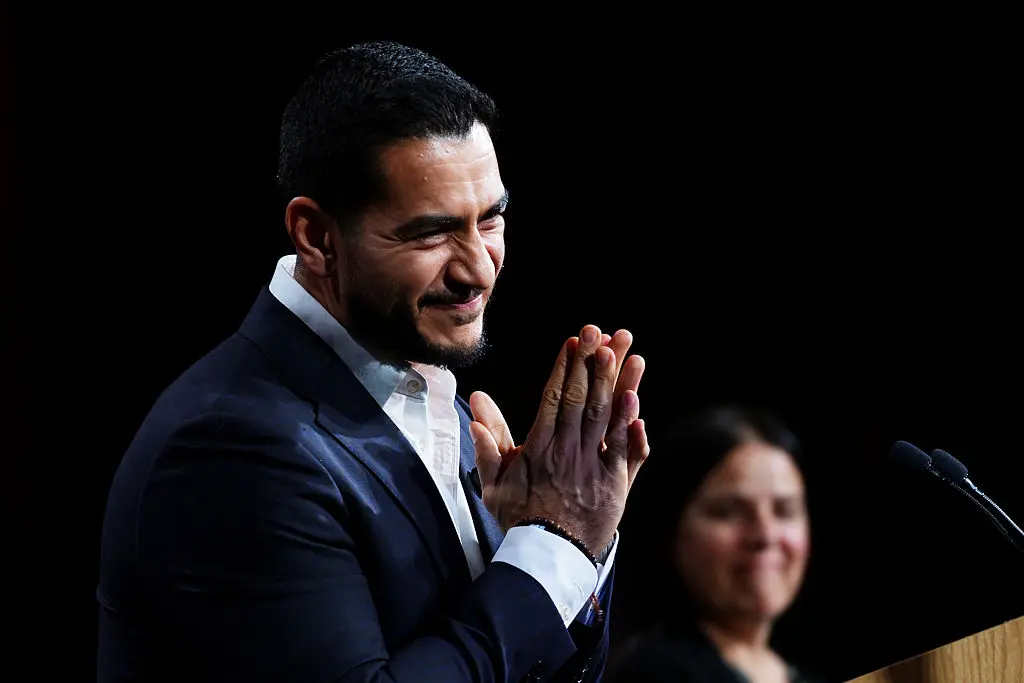
Let’s accept the centrist claim as true. Moderates win with more votes, progressives win with fewer votes. So what? The point is: a leftist won! Over the next six years, Michigan Senator Abdul El-Sayed will build an even stronger base while in office, he’ll push and vote for progressive legislation, inspiring other people to do the same elsewhere. That’s how the left wing of the possible, the slow boring of hard boards, works. You shed a point here, you lose a vote there, but you still win and are able to pass progressive legislation, building a base of support in the population for the long term. Without sacrificing an election.
Don’t just think this is special pleading for the Left. It applies across the board. Just consider some history. In her first race for Senate, self-styled Michigan moderate Elissa Slotkin won with a margin of victory of 0.34 percent. Her opponent? Mike Rogers, the very Republican who El-Sayed just defeated by 7 points. Georgia Senator Jon Ossoff’s margin of victory in his first Senate race? 1.23 percent. People invoke Ossoff and Slotkin today as if they are titans of the electoral map, but in their first victories, their margins were far smaller than those of progressive legislators. Yes, there were different variables in those elections, different electoral landscapes. But do you know what else is a confounding variable and a different electoral landscape? Being the first Muslim candidate for Senate in Michigan, which El-Sayed also is.
Former Senate Majority Leader Mitch McConnell’s first margin of victory? 0.4 percent. Current Senate Majority Leader John Thune’s first margin of victory? 1.2 percent. Both of them turned into the the most powerful Republicans in the twenty-first century Senate.
So indoctrinated are we with ever-presentist, anti-historical, Nate Cohn/Nate Silver style of analysis, so beguiled are we by numbers and math, we completely lose sight of substance. We turn, or allow others to turn, victories into defeats. We forget to keep track of how the media and the centrists used to talk about the Left and fail to chart the way their propaganda changes over time. This, by the way, is why education in history and political theory is helpful: it keeps you attuned to how arguments are made, and how arguments change, and what’s behind those changes. It keeps you attuned to politics in a much deeper way than tracking the horse race of numbers does.
The problem with the ahistorical takes of our times is that they treat political reality as fixed, something like a natural fact. The foundation of all politics, going back to the ancient Greeks, is that there’s a difference between physis (nature) and nomos (law or custom, or what we call politics). Centrists and libs look at the world and see “battleground states” as some self-evident term of permanence and fixity, as facts of nature. They’re not.
I’m old enough to remember when California was a battleground state. It’s now the bluest of the blue. Likewise, Nevada and Arizona, once red, now purple, trending blue, and of course, there’s the big state of Texas. These things change, not in some Keynesian sense of “in the long run, we’re all dead” but in reasonably proximate notions of time.
Let’s look at the four anti-trans initiatives the Right put on the ballot this time. They won in three states: Colorado (blue state), Washington (blue state), and Arizona (purple state). The one state where an anti-trans ballot initiative went down? Missouri, a red state, which used to be purple. Why? Because the Right attached the anti-trans initiative to an anti-abortion initiative. A commitment to abortion rights, in other words, saved trans kids. In Missouri, a red state.
None of this would have been easily predicted from the past. It’s not that there are no risks with pushing a left platform. There are. And you have to be careful and not be reckless. But the idea that in an extremely fluid environment like this one, where North Carolina is suddenly talking about its long progressive heritage, where Georgia Democrats are, for the first time in decades, faced with the task of governing as opposed to merely resisting — the idea that, in an environment like this, we’d act as if we knew in advance, with 100 percent certainty, what is red, what is blue, what is purple, and so on, is what C. Wright Mills called “crackpot realism.” It’s not realistic. It’s reading the world through math.
And don’t just take it from me. Max Weber, considered by many to be the dean of realism, said it clearly, just a little bit more than a hundred years ago: “Certainly all historical experience confirms the truth — that man would not have attained the possible unless time and again he had reached out for the impossible.” Today we’re not even reaching out for the impossible. We’re merely advancing the left wing of the possible. It’s not an unreasonable project.
So, once again, the Left won. By how much or how little, it doesn’t matter nearly as much as the centrists would have us believe. Now we use that power to build more power, to expand our base, to show voters we can deliver. Don’t allow centrists to change the terms of debate and the metrics of success.
This article originally appeared in Jacobin, a democratic socialist magazine publishing long-form essays and analysis on politics, economics, and culture. Subscribe to the print edition for $20 a year.