
World Jacobin
What Ballot Measures Told Us About America
Last week’s votes on taxing billionaires, abortion and trans rights, and divestment from Israel offer a window into the American electorate’s political mood.
English (original) ·Read in Deutsch ⇄
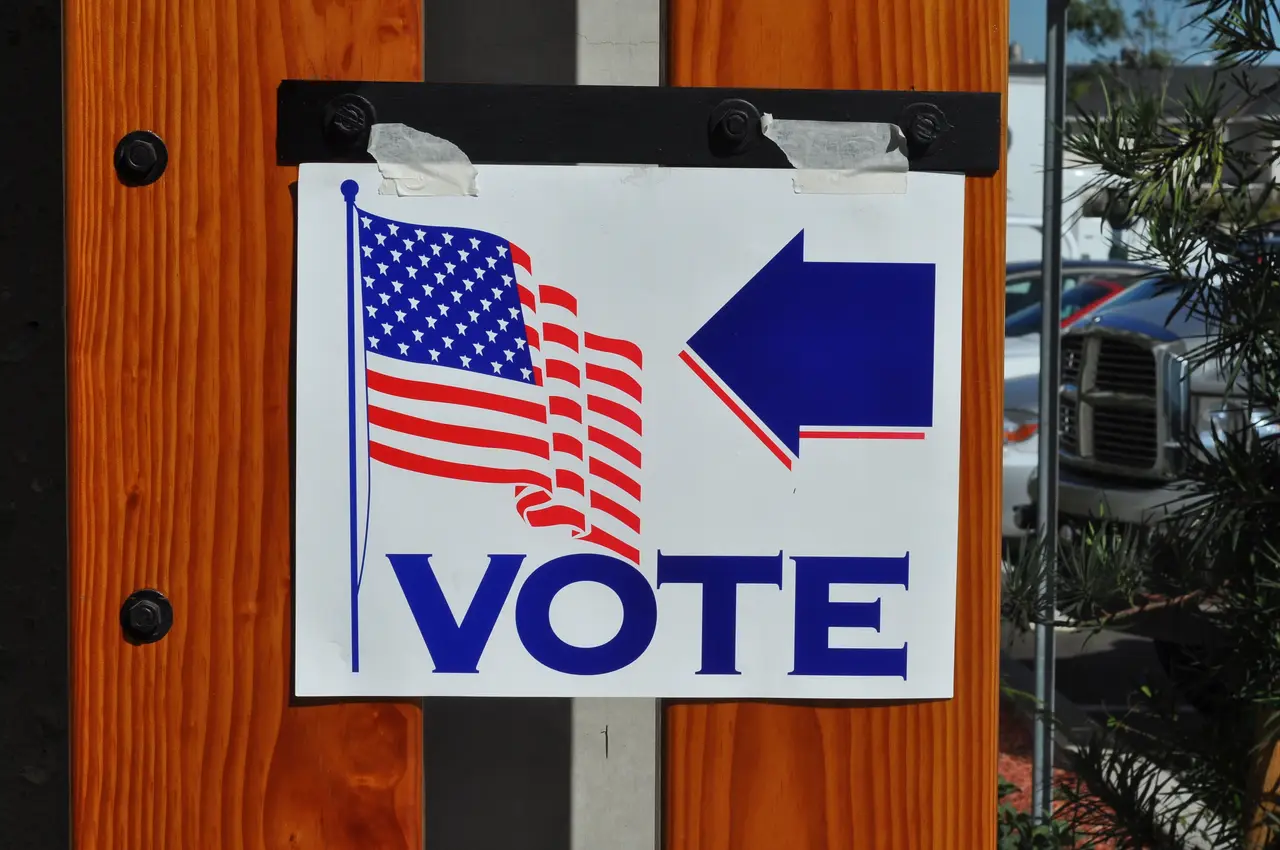
The blue tidal wave that swept congressional and local elections around the country is leaving a new political landscape in its wake. The generational scope of Democratic wins and unprecedented success of democratic socialist candidates notwithstanding, the president’s party almost always loses midterm elections, often by wide margins. How much do the election results reflect a shift in society’s politics, and how much do they reflect an extreme version of the standard two-party pendulum swing? And more importantly, where are the opportunities to push organizing to new horizons in this new terrain?
The results of ballot initiative votes are especially useful in analyzing the political realities on the ground. Ballot measures present a simple yes-or-no choice on a piece of legislation, making them excellent barometers of public sentiment. Between state and local ballots, Americans vote on hundreds of initiatives every cycle. Coming out of Election Day 2026, three ballot measures demand particular attention.
In California, a pioneering attempt to tax billionaires’ wealth to fund the hollowed-out health care system was drowned in almost $400 million in billionaire spending. Missouri saw the first Republican attempt to overturn abortion rights that were previously won at the ballot by packaging the rollback with transphobia; it was resoundingly defeated. And a whopping three-quarters of voters in Providence approved a measure to divest from countries and companies committing severe human rights abuses, making Rhode Island’s capital the largest US city to approve divestment from Israel.
Not Yet Taxing Billionaires in California
The California Billionaire Tax was as novel a proposition as it was consequential. Trump’s 2025 “One Big Beautiful Bill” made major cuts to Medicaid, with major coverage restrictions scheduled to take effect after the midterms, in January 2027. The cuts are expected to leave millions without insurance and put health care facilities at risk of closure. Billionaires’ fortunes have skyrocketed by hundreds of billions of dollars more since the bill’s passage.
In California, a union of hospital and health care workers put two and two together. In collaboration with leading progressive economists, the Service Employees International Union–United Healthcare Workers West (SEIU-UHW) proposed a first-of-its-kind, one-time 5 percent wealth tax on the two hundred–odd billionaires living in California. The union projected that it would raise roughly $100 billion. Ninety percent of the revenue was earmarked for health care, with the remainder for education, food assistance, and administration.
Proposition 40, as it was designated once it qualified for the ballot, was written to be applicable to billionaires residing in the state on January 1, 2026, anticipating the capital flight argument that billionaires would simply move out. With the mind-boggling amounts of money billionaires have been making in recent years, the 5 percent wealth tax would still have left California’s billionaires vastly wealthier than they were just a year ago, while the state’s health care system would avoid disaster. Seems like common sense — unless you’re a billionaire who thinks taxation is oppression.
Yet the billionaires were not the only ones opposed to Proposition 40. Labor was mostly aligned behind UHW in the push, including the California Labor Federation, Teamsters California, and California Nurses Association. But it wasn’t unanimous: the California Teachers Association and the State Building and Construction Trades Council of California opposed. SEIU California remained neutral, despite Proposition 40 being proposed by one of its largest locals. Some prominent progressive advocacy groups like Planned Parenthood Affiliates of California and the NAACP California/Hawaii State Conference joined unlikely forces with the likes of Peter Thiel against the billionaire tax.
The apparent split in left forces, particularly the elements of labor that opposed the billionaire tax, was prominently featured in ads from Building a Better California, a billionaire-backed organization opposing Proposition 40.
Many of Building a Better California’s attacks were focused on UHW president Dave Regan, who was on the receiving end of a litany of allegations, including resurfaced claims he used intimidation tactics in political negotiations seventeen years ago — all of which Regan frames as a transparent smear campaign aimed at distracting from the issue at hand.
Still, if the billionaire lobby’s goal was to sow mistrust around Proposition 40, the intra-left divisions and air of scandal around UHW certainly helped. To add insult to injury, UHW’s staff union declared a strike in the days leading up to Election Day, obstructing Proposition 40’s final get-out-the-vote push.
Ultimately, neither the measure’s necessity — even now, nobody seems to have an alternative plan for when the Medicaid cuts kick in — nor its meticulous construction ended up matching the unprecedented amounts of money the billionaire lobby dumped into this election. Opponents raised at least $378 million, overwhelming the pro-tax campaign and helping swing the popular vote away from Proposition 40. The billionaire lobby also financed two poison pill measures, Propositions 41 and 42, which could have blocked Proposition 40 even if it passed, provided they received more “yes” votes.
Proposition 40’s chaotic loss should not distract from its importance. The front line often doesn’t survive the battle, but in this case it opened an important new front. By organizing to put the issue directly on the ballot, UHW forced a public conversation about wealth taxes that put the idea on the political menu. Not only did Bernie Sanders and Ro Khanna wholeheartedly endorse the measure, they had already introduced legislation for an annual federal billionaire wealth tax. California governor Gavin Newsom, in his haste to kill the California billionaire tax, was forced to admit that America needs a national minimum tax on the ultrawealthy (as long as it didn’t start in his state). United Airlines’ millionaire CEO, Scott Kirby, recently chimed in, advocating for a national wealth tax.
Proposition 40’s hard-fought loss is at once an illustration of how hard many billionaires will fight being taxed and how important it will be to tax them anyway.
Defending Abortion Rights and Defeating Transphobia in Missouri
Alongside the demonization of immigrants, attacks on transgender people have been a staple of reactionary scapegoating in recent years. In September, Elon Musk reportedly authorized more than $100 million in midterm spending by his PAC, which launched transphobic ads, including in Texas, Tesla’s headquarters. That strategy failed, as targeted Democrats swept in the midterms.
However, transphobic attacks also made it directly onto the ballot in multiple states, where they were largely successful. Majorities in Arizona, Colorado, Nebraska, and Washington approved restrictions on transgender students’ participation on school sports teams aligned with their gender identity. Another Colorado measure, banning gender-affirming surgeries for minors, also passed. Niche an issue as it may seem to many, the Right has found a foothold in youth sports.
Nevertheless, the biggest test of how far conservatives can leverage transphobia failed in Missouri, where Republican legislators tried using it as a lever to overturn abortion rights. The victory against this tactic is instructive for how the Left can defeat transphobic scapegoating at the ballot moving forward.
In 2024, Missouri residents voted to enshrine abortion rights in the state constitution. That vote, titled Amendment 3, had been proposed as a citizen initiative and won narrowly but decisively with 52 percent of the vote. It didn’t take long for Republicans in the state legislature to hatch a scheme to countermand the popular vote. The result was Amendment 3, part two.
This year’s Amendment 3 was a legislatively referred repeal of the citizen-initiated Amendment 3 from 2024. It combined a rollback of abortion rights with a constitutional ban on gender-transition procedures for minors, including surgery, puberty blockers, and hormone treatment, subject to specified medical exceptions. Rather than trying to change majority opinion on abortion rights, the antiabortion campaign focused its talking points on transphobia.
Voters also had to wade through the confusion. Not only had they just voted on abortion two years ago, but when a majority of Missouri voters checked “yes” on Amendment 3, they were voting to support abortion rights. Now, a “yes” vote on Amendment 3 meant the opposite.
It’s not the first time Republican legislators have attempted this kind of ballot title shell game, to little effect. It didn’t work in Missouri either. On Election Day, Missouri voters decisively rejected the new Amendment 3 with 55 percent of the vote — an even higher percentage than voted for abortion rights in 2024. To cement their rebuke, voters also passed a citizen-initiated constitutional amendment to protect the ballot initiative process from legislative tampering.
Had Missouri Republicans been successful in overturning a popular vote for abortion rights by leveraging transphobia, the same tactic would have been rolled out across the country. It still might, but now there is both strategy and precedent to defeat it. The coalition against the new Amendment 3 had to balance a focus on abortion rights with addressing attacks on trans youth.
A contingent of the campaign headed by PROMO, a Missouri LGBTQ organization, leaned into the opportunity to move the needle on trans rights for the long term. They committed to an intensive deep canvassing program aimed at changing hearts and minds — an approach that has worked on gay marriage and trans antidiscrimination votes over the past decade and a half. Therein lies the lesson.
The political Right has a fast-evaporating pool of persuasive appeals to the public. Following the Right’s trouncing in the midterm elections, conservatives can be expected to double down on anti-trans arguments as a foot in the door to a popular audience. Missouri shows that the best defense against transphobia is a good offense, both pointing out that scapegoating is designed to distract and also engaging in proactive public education to stand in unflinching solidarity against all forms of bigotry.
Divesting From Genocide in Providence
If elections over the summer indicated that Palestine had changed US politics, November signed, sealed, and stamped that reality. Explicitly pro-Palestine candidates won across the country, most prominently Abdul El-Sayed, who won a US Senate seat in Michigan despite what he described as $42 million in AIPAC spending against him. These wins proved beyond a doubt that questioning US support for Israel — a nearly unthinkable stance in mainstream politics only a few years ago — calling the genocide in Gaza a genocide, and advocating for an arms embargo against Israel are no longer liabilities for elected leaders.
Still, it is difficult to distinguish those who voted for El-Sayed because of his stance on Israel from those who supported him in spite of that stance. Such is the nature of two-party elections, when voters must shoehorn or project a variety of wants, needs, and hopes onto a single personality and often hold their noses about the rest. But devil’s advocates will find no solace this year, because there was one vote last Tuesday that was about Palestine and nothing else, and the results were not ambiguous.
Providence, Rhode Island, is the first US city to enact a binding divestment law by popular vote, targeting investments in countries and companies engaged in severe human rights abuses like genocide, ethnic cleansing, and apartheid — a campaign explicitly focused on divesting from Israel. It won by a landslide, with 75 percent of the popular vote. The effort was led by a local coalition that included Jewish Voice for Peace; Democratic Socialists of America; Reclaim Rhode Island, a housing justice and generally progressive organization; and American Federation of Teachers Local 6516, representing graduate workers at Brown University. (You can read more about the initiative in this Jacobin piece by two organizers from the campaign.)
Following the initiative win, Providence becomes the largest US city yet to approve divestment from Israel. It will join at least six other cities around the country in passing some form of divestment legislation — Hayward and Richmond in California; Dearborn, Michigan; Medford, Massachusetts; Belfast, Maine; and most recently Cambridge, Massachusetts. Providence does not have a proportionately large Muslim or Arab population, but it does have a sizable Jewish population. The overwhelming victory for divestment at the ballot cements beyond a doubt the swing happening in the American public not only away from Israel but toward decisive action against its genocidal policies.
It is also worth noting, with the California Billionaire Tax in mind, that while Providence marks a triumphant success for the Palestine solidarity movement in a watershed election, it was not the first attempt to divest from Israel by direct democracy. The first two attempts, both in Pittsburgh, lost court challenges and never made it to voters. The third, in Somerville, Massachusetts, won majority support a year ago, but was a nonbinding initiative. Somerville’s City Council has committed to pursuing a binding ordinance, and an ethical procurement proposal remains before it. Sometimes it takes time for game-changing policies with deep-pocketed adversaries to succeed at the ballot.
Alongside Question 7, Providence elected a mayor who endorsed the divestment initiative, twenty-eight-year-old democratic socialist David Morales, as well as a slate of allied city council members. Should Question 7 survive the court challenges that have already been threatened, it will be implemented by the new city government.
But even if it is somehow beaten back in the courts, the Providence vote will echo across the country and well beyond, showing that after three grinding years of misery in Gaza and across Palestine, firm policy against genocide is not only a viable position but an asset for candidates and elected officials.
American politics is changing fast. To make the most of it, it is helpful to understand how majorities vote when they get a chance to legislate key issues directly. Our moment requires taking big swings in redistribution and economic justice. At the same time, the closer those moves get to billionaires’ money, the more severe the reaction will become. Going up against those kinds of resources, setbacks are to be expected, but the worst thing we could do would be to interpret losses as undermining the necessity or viability of taxing billionaires’ wealth.
As the Right’s bid for legitimacy falters, it will lean harder into scapegoating and demonizing marginalized groups. Contra antipopulist liberal fantasies, American society is not hopelessly bigoted. People can be won over to both economic and social justice, but only if movements commit to the protracted work on both fronts as part of the same political project. And policy positions that appear to be third rails, like divesting from Israel used to be, can be transformed through mass organizing and popular pressure.
This article originally appeared in Jacobin, a democratic socialist magazine publishing long-form essays and analysis on politics, economics, and culture. Subscribe to the print edition for $20 a year.