
World · Jacobin · · 1h
We Have to Figure Out How to Design a Warming Planet
English (original) · Read in Deutsch ⇄
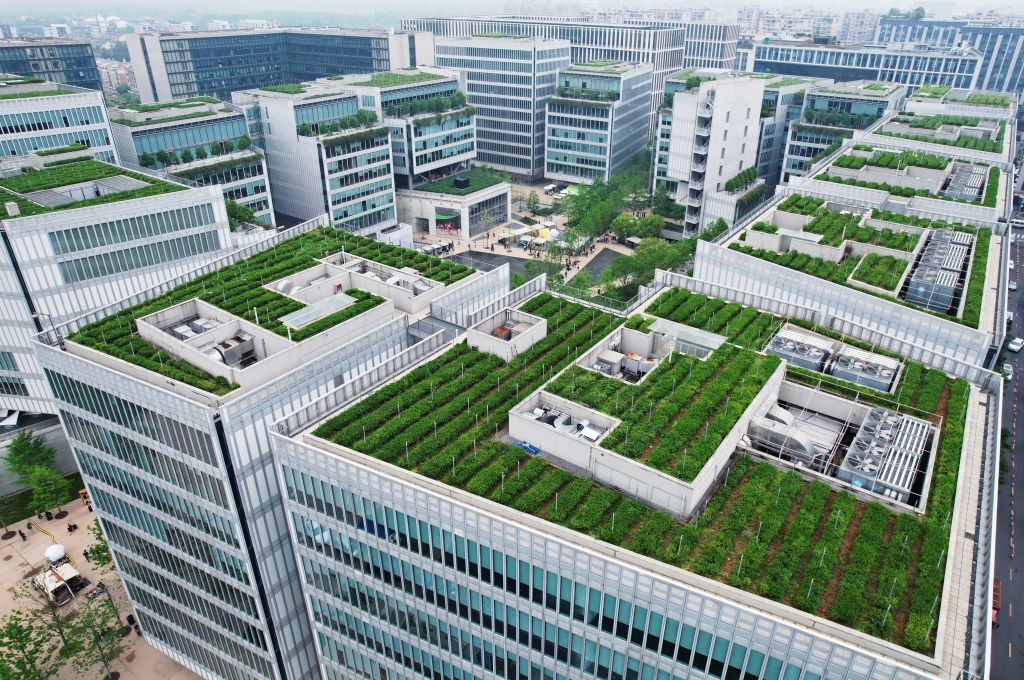
Before we get into the nitty-gritty, we should start with the problem in its purest form: The world as we know it cannot go on. Something’s got to give. Ideally, that would be capitalism, but we don’t have enough time to pull that off before the planet catches fire. The planet is already catching fire. What to do, then? Everything — supply chains, information systems, labor practices, policy decisions, economic structures — is so inextricably linked that it feels impossible to know where to start chipping away. Recently a friend asked, hypothetically, why it would be worthwhile to make an ethical decision in one’s own personal life if the larger entities that structure that life certainly aren’t making ethical decisions. Isn’t their impact much larger than our own? It’s hard to argue with that.
In the design world, the responses to what I’ve come to think of as “scalar overwhelm” (often accompanied by a sense of nihilism) have ranged from cynical surrender — if you can’t beat them, join them: design for developers, make some money, and call it a day — to fantastical idealism: draw up “solutions” to the crises we face that will be hard to build and even harder to finance. Architects and designers are often left out of the funding and policy decision-making processes that structure and condition their work, meaning that the work they do is often reactive rather than proactive. More often than not, an architect’s job is to design to minimize up-front costs and maximize return on investment for developers.
When that’s your everyday task, it’s difficult to imagine how you might participate in ameliorating global warming, a crisis to which your job directly contributes — buildings and their construction account for about 40 percent of all greenhouse gases globally — but cannot directly solve. It’s not exactly up to you how the concrete panels you specified in your design plan are manufactured, what fuel the truck that transports wood to the job site uses, or whether the grid your building connects to runs on fossil fuels.
Fortunately, Damian White and Nicholas Pevzner have written a book that will help almost anyone — primarily but not solely architects and designers — put some detail on the source of their scalar overwhelm and thereby make it more approachable. Designing the Just Transition is not a blueprint; it is a topographical map of the way designers and design thinkers have tried to address our warming planet and the factors that might facilitate (or make difficult) the collective creation of a new world.
Ambitious! And why shouldn’t it be? In Designing’s lengthy introduction, White and Pevzner lay out the stakes: the world is not only warming, it is unstable and unlikely to stabilize any time soon. And yet it is still imperative that we do something to improve life upon it.
Within this fractious context, White and Pevzner attempt to “consider what opening might exist for a design- and labor-friendly politics of transition that can revitalize the public imagination and the public realm.” For them, a “just transition” is not merely a set of policies: it is a “demand for a future that ties the social question and the ecology question together.” In order to find an opening for it, White and Pevzner look both backward and forward.
The first three chapters situate us in design and labor histories, tracing, respectively, the often contentious relationship between the labor and environmental movements; the history of environmental, ecological, and “nature-inspired” design; and the ways the architecture and planning industries have interacted (or not) with the concept of green design. To those versed in labor or design histories, much of the content of these chapters will be familiar. White and Pevzner’s contribution in this first half of the book is to bring all of these histories together under a singular frame. To those not so versed in these topics, Designing’s first three chapters will serve as a crash course, helpfully focused by the book’s political orientation and aims.
In its fourth chapter, Designing begins to look toward the future. The question mark that punctuates its title, “Labor-Centered and Worker-Centered Design for Just Transitions?”, implies doubt: Is this quest even possible? White and Pevzner suggest that it might be, first by surfacing histories of design initiatives that brought together environmental and labor concerns, and then by visiting contemporary currents of design doing the same.
This dual endeavor marks the book’s pivot point. From here on, it’s all about the hereafter. Chapters five, six, and seven consider, respectively, the role of noncredentialed designers in cocreating the future, exploring the contributions and limitations of the field of critical design studies; the role of the Green New Deal in advancing conversations about design, labor, and decarbonization; and the possibilities modeled, proposed, and speculated upon in “political theory, [climate fiction], speculative design futuring, and contemporary design practice.”
The mere act of considering these questions is one of optimism, but White and Pevzner aren’t prescriptive. They are at their best when laying out the stakes and illuminating some of the stones that might pave a path forward, as in this passage:
The core position here . . . is that life on a hotter, more turbulent, and more dynamic planet will require design interventions that will have to be iterative and inventive, taking place again and again and again in climate-challenged worlds. The general proposition that design would do well to orientate itself toward a dynamic future “coming at us” has much greater alignment with more recent developments in non-equilibrium ecology, climate science, and complexity theory than a great deal of equilibrium orientated ecological design of the past.
This orientation toward the world’s inherent instability runs through Designing and is perhaps the book’s guiding principle: that it is the task of those demanding a just transition to imagine adaptation as an ongoing process that necessarily accommodates perpetual change. In that process, design can neither be dismissed as inert nor centered as the only way toward a solution; labor must be considered and accounted for; and sustainability must be a goal but not the goal, rather part of a constellation of characteristics of a fairer society that also include “meaningful work, labor, wellbeing, economic security, and shared prosperity.”
Despite their optimism, or maybe because of it, White and Pevzner end Designing by addressing the disenchanted quality of our current moment: the pervasive scalar nihilism. They write:
The just transition irreducibly raises questions about the extent to which we can plan, design, redesign, imagine, and materialize worlds that are very different to business as usual or the extent to which the forces of the status quo will lock us into fossil capitalism and life on a much warmer, more turbulent planet.
In the face of these questions, it would be easy to shrug, cowed by their magnitude into inaction. The merit of White and Pevzner’s book is in expanding upon, elucidating, and contextualizing these questions, engaging with the many thinkers, academics, theorists, and writers that have asked or anticipated them. If Designing the Just Transition is a topographical map, then after reading it, we might not know when the next earthquake is coming, but we will know where the fault lines are — and where we might find the footholds necessary to climb a seemingly unscalable mountain.
Read the full story at the source
Source: Jacobin