
Politics · Jacobin · · 3h
The US Gives Impunity to Israel and Sanctions Its Critics
English (original) · Read in Deutsch ⇄
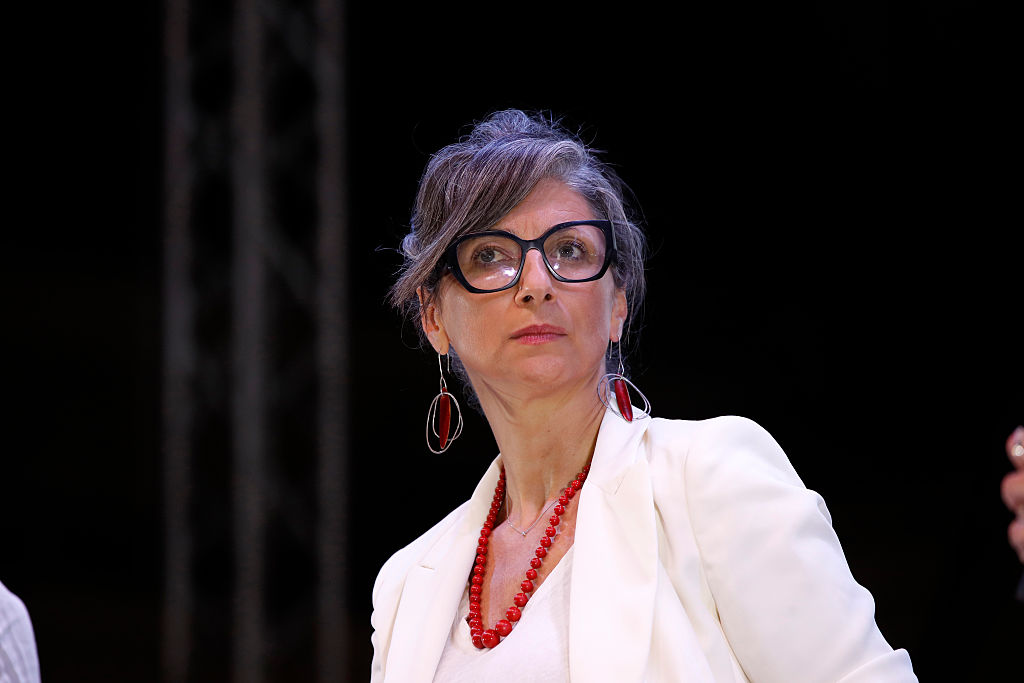
“It’s the first time, as a lawyer, I’m about to defend myself, not the people I work for.” Speaking as the United Nations’ Human Rights Council in Geneva discussed Palestine this March, Raji Sourani complained of attacks on human rights defenders’ most basic duties.
Sourani, who is the director of the Palestinian Centre for Human Rights (PCHR), made these comments just after UN Special Rapporteur Francesca Albanese had presented her report on systematic torture against Palestinians. For Albanese, torture is “the symbol of this genocide”: it devastates people’s bodies and dignity, while everything that makes Palestinians’ lives possible is being destroyed all around them.
In a meeting on the sidelines of the session, Sourani, along with Issam Younis, who is executive director of Al Mezan, as well as representatives from Al-Haq, described what it means to continue documenting these crimes while their organizations are under US sanctions. Sourani explained how even though “the genocide continues as we speak,” he and his colleagues are forced to talk about frozen accounts and salaries they can no longer pay. “Instead of talking about genocide and ethnic cleansing, we’re here defending ourselves, with our silly little concerns: How can our organization survive and continue to defend human rights?”
PCHR, Al Mezan, and Al-Haq are working with a specific legal purpose: collecting testimonies, assisting victims, and submitting evidence to the UN and the International Criminal Court (ICC). This is how violence suffered can become verified testimony and, ultimately, serve as evidence before a judge. But in this also lies the fundamental disconnect running through the UN meeting. While those who commit crimes still face no consequences, those who document them must weigh the consequences of every payment, trip, or collaboration they engage in.
Archive Under Threat
At Al-Haq’s offices in Ramallah, this work takes the form of an archive built up across a decades-long Israeli occupation. When we tried to get there from Bethlehem in July 2025, we got stuck in a long line at the checkpoint. An hour before our appointment, we still didn’t know if we’d make it. Every trip is subject to Israeli soldiers’ discretion. “We’ll get to Ramallah, inshallah,” says our guide.
Inside the offices, researchers have been collecting testimonies from across the occupied West Bank. Al-Haq keeps data on killings and demolitions, analyzes photographs and videos, and reconstructs attacks in order to challenge the official Israeli accounts. It has also created a forensic architecture unit, which uses spatial analysis and architectural tools to investigate human rights violations.
“One of the things that motivates me to wake up every morning is that Israel seems to be running scared of our investigations,” says Mariam (who has been given a pseudonym), a researcher at Al-Haq. That fear, she explains, translates into pressure on funders and threats against banks. “They try to scare every single donor.”
When an archive can refute the military’s version of events and contribute to international legal proceedings, it becomes a political threat. This is the evidence-gathering capacity that the sanctions now target.
In truth, the attack on Al-Haq did not begin with the US sanctions. In 2021, Israel had already designated it and five other Palestinian organizations as terrorist. Then, in September 2025, Washington included Al-Haq, Al Mezan, and PCHR in the sanctions program established through Executive Order 14203 against the International Criminal Court. Assets under US jurisdiction were frozen, while US individuals and companies were prohibited from providing them with funds, goods, or services.
Sanctions Program
Since most international transactions are conducted in US dollars and through US-based platforms, many banks, donors, and partners in other countries severed ties despite not legally being required to do so. The report Criminalising Accountability refers to this as a mechanism of over-compliance. In less than a month, these organizations lost between 20 and 60 percent of their revenue, and YouTube removed over seven hundred videos, including witness accounts of torture and images of demolitions.
For Al-Haq, this has meant staff left unpaid and US collaborators forced to resign. For Al Mezan, the sanctions compound the devastation in Gaza, affecting staff who’ve been displaced and the fate of researchers who must document events while also trying to protect their families, on top of their offices being hit. “We have no funds; we’ve had to cut salaries, and this has a direct impact on our ability to document crimes in Gaza,” says Younis.
Albanese has also been personally sanctioned for her work as a UN special rapporteur. Her assets have been frozen and her transactions blocked, and she faces restrictions on entering the United States. When she takes the floor in Geneva, her first remark is directed at the institution that was supposed to protect her.
Why, she asks, did the UN wait so long before discussing sanctions against one of its own special rapporteurs, against prosecutors and judges of the International Criminal Court, and against Palestinian organizations that cooperate with the justice system?
Albanese says she has “less autonomy than [her] thirteen-year-old child. . . . just for writing reports to the United Nations” and is treated by the financial system like a “narcotrafficker, a drug dealer, or a terrorist.” What do she, the Palestinian organizations, and ICC officials have in common? They’re there “to pursue accountability, to advance justice for victims and survivors.”
“Prosecutors cannot visit occupied Palestinian territory,” explains Sourani. They depend on organizations capable of reaching witnesses and preserving evidence. “When the Office of the Prosecutor, Palestinian organizations, judges, and the special rapporteur are targeted, the circle closes. The intention is clear.”
Encouraged by Impunity
The same selectivity permeates international institutions. In the UN Security Council, the permanent members’ veto power means there are often no consequences for violations. In the Human Rights Council, the same power dynamics determine which crises will lead to concrete measures and which instead remain a matter of only reports and resolutions.
The ICC remains open, but it is isolated from the people who are gathering evidence and investigating. “We are witnessing the dismantling of accountability from the ground up,” warns Albanese.
For Al Mezan’s executive director, Issam Younis, returning to the UN’s Palais des Nations holds personal significance. In 1993, he came here as a student to tell member states that Palestinians were being tortured. More than three decades later, the torture continues, and his organization is being sanctioned for its work with the ICC.
“Governments no longer deny committing crimes,” he says. “In the past, they used to deny it. Now they’re proud to commit war crimes and genocide.”
The images of Israel’s crimes, the official statements, and the many eyewitness testimonies have failed to provide protection. Indeed, this impunity is evident in the confidence with which the crimes are displayed: those who commit them are well-aware that the images will circulate and that other states will stand idly by.
At the meeting in Geneva, a Palestinian lawyer recounted how detainees were forced to live for months inside a circle drawn on the floor, with their hands and feet chained, allowed to step outside it only for one-minute showers. “I’ve worked with prisoners for years. I’d never seen anything like it.” He described rapes, sexual violence, and amputations performed without anesthesia.
“Torture does to the individual what genocide does to a group,” Albanese says. Documenting these acts does not restore to the victims what has been taken from them, but it preserves the possibility of recognition and justice being done.
The lack of international action over Israel’s crimes in the West Bank has further consequences in the form of home demolitions, the seizing of land, and yet more attacks by settlers.
Take what happened on July 28 last year in Umm al-Khair, when a bulldozer from a nearby Israeli settlement entered the village and damaged Palestinian property. Teacher Awdah Hathaleen, an activist and father of three, filmed the scene. In the videos, Israeli settler Yinon Levi raises his gun and fires in his direction. Awdah is fatally shot in the chest.
Levi lives in the nearby settlement of Carmel. In 2024, he’d already been sanctioned by the United States, the European Union, the United Kingdom, and Canada for his role in violence against Palestinians. Yet the Trump administration revoked the US sanctions. After the killing, Levi was arrested and then quickly released again; Awdah’s body, however, was held for ten days, while conditions were imposed on the family regarding the funeral. “How can you release the murderer and hold onto the victim?” asks a representative of the Jerusalem Legal Aid and Human Rights Center.
For Haneen Hathaleen, Awdah’s niece, what has changed since October 7, 2023, is above all the license with which the Israeli settlers act. In previous years, she says, the violence was at least partially restrained by fear of international backlash. Now that seems to have vanished. “After everything that happened in Gaza, no one has called Israel to account for anything,” she says. “So whatever they do here, who would dare oppose them?”
The women of Umm al-Khair say that, since October 7, settlers have been coming almost every night. They enter the village, vandalize property, and prevent families from sleeping. “It’s not like it used to be,” they say. Fear is growing within the community that the increase in attacks will accelerate the displacement and annexation of their lands. The impunity for what is happening in Gaza is not separate from the West Bank: it strengthens the settlers’ conviction that they can act without resistance or consequences.
Avenues of Accountability
In an interview at the Café Suisse in the Palais des Nations, Palestinian Ambassador Ibrahim Khraishi tells me of the limitations of sanctions that target only individual settlers. Such measures, he argues, do not address the political and military system within which settlement violence is made possible and protected. They may restrict travel or freeze certain assets, but they do not stop the attacks or the expansion of settlements on the ground.
Sanctions against those who document the violence are being expanded; sanctions against those who perpetrate the violence may be revoked or remain without concrete effect. In Umm al-Khair, impunity means that Awdah is killed, his body is withheld, and the attacks against his community continue.
At the Palais des Nations, following the report on torture, some statements shift the debate from the evidence to Albanese herself: Hamas, accusations of antisemitism, and adherence to the code of conduct. The people documenting crimes must once again defend their legitimacy.
“Diplomacy in times of genocide is not neutral,” Albanese responds. Younis insists that the UN member states need to take action: “Stop showing solidarity without taking action. It is time to act for accountability.”
The tools exist. States that are parties to the ICC can defend the court’s work; the Netherlands can safeguard its operations; the EU can counter the effects of sanctions; and the UN can defend the special rapporteur to whom it has entrusted the mandate. Yet none of these actors has devised a response capable of protecting these people and institutions.
The US government, through its control of the dollar, works to thwart accountability. But impunity is also fostered by states that acknowledge crimes and then refuse to use the tools that they have available to stop them. Many EU member states’ governments routinely claim that they stand up for international law, yet they maintain military, economic, and diplomatic relations with Israel without protecting the ICC or Palestinian organizations.
Contagion Effect
What is happening in Palestine will not remain confined to Palestine: impunity doesn’t just shield crimes that have already been committed but also makes future ones more likely. Every time a state sees another one disregard the courts, violate international norms, and pursue its own aims without paying the price, the rule of law loses strength elsewhere as well. The message to other governments is that rules can be set aside so long as they have political, military, or economic protection. This is how exceptional crimes come to set a precedent.
This erosion is already evident in the growing challenge to international institutions. Chad has begun the process of withdrawing from the Rome Statute, a decision welcomed by Washington, which has called on other states to follow suit.
According to Sourani, it would be a mistake to think that all of this concerns only Gaza or the Palestinians. Sanctions are replacing the rule of law with the “rule of the jungle.” “What is lost in Palestine will be lost everywhere,” warns Albanese.
Meanwhile the genocide continues. The organizations that are supposed to collect and preserve evidence of it are being obstructed, deprived of funding, and isolated from international institutions. And even as the destruction continues in Gaza, settler attacks and pressure on Palestinian communities are mounting in the West Bank too. Yet while those who commit these crimes act with impunity, those documenting them are forced to defend their right to exist.
Read the full story at the source
Source: Jacobin