
World Jacobin
The Southern Negro Youth Congress’s Bold Push for Equality
Founded in 1937, the Southern Negro Youth Congress was a key player in the radical wing of the early phase of the civil rights movement.
English (original) ·Read in Deutsch ⇄
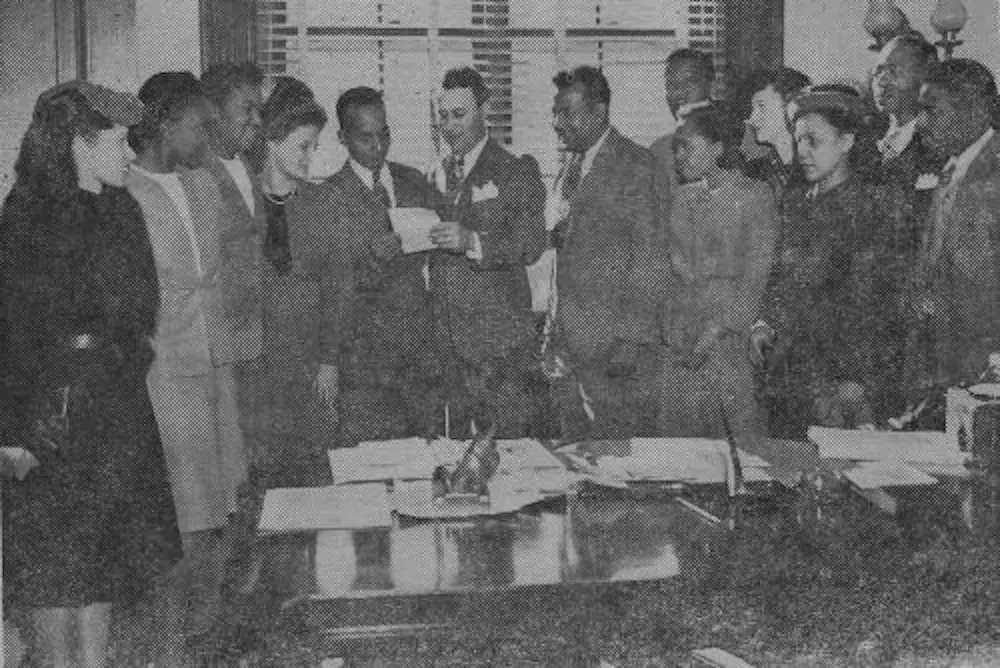
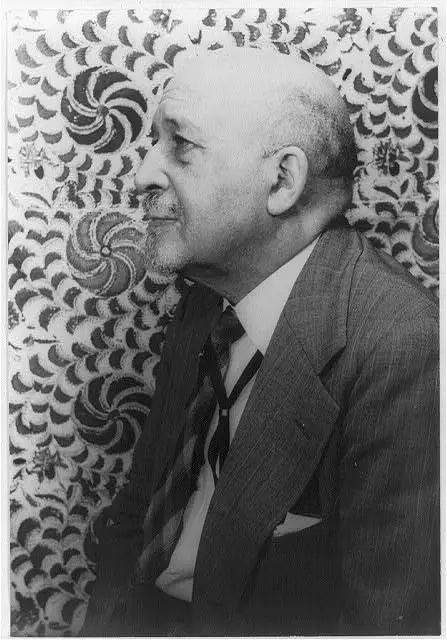
“Behold the land, the rich and resourceful land, from which for a hundred years its best elements have been running away, its youth and hope, black and white, scurrying North because they are of each other, and dare not face a future of equal, independent, upstanding human beings, in a real and not a sham democracy.” This line was spoken by W. E. B. Du Bois near the end of arguably his greatest speech, titled “Behold the Land.” It was delivered on October 20, 1946, at a convention hosted by the Southern Negro Youth Congress (SNYC), where Du Bois thundered from the dais at Antisdel Chapel at Benedict College in Columbia, South Carolina. He and the SNYC had, for a brief moment, made the Palmetto State the center of the struggle for global human rights in the post–World War II years.
Founded in 1937, the SNYC represented the radical wing of the early phase of the civil rights movement. Its radical politics lay in the organization’s recognition of the links between racial and class problems in the US South and throughout the nation. At times, it made alliances on the ground with various Communist Party USA organizations in the South. While many historians have come to see the civil rights era as extending longer than the “classic” phase of 1954 until the mid-1960s, what makes the SNYC unique is how many of the issues they attacked would come up again during both the 1960s and the early decades of the twenty-first century.
As part of the youth wing of the National Negro Congress (NNC), the SNYC went well beyond organizing the black youth of the Jim Crow–era South. It offered them an opportunity to voice and do something about the growing frustration many of them felt living in the grip of Jim Crow segregation.
Through the course of the Great Depression and World War II, the SNYC pressured political and social leaders throughout the South. As they pressed for greater freedom for all people in the former Confederacy, the SNYC became a beacon of hope during the fight against fascism at home and abroad. The SNYC always linked the struggles against Jim Crow segregation at home to the rising tide of fascism, Nazism, and militarism abroad, even before the advent of the better-known “Double V” campaign among black Americans during World War II, pushing for victory over fascism abroad and Jim Crow at home.
The bread and butter of the organization was the organizing of previously disenfranchised workers in the South. Their earliest campaigns included the organizing of black tobacco farmers outside their first headquarters of Richmond, Virginia. At other points, the SNYC would participate in voter registration drives and work with unions to increase labor organizing across a region that, by the Great Depression, had earned a staunchly anti-labor reputation. Other efforts included the investigation of cases of murder in the South via private investigators, such as the case of William Daniel’s 1946 murder by Birmingham police. In short, like the NNC and other radical organizations of the Great Depression and World War II eras, the SNYC used virtually every method at their disposal to fight against Jim Crow segregation.
But the challenges facing the SNYC were more dangerous after America’s triumph in World War II. A rift formed between liberals and leftists after the war; the wartime exigency of the American-Soviet alliance gave way to fears of another world war, this time between the United States and its allies against the Soviet Union and a growing postwar Communist bloc. At the same time, anti-colonial campaigns were spreading like wildfire across Asia and Africa. This, coupled with black frustration at home due to renewed white backlash to civil rights, gave the SNYC ample reason to step up their efforts in a place like South Carolina.
Ahead of Its Time
By 1946, South Carolina already had a growing movement for radical human rights. The Progressive Democratic Party (PDP), led by black South Carolinians Modjeska Simkins, John Henry McCray, and Osceola McKaine, built a progressive black alternative to South Carolina’s white-supremacist Democratic Party of South Carolina. Registering black South Carolinians to vote, putting up their own slate of candidates for state and national office, and even traveling to the 1944 Democratic National Convention to challenge the legitimacy of the South Carolina Democratic Party, the Progressive Democratic Party presaged the better-known Mississippi Freedom Democratic Party (MFDP) by twenty years in using grassroots democratic traditions to attempt to upend the old system.
Their efforts to overturn the ironclad rule of the white-supremacist Democratic Party did not result in electoral victory. Osceola McKaine, the black nominee of the PDP who campaigned against incumbent Olin Johnston in 1944, fell short in his campaign. But McKaine’s own personal story is a reminder of why black South Carolina, in 1944, was so thoroughly galvanized to fight back against Jim Crow.
McKaine, a native of Sumter, South Carolina, served in the United States military during World War I. After his term of service ended, McKaine, tired of the hypocrisy of American calls to “make the world safe for democracy” abroad while not doing so at home, settled in Ghent, Belgium, and opened a successful nightclub. Forced to flee Belgium due to World War II, McKaine returned to Sumter determined to fight for democracy in his home state. He was defeated in 1944 by Johnston, who was governor of South Carolina when the state condemned to death fourteen-year-old George Stinney, who some believe is the youngest person condemned to death in US history.
The PDP, like the MFDP twenty years later, was important not due to victory at the polls but due to the organization’s ability to give voters hope who had had none for generations. Thousands of new black voters became part of South Carolina’s voting process for the first time since the immediate aftermath of the collapse of Reconstruction. Meanwhile, growing pressure to restore the right to vote for black citizens in the South was also enhanced by the 1944 Smith v. Allwright Supreme Court decision, which declared the all-white primaries of Southern Democratic parties unconstitutional.
Again, South Carolina played a crucial role in resisting this, with Governor Johnston himself calling a special session of the state legislature in 1944 to pass new laws to continue the white primary. It was not until another federal court case, Elmore v. Rice, originating with the challenge of black South Carolinian George Elmore and decided in 1947, that the white primary was broken.
What SNYC Represented
South Carolina, therefore, had already made itself the nexus of domestic political battles over racism and citizenship. But the state was also important as a site of international debate over the future of peace in the post–World War II landscape. One of the chief architects of the post–World War II foreign policy, which quickly became antagonistic toward the Soviets, was South Carolinian James Byrnes.
Often overlooked in twentieth-century American foreign and domestic policy history, Byrnes holds the unique distinction of being one of the few politicians in American history to hold virtually every possible office in the federal government. He served as congressman, and later senator, from South Carolina in the 1920s and 1930s. As a close friend to President Franklin D. Roosevelt, Byrnes briefly served on the Supreme Court before being named director of the Office of Economic Stabilization, and later director of the Office of War Mobilization during World War II. In that role, Byrnes became one of the most important people in America’s war effort. Afterward, under President Harry Truman, Byrnes was named secretary of state in 1945.
But Byrnes coveted the presidency. As was the case with another South Carolinian, John C. Calhoun, in the nineteenth century, Byrnes’s ties to South Carolina and white-supremacist ideology became the chief impediments to higher office. Most notably, liberals and progressives within the New Deal–era Democratic Party stymied efforts to make Byrnes the vice president under Franklin Roosevelt during his 1944 campaign. Still, Byrnes remained a powerful force within Southern and national politics. And as the Cold War intensified, a massive campaign for social change in his home state made perfect sense.
The SNYC, committed as it was to racial justice at home and peace abroad, knew that targeting Byrnes’ home state was a major rallying point for the radical wing of American politics in the post–World War II years. Also, the fact that South Carolina was home to a growing radical movement for human rights helped make it a logical choice for the SNYC’s annual convention.
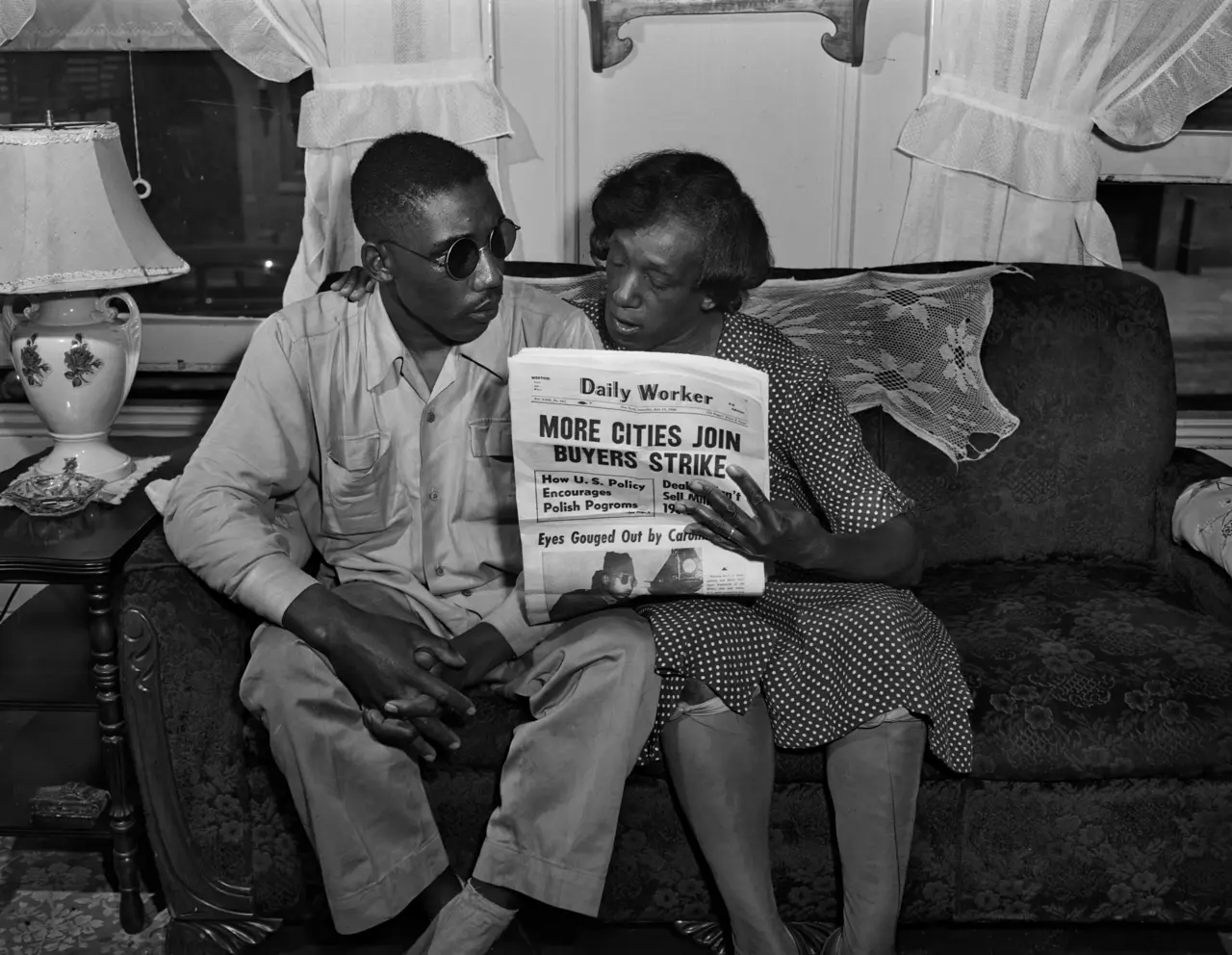
Bringing both foreign and domestic crises together, finally, was the saga of Isaac Woodard, which galvanized activists and brought global attention to South Carolina. A black World War II veteran blinded by police on February 12, 1946, in Batesburg-Leesville, South Carolina, Woodard’s case became a symbol of the brutal attacks on black veterans and their allies that occurred throughout the South after World War II. A backlash similar to the Red Summer of 1919, the post-1945 political and social environment was incredibly difficult and reactionary, but also presented incredible opportunities to SNYC leaders.
The SNYC needed a place to not only bring together their members but a location where a new, militant human rights movement was evolving on the ground. Columbia became that place, due in large part to the work of Modjeska Simkins in welcoming the organization to her hometown.
The 1946 convention in Columbia, South Carolina owed a great deal to Modjeska Simkins. A human rights activist born and raised in Columbia, Simkins had become, by 1946, one of the leaders of a radical human and civil rights movement in the Palmetto State. She became secretary of the South Carolina State Conference of the NAACP in 1941 after working tirelessly in black communities across the state as director of negro work for the South Carolina Tuberculosis Association, and after playing a pivotal role in the formation of the state conference in 1939.
Many years later, in an oral history interview with Jacquelyn Dowd Hall, Simkins argued that the SNYC represented something unique and powerful in the broader human and civil rights movements of the twentieth century. “The power structure,” Simkins stated, “has always feared the combining of the forces of black and white masses.”
This was what the SNYC represented. On the first insert page of the 1946 conference program, the Southern Youth Legislature, which was the organizing body within the SNYC that spoke for the organization, made their demands clear. “We meet in solemn session,” they began, as “militant, courageous Negro youth of the South. Youth. . . . which must and will be served. Youth. . . . dedicated to the struggle for freedom. Youth determined to achieve that freedom in its lifetime.” For members of the SNYC, the opportunity arose to finally make a serious blow against segregation. Or, as the title of Erik Gellman’s groundbreaking 2012 work on the National Negro Congress goes, a “death blow to Jim Crow.”
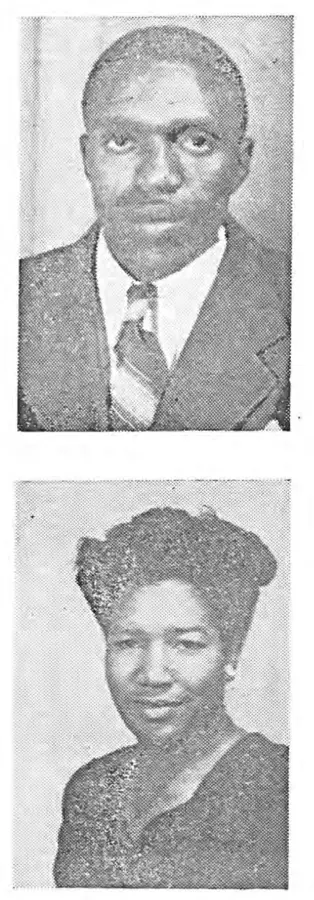
Some of the leaders of the 1946 conference, like Modjeska Simkins or Dorothy Burnham, would become better known throughout the twentieth century for their work in various strands of the civil and human rights movements. Others, such as Columbia SNYC leader Harold H. Poole or Benedict College student Ethel Bigby, are not as well known nationally or even regionally. But they all were pivotal leaders in a movement that, in 1946, seemed poised to tackle the crises that Dr Martin Luther King Jr so eloquently described a generation later: militarism, racism, and capitalism.
Alas, the Second Red Scare at home and the Cold War abroad destroyed the SNYC. The organization was constantly harassed by the FBI and local police forces in the South. Ultimately, the organization was also brought down, like others, due to its alliance with the 1948 Progressive Party campaign of Henry Wallace. Eugene “Bull” Connor — better remembered for his vicious treatment of activists in Birmingham in 1963 — created havoc for left-wing activists in Birmingham.
Its 1946 convention remains the high point of the organization’s history, leaving behind a legacy of activism in South Carolina and throughout the nation. Many of the members of the SNYC, or those affiliated with the organization, continued to be involved in activism deep into the twentieth century. For example, several of the founders of the legendary Freedomways magazine, which between 1961 and 1985 served as a key periodical for the black left, were veterans of the SNYC. Editors and writers such as Esther Cooper Jackson, Louis Burnham, and even Du Bois himself all had significant ties with the organization.
In that sense, the SNYC is part of the larger connective tissue of twentieth century radical social movements — and the 1946 convention in South Carolina was its moment of triumph.
This article originally appeared in Jacobin, a democratic socialist magazine publishing long-form essays and analysis on politics, economics, and culture. Subscribe to the print edition for $20 a year.