
World · Jacobin · · 57m
The Socialist Labor Unionists Who Took On Samuel Gompers
English (original) · Read in Deutsch ⇄
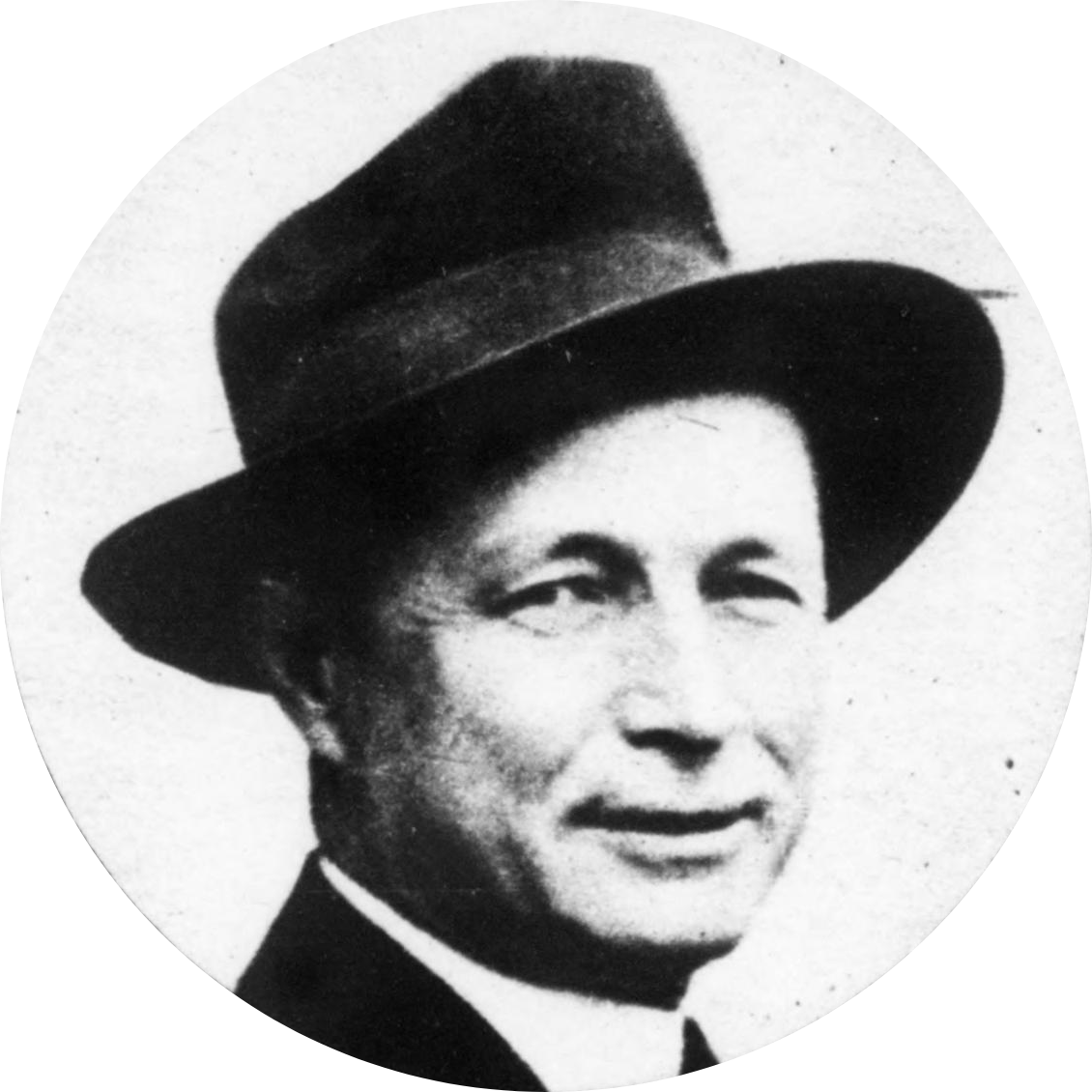
“We have started on a great big national fight with the union movement at stake!” Max Hayes, socialist newspaper editor and union leader, thundered to the assembled representatives of Cleveland, Ohio’s labor movement in the fall of 1909. “The American Federation of Labor will stand or fall as events issue.”
The delegates roared their approval, setting in motion a decisive battle for the soul of organized labor. On one side were Cleveland’s radical left-wing workers, led by Hayes; on the other, the AFL, led by archconservative President Samuel Gompers. At stake was the meaning of solidarity, union democracy, and the future of labor politics — whether the American labor movement would continue to be dominated by conservative business unionists or embark on a revolutionary anti-capitalist path. Though their fight is little remembered today, the socialists came very close to winning. Their ultimate defeat had fateful implications for American unionism in the decades that followed.
“Little Napoleon” and the Socialist Three
Max Hayes was a fitting spokesman for the Cleveland workers. In 1887, the city’s central labor council adopted a radical Declaration of Principles that called for the “emancipation of the working classes” and implored workers not to vote for the “political parties of the capitalists.” Hayes would later recall that “with few exceptions the officers and active delegates of the central body became adherents of the People’s (Populist) and Socialist Labor parties.” Cleveland’s labor council provided a platform for all manner of radicals, including inviting renowned anarchist Emma Goldman to a meeting in 1897. Socialists held key officer positions and ran the Cleveland Citizen, the city’s main labor newspaper. They were the voice, brain, and heart of the city’s labor movement.
Three socialists in particular played a key role — one of their enemies would dub them the “Socialist Three.” Robert Bandlow, a German-born typographical worker (or “typo”), cofounded the labor council and the Citizen. Harry Thomas, a Welsh-born carpenter, was both the lead organizer for the labor council and a Socialist Party delegate to the 1912 Ohio Constitutional Convention.
Hayes, another typo, born in Ohio to immigrant parents, was the third and by far the most famous. In addition to editing the Citizen, Hayes helped organize the Socialist Party of America, wrote and spoke for an international audience, and led the radical opposition movement within the national AFL beginning in 1898.
The record of the Socialist Three was impressive. Under socialist leadership, the labor council grew from a clique of around a half-dozen unions in 1887 to a federation of over one hundred locals by 1902. Hayes led an audacious typo strike in 1905 that won an eight-hour workday. The Citizen uncovered a corporate spying ring, then caused a scandal by exposing the union-busters running William McKinley’s 1896 presidential campaign. Cleveland’s radical working class was a key source of support and leftward pressure for Mayor Tom Johnson, a progressive Democrat who championed union labor and vastly expanded public services during his “nine years’ war with privilege” from 1901 to 1910. Hayes and Thomas drafted Ohio’s workman’s compensation law in the Citizen office.
The AFL, meanwhile, had been dominated by Samuel Gompers since its founding in 1886. Gompers, a British immigrant and onetime Marxist, came through decades of bitter experience to believe only in what could produce immediate, tangible results. His strategy was “pure and simple unionism,” what we would today call business unionism: using economic pressure to extract concessions from employers rather than fighting to replace the capitalist system. To the extent that he engaged in politics, it was to “reward our friends and punish our enemies” rather than to try to build an independent labor politics.
Gompers’s achievements were also impressive. By 1905, the AFL had grown from a few hundred thousand to around two million workers and had won significant gains for its members. But those gains were not shared by much of working class. Rather than industrial unions, which represent all workers in a particular industry, the AFL was largely composed of craft unions, which represented only decently paid skilled workers and excluded the unskilled majority. While this maximized labor’s economic leverage, it also led to unions that were insular, elitist, and often excluded immigrants and people of color.
To socialists like Hayes, the AFL was failing to live up to its role as the representative of the American labor movement. Craft unionism destroyed solidarity and abandoned millions of workers. “Pure and simple” efforts to win economic concessions could never free the workers from the ravages of automation and the business cycle. The socialists believed political action was essential — and not just endorsing the most “pro-labor” candidate in any given election but building a political movement that truly represented working-class interests. That movement, according to Hayes, was the Socialist Party, which was rapidly growing into the most successful socialist political movement in US history.
Hayes and Gompers traded attacks throughout the 1890s and 1900s. Hayes called the compact AFL President “Little Napoleon,” accusing him of using his power to squash dissent and stifle the aspirations of the rank and file. Gompers retorted that Hayes was a phony trade unionist scheming to place the labor movement under the domination of the Socialist Party. “I am a trade unionist; he thinks he is,” Gompers said of Hayes in 1903.
The momentum seemed to be on Hayes’s side. By 1909, after years of socialist agitation, corporate intransigence, and government repression, the left-wing alternative was gaining strength. The AFL’s growth slowed to a crawl, leading many to question Gompers’s leadership. Around that time, rank-and-file revolts overthrew the conservative officers of the International Association of Machinists, the United Mine Workers of America, the United Brotherhood of Carpenters and Joiners, and the Journeyman Tailors Union, to name just a few, with Socialists frequently taking their place. The AFL already included a few industrial unions — most notably the Brewery Workers and the Mine Workers — and many others hoped to follow their example.
The demand for socialist political action was growing, as was the demand for organization along broad-based industrial lines. But Gompers still wielded the power of the presidency. And he set his sights on Cleveland.
The Big Guns
The leadership of the Socialist Three in Cleveland never went uncontested. A vocal minority criticized them for, as they saw it, wasting the labor movement’s time on divisive and quixotic political campaigns rather than focusing on “pure and simple” unionism. These critics repeatedly attempted to dislodge the Socialists from leadership.
In 1906, the conservatives — with the help of an organizer dispatched from the AFL — even managed to temporarily wrest control of the Citizen from Hayes and Bandlow and revoke the radical Declaration of Principles. But the Left put the question to a membership referendum, which delivered an overwhelming victory for the Socialist Three. “So far as the Citizen is concerned,” Hayes declared in the Citizen after the vote, “this announcement closes the chapter on the labor book.”
But he must have known it was only a matter of time before the conservatives tried again. In 1909, Samuel Gompers gave them their biggest opening yet.
That year, the crisis within the AFL reached its climax over a leadership struggle within the International Brotherhood of Electrical Workers. The AFL recognized the conservative incumbent faction and ordered all affiliated bodies to do the same. But Cleveland’s labor council, then called the United Trades and Labor Council (UTLC), backed a rival faction that had the overwhelming support of the rank and file. As Harry Thomas explained, Cleveland would uphold the “inalienable right of the members to revolt against International officers who are wrongfully carrying out the purposes of the organization” as well as “the inalienable right of majority rule.”
The AFL’s response was aggressive and unprecedented. The national executive board summarily revoked the charters of state and local labor bodies across the country that defied its orders. That included Cleveland’s UTLC.
A group of Cleveland conservatives then sprang into action. They announced that they were leaving the UTLC and launching a new, rival organization: the Cleveland Federation of Labor (CFL). Gompers promptly granted a charter to the secessionists.
“God help the labor unions of America if their conditions of government continue as they are,” Hayes raged when the delegates of the UTLC gathered to plan their next move. The UTLC refused to abandon the electrical workers or give up its charter, and Hayes was sent to take up its cause at the 1909 AFL Convention.
As the delegates gathered in Toronto, all eyes were on Hayes. The press and conservative unionists spread rumors that Hayes was manipulating the entire crisis to destroy the AFL and place himself at the head of an independent labor federation. The accusation was ironic, given that the major existing independent labor federation — the Industrial Workers of the World — had invited Hayes to join and he had rejected it in favor of working within the AFL.
“It makes me laugh to note how the big guns and all their little agents watch me like a cat watches a mouse,” Hayes wrote his wife from the convention. “Whenever I move and talk to anyone their little eyes follow and sometimes there are ears near to catch words that may be dropped . . . they seem to fear that I am trying to steal the unions and move them into Socialist headquarters in Chicago.”
Hayes and his Socialist comrades had a different plan: instead of destroying the AFL, take it over. And they came close. In fact, this might have been the closest Gompers came to losing the presidency in over a decade. The labor movement was in an uproar after Gompers overplayed his hand to squash the electrical workers, and a well-organized Socialist faction within the AFL planned to harness the backlash to finally overthrow Little Napoleon. A group of Socialist delegates asked Hayes to challenge Gompers, and he wrote to his wife that he was strongly considering it.
But Gompers was saved — by a prison sentence. News reached the convention that Gompers would likely have to report to prison for defying a labor injunction. Labor closed ranks behind its besieged leader, and the Socialists decided it would be counterproductive to attack Gompers in such a sensitive moment. “After numerous conferences were held,” Hayes recalled, “it was agreed that an attack upon the administration at this juncture would be misinterpreted — that the votes of the opposition would be twisted into an endorsement of the judicial decrees committing the labor officials to prison.” And in a cruel twist, the convention voted to reconsider the electrical workers’ case, but not the cases of the labor councils, like the UTLC, that sacrificed their charters on their behalf.
Yet the UTLC remained defiant when Hayes returned to Cleveland. Members held out hope that their charter could be restored. But their position weakened over the next several months. Member unions were pressured to join the recognized conservative labor council, and they gradually broke from the UTLC.
In April 1910, the UTLC voted to join the CFL en masse, hoping to overpower the conservatives. But at the decisive CFL meeting, the Socialists lost every major vote. The conservatives were now in charge. “After having endured the overbearing rule of the Socialist three, Hayes, Thomas, and Bandlow, for too long,” a leading conservative boasted, “the unions of Cleveland have declared themselves by starting a central body free from politics.”
The Left Defeated
It was not yet the end of Cleveland’s left-wing labor movement. But the monthslong standoff was deeply damaging to the Socialists’ reputation. Within three years, Thomas and Bandlow both died, depriving the movement of two of the Socialist Three. In 1918, Hayes wrote that a comrade wished that he could “bring the movement back to where it was when Bandlow, Thomas and I gave it some prestige.” As its radical conscience dimmed, its leaders grew pragmatic, conservative, and, in some cases, compromised. It was no coincidence that the leader of the CFL secession was caught soliciting ads from union-boycotted firms for his own labor newspaper soon after the CFL-UTLC reunification.
Nationally, rank-and-file revolts continued over the next several years, and Gompers continued to fear Hayes. But he wouldn’t again pose such a dire threat to Gompers’s leadership. Hayes ran a symbolic campaign against Gompers in 1912, drawing a respectable third of the vote but never threatening to actually win. The socialist opposition in the AFL weakened as the Socialist Party suffered from infighting, until it was largely purged amid the First Red Scare and a disastrous strike wave in the early 1920s.
Still, this should not obscure how close Hayes actually got. Had Gompers not been sentenced to prison (a sentence that the Supreme Court ultimately intervened to prevent from being carried out), there was a real chance that Hayes could have unseated him — putting a Socialist in charge of the AFL, the bastion of conservative business unionism. It is a reminder that the American working class, often thought of as docile and or even reactionary compared to its overseas counterparts, was the same working class that shut the country down with mass strikes in 1877, 1886, and 1894; that, in many parts of the country, enthusiastically backed the Socialist Party; that repeatedly ousted the leadership of mighty international unions. It is the same working class that today has withstood five years of union-busting by Starbucks executives, reversed decades of concessions to the United Parcel Service and the Big Three automakers, and defied murderous federal occupations in Los Angeles, Memphis, Minneapolis, and elsewhere.
Gompers’s vision of capitalist-friendly unionism and political pragmatism largely dominated the labor movement over the next century. After a surge of labor militancy and the rise of industrial unionism in the 1930s and ’40s helped produce the New Deal and led to the organization of a third of American workers, Gompers-style unionism reasserted itself in the wake of the Second Red Scare, contributing to the decline of organized labor — which today is weaker than it has been since Max Hayes’s time. But the struggle of the Cleveland workers reminds us that it didn’t have to be this way — nor does it have to stay this way.
Read the full story at the source →
Source: Jacobin