
World · Jacobin · · 1h
The Guns That Nobody Hired
English (original) · Read in Deutsch ⇄
Before “filibuster” meant a very long Senate speech, it was a term for a military adventurer who tried to overthrow a foreign government without official state backing. In the 19th century, US-based filibus-ters launched many expeditions in Latin America — sometimes out of opposition to Spanish colonialism, but more often with the goal of setting up petty dictatorships and overseas citadels for Southern slave capital.
Aaron Burr
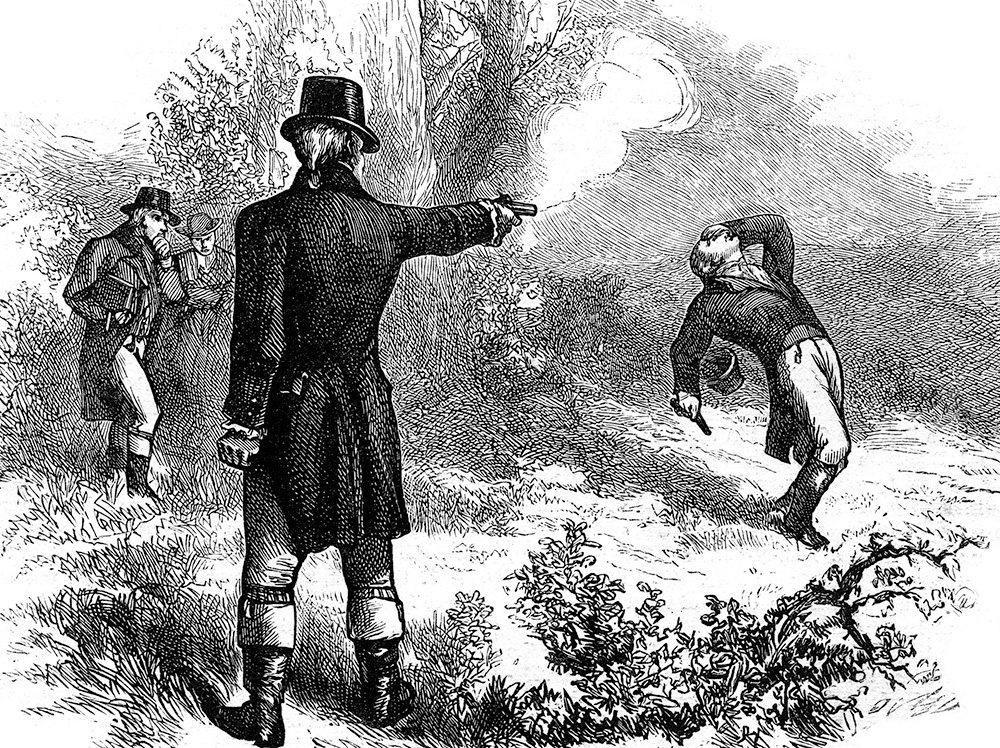
When Vice President Aaron Burr killed his rival Alexander Hamilton in an 1804 duel, his career in US politics was finished. He looked for a fresh start in a new country — a country that he would allegedly try to create himself by conspiring with a group of planters and rogue military officers to seize the Southwest Territory from the Spanish. Upon learning of the plot, Thomas Jefferson charged his former vice president with treason, forcing Burr into exile in Europe.
Francisco de Miranda
In 1806, after serving in the American and French rev-olutions, Francisco de Miranda gained tacit US support for an expedition to end Spanish colonial rule in his homeland of Venezuela. The gambit failed, as did a second British-backed attempt later that year. However, once Venezuela won de facto independence in 1810, Miranda returned to the country, where he briefly became dictator before being arrested and delivered to the Spanish by Simón Bolívar.
Narciso López
The Venezuela-born Narciso López fought against Bolívar as a young man, yet his loyalty to the enslavers of the US South later trumped his alle-giance to the Spanish crown. Aided by leading Mississippi politicians and the man who coined the phrase “manifest destiny,” López and 600 mercenaries unsuccessfully attacked Cuba in 1850, hoping to enlist it as a slave state; he was captured and executed by the Spanish during a second mission to Cuba in 1851.
John Quitman
Illegally supplying rifles to López’s Cuban campaign cost John Quitman his job as governor of Mississippi. Undeterred, he started planning his own assault on Cuba in 1853, with several thousand troops and the private encouragement of President Franklin Pierce. However, amid the controversy over the Kansas-Nebraska Act, Quitman lost the Pierce administration’s backing and had to resign himself to advocating for the expansion of slavery in Congress.
William Walker
William Walker was a rare filibuster who actually succeeded — twice. Driven by his passion for slavery and manifest destiny, Walker invaded north-western Mexico in 1853, founded the so-called Republic of Sonora, and held on as president for a few months. In 1855, with just 60 troops, he seized control of Nicaragua for almost a year, repealing antislavery laws and winning diplomatic recognition from the United States. His exploits were immor-talized in Alex Cox’s 1987 film Walker, which doubled as a satire of the Reagan administration’s meddling in Nicaragua.
Read the full story at the source →
Source: Jacobin