
World Jacobin
The Dollar’s Power Never Came From Oil
The emergence of the dollar as the world’s currency was the result of the rise of the US as the preeminent global power. But the slow erosion of US economic and political power will not automatically
English (original) ·Read in Deutsch ⇄
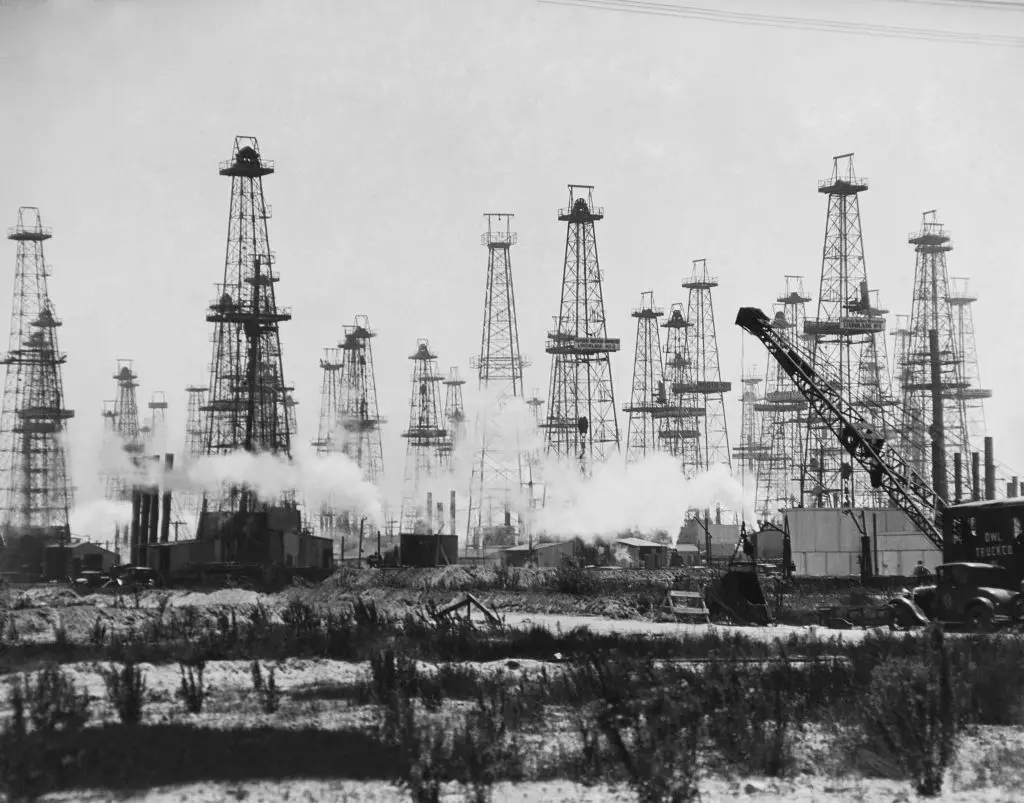
The war in Iran and the disruption of shipping through the Strait of Hormuz have renewed an old debate about the foundations of American global power. Oil has been central to the geopolitical order dominated by the United States since World War II. The dollar is the principal international currency, oil is overwhelmingly priced in dollars, and American military power has been essential to controlling access to petroleum, particularly in the Middle East. The question raised by some analysts is whether the erosion of this arrangement, accelerated by the transition to cleaner sources of energy, signals the end of American hegemony and of the privileged position of the dollar.
There are good reasons to take this possibility seriously. China has become the leading producer of solar panels, batteries, electric vehicles, and many of the technologies essential to the transition away from fossil fuels. The transition to new energy technologies could therefore profoundly reshape the distribution of global economic power at a time when American military superiority is being questioned.
But there is a problem with moving directly from the decline of petroleum to the decline of the dollar. International monetary hegemony does not depend primarily on which commodities are traded, and only secondarily on which country possesses technological superiority in the industries of the future. It rests on a broader structure of fiscal, financial, productive, and military power that has historically developed over centuries. Understanding that distinction requires looking beyond oil to the historical relationship between money and empire.
The Hydrocarbon Dollar Thesis
An influential interpretation of international economic power emphasizes the relationship between energy technologies and geopolitical hegemony. Britain’s rise coincided with the coal-powered Industrial Revolution, while American dominance was associated with the age of petroleum, particularly as oil became essential to modern warfare and transportation. In this interpretation, China’s predominance in renewable energy technologies raises the possibility of another hegemonic transition. Daniel Bessner has suggested that China’s predominance in renewable energy technologies may herald that transition.
Helen Thompson, in her book Disorder: Hard Times in the 21st Century, provides a sophisticated historical version of this argument. She shows how successive energy regimes shaped imperial rivalry, international finance, and the geopolitical conflicts of the twentieth century. For her, oil altered the material foundations of military and geopolitical power, creating a structural disadvantage for Britain and an advantage for the United States. Britain had become the leading industrial and naval power during the age of coal, a resource it possessed in abundance. The transition to oil, initially for naval propulsion and subsequently for motorized transportation and aviation, changed the strategic equation.
In 1911, Winston Churchill, as First Lord of the Admiralty, decided that oil should replace coal in the Royal Navy. Oil-powered ships offered military advantages, but the change created a serious strategic vulnerability. The energy transition forced Britain to import a resource it previously did not need. In addition, the United States possessed an enormous advantage in oil production. Its rapidly expanding oil industry gave it the capacity to supply both its own economy and the Allied war effort. Thompson notes that approximately 80 percent of the oil used by the Allies in World War I came from the United States.
During the interwar period, British governments tried to establish secure supplies through their Middle Eastern concessions. Nevertheless, their reliance on western hemisphere oil persisted. During World War II, Britain again needed oil supplied by American companies, paid for in dollars. Thompson’s point is not simply that oil was a superior energy technology. It is that the geographical distribution of petroleum reserves fundamentally altered the capacity of competing states to sustain modern warfare. More importantly, Thompson’s contrast between Britain’s ascent during the age of coal and America’s ascent during the age of oil suggests that, in the next renewable energy age, based on minerals, batteries, and electrification, China might become the key player.
There is much to this argument. Countries that depend heavily on imported oil are vulnerable to changes in international oil prices and the availability of foreign exchange. The expansion of renewable energy can reduce these vulnerabilities. It may also weaken the strategic importance of oil-producing regions and the influence of countries that dominate them. But reducing the external dependence associated with energy imports is not the same thing as escaping the international monetary hierarchy.
The ascent of the United States implied that the infrastructure of international trade and finance was organized around the dollar — most clearly after the Bretton Woods Agreement in 1944. Many internationally traded commodities, including oil, were priced in dollars. By the 1970s, after the collapse of the Bretton Woods system and the two oil shocks, oil-exporting countries earned large dollar surpluses and recycled their revenues through American banks and Treasury bonds. The petrodollar system thus helped sustain the international demand for the dollar. A conventional fear is that international investors might lose confidence in the dollar and shift their holdings into other assets. If the international demand for dollars is partly sustained by the hydrocarbon economy, then a transition to renewables could reduce that demand and thereby weaken dollar hegemony. In that sense, petrodollars might become eventually battery-renminbis.
However, pricing oil in another currency would not necessarily undermine the international role of the dollar. Foreign exchange markets make it possible to acquire currencies for particular transactions without fundamentally changing the denomination of international debts, the composition of reserves, or the structure of international credit. The critical question is therefore not simply what currency is used to purchase oil, even if that matters. It is why the rest of the world continues to need dollars, and why the United States does not face a comparable need for foreign currencies.
Money and the Fiscal-Military State
Another explanation, developed recently by Ho-fung Hung in Greenback Empire, places geopolitical and military power at the center of international monetary relations. The postwar international monetary order was intrinsically connected to the overwhelming predominance of the United States following World War II. First its wartime allies, and subsequently even its former enemies, Germany and Japan, became dependent on American military protection.The United States also exercised considerable control over access to strategic commodities, particularly petroleum, and maintained close security relationships with major oil-producing countries, even as they sought greater autonomy through the Organization of the Petroleum Exporting Countries (OPEC). Even geopolitical adversaries remained, to varying degrees, dependent on the dollar-centered international financial system. The widespread use of dollars and accumulation of American financial assets cannot be separated from these political and strategic relationships. The resulting system is self-reinforcing. American military superiority supports the international role of the dollar, while dollar hegemony allows the United States to sustain military expenditure and international commitments on a scale that would be considerably more difficult for other countries.
Nevertheless, a fuller explanation requires placing these relationships in a longer historical perspective. The fiscal-military state was central to the development of modern capitalism and the rise of successive hegemonic powers. Public debt, central banking, and military expenditure did not merely support economic development after the fact. They were essential institutions in the creation of modern capitalist economies.
The Bank of England, founded in 1694, was established principally to finance the British state during its wars against France. Public debt became the foundation of an expanding financial market. The central bank helped transform government obligations into liquid financial assets, supporting both private finance and state expenditure. The development of the British fiscal-military state, to use John Brewer’s apt concept, allowed the government to finance its navy, sustain prolonged wars, protect commercial routes, and promote the international expansion of British capitalism. This process helped establish the foundations of sterling’s international predominance. It was not simply that British industrial and naval power made sterling an international currency. The institutions associated with public finance and monetary development helped create that industrial and naval power in the first place.
The same relationship would later emerge in the United States. Government expenditure, public credit, and the creation of financial institutions supported national economic integration and industrial development. Alexander Hamilton understood the significance of public debt and banking institutions for the construction of a national economy. The federal fiscal and monetary apparatus developed further during the Civil War, while the creation of the Federal Reserve in 1913 helped establish the financial infrastructure required for the dollar’s international expansion.
The relationship between fiscal-military and monetary power is circular. The fiscal capacity anchored in taxation, public debt, and central banking makes possible government expenditure on military procurement and research that promotes technological development and military power. These capabilities, together with geopolitical alliances and financial institutions, help sustain the international use of the hegemonic currency as the unit of account in trade and debt contracts, and as the main reserve asset. Monetary predominance then reinforces the original advantage. The hegemonic state can borrow and settle its external obligations in its own currency without having to accumulate foreign exchange as other countries do. It also acquires leverage over the external financial constraints faced by other states through its control over international liquidity and financial infrastructure. Rather than deriving simply from commodity pricing, market confidence, or network effects, monetary hegemony is thus both a product of fiscal-military power and a central means of reproducing it.
How Britain Actually Lost Monetary Hegemony
The transition from British to American hegemony provides a particularly revealing historical example of how currency competition works. It is tempting to associate Britain’s decline with the transition from coal to petroleum, just as it is tempting to interpret America’s current difficulties as a consequence of its attachment to fossil fuels. Energy certainly mattered. Coal was fundamental to British industrialization and naval power, while petroleum became increasingly important for modern transportation and warfare. But the crucial transformation in the international monetary hierarchy occurred through a different mechanism.
During the nineteenth century, Britain was the world’s principal financial center. London supplied international credit, financed trade, and exported capital on an enormous scale. Sterling became the leading currency of international transactions. As Jay Sexton shows in Debtor Diplomacy, the United States, despite its growing productive capacity, remained dependent on British finance. American railroads, infrastructure, and industrial expansion benefited from access to London’s capital markets, which British financial diplomacy helped facilitate. By the beginning of the twentieth century, however, the United States had become the world’s largest industrial economy. Its productive predominance was not yet matched by equivalent international monetary power.
World War I transformed this relationship. Britain entered the war as the leading international creditor but became increasingly dependent on American productive resources and finance. Maintaining its military commitments required massive purchases from the United States, financed through the liquidation of foreign assets and increasingly through American credit. By 1917, Britain could no longer sustain its war effort without substantial American financial assistance. The United States, which had previously depended on British finance, emerged from the war as the principal international creditor. John Maynard Keynes, who worked at the British Treasury dealing with the interallied web of debts, observed that “[i]n another year’s time we shall have forfeited the claim we had staked out in the New World and in exchange this country will be mortgaged to America.”
The transformation of monetary power followed. The creation of the Federal Reserve supported the development of dollar-denominated trade finance. As suggested in Charles Kindleberger’s classic account of the interwar period, The World in Depression, 1929–1939, the economic collapse and the geopolitical turbulence that led to two world wars were intrinsically connected to the global crisis of British hegemony and the absence of a clear hegemonic power. World War II and the establishment of the Bretton Woods system institutionalized American monetary predominance. Sterling continued to play an important international role, particularly within the sterling area, but Britain had become subordinate to the United States.
As David James Gill shows in The Long Shadow of Default, American financial assistance through Lend-Lease, the 1946 Anglo-American Loan, and Marshall Plan aid had cushioned Britain’s decline. At Suez, Washington demonstrated that it could also use its financial predominance to impose constraints. The Suez Crisis of 1956 dramatically demonstrated the limits of American support. When Britain and France, together with Israel, intervened militarily against Egypt following the nationalization of the Suez Canal, the Eisenhower administration opposed their operation. Britain faced a financial crisis as sterling came under speculative pressure and its dollar reserves declined. The United States had the capacity to provide the financial assistance Britain required, but withheld support until the British government agreed to withdraw.
The significance of Suez was not simply that Egypt could disrupt an important petroleum route, as Iran is doing now in the Strait of Hormuz. It was that Britain could no longer conduct an independent imperial military operation when the United States opposed it, because Washington could impose an external financial constraint that London could not escape. Suez did not create Britain’s monetary subordination. It made visible the hierarchy that had emerged through the two world wars. An equivalent moment for the United States would require another power capable of imposing a comparable external constraint on Washington. Disrupting international petroleum supplies is not by itself sufficient, in particular because the United States is not dependent on imports of energy commodities.
The Global Fiat Dollar Standard and the Rise of China
The history of international monetary standards reinforces the argument. The transition from Dutch to British hegemony coincided with the gradual displacement of silver by gold as the principal international monetary standard. The transition from British to American hegemony eventually produced a more radical transformation, namely, the demonetization of gold itself.
The gold standard collapsed during the interwar crisis of the 1930s, although gold remained central to the international monetary arrangements established at Bretton Woods. Under that system, foreign monetary authorities could convert dollars into gold at a fixed price. When President Richard Nixon suspended dollar convertibility in August 1971, many observers expected American monetary predominance to decline. The United States could no longer guarantee the metallic backing of its international liabilities. Yet the dollar did not lose its position as the principal international currency. On the contrary, the eventual consolidation of the global fiat flexible dollar standard eliminated the requirement that the United States settle foreign official dollar claims in gold. The international monetary system remained organized around American liabilities but without the same metallic constraint.
The aggressive reassertion of American monetary power in the early 1980s was central to the restoration of American hegemony, as Maria da Conceição Tavares argued at the time. Susan Strange similarly challenged the conventional view that American structural power was declining. The Volcker shock demonstrated the international consequences of American monetary power. The sharp increase in American interest rates helped produce the debt crisis of the developing world, forcing countries throughout Latin America and elsewhere into painful external adjustment. The aggressive reassertion of American monetary power in the early 1980s was central to the restoration of American hegemony.
This history presents a serious problem for interpretations centered on the material backing of money or the pricing of particular commodities. The disappearance of gold convertibility did not end dollar predominance. The petrodollar arrangements of the 1970s reinforced an already existing monetary hierarchy. They did not create it. Together with the expansion of offshore dollar markets and private international banking, they helped consolidate what Peter Gowan called the Dollar-Wall Street Regime. Neither the deindustrialization of the United States nor the rise of Japan, the Asian Tigers, and China necessarily implies the end of American hegemony or of the international position of the dollar. The Dollar-Wall Street Regime survives even if the United States has been challenged in the productive arena.
The distinction between productive and monetary predominance is essential for understanding the current international order. China has become a leading industrial power and an increasingly important source of advanced technology. In renewable energy, China clearly challenges the productive predominance long enjoyed by the United States. But China does not possess an equivalent position in international finance. The dollar remains the principal currency of international credit, foreign exchange trading, and official reserves. China itself continues to hold substantial dollar reserves, and much of its international lending and trade remains connected to the dollar system. The United States does not face a symmetrical dependence on the renminbi.
This asymmetry is the foundation of American monetary privilege. The United States can finance international commitments and external liabilities in its own currency. Most other countries, including China, must continue to consider their access to the principal international currency. More importantly, the dollar’s position allows Washington to influence the external financial constraints faced by other countries. American sanctions can restrict access to international payment systems and financial markets. Conversely, the Federal Reserve can provide emergency dollar liquidity to selected foreign central banks, alleviating pressures that might otherwise produce financial crises. This ability to impose or relax external constraints is not simply an incidental benefit of the dollar’s international role. It is one of the central mechanisms through which monetary hierarchy sustains geopolitical power.
China’s growing technological capabilities could certainly alter this balance over time. Dependence on Chinese strategic minerals, equipment, and manufacturing capacity already creates vulnerabilities for the United States. But dependence on particular imported commodities or technologies is different from financial dependence on another state’s currency. For a transformation comparable to the British-American transition, the United States would have to become dependent on Chinese-controlled resources or finance under conditions in which China could determine the terms of access. The emergence of substantial international borrowing, credit, and settlement in renminbi could form part of such a transformation, but nothing of the sort is in the cards in the near future.
The Resilience of the Dollar
None of this means that American monetary hegemony is permanent. China’s advances in batteries, electric vehicles, and renewable energy could erode American productive predominance, at least in some sectors. The increasing use of financial sanctions and other coercive measures may also encourage countries to develop alternatives to the dollar. But greater currency competition is not the same as a reversal of the underlying international financial hierarchy.
Britain’s loss of monetary hegemony was ultimately tied not only to its dependence on American production but also to its reliance on dollar financing during the two world wars. Suez demonstrated that Washington could use that dependence to constrain British policy. The United States, by contrast, does not need to borrow in renminbi to sustain its international commitments, and China cannot yet impose a comparable external financial constraint on Washington. China’s challenge to American productive predominance is real, but no significant decline in the dollar’s international market share has occurred. Even if such a decline were to take place, it would not by itself establish a new monetary hegemon.
Indeed, as America’s productive lead and the legitimacy of its international leadership erode, its reliance on sanctions, financial exclusion, and military pressure may increase. The problem may therefore be less the imminent disappearance of American monetary hegemony than its increasingly coercive character. The transition away from fossil fuels is essential for addressing climate change and could substantially reduce the external vulnerabilities of oil-importing countries. But it will not automatically create an alternative international monetary order. To paraphrase John Connally’s famous dictum, the dollar remains America’s currency and the rest of the world’s problem.
This article originally appeared in Jacobin, a democratic socialist magazine publishing long-form essays and analysis on politics, economics, and culture. Subscribe to the print edition for $20 a year.