
Labour · Jacobin · 4h
The Canton–Hong Kong Strike Changed China’s History
English (original) · Read in Deutsch ⇄
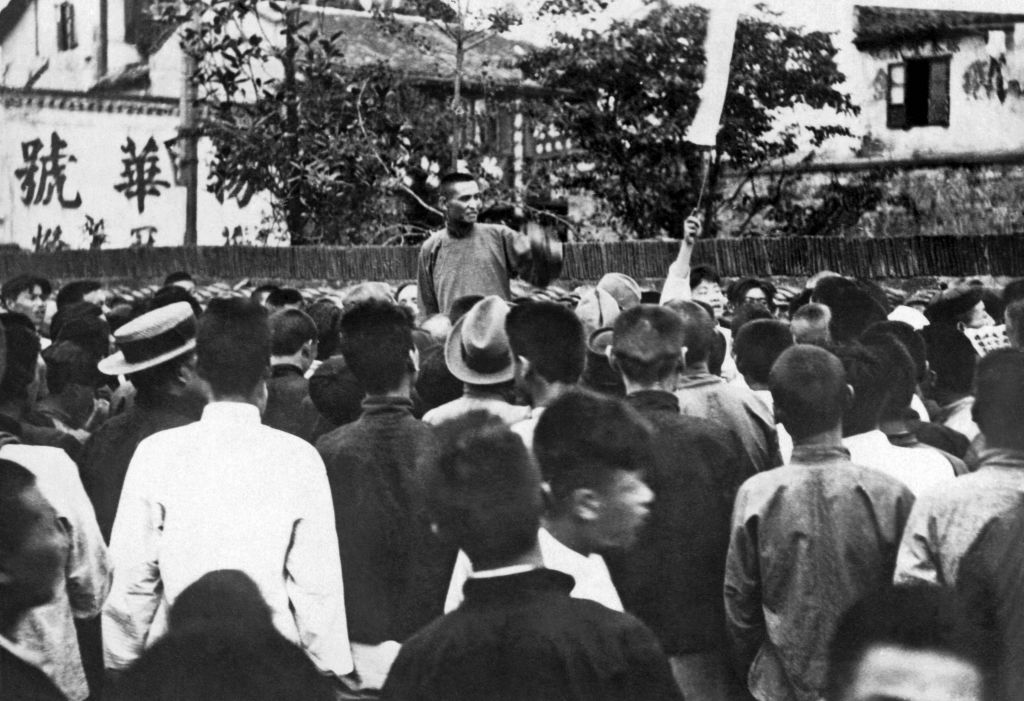
A century ago, workers in Hong Kong and Guangzhou — then generally known in English as Canton — waged one of the longest continuous general strikes in history. At the time, foreign powers such as Britain and Japan had carved China into spheres of influence. Wave after wave of students’ and workers’ movements struggled against this imperialist control, especially the May Fourth Movement of 1919.
This anti-imperialist upsurge reached a fever pitch on May 30, 1925. That day, the police opened fire on students who were marching toward the British-controlled part of Shanghai to protest the murder of a Chinese worker at a Japanese-owned cotton factory during a recent strike.
The May 30 massacre spurred workers in Hong Kong, then under direct British colonial rule, to strike in June. The Canton–Hong Kong strike lasted sixteen months, shutting down a central British commercial outpost. It was also the impetus for China’s national reunification for the first time outside of monarchical rule. Aided by the organizing acumen of a nascent Communist Party of China (CPC), then operating within the big-tent Kuomintang (KMT), Chinese workers governed Canton and paralyzed Hong Kong.
China’s political context has completely changed since the strike. The KMT brutally crushed the CPC six months after the strike’s end, and the Communists retreated from the cities to rebuild in rural areas over the next two decades, eventually managing to defeat the KMT in 1949. The CPC has since led China as a one-party state, the People’s Republic of China (PRC), changing ideological direction in the 1980s and leading China’s turn to capitalism.
Today Beijing has become a global superpower rivaling Washington. The PRC has prohibited workers’ movements from coalescing into independent organizations that can contest for political power. Its official histories have converted the experience of workers’ revolt a century ago into merely an expression of patriotism, and we need to reclaim the memory of that experience.
Those workers built democratic unions to fight imperialism while transforming bureaucratic unions along the way. The strike showed that the working class led Hong Kong’s first struggle for universal suffrage — a demand ignored by the British and still refused by today’s PRC. The strike’s legacy thus offers an alternative to the PRC’s great-power nationalism and chauvinism that is grounded in workers’ independent organization and democracy.
China’s Warlord Era
China underwent a massive political transformation throughout the 1920s. The decade began with disarray and fragmentation. Rival military cliques backed by different imperialist powers divided the country starting in the 1910s. They jockeyed for power after the fall of the Qing Dynasty and former Qing General Yuan Shi-kai’s rule.
By 1928, the KMT had unified the entire country under its rule by defeating these warlords. The party traced its roots to anti-Qing revolutionary groups in the 1900s linked to Cantonese revolutionary Sun Yat-sen. Sun and his followers were mainly intellectuals, supported by some triad-linked brotherhoods and secret societies, advancing a vision of modernizing and unifying China.
In the 1910s, the KMT’s organizational infrastructure and political program were loose and ill-defined. It also lacked a well-organized military unit. This changed when a Cantonese general, Chen Jiong-ming, took power in Canton and welcomed Sun back from exile to his home region in 1920.
Shortly after, Sun broke with Chen and set up a government in the region under a reorganized KMT. The main foreign power that backed him was the Soviet Union. The Bolshevik international strategy at the time rested on supporting Communist forces in alliance with broad nationalist movements to overthrow colonial empires.
With the help of Bolshevik advisers, Sun transformed the KMT into a cohesive political party with a regional base in Canton in the early 1920s. The reorganized KMT allowed Communists to join as individuals while also incorporating China’s weak but emerging capitalist class under its political umbrella. Anti-imperialism became a bedrock of the KMT’s nationalist program, unifying the Left and the Right within the KMT. When Sun died in early 1925, his successor, Wang Jing-wei, continued his alliance with the Communists as the first president of the KMT’s Canton government.
The CPC, formed by revolutionary intellectuals in 1921, began organizing workers in northern and central China. This period saw the organized working class emerging for the first time in China’s political arena. Workers resisted rampant labor abuses and exploitation, exacerbated by the competition between foreign firms and local employers as industry started to develop in China. Although anarchists and Communists led some of these struggles, traditional guilds and other conservative labor organizations dominated many workers’ organizations.
The influence of reactionary labor forces was particularly acute in Canton and Hong Kong, where craft guilds, corrupt “yellow” unions, and triad-linked secret societies were the main tendencies organizing workers. The KMT enjoyed great prestige in these regions during the early 1920s, especially among militant workers deeply inspired by their kinsman Sun’s nationalism.
All this made it hard to organize workers independently. Canton had little by way of large-scale heavy industry, unlike China’s other major cities, like Shanghai. Most Cantonese workers were scattered across small-shop handicraft and household industries. Hong Kong had more modern industries, mainly British monopolies, like transport, utilities, commerce, and shipbuilding.
Though divided in terms of sovereignty, workers in Canton and Hong Kong shared strong bonds. The Chinese in Hong Kong were mostly migrants from other provinces. The great majority came from Canton, which was adjacent to Hong Kong. These links were crucial for workers’ solidarity during the strike. Nonetheless, compared with the north, conditions in the south did not seem as favorable to the growth of an industrial union movement.
The Strike’s Outbreak
When the CPC sent its best labor organizer, Deng Zhong-xia, to Hong Kong to organize a general strike in solidarity with Shanghai’s anti-imperialist movement, he thus had few expectations of success. Deng came from a different region and spoke a different dialect: he relied on a Hong Kong Communist worker, Su Zhao-zheng, who had led a seamen’s strike in 1922, to build trust with Cantonese workers.
Still, Deng was not completely unknown among the Cantonese workers. As the early CPC’s main labor leader, Deng had just organized China’s second national labor congress. This congress proved pivotal for the party in clarifying a labor strategy that it put into practice in the Canton–Hong Kong strike.
Held just before the May 30 massacre, this gathering called on workers to form their own organizations independent from the bourgeoisie. It also established that workers’ economic and political struggles were inseparable. In other words, Communists had to extend the scope of workers’ struggles for better working conditions to fight the alliance of the capitalist class with warlords and imperialists.
Some of Canton and Hong Kong’s most powerful unions, such as the employer-friendly mechanics’ union, boycotted the congress and protested its militant tone. Deng knew he would face the difficult task of dealing with these unions as he arrived in Hong Kong. But when Deng and Su held a cross-union meeting to call for a strike, a majority, including these yellow unions, voted to authorize it.
In a later reflection, Deng suggested that even corrupt union leaders believed they could benefit from a strike at that moment. They were keen to siphon money from the strike fund and increase their prestige and power in the labor movement. The CPC leaders also helped persuade the yellow union leaders by inviting them to participate in the strike committee.
But there was another crucial element to the strike vote. The massacre in Shanghai was a turning point for Cantonese workers’ hatred of British imperialism. Sensing this opportunity, Deng, Su, and the CPC’s Hong Kong branch — then only a handful of dockworkers and students — went directly into the factories to agitate the workers. Though the seamen’s union was taken over by corrupt leaders after the 1922 strike, seamen and dockworkers still revered Su, who easily rallied them for the general strike.
As historian Daniel Kwan has documented, another CPC cadre, Yang Yin, passionately appealed to a sense of patriotism in seeking to persuade even triad and secret society labor leaders that they had a role to play in a time of national crisis. Thus, as Deng explained, the CPC had a two-pronged strategy: persuading union leaders directly while also agitating among workers to push their own leaders to act.
Despite their support, many conservative labor leaders dragged their feet, resulting in the CPC-friendly unions — led by tram workers, seamen, typesetters, and foreign-firm workers — striking first on June 19. But the feelings of anger and restlessness among the union’s rank and file were too strong for Hong Kong’s conservative union bureaucracy to contain.
Rank-and-file mechanics struck on their own without official approval from their union leadership. The seamen even physically threatened their union leader to issue an order to strike. If he refused, the workers declared, they would “greet him with their fists.”
The Canton–Hong Kong strike uplifted the anti-imperialist demands coming from the movement in Shanghai to abolish China’s unequal treaties with imperialist powers. But its horizon did not stop there. The strike demands were as follows:
absolute freedom of the Chinese to gather, organize, speak, publish, and strike;
equal treatment of all Hong Kongers, whether Chinese or Western, under the law, and the immediate abolition of all laws and actions targeting Chinese residents for deportation and cruel punishment;
every Chinese worker must be granted the right to vote, to satisfy the basic principle of universal suffrage;
the introduction of labor laws, including an eight-hour day and a minimum wage, the abolition of contract labor, improvements to the livelihoods of women and child workers, and the implementation of workers’ insurance, with representatives from labor unions included when drafting these laws;
the cancellation of proposed rent increases on July 1, with a 40 percent cut to rents instead;
freedom of residence to the Chinese in Hong Kong.
The strike combined economic and political demands that identified the roots of the workers’ exploitative conditions in colonial rule. Most significantly, it was the earliest moment at which Hong Kongers demanded universal suffrage in a mass movement. This echoed the early CPC’s demand for a wider struggle for democracy across China. The strike showed that the working class was the vanguard of Hong Kong’s fight for decolonization and democracy.
A massacre by British troops transformed the strike into a mass movement. On June 23, one hundred thousand people from Canton held a march to Hong Kong in solidarity with the strike. When they passed by Shaji Road, British soldiers in the occupied district of Shamian across the river opened fire and killed dozens of protesters.
The massacre drastically broadened the scale of the strike. Workers demanded that London compensate and apologize for the killings. Tens of thousands of workers in Hong Kong then joined the strike and left for Canton.
Striking Through Workers’ Democracy
The strike had a major impact on Hong Kong. The central strategy was to block access to Hong Kong for sea traffic. Two months in, the strikers decided to only target British ships, a boycott that lasted until October 1926. This strategic shift discouraged Cantonese merchants from opposing the strike and prevented a united front among imperialist powers from crushing it.
Meanwhile, Hong Kong was in a state of shambles. Deng recalled that the number of ships passing through Hong Kong in 1925 was only 16 percent of the 1924 level. Hyperinflation reigned, and the city’s major industry, shipping, almost ground to a halt. Hong Kong’s financial institutions nearly went bankrupt. Rocked by its own wave of labor unrest back home, London had little will to amass a military invasion force that could end the strike.
CPC cadres organized workers to maintain the strike with a highly disciplined formation governed by a robust democratic structure. The highest decision-making body was the Strikers’ Delegates Congress, which featured eight hundred delegates from unions, each representing one hundred workers. This body met every second day for more than a year to discuss the strike’s direction and organization. The committee openly published its minutes and resolutions in a magazine, Workers’ Road, that the strikers closely followed.
The other main leadership body was an elected strike committee, chaired by Su, that was responsible for implementing the decisions made by the congress. Beneath the committee and congress were a host of departments in charge of different types of organizing, from coordinating finances and other logistical tasks to political education.
The CPC built influence by helping to design and administer this efficient structure. It also provided political leadership by enabling strikers to participate in these institutions of workers’ democracy. Deng and other party cadres led an advisory committee that helped develop resolutions for discussion and debate in the congress.
CPC cadres mobilized workers’ representatives to put forward motions and win others over to their tactics and positions. They organized worker leaders to read articles from Workers’ Road to strikers patrolling to enforce the boycott before their duties each morning, so workers could stay informed about political affairs.
This guidance provided a mostly illiterate population of workers with an invaluable opportunity to practice expressing themselves politically and making decisions on how society should be run. All of this was still being organized under the aegis and financial support of the KMT regime, but Deng hoped that these experiments in workers’ democracy could develop into the seeds of a workers’ soviet. He even called the Strikers’ Delegates Congress the “herald of the future Chinese workers’ government.”
For over a year, the scale of the strike expanded so much that the strikers’ organization became nearly indistinguishable from regional governance itself. The congress tasked workers with forming groups to patrol provincial borders and ports, making sure that British goods did not circulate. This “patrolling” often involved violent battles, as the strikers clashed with smugglers and other disrupters. Over a hundred workers lost their lives throughout the course of the strike in these pickets.
One early threat to the strike came from Chen’s troops, who now received British support. But the workers’ patrols were so militarily effective that Wang could mainly rely on them to defeat Chen. These patrols practically became a workers’ militia that defended the authority of the strikers’ congress and the jurisdiction of the KMT itself.
The success of the strike and the anti-Chen campaign initially strengthened the influence of Wang and the KMT’s left wing over the Canton KMT government. Wang largely left the congress in charge of the strike, and the strike committee commandeered and repurposed civic spaces to conduct its daily affairs. It ordered gambling houses, brothels, temples, and clan buildings to be turned into hostels and dining halls for strikers.
The congress even set up its own court to arbitrate any disputes that arose during the strike. This court became a democratic judiciary that partly ran the city. An American correspondent from The Nation declared it to be “the only court in China where civil cases were properly tried.”
The strike was an occasion for Cantonese workers to practice governing through workers’ democracy in a region long mired in conservative trade unionism. The congress empowered workers to elect their leaders, formulate structured political proposals, decide on political priorities, and act collectively to execute these decisions. Workers debated and passed nearly three hundred political resolutions within a year of the strike.
The resolutions broke with many long-standing Cantonese union practices. For one, they mandated unions to be organized democratically with an elected committee, hold regular meetings, and act as vehicles for class struggle. As historian Jean Chesneaux noted, workers formed over eighty unions within a year of the strike, and elected committees ran all but twelve of the 168 Cantonese unions at its height.
A Cross-Class Alliance?
At the strike’s height, as Chesneaux described, “the strategy and organization of the strike were essentially in the hands of Communist cadres, and neither the nationalist government nor the people of Canton had any illusions about this.” But the inability of the Communists to form genuinely independent workers’ organizations ultimately contributed to the strike’s failure.
At the beginning of the strike, the CPC was able to contain the ambitions of Canton’s merchants. It would have been impossible to gather broad union support for the strike without some compromises. The decision to narrow the scope of the boycott to just British goods meant there would be less competition and more profit for the local bourgeoisie. Deng summed up the CPC’s approach toward this conditional alliance as such: “Not yielding a foot in important matters, but being flexible in secondary matters . . . we will find a way to divide their forces later.”
The power of the Communists lay in being the most organized force in the strike committee. Deng argued that the best way to combat the reactionary unions was through workers’ democracy. This meant centralizing major decisions in the congress, where striking workers were most concentrated and had the most power to decide on their own affairs. They opposed their corrupt union leaders by contesting their tactics in open view of the elected representatives of the working class.
At the same time, the Canton CPC was not visible enough to organize workers independently from the KMT. The KMT was responsible for a significant amount of the funding of the strike, supporting the strike committee with a sizable monthly stipend to run its affairs. Though the KMT played a passive role in the strike, it nevertheless ran the Canton administration and backed the strike committee.
The dual party affiliations of the Communists and their deep involvement in the day-to-day spadework of the strike made it hard to concentrate on recruitment into the CPC. Even when striking unions represented over 150,000 workers one year into the strike, there were still only around three hundred party members. Despite the power of the congress, it did not express a political infrastructure independent from the KMT into which the CPC could rally workers.
This lack of class independence was the key weakness of the Communist strategy. The Communists were unable to organize workers under their own banner and program. This left an opening that the capitalist class and the KMT right could exploit.
A Turn of Fortune
The Left’s hegemony was never quite secure. The cracks were showing even at the height of the strike committee’s power. Less than two months into the strike, Liao Zhong-kai, one of the top pro-Soviet and left-wing leaders in the KMT Executive Committee, was mysteriously assassinated. Many suspected the KMT right, but no proof was ever found.
Liao’s assassination did not immediately benefit the KMT right. Wang ousted a few leaders of the KMT right such as Xu Chong-zhi, who led the KMT armed forces. By early 1926, however, the KMT right discovered a new champion — Chiang Kai-shek. Chiang was a KMT military officer who rapidly rose in the KMT ranks after taking leadership of the KMT armed forces after Xu’s dismissal.
Publicly, Chiang supported Wang’s maneuvers against the right after Liao’s assassination. He helped unify newly trained KMT military forces and the strikers to defeat Chen. But privately, Chiang sympathized with the KMT right’s anti-communism and waited for his moment to act against the Left.
Chiang found his first opportunity on March 20, 1926. He accused a pro-Communist KMT navy captain of starting a coup. With this excuse, he abruptly declared martial law in Canton and mobilized KMT military units loyal to him to round up and detain Communist strike leaders. The Communists were caught completely off guard.
However, Chiang knew it was not yet the right time to fully smash the Left. The national priorities of both parties were shifting. Thanks to the strike, the KMT had grown into a strong regional power with a base in southern China. Popular fervor against the imperialists and warlords continued to stir across the nation. Both the KMT and the CPC agreed that it was an opportune moment to launch a national military campaign heading north to defeat the warlords and unify China.
The KMT had a different conception of what fighting imperialism meant than the CPC. For the former, breaking with imperialism was necessary only insofar as it allowed the Chinese bourgeoisie an equal chance to develop and compete in capitalist markets. For the latter, the goal was to overthrow the imperialist system, summon a national people’s assembly, and eventually found a workers’ state.
The Communists in Canton were caught in a difficult position. They knew that much of their support with the working class still rested on a united front with the KMT against the British. The workers still overwhelmingly identified with the KMT, whose stature was further enhanced by its support of the strike.
While Chiang wanted to eradicate the Communists from the KMT, he needed them to mobilize the masses for the campaign, so both sides compromised for now. Chiang backed off and released the Communists who had been arrested. He publicly criticized the KMT right and promised to preserve the alliance with the Communists.
At the same time, he pressured Wang to resign and temporarily leave the country and decisively solidified his control and that of the military over the KMT. Chiang also required the Communists to hand over their list of members in the KMT and agree not to control more than a third of any KMT city, regional, or national party committees.
The End of the Strike
Chiang’s show of force was the beginning of the strike’s drawn-out end. The CPC’s reaffirmation of the united front exposed their weaknesses to the KMT right, which rapidly gained power over the KMT in the ensuing months. Without organizing workers to oppose the KMT’s attempted assault on their ranks, the Communists let the KMT right push their limits, and Chiang began disarming the workers’ pickets as early as April. By May, the KMT right controlled the KMT Executive Committee.
The Chiang-led KMT began openly calling for a strike settlement and strengthened KMT police authority over the congress. The government curtailed the strike committee’s ability to make arrests and reopened some businesses that had been used to house strikers since the previous June. Yellow union leaders began pushing back against the strikers’ authority.
By the summer, the CPC itself was divided over whether to end the strike. Some saw the strike as a distraction from the Northern Expedition, while other cadres, like Huang Ping, argued against the view the striking during the expedition was “counterrevolutionary”: “We might as well tell workers that they should not eat during the expedition, as eating would be counterrevolutionary.”
The negotiations with the British, led by the KMT rather than the strikers, stretched on until October. In the end, the strikers won few of their original demands.
The Northern Expedition was a success, at least by the KMT’s standards. In March 1927, the KMT army, supported by the CPC, entered Nanjing. But many of the original Cantonese strikers who formed the popular base for the Northern Expedition did not make it that far. The KMT military dismissed many along the way and left them with few provisions.
But the worst was still to come. Shortly after entering Nanjing, Chiang’s KMT finally purged the Communists for good. It hunted and shot thousands of Communists in the following weeks. The CPC organized scattered rebellions in different cities, including Canton, to resist. But all failed disastrously. Wang soon also joined Chiang and helped purge the Communists (Wang later turned further to the right and led Japan’s puppet regime in China during World War II).
Only one in six CPC members survived 1927. The CPC’s connection to the urban working class was severed for two decades. At first, Deng evaded arrest and continued to organize underground. But in 1933, the KMT finally captured him in Shanghai and executed him.
A Legendary Tale
The CPC’s rebirth is now a legendary tale. Throughout the 1930s, the remnants of the party rebuilt its forces under Mao Zedong’s leadership in the countryside, eventually defeating both Japan and the KMT. But the CPC that eventually took power in 1949 fostered a different relationship with China’s industrial working class than before.
By then, the party needed the working class for nation-building and sovereign development. The idea of workers’ democracy that the 1920s CPC had cultivated gave way to the practice of a ruling party that alone claimed to represent the entire class, permitting no alternatives.
The Canton–Hong Kong strike remains a part of the PRC’s nationalist mythmaking. Last year, the Hong Kong Federation of Trade Unions’ centennial event mainly praised the strikers as “patriotic,” with little attention to how they organized. Hong Kong’s labor secretary, Chris Sun, declared that the strike’s legacy involves Hong Kong “fully taking advantage of its privileged position as an international financial center.”
A hundred years ago, the CPC did not see patriotism as an end goal, but a way to bridge workers’ national consciousness to a larger fight for socialism. Ultimately, Deng and his comrades failed to move the workers toward a socialist movement beyond national reunification. The strike’s failure shows that nationalism is not enough to build workers’ movements to dismantle capitalism.
This lesson is salient for Chinese workers today, at home and overseas. China’s emergence as a capitalist superpower means that Chinese national consciousness is no longer simply an expression of the oppressed. It has a progressive side, when Chinese and Chinese diaspora workers resist US imperialism and chauvinism. It also has a reactionary side, when the PRC subordinates workers’ power and democracy to great-power nationalism.
The strike’s centennial should remind us that Hong Kong’s long and incomplete fight for democracy began with workers’ struggle. Like the European working classes in 1848, Chinese workers did not win power. Still, they once governed on a regional scale, with little at their disposal. When they did, they dealt a major blow to imperialism and unified their country. Today, in a world wrought by new imperialist powers and a crisis of democracy, the Chinese working class has no dearth of world-historic tasks it can still accomplish.
Read the full story at the source →
Source: Jacobin