
Politics Jacobin
The American Woman Who Joined Algeria’s Socialist Experiment
Elaine Mokhtefi has died. The Jewish New Yorker was the only American to serve in Algeria’s government after independence, and she spent a decade at the center of the Third World revolution.
English (original) ·Read in Deutsch ⇄
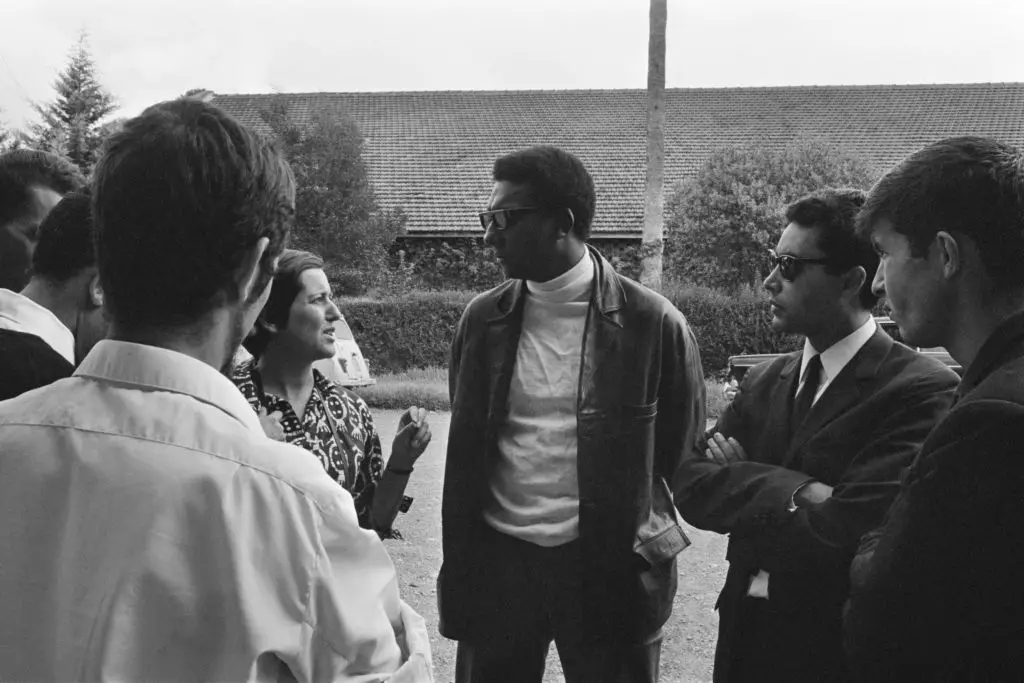
Within days of arriving in Algeria, months after its liberation from France in 1962, Elaine Klein knew she was there for the long haul. “The experiment to create a new socialist country from the impoverished colony, the tremendous task of building a state respected in the international arena, was daunting,” she later wrote. Yet, “My gut told me that I would settle here.”
Her intuition was correct. For more than a decade, the Jewish New Yorker was the only American in Algeria’s new government. She assumed a range of roles — reporter, translator, envoy — as the former French colony established itself as an international haven for resistance groups, political dissidents, and anti-colonial organizers. Klein was not the only one taking on new responsibilities. A national program of popular self-management, or “autogestion,” was implemented soon after the revolution, giving the Algerian people ownership of the farms, businesses, and buildings abandoned by fleeing European settlers.
A coup led by military chief Houari Boumédiène overthrew the first postcolonial government. The autogestion experiment largely ended, though Boumédiène kept trying to close Algeria’s wealth gap and resist economic subordination by the Global North. Klein also continued to cover progressive and socialist assemblages around the world on behalf of the national press agency, Algérie Presse Service. When the Organization of Latin American Solidarity gathered in Cuba in 1967 to form a united front against US imperialism, she attended a press conference where Stokely Carmichael called “white Western imperialist society” the “common enemy” of all the delegates present and declared, “Our struggle is to overthrow this system which feeds itself and expands itself through the economic and cultural exploitation of nonwhite, non-Western peoples.” Klein took the opportunity to invite Carmichael to visit Algeria later that year: his first trip to the African continent.
Into the early 1970s, she served as a sort of domestic ambassador for other Black Panthers and leaders of international revolutionary movements who flocked to open offices in Algiers, a city dubbed the “Mecca of Revolution” by Pan-African Bissau-Guinean poet Amílcar Cabral and the “third world capital” by Klein. Her work brought her under the scope of a vast CIA operation aimed at uncovering foreign involvement in domestic protest movements within the United States. The FBI’s COINTELPRO initiative helped drive a wedge between the international wing of the Black Panther Party, which Klein helped establish, and their US-based counterparts. After more than a decade in Algeria, Klein herself was forced to leave when she refused to spy on a friend for the Boumédiène regime.
Her idealism, however, never wavered. Until her death this September, she followed an irrepressible impulse to stand with other humans fighting for freedom and self-government, no matter where they were. And despite the remarkable role she played in some of the twentieth century’s most historic anti-colonial, social ownership, and civil rights movements, she never thought of herself as anything more or less than a world citizen.
Revolution in the Third World
Klein first encountered the Algerian anti-colonial movement at the 1952 May Day parade in Paris. She had moved to France months earlier, after being pushed out of her job in New York with the United World Federalists (UWF). The UWF, part of an emerging “world government” movement that aimed to eradicate war and establish a system of global justice, had fractured due to internal divisions and external pressure from US authorities, a process that would recur with many causes Klein championed over time.
After moving to Paris, she began learning the history of decolonization in North and West Africa through work as a French–English conference interpreter. In 1960, the year that eleven African countries — including nine former French colonies — became independent, she helped organize a congress in Ghana, the first African state to shake off colonial rule. There she developed a fast friendship with Frantz Fanon, whom the Algerian provisional government had recently named their ambassador to Ghana.
Back in New York later that year, Klein met the Algerian provisional government’s representative to the United Nations. He hired her on the spot to write promotional material and lobby for Algerian independence at the United Nations. On December 19, 1960, those efforts would pay off when the General Assembly voted 63–8 to recognize Algeria’s right to self-rule. (The United States and twenty-seven other countries abstained.) As Mokhtefi later told me, the unexpected job was a long-awaited opportunity for “digging in” and “getting my hands dirty” in the decolonization cause that she had long supported.
When France recognized Algerian independence in the summer of 1962, a brief power struggle ensued inside the National Liberation Front, the party that had led Algeria’s revolution. One of the Front’s original leaders, Ahmed Ben Bella, and Boumédiène, the head of his army, took control of Algiers in September. Klein arrived in October and started working for the tourism authority, a largely theoretical job in a country that would receive no tourists for years to come. Upon learning she was from New York, Ben Bella’s press and information adviser hired her as his assistant. From there, she was transferred to the government’s secretary general, an office that produced agendas, reports, and press releases for meetings of Algeria’s cabinet. Finally, she was moved to Algérie Presse Service, where she wrote daily op-eds and became the entire “English desk.”
Ben Bella was an outspoken adherent of Third Worldism, the anti-imperialist, anti-racist movement through which current and former colonies united to resist oppression by European powers as well as, eventually, the American and Sino-Soviet blocs during the Cold War. Third Worldists, as political scientist Robert Malley put it, had an “uneasy coexistence” with the Eurocentrism and cultural superiority embedded in some Marxist theory; Friedrich Engels in 1848 had described France’s conquest of Algeria as “an important and fortunate fact for the progress of civilization.”
Yet following the 1962 exodus of French colonists, or “pieds noirs,” socialists from around the world flocked to Algeria, drawn by the revolutionaries’ vision of a more democratic, egalitarian state. These foreigners would become known as “pieds rouges” after Ben Bella’s overthrow ousted many of them from Algeria too. Among them was the Greek Trotskyist Michalis Raptis, aka Michel Pablo. While leading the Fourth International during the 1950s, Pablo had devised a counterfeit-money scheme to buy weapons for Algerian revolutionaries on the world market and had established an arms factory for them in Morocco.
Soon after Pablo arrived in independent Algeria, he became an economic adviser to Ben Bella, presiding over the campaign of “autogestion” that put the nation’s resources under popular control. Modeled on similar experiments in Cuba and Yugoslavia — countries that also sent medical teams to Algeria to help replace the European health care personnel who had fled — Algeria’s self-management program established worker-run committees to oversee the farms, industrial enterprises, and estates left behind by the colonial regime. After attending an Algerian congress on industrial self-management in 1964, the Trotskyist French militant Daniel Guérin wrote that the event had been “dominated” by the emergence of “a working class, of a socialist awareness.” Ben Bella himself embraced socialism at public rallies and within his government, opening a National Office for the Support of the Socialist Sector.
This enthusiasm was short-lived, however. Ben Bella’s other advisers persuaded him to fold the socialist sector support office into the agricultural ministry and to exert more central control over the self-managed farms, giving rise to a corrupt bureaucracy. While the National Liberation Front continued to publicly tout Algeria as a self-managed socialist state, the country slipped further from that ideal. “Power and increasing adulation isolated [Ben Bella] from a truthful examination of events,” according to Klein. “He launched new national projects every day, but neglected the measures required to implement them; he created offices and agencies that functioned in name only.” Ben Bella also began to take more punitive measures against domestic dissidents, arresting, torturing and banishing those who criticized him.
Three years after Algeria had won its independence, Boumédiène led a coup in which Ben Bella was arrested. It was the result of an internal power struggle more than an ideological rift; Boumédiène would continue to pursue some of the same progressive social policies and redistribution measures as his predecessor. But many pieds rouges, including Pablo, were branded foreign atheists and forced out of Algeria. Klein stayed, even though she had joined popular protests against the coup. Her fluency in English and French — a rare combination in postrevolutionary Algeria — had made her useful to the foreign affairs minister, Abdelaziz Bouteflika, a key ally of Boumédiène. “Hope remained that one day everything would be put right,” Klein later wrote. “And we all went back to work.”
Panthers, Trotskyists, and G-Men
In the summer of 1969, two years after she had invited Carmichael to Algeria and shown him around the country, Klein received a call that another Black Panther leader was in Algiers — and needed her help establishing a permanent presence there. Eldridge Cleaver had fled the United States several months earlier after exchanging shots with Oakland police the night of Martin Luther King Jr’s assassination. For Klein, who had protested racial segregation in the United States since college and reported on the rise of the Black Panther Party for the Algerian press, the opportunity to work for the Panthers was thrilling. As with many in the Third Worldist movement, she saw anti-racist and anti-colonial activism as inseparable.
Klein helped formalize Cleaver’s status in the country by involving him in the world’s first Pan-African Cultural Festival, which she organized in Algiers soon after his arrival. She also helped Cleaver and other Panthers establish the party’s international branch there, and accompanied his wife Kathleen on a speaking tour back in the United States. As Cleaver settled into Algeria, he took a more militantly anti-American stance and strengthened the Panthers’ Third World, anti-colonial bona fides through new alliances with figures such as North Korea’s Kim Il Sung and the Palestinian Fatah leader Yasser Arafat. In a 1971 interview with a San Francisco radio station, Cleaver proudly claimed that Black Panther members serving in Vietnam had switched sides, fighting against the US war effort there.
These moves clashed with the priorities of the US-based Panthers, who, depleted of personnel and funds by the number of Panthers who had ended up in prison, were trying to put more resources into peaceful community service programs. In March 1970, as part of its COINTELPRO effort to “expose, disrupt, misdirect, discredit, or otherwise neutralize the activities of black nationalist, hate-type organizations and groupings,” the FBI’s second most powerful official recommended that the Bureau send Cleaver a letter “aimed at inflaming the dispute” by telling Cleaver he was being undercut by US-based Black Panther Party leaders. One year later, as Cleaver was on the brink of completely falling out with one such leader, Huey Newton, J. Edgar Hoover endorsed a plan to send Cleaver and Newton spurious correspondence designed to “provoke the existing difficulty” between them. One fake letter purported to show Newton denouncing Cleaver to Boumédiène.
Tensions between the Algerian government and the Black Panthers, meanwhile, had been building, exacerbated by the Panthers’ disinclination to integrate into Algerian society. There was also a fundamental contradiction between the goals of the Algiers-based Panthers and those of the Algerian government. For Cleaver, the Black Panther Party had a singular objective: overthrowing the US government. But Algerian leaders wanted to limit their military aid to freedom fighters trying to liberate their countries from foreign colonization.
The mutual frustration between the Algerian authorities and their American guests peaked in August 1972. That month, members of the Black Liberation Army, a splinter group started by former Black Panthers who had rejected Huey Newton as too moderate, hijacked a Delta flight from Detroit destined for Miami and landed it in Algiers. They planned to donate their $1 million ransom from the airline to the international Black Panthers, but Algerian authorities confiscated the funds and returned them to Delta. When Cleaver demanded the money, local police raided the Panther villa and took their weapons. Cleaver was never officially deported, but with other Panthers also leaving Algiers, he decided to leave.
To extract Cleaver from Algeria, Klein enlisted the help of none other than Michel Pablo, who had fled to France after Boumédiène’s 1965 coup. The former Fourth International secretary and Ben Bella adviser who had once counterfeited money to supply arms to Algeria’s revolutionary army sprang into action once more to help a different kind of revolutionary leave Algeria. Pablo gave Klein the number of a “passer” who could meet Cleaver at the Geneva airport and covertly drive him over the border into France. Pablo also supplied her with a “classy British passport with a photo of a Black man who could have been a younger Eldridge,” as Klein wrote in her memoir. She arranged a safe house for Cleaver and helped him find French lawyers to petition for his asylum there.
Klein’s own position in Algeria was becoming more precarious under Boumédiène’s regime. In 1972, security agents asked her to spy on a friend of hers who had married Ben Bella, and she refused. Two years later, Klein herself was forced into exile from the country to which she had devoted her life. But she had a companion by her side. Two years earlier, a mutual friend had set her up with Mokhtar Mokhtefi: a dashing hero of the Algerian Revolution, who was also rapidly growing disillusioned with the authoritarian turn of the post-independence leadership. When Mokhtefi ended up in France, Mokhtar followed, and they lived there for two decades, doing a mix of odd jobs — from making jewelry to writing children’s books — before moving to the United States in 1994.
As she forged a new life first in Paris and ultimately in New York City, Algeria underwent its own identity crises and political convulsions, straying even farther from the socialist ambitions that had defined its early years of independence. When Bouteflika — the Boumédiène-aligned foreign affairs minister who had used Klein’s translation services in the 1960s — became president of Algeria in 1999, he shored up his power by enriching a small group of oligarchs at the expense of the general population.
Twenty years into his presidency, Bouteflika was forced out of office by the largest popular opposition movement in Algeria since the revolution that had launched his political career sixty years earlier. On November 1, 2019, the sixty-fifth anniversary of the start of the revolution, tens of thousands of demonstrators who called themselves the Hirak (Arabic for “movement”) surged through Algiers to protest Bouteflika’s final efforts to cling to power. “Algeria will take back its independence,” they chanted in Arabic, clapping in time to the syncopated rallying cry. Young and old Algerians waved flags as they marched in the streets or banged on pots and pans from their windows in solidarity.
Among the protesters thronging the main streets of Algiers so densely that it was almost impossible to move, Elaine Klein — now Elaine Mokhtefi and ninety years old — could be seen in the crowd, glowing with excitement and cheering on the Hirak with the slogans of the new revolutionaries.
“I’ve Started to Talk, and I Don’t Stop”
I first visited Mokhtefi at her Manhattan apartment in 2021, when I emailed her out of the blue to ask if I could interview her for a book I was writing about Americans who had traveled abroad to join revolutionary liberation movements. We spoke for several hours about the remarkable trajectory of her life and the causes she and Mokhtar continued to support after moving back to the United States. It was a lonely repatriation for Mokhtefi, at first: “There was nobody to tell what had happened, neither about the Black Panthers, nor about the Algerian war. Everyone seemed very far from all that.” But she and Mokhtar were not idle. “We had to contribute,” she said. “We had to show that we were still responsible world citizens.” They joined Palestinian liberation demonstrations, climate justice marches, and visited encamped protesters at Zuccotti Park several times during the 2011 Occupy Wall Street movement.
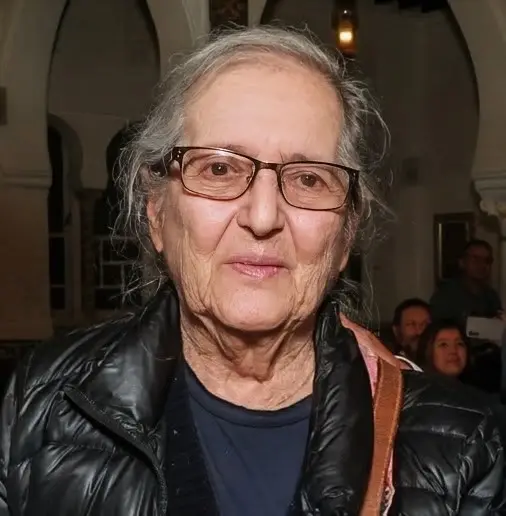
Mokhtar died in 2015, forty-three years after he and Mokhtefi first met. Writing her memoir, Algiers, Third World Capital: Freedom Fighters, Revolutionaries, Black Panthers, Mokhtefi told me, had saved her from a pit of grief that she feared might swallow her up. But ever since it was published in 2018, “and I went on these tours, and I saw that people were really interested in what I had lived,” she continued, “I’ve started to talk, and I don’t stop.”
I stayed in touch with Mokhtefi as I continued working on my chapter about her. In 2022, I went to Algiers to visit prominent sites from her time there and interview former Algerian revolutionaries whose paths had crossed with hers. Eventually she met my partner and daughter, and I got to know many of her friends. Every time we saw each other, I marveled at how busy her social life and traveling schedule remained, even as she grew frailer and memories eluded her more often. In August, I visited her apartment one last time to attend a party she threw to celebrate receiving Algerian nationality in recognition of her service to the nation. By then, I had a copy of my own book to give her.
A few weeks later — three days before her sudden death — she emailed me, telling me she had started reading my book from the beginning, but that about halfway through the second chapter, “I couldn’t hold myself back, I had to read about me. I just wasn’t capable of waiting my turn. What an experience . . . Thanks, merci, gracias, saha as the Algerians say, the works. I felt so full of myself, validated well beyond any merit.”
She told me how lucky she felt that we had entered each other’s lives. Then she added, “I will read the other chapters and see your perspective through to the end, and with such pleasure. With love, Elaine.”
This article originally appeared in Jacobin, a democratic socialist magazine publishing long-form essays and analysis on politics, economics, and culture. Subscribe to the print edition for $20 a year.