
World · Jacobin · · 1h
Russian Elites Are Fighting for Unchecked Power
English (original) · Read in Deutsch ⇄
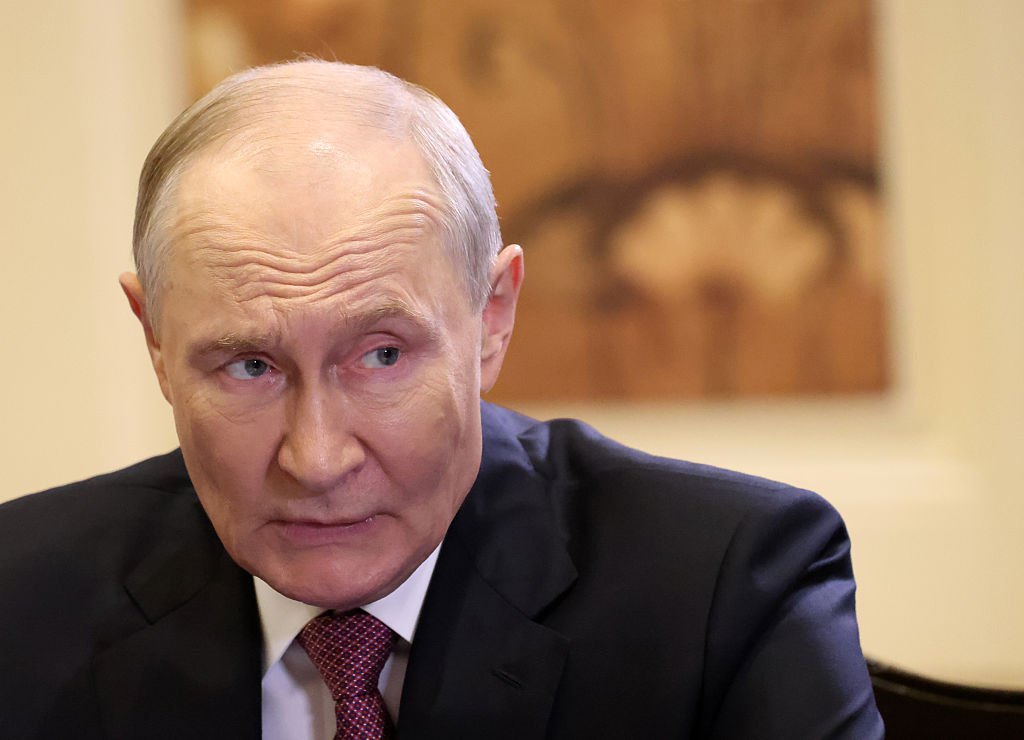
Ignoring a problem is rarely enough to make it go away. Take civilizationism, an approach based on shared culture taken to the level of civilizational identity. Also called civilizationalism, the idea has been around for centuries and has quietly inspired many conflicts. Overshadowed briefly by Cold War ideological conflict, it resurfaced in the 1990s when political scientist Samuel Huntington famously proposed a coming “clash of civilizations,” in contrast to his student Francis Fukuyama’s suggestion of the “end of history.”
Huntington’s thesis was heavily criticized in mainstream academia, partly due to his Orientalism and racialized stereotyping. Still, it had its political impact, even beyond Huntington’s own homeland. After Russia’s conservative turn in 2012, President Vladimir Putin started to call his country a “civilization state,” and the civilizational framing later became central to Putin’s speeches. Similar civilization talk has since spread everywhere from Narendra Modi’s India to Donald Trump’s America.
Now that civilizationism is blooming, we can see how its dismissal was essential for its rise. Calling Huntington’s geopolitical vision ignorant, racist, and irrational should not have been the end of the matter but more like the start of the conversation, especially when racism and irrationality were exactly what some adherents of the model were hankering after. As historian Ilya Budraitskis argued, Huntington’s theory was a self-fulfilling prophecy: his ill-motivated predictions gave influential readers, including some world leaders, a useful ideological construct.
Russia’s conservative turn, following its “civilizational” realignment, is another example of unfortunate dismissal. The view of Putin’s Russia as an essentially practical-minded actor, which held through the 2000s, obscured the full extent of the changes in the 2010s. Marlene Laruelle, one of the foremost foreign scholars of Russian nationalism, argued in 2013 that Putin’s newly adopted conservative rhetoric on family, sexuality, and national and religious identity was “usually more for pragmatic reasons than ideological ones.” After 2022, though, Laruelle’s own work showed that “traditional values,” anti-Westernism, and civilizational exceptionalism in fact form a genuinely coherent worldview — difficult to disprove given the extent of repression against LGBTQ people in Russia, which goes far beyond a cynical demagogy.
Eventually, civilizationism and conservatism in Russia blended into single political force. Thus, in October 2022, Alexander Khinshtein, a member of the Russian parliament (the Duma) justified a complete ban on LGBTQ “propaganda” by framing Russia’s confrontation with the West as “civilizational,” with Russia as the “outpost” defending traditional values.
Think of it this way: Fukuyama and Huntington both claimed to describe an era beyond ideological struggle. Yet between them, they handed anti-Western powers both an ideology to fight against (Western liberalism as the last form of universalism) and one to fight with (civilizational identity as its alternative).
While some might argue that a global pushback against neoliberalism, identity politics, and Western hegemony was needed, the outcome in Russia’s case — which is now a blueprint for others, including Trump’s America — offers something much worse: a single identity and a culture of absolute authoritarianism that completely deprives ordinary people of power.
The New Statesmen and Their Culture War
In modern studies of civilizationism, one observation often stands out: how this concept and the word “state” have become entwined. For Mark Bassin of the Stanford-Göttingen Civilizationism Project, “In the Russian version, and maybe in the other versions too, [civilization] can be put together with the state” — noting that for Huntington or his predecessors this was never the case.
The statism of the Russian civilizational project was best explained by Putin himself at the 2021 Valdai Discussion Club. Claiming the West could no longer meet the challenges of the present era, he insisted, “Any effective international order should take into account the interests and capabilities of the state. . . . Each state decides for itself how best to protect based on its abilities, culture and traditions.” Meaning, the state is the only guarantor of civilizational identity.
The same speech — almost a quarter of it — leaned heavily into culture-war discourse: the “reverse discrimination” against majorities in favor of minorities, “cancel culture” reaching all the way to William Shakespeare, forced diversity in Western cinema, and questions of gender: “Anyone who dares mention that men and women actually exist, which is a biological fact, risks being ostracized.”
Putin’s comments at Valdai amounted to saying: the Western way of solving problems does not work for other states/cultures/civilizations, because Western culture is declining. But to fully reconstruct the strategy and logic behind his speech, it’s worth asking what “culture war” actually is.
In the modern US context, the most influential definition of a culture war is sociologist James Davison Hunter’s: a struggle between a conservative, traditionalist worldview and one that is secular and progressivist, which over time came to map onto the right and left of American politics, with the rest of the world slowly following a similar path.
However, both culture wars and their civilizationism-adjustment predate Hunter’s 1991 coinage. Already in late nineteenth-century Germany, the Kulturkampf pitted liberal nationalists, who framed their campaign against Catholicism as a “struggle for civilization,” against Catholic and conservative forces. A similar conflict played out in the Russian Empire, opposing the secular Westernizer intelligentsia to the okhraniteli (“guardians”) — a conservative-nationalist coalition whose intellectual heirs, Konstantin Leontiev and Nikolay Danilevsky, first theorized the notion of Russian civilization, a successor to Byzantium and adversary of the West.
Probably none of this is what you picture when I use the words “culture war” — we think more of online disputes over “wokeness” and “cancel culture,” the flash points Putin raised at Valdai.
The final piece of the puzzle is a geopolitical definition of culture war, depicted well by the concept of “cultural victory” in the Civilization video game series. Think of the triumph of Enlightenment ideas in eighteenth-century Europe, credited to France, whose intellectual output dominated the following decades (and spawned German civilizationism), and the Cold War more recently, which also ended with an American cultural victory. That was what Francis Fukuyama effectively declared in his 1989 “The End of History?” essay: he credited liberal democracy and the free market as elements of Western culture that had proven stronger than the culture of the Eastern Bloc — and so the West had won.
Fukuyama’s failure was not so much in declaring victory but in the nuances: crediting democracy as the winner when it was mostly just neoliberalism, and treating the conflict as purely ideological when it was also a contest between two great powers. Or two civilizations, as the North Atlantic Treaty of 1949 stated in its aim “to safeguard the freedom, common heritage and civilisation of their peoples.”
With that in mind, it is easier to see “the end of history” as only an interim Western victory. And at the same time, as a revelation for Russia’s security elites: an explanation for their defeat and a hint about how to regroup, by taking the winning culture for themselves.
The only complication, given that a culture war had already broken out in the United States, was figuring out which American culture counted as the winning one. That turned out to be easy: in regular statements of Republicans, it was their Reaganite fusionism. That, for instance, was the argument of paleoconservative Pat Buchanan, a former adviser to Ronald Reagan, in the historic speech he gave at the 1992 GOP convention, often considered a moment that brought the culture war to the heart of US politics.
Clearly, this choice was not made by some specific, secret group of elites. Most likely, not a single person in the Russian leadership in the 1990s heard any of Buchanan’s speeches. But the following development of post-Soviet culture was largely built on accepting, adopting, and evolving the very same winning culture of free‑market libertarian economics, social conservatism, and blunt anti‑communism that underpinned Reaganite fusionism.
A Home Run
The post–Cold War anti-socialist consensus not only set the trajectory for the development of Russia’s own fusionism but was also a primary factor in the reemergence of civilizationism in the post-Soviet space. With the Soviet system that leaned on Marxism falling apart, new semantic and theoretical support was needed, which eventually led Russian social science toward the civilizational logic of interwar “conservative revolutionary” Oswald Spengler and the homegrown civilizationism of Nikolay Danilevsky.
The civilizational approach offered a shared language for people who otherwise disagreed on almost everything: Western-oriented mainstream scholars and marginalized conservative reactionaries. The main divide was not over the legitimacy of civilizationism but over whether Russia should be seen as part of a broader Western civilization or as a distinct civilization of its own. So, when Huntington’s Clash of Civilizations arrived, it did not introduce anything new to the Russian internal discussion; it was more of a validation: a prestigious Western theorist had finally acknowledged the civilizational fracture it had long insisted on.
This mentioned internal tension was, doubtless, already a culture war. In many ways, it echoed that of the nineteenth-century Russian Empire: Westernizers versus Slavophiles; liberals who tried to make Russia an exemplary European democracy versus conservatives who did not believe that possible.
Saying that Russia’s own culture war was unrelated to the US one would also be a mistake. As it is meticulously described by Kristina Stoeckl and Dmitry Uzlaner in The Moralist International, the American culture war had already broken into Russia in the 1990s, with the American Christian right going on a missionary quest that contributed to the birth of a conservative coalition in the global culture wars.
One example of these practical connections is CoMission, an international evangelical Protestant coalition that distributed brochures in schools and trained teachers in ethics grounded in evangelical Christian values. Its program was eventually shut down by the Russian Orthodox Church, but by that time the underlying morality — the same that had underpinned Reaganite fusionism — had already put down firm roots in Russian culture.
In any case, during most of the 1990s the conservatives were neither popular nor united, scattered across different social circles. The “end of history” legend was strong in Russia, and liberals were in control. But then came the severe 1998 financial crisis, which shook part of society’s faith in the liberals, and NATO’s 1999 Yugoslavia operation, which undermined trust in the West. So, when Putin became prime minister in 1999 and then president, he harnessed the resentment. And as he came to power, the reactionaries became united and validated as the opposition to the liberals of the 1990s.
In the next few years, a new okhraniteli value system crystallized around Russian uniqueness, opposed by default to whatever Western civilization was — which, as Fukuyama hinted, was liberal democracy. Around that core clustered a cloud of not-always-consistent tags: war with the West, “sovereign” democracy at home, monarchism, imperialism coexisting with anti‑imperialism when the empire in question was the United States, and “traditional values” borrowed from the American Christian right.
The opposing liberal Westernizers’ culture was slowly losing its positions — not as fast, though, as liberal politicians were. While architects of 1990s post-Soviet economic reforms like Anatoly Chubais and Yegor Gaidar were heavily scrutinized in the media, liberal culture — which was almost synonymous with “Western‑inspired” culture — largely seemed safe. American movies or British rock music were still cherished by all sides, and all sides wanted Russian culture to be on par. The red lines between liberals and okhraniteli were mostly drawn around gender and religion: some anticlerical exhibitions were shut down, and gay pride events were either banned or attacked by Orthodox and ultraright crowds. Still, the consensus aligned with political scientist John Anderson’s pre‑conservative‑turn conclusion that these were just occasional skirmishes, rather than the makings of a culture war.
Then the clash finally happened during the 2011–12 protests over election fraud and Putin’s intentions to return to the presidency. Liberals were mostly the ones protesting, and the statist okhraniteli were deployed to counter them. And as the myth that the protests were orchestrated by Western interference arose, the Western-leaning liberals got branded as traitors.
The conservative turn that followed Putin’s 2012 reelection was a counterrevolution. There was no more dialogue with progressive liberal culture, only legislation: like the Pussy Riot trial, the 2013 law banning “gay propaganda,” and the 2020 constitutional amendments defining marriage as a union only between a man and a woman. Consequently, the internal culture war was concluded with mass exile and silencing of liberals and their culture in the 2020s.
The Authoritarian International
Meanwhile, Putin learned the language of Western culture wars well. When he began preaching “traditional values” shortly after 2012, he was largely reproducing the rhetoric of American hard-right conservatives like Buchanan — who himself asked, “Is Putin one of us?” after one of the Russian president’s speeches.
At the same time, Kremlin-linked oligarchs started actively participating in the Western culture wars and spent hundreds of millions fighting “gender ideology” in Europe, while the Internet Research Agency worked to escalate culture-war tensions on American social media.
In The Moralist International, an important moment is singled out: a speech that Alexey Komov, a Russian representative of the World Congress of Families (and close associate of hard-right oligarch Konstantin Malofeev), gave at a conference in 2014. “Russia has a real historical chance to become the universally recognized leader of this nascent ‘pro-family’ movement and regain ideological and moral leadership in geopolitics,” Komov said. He expressed out loud what the “cultural win” concept implied: by stepping into culture wars, the Kremlin is seeking global leadership.
Starting in 2022, this went from oligarch-funded operations to state policy, while the war against Ukraine was itself reframed as a culture war: “Do we really want, here, in our country, in Russia, instead of mama and papa, to have ‘parent number one,’ ‘number two,’“ Putin asked, explaining the annexation of four Ukrainian regions. Later he signed a decree easing residency for citizens of countries where “destructive neoliberal ideological attitudes are being imposed” — and yes, “neoliberal” in this case means “woke,” with a less direct connection to economic strategy.
While the way Putin and his statesmen use the culture-war language is almost identical to how Buchanan, Trump, or other US and European right-wing populists do it, there is one major, critical distinction. The latter are trying to harness power in their countries’ internal political brawling, while Russian reactionaries speak as winners of their own inner culture war — which is exactly what gives Russia a chance to rewrite the outcome of the Cold War.
Fukuyama’s essay back in 1989 already showed the principle of how this works, when he listed achievements of Western culture that had gone universal, and among them were farmers’ markets and color television. He had a point in context: farmers’ markets in China were an example of the shift toward a market economy, and television culture worldwide really was associated with the West. What this means for today’s Russia is that it did not need to invent a fight against “wokeness” to master and claim it.
So, by employing civilizationism, Russia offers an alternative state model that is also, like post–Cold War Western liberalism, universal but allows countries to keep their own culture and traditions. That was exactly what Putin proposed at Valdai in 2021, and during the Q&A after the speech, a certain example arose. Discussing Russia’s negotiations with the Taliban, who had seized power in Afghanistan a few months prior, the Russian president did not exactly praise the Taliban but recognized its legitimacy. “We cannot impose on the Afghan people what the Soviet Union tried to impose, what the United States tried to impose,” Putin added.
This perspective reveals Russia’s package offer: people are promised “traditional values,” while elites get a convenient authoritarian system and a seat in the club of the authoritarian international. Russia’s allies today make the pattern obvious: Trump, China, Iran, North Korea, Germany’s Alternative für Deutschland, France’s Marine Le Pen — left and right, united only by authoritarianism.
Even If You Ignore It
Paradoxically, this brings us right back to where we started: the assumption that Putin is a calculating, pragmatic actor. The ultimate goal of his grand culture war is the mundane preservation of power — which democracy stands in the way of.
With all that in mind, it becomes easier to connect developments in various culture wars that otherwise look unrelated. Unchecked power is exactly what conservative culture warriors are defending whenever anything threatens to redistribute it: gender politics and trans rights, which strip authorities of the power to define identity and enforce hierarchy; the social sciences that draw on Marxism and critical theory, which make those power structures visible; even climate activism, which leads to holding extractivist elites accountable.
Culture wars have always been a battle over the limits of power. What Otto von Bismarck sought in his Kulturkampf was the supremacy of the state over the Catholic Church; what Russia’s imperial okhraniteli sought to preserve was autocracy. State-civilizationism is the same instinct globalized: a libertarian-like solution that looks like a celebration of cultural diversity but is really a claim that no one, inside or outside, gets to hold the sovereign to account — a template available to any ruler who wants the same immunity. Putin, after all, is confident in his ability to survive a world reorganized this way; he is far less confident in his ability to survive his own people.
There is no ready recipe for countering this, but one thing is clear: the ongoing culture war that feeds civilizationism must not be dismissed. Distancing oneself from “wokeness,” as some progressive leaders already do, may seem like a smart tactic. The risk lies in letting conservative culture and the authoritarian international behind it evolve unchallenged and unchecked — just like the power it seeks.
Read the full story at the source
Source: Jacobin