
World · Jacobin · · 2h
Joe Sacco’s Indictment of Western Blindness on Gaza
English (original) · Read in Deutsch ⇄
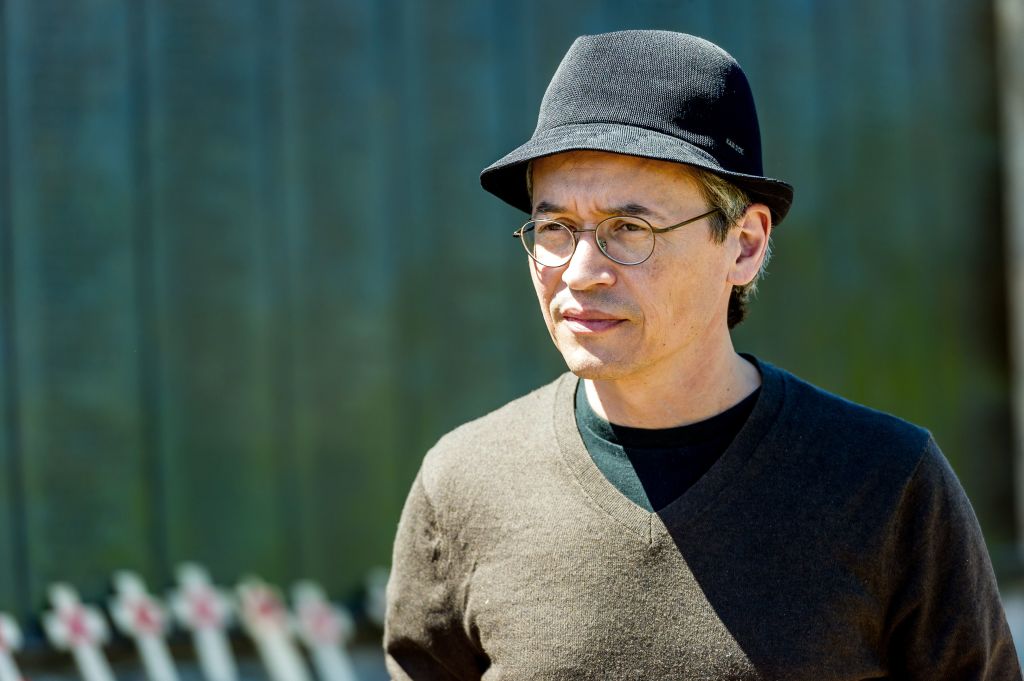
Joe Sacco is widely regarded as one of the pioneers of comics journalism. He became famous for his Palestine (first published in 1993–95) which offered a powerful portrayal of Palestinian life under Israeli occupation. In 2009 came his Footnotes in Gaza, and, in 2024, War on Gaza, a collection of comics commenting on the Israeli destruction of the Gaza Strip. Today the streets that the journalist and cartoonist once depicted in such painstaking detail no longer exist.
Now, over three decades since the first publication of Palestine, Sacco has again turned his attention to Gaza. Last year, together with his colleague Chris Hedges, he traveled to Cairo to interview refugees who had survived the genocide. Their new volume Requiem for Gaza, combines Sacco’s drawings and reporting with Hedges’s prose and interviews to document Gazans’ experiences.
Sacco spoke with Elias Feroz about Requiem for Gaza in an interview for Jacobin. Sacco reflects on the failure of much Western media to stand by their Palestinian colleagues, many of whom were killed as they reported on the genocide. Their conversation also addressed historical memory, Sacco’s decades-long engagement with Palestine, and why the destruction of Gaza has compelled him to return to journalism.
Elias Feroz
You and Chris Hedges explicitly dedicate this book to Palestinian journalists, a group that has been targeted and killed like never before in the war on Gaza. If we consider a “requiem” as an elegy for the dead, is this book also your personal requiem for your killed colleagues who were silenced?
Joe Sacco
The book is a requiem for all of Gaza and for Gazan society. But yes, I do think of these journalists as my colleagues, and that’s why the dedication is to them. They showed tremendous integrity, suffered enormously themselves, were killed in great numbers, and saw their families killed as well.
We often talk about how foreign journalists cannot get into Gaza. As a foreign journalist, I want to go there and see things for myself. But that should not in any way diminish the amazing work these journalists did, under circumstances that I think were unprecedented. I have tremendous admiration for them. They did incredible work while they were portrayed as Hamas supporters and subjected to all kinds of smears. Part of the dedication is also a kind of indictment of many Western reporters who didn’t stand up for their colleagues, who went along with those smears, including some of the very organizations that employed, or had employed, those Palestinian journalists.
Elias Feroz
Chris also makes a very interesting point regarding Israel’s ban on foreign media, stating: “The assumption that if Western reporters were in Gaza, the coverage would improve, is risible. Trust me, it would not.” This directly challenges a deeply rooted, almost colonial bias in the West, which implies that Western reporting is inherently superior or more “objective” than the work of local Palestinian journalists. What is your own experience? Have you faced criticism or skepticism from mainstream editors or readers who questioned the credibility of your work simply because you center the raw testimonies of Palestinians sources?
Joe Sacco
I guess that is a typical charge: “Why are you focusing on Palestinian sources and what about the other side?” I respond by saying that I grew up with the other side, seeing everything through an Israeli filter.
Growing up in the United States in the 1970s and ’80s, the only voices I heard were Israeli voices and voices that supported Israel. So much so that I used to think of Palestinians simply as terrorists. Eventually I had to interrogate that notion. And I did that after I already had a journalism degree. I really had to interrogate the whole notion of journalism: American-style, “objective”-style journalism.
My first attempts to talk about the Palestinian situation were about getting Palestinian voices heard, because I simply didn’t see any at the time. And I am never going to apologize for approaching it the way I did, which was: let’s see what Palestinians have to say. I am not going to paint them as angels, but I want to hear what they have to say. And I think that still holds true. What is interesting now is that we have learned something about the Palestinian experience in many ways, in spite of the Western media. A lot of Palestinian voices have been coming through unfiltered on platforms like TikTok and other social media platforms, which is perhaps why they’re being bought up by people like Larry Ellison to silence that sort of thing.
Elias Feroz
What do you think is the fundamental difference between mainstream Western reporting and your own experiences on the ground? And why is the picture presented to the public so starkly different from the reality you encounter? Is it simply because they don’t want to show Palestinian perspectives, or is there another reason as well?
Joe Sacco
I think most Western reporters identify with Western interests. Ultimately, you are shaped by the culture you grow up in. That is true of anyone, anywhere. I think Western reporters often find it very difficult to step outside of that framework.
They see the US government and the American way of doing things as part of the broader Enlightenment project: something they believe in and subscribe to. And ultimately, they see the American way as the right way. That’s a somewhat fundamental, even simplistic, way of putting it, but I think that is generally what’s happening. I think the trap for journalists is that they see themselves as objective. They go to a place in the Middle East believing that they can be objective. The difference, in my case, is that I recognize that I cannot be objective. I am the product of my education.
There are things I have learned, things I have to unlearn, and things I have learned that need to be challenged. So, as much as possible, I try to understand what the so-called other is going through and simply hear what they have to say. To me, it is not even about “giving them a voice.” I have always found that idea somewhat unhelpful. I think they already have a voice. The question is whether we have the ears to listen. That is what I have tried to do: listen and then put down on paper what I have heard.
Elias Feroz
In the book, Chris distinguishes between two kinds of war correspondents: There is a small minority that takes real risks to document the unvarnished reality on the ground, which almost always contradicts official narratives. But he also describes a mass of journalists who willingly sell staged military propaganda as news. Does this second group highlight the massive structural obstacles of mainstream journalism?
Joe Sacco
I think it probably does. And Chris has a better sense of this than I do because he was New York Times bureau chief in the Middle East and has also been a bureau chief in other parts of the world. So, he was very much part of that milieu and saw it up close.
I have met quite a few journalists, but because of what I do and the way I approach my work, I have never really spent time with that group in the same way. When I have met journalists, even those working for mainstream publications, I often feel that they know what’s going on. They are intelligent people. But I think they ultimately have to answer to their editors — the people pulling the strings in London and Washington — when it comes to what gets reported. And the editors, as well as the people who own the publishing companies that own the newspapers, have a particular line and point of view. I think journalists know how far they can go in telling people what’s really happening.
They often know that they have to get the other side, partly to sort of wash it out a little too. But I don’t feel like I have to play that game, and I know that Chris doesn’t.
Elias Feroz
As an independent comic journalist, you work outside this system. Do you believe that this gives you the ultimate advantage: the freedom to bypass these institutional shackles without having to consider the comfortable perceptions of others?
Joe Sacco
It does. But when I started out I wasn’t thinking this through. I just didn’t have any money. And when you don’t have any money, you have to find alternative ways to do your reporting. You often have to rent from people who live there. You’re not going to spend time in a hotel if your money is going to run out in five or six days. So you have to find other means of just being on the ground. And that puts you more into contact with people on the street. In some ways, the way I started out, without really thinking it through, just organically, shaped how I reported, because that’s what I was seeing.
It wasn’t my writ, or even my ability, because no one was going to speak to me if I was a cartoonist at the beginning. I wasn’t going to be speaking to politicians or generals. When I was first starting out, it was just all cafés, bars, living with or renting a room from someone. You get a different perspective when you’re not in that rarefied journalistic space, that more comfortable space.
Elias Feroz
Did you become interested in interviewing politicians or military figures later?
Joe Sacco
Later in my career, when I developed more self-confidence in what I was doing, I did start interviewing generals, colonels, and some politicians. But I never really developed a taste for that.
I like hanging out with just ordinary people because, ultimately, I realize that what I am interested in is how the decisions made in the capitals of the world affect human beings. Because the decisions made even domestically here affect me personally. We are the people who are being run over by these decision-makers, their grand plans, and their desire to retain power. So, I have an affinity for that too. I feel that is my strength.
I don’t need to hang out with the powerful. I just wouldn’t be comfortable at this point. If you had caught me in my early twenties and given me a lot of access, maybe we wouldn’t be having this conversation. I cannot say that I’ve got some moral superiority in all this. I think, organically, it just worked out the way it worked out.
Elias Feroz
For your newest book, you and Chris interviewed Palestinians who managed to flee from Gaza to Egypt. Both of you know the region well and visited Gaza years ago: Chris back then as a New York Times correspondent, firmly rooted in traditional mainstream journalism, while you established your own way of journalism by drawing comics. How did these two contrasting worlds shape the collaboration on this book, and where did you find the strongest common ground?
Joe Sacco
Chris and I met in Bosnia, in the back of an armored jeep. I was a cartoonist, doing what I was doing, and he was the Times bureau chief in Sarajevo at the time, during the end of the Bosnian War. So that’s quite a gap on some level, but we just hit it off because we talked about books, basically, on this long, long drive to an eastern Bosnian town called Goražde. From that point on, we were friends. And then we started to collaborate. He had spent a lot of time in the Middle East and in Gaza.
At some point, we did an article for Harper’s Magazine where he was doing all the prose, and I was doing illustrations for it. Later, we did a book called Days of Destruction, Days of Revolt. That was also sort of a blending of how we do things, and we do the interviews together. In most circumstances, he takes the lead in the interviews, and then I will interject or ask things that I think he may have missed, which doesn’t happen often.
He has a lot of respect for what I do, and vice versa. So if there’s a story that particularly seems to fit well with my way of doing things, he says, “You should take this. This has got really great imagery.” With the Gaza book, there was one story where I thought, “I need to focus on this one.” And he told me right away to go ahead. We don’t step on each other’s toes. And even in constructing the book, he wrote, for instance, the end of one chapter to lead into my section. We’re not fussing with each other’s stuff either. It just works very organically.
Elias Feroz
Chris heavily criticizes the New York Times in the book for its coverage of Gaza. Given that it is his former employer, do you and Chris see any real improvement or structural shift in how mainstream institutions like the Times report on Gaza today, or do you find that the fundamental biases and editorial constraints have remained the same?
Joe Sacco
I think both things are sort of true. The fundamental biases have remained the same, but I think the genocide is so clear, and so many people see it, that the paper cannot ignore it, or they have to deal with it on some level.
It doesn’t mean the structural situation has changed. They are acknowledging some of the pain that the Palestinians are going through. That is my interpretation. Chris might have a different interpretation.
Elias Feroz
In the current political and media discourse surrounding Israel and Palestine, there is a fierce debate about historical context and when this conflict actually started. Mainstream narratives often hyperfocus on immediate events, treating past decades as if they have expired. In the book, there is a striking passage about how Lewis Lapham, the editor of Harper’s Magazine, cut your interviews with survivors of the 1956 massacres because he dismissed them as “irrelevant history.” You were furious and returned to Khan Yunis and Rafah, which culminated in your book Footnotes in Gaza. Looking back, how did that editorial rejection shape your understanding of how the mainstream uses the weapon of “irrelevance” to control the timeline of a conflict?
Joe Sacco
If you don’t understand the history, you don’t understand why things happen. Very little historically just comes out of a vacuum. There’s a continuum of events.
Sometimes a whole generation can be skipped, and then a thread is picked up again. In the case of Palestine, that’s really clear. You could go to, let’s just say, the 2000s. Two or three times, Israel came through and would “mow the grass,” as they euphemistically put it, killing hundreds, even thousands of people, with weeks-long campaigns of bombing. Clearly, people in Gaza have been contained, frustrated, oppressed, and controlled in every possible way.
Interestingly, despite all that, a vibrant society managed to develop there.
In that case, I wanted to focus on what happened in 1956 in the towns of Khan Yunis and Rafah. I don’t think of history as an irrelevance. I think of it as a foundational building block for where we are today. To understand the rage, the frustration, the anger, all that, you have to understand what’s happened to a people. That’s, of course, not to take anything away from what happened on October 7. I don’t. But you have to look at certain things.
During the Great March of Return in 2018–19, for instance, when Palestinians peacefully came up to the so-called security wall [built by Israel] and were gunned down. Over a period of months, a couple hundred were killed. Many were severely wounded. Israeli snipers were shooting people in the legs and knees, so there would have to be a lot of amputations. This sort of thing didn’t get much mainstream press. It drives me crazy when people like Thomas Friedman of the New York Times are asking, “Where is the Palestinian Gandhi?”
You are seeing people trying some peaceful way of getting the attention of the world, saying, “This containment of us as a people cannot go on. This oppression cannot go on,” but the Western world shrugs. So you have to understand all these things.
I will give you another example of something that I felt was very important that was cut from that Harper’s piece. We interviewed [Abdel Aziz] Al-Rantisi, one of the founders of Hamas. This was in Gaza City in 2000 or 2001. He was telling us about the massacre of 1956 in Khan Yunis and how his uncle had been killed, when he was a boy of eight or nine years old. He told us how he remembered the wailing. He felt like he was going to cry just thinking about what happened, and he said, “At that moment, they planted hatred in our hearts.” You must understand how one thing builds on the other. You cannot pull out the historical events.
Elias Feroz
For Requiem for Gaza, you and Chris interviewed twenty-nine families in Cairo who had just fled Gaza. How did the immediacy and freshness of their trauma affect your interviewing process compared to your historical research for Footnotes in Gaza? And how did you choose your interview partners?
Joe Sacco
A few weeks before we went for our current book, we were thinking: Who are we going to interview? How are we going to do this? We had a translator named Ruba, and she helped manage who we were going to interview. You make a contact, and they talk to you. And then that person tells you there is someone else. Again, it organized itself organically.
Some people are afraid to talk, but a lot of people want to talk. The difference is that when you are talking about something that happened fifty years ago, of course, memories have begun to fade. People still remember certain very striking things quite well. There was that element of having to contend with many different historical episodes, competing with one another in people’s minds. When I was doing the book about 1956 and interviewing people in Gaza, I was also sometimes asked, “Why don’t you talk about what’s going on now?
With the current book, on the other hand, the memories of our interview partners are very fresh. A lot of the people we talked to still had family members in Gaza. They had their phones on the table because they would get phone calls from their relatives — waiting for some news. Always anticipating and worried about their loved ones. You could tell they were really feeling anguish that others had been left behind.
Elias Feroz
There is a pervasive argument in Western political discourse suggesting that neighboring Arab countries should simply absorb the population of Gaza to solve the humanitarian crisis. Your book completely dismantles this misconception. The families who managed to flee to Egypt have no legal status, no right to work, no health insurance, and their children are barred from schools: they are given no future at all. When you were in Cairo, did you also speak with the refugees about their views on these so-called solutions?
Joe Sacco
I don’t remember asking that specific question, but you’re right. People were in a great limbo in Egypt. It was extremely uncomfortable. They weren’t being bombed. They weren’t starving in that way. But a lot of people were running out of money. And when you run out of money, you tend to do things that you wouldn’t normally do otherwise.
That discourse about absorbing the Palestinians, I’m sure we’re going to hear a lot more about that in the future, because at this point, I’m not sure I see Gaza being rebuilt. It would take a big change of politics — US politics and Israeli politics — to allow the rebuilding of Gaza. I’m not sure what’s going to happen to people there.
A lot of people in Gaza would probably say, “Just get me out of this.” After the genocide, after living in tents, living with snakes and diseases and under starvation or near-starvation conditions for that long, you just want to keep your children safe. I think it might as well be the plan to make the people leave Gaza “voluntarily.” In other words, this would be ethnic cleansing, for sure.
I know that Egypt is very resistant to absorbing Palestinians. They have absorbed a lot already as far as they are concerned. But you can imagine some arrangement being made, just as Donald Trump has gotten countries like El Salvador to take Immigration and Customs Enforcement detainees from other countries or is getting Liberia to take people. You could imagine similar arrangements being made with other states. Who knows what they might try to work out?
Elias Feroz
Your career and your identity as a pioneer of comic journalism are deeply intertwined with Palestine. You walked the streets of Gaza decades ago for your books, and now, the Gaza you once knew, along with many of the places and perhaps even some of the people you drew, literally no longer exists. Looking back, how deeply has Palestine shaped you, not just as a journalist, but as a human being? And what does it mean to you, emotionally, to know that your books have now transformed from contemporary reportage into a vital, tragic archive of a world that has been physically erased?
Joe Sacco
Palestine transformed me from the beginning. I would have been happy to move on from the issue if, for example, the Oslo Accords had developed into a two-state solution that, while perhaps not particularly fair, was at least workable and acceptable to the people involved. In that case, I probably would have moved on.
But to me, the issue remains significant because the West is deeply implicated. I have looked at other conflicts, massacres, and genocides, but rarely have I seen a situation in which the West is so directly entangled in what is happening. In the case of Palestine, the United States has supported Israel’s policies for decades, after the Six-Day War, when the United States essentially came to see Israel as part of a greater imperial project. The situation has deteriorated over time, particularly with the genocide. Our involvement goes far beyond simply providing weapons and diplomatic cover. We have essentially abandoned many of the principles and institutions we built up after World War II to allow this to continue. The International Criminal Court, the United Nations, and all these institutions were created to prevent something like this from happening, or at least to mitigate it in some way. Seeing them fail so completely has been very difficult. For me, it is also a fundamental moral issue. If you cannot acknowledge that a genocide is taking place, then I honestly don’t know what to say.
But you’re right: my work has entered the realm of the archive in some sense. And there is a great sadness in that, because you realize that the streets I walked, the people I met, an entire society and an entire way of life are being erased before our eyes. That should be something profound for any civilized person — or for anyone who considers themselves civilized — to reflect on. So yes, it has affected me. Obviously, I’m more deeply connected to this issue than most people. I have spent a large part of my career thinking about it and drawing it. It is not easy to watch what is happening from this perspective.
I have wanted to move away from journalism for a while. I wanted to pursue other creative work. I felt that, in some ways, I have done enough. But then Gaza happened, and you have to put your journalistic pants back on and get back to work, because this is a profound moral issue. I feel an obligation to think about it and report on it. Maybe I can do that, to some extent, better than other people in the West simply because I have the experience, just as Chris does. I am sure he feels the same way. It’s not that I am eager to return to it. It’s that I feel an obligation to do so. It’s a duty.
Elias Feroz
Are you currently working on another project in this direction?
Joe Sacco
I am working on something that goes back to some of my old underground comics days. It is still looking at some of the same issues I have been interested in all my life, but I am approaching them in a completely different way, not as journalism. Basically, I’m taking some of the things I’ve been thinking about while doing journalism that I couldn’t really express through journalism because they’re more a matter of gut feeling. When you’re doing journalism, you’re focused on the facts, on getting the story right, and all that sort of thing. But you also think deeply about human nature and other things that don’t necessarily fit into a journalistic framework. Now I’m turning to some of those ideas that I couldn’t report on directly. It’s more like an essay, with elements of dark humor and satire.
Read the full story at the source →
Source: Jacobin