
World · Jacobin · · 2h
How a Fight Over the Contras Bankrolled Roger & Me
English (original) · Read in Deutsch ⇄
Before Paul Berman became a liberal hawk, he was a New Left veteran who edited a book called Quotations from the Anarchists. In 1986, his long-standing anxiety about the authoritarian left may have produced a casualty: Michael Moore’s magazine career.
Moore had edited Mother Jones for five months when he tried to kill the second installment of Berman’s two-part commissioned dispatch on Nicaragua. Berman did identify the Contras as US-financed, traced their leadership to Anastasio Somoza Debayle’s National Guard, and acknowledged the “blood on their hands.” But his overarching concern was Sandinista Leninism: their restrictions on political competition and refusal to share power. Moore was unmoved. “The article was flatly wrong and the worst kind of patronizing bullshit,” he said. “You would scarcely know from it that the United States had been at war with Nicaragua for the last five years.”
With Washington funding a counterrevolutionary army and the civil war’s outcome very much in doubt, Moore worried about the impact the article could have. President Ronald Reagan, he complained, could wave it around and say, “See, even Mother Jones agrees with me.” He’d wanted Alexander Cockburn writing on Nicaragua instead of “neo-nudnik Paul Berman.”
He also might have suspected that his erstwhile anarchist writer, though denouncing the “true psychopaths” leading them, had some latent sympathies for rank-and-file Contras. Reporting from Nicaragua for the New Yorker a decade later, Berman would write that the group’s popularity in the countryside “was overwhelming,” and that their claim to be “the largest guerrilla movement in the modern history of Latin America was entirely correct.”
By then, he and journalist Joan Kruckewitt had traveled through northern Nicaragua tracking down members of the Contra unit that killed Ben Linder, the young American engineer ambushed while building a dam for a hydroelectric project. They found a commando whom official reports placed at the ambush — a devout, teetotaling Assembly of God preacher known as Williams. Williams denied personally taking part in the attack, despite his signature on the reports and his detailed recollection of the events. Berman nevertheless found the Contra veteran strikingly similar to the victim: “fervently idealistic,” “likable,” and “admirable.” “It was just that one was living and the other was dead.” It was Sandinista land seizures, price controls, conscription, and Cuban advisers, not just American money and propaganda, that Berman blamed for driving Nicaragua’s peasantry into the Contra ranks in the first place.
Back in 1986, Mother Jones chairman Adam Hochschild, who bankrolled much of the magazine’s budget himself, was unmoved by Moore’s objections. He called to say, “I am exercising my prerogative as chairman of the board of directors and ordering you to run this piece.” Publishing the Berman piece, in Hochschild’s thinking, would counteract any suspicion that the magazine was carrying water for the Sandinistas. Moore, still smarting, had decided to run it after all, planning to include an editorial rejoinder alongside it.
Before he could, Hochschild rang again, out of the blue, and fired him: “You’ve created a crisis situation.” He offered Moore two months’ pay and help getting his things back to Flint, Michigan, on the condition that Moore sign a statement describing the split as a “no-fault separation.” Moore refused. Afterward, Hochschild would deny that the Berman fight had been the real cause at all, citing vague “personnel problems” to Cockburn that he wouldn’t specify. Moore was adamant that he was ousted because he “did not want to print lies about Nicaragua,” and his supporters speculated that Hochschild had wanted a working-class editor’s image without a working-class editor’s independence.
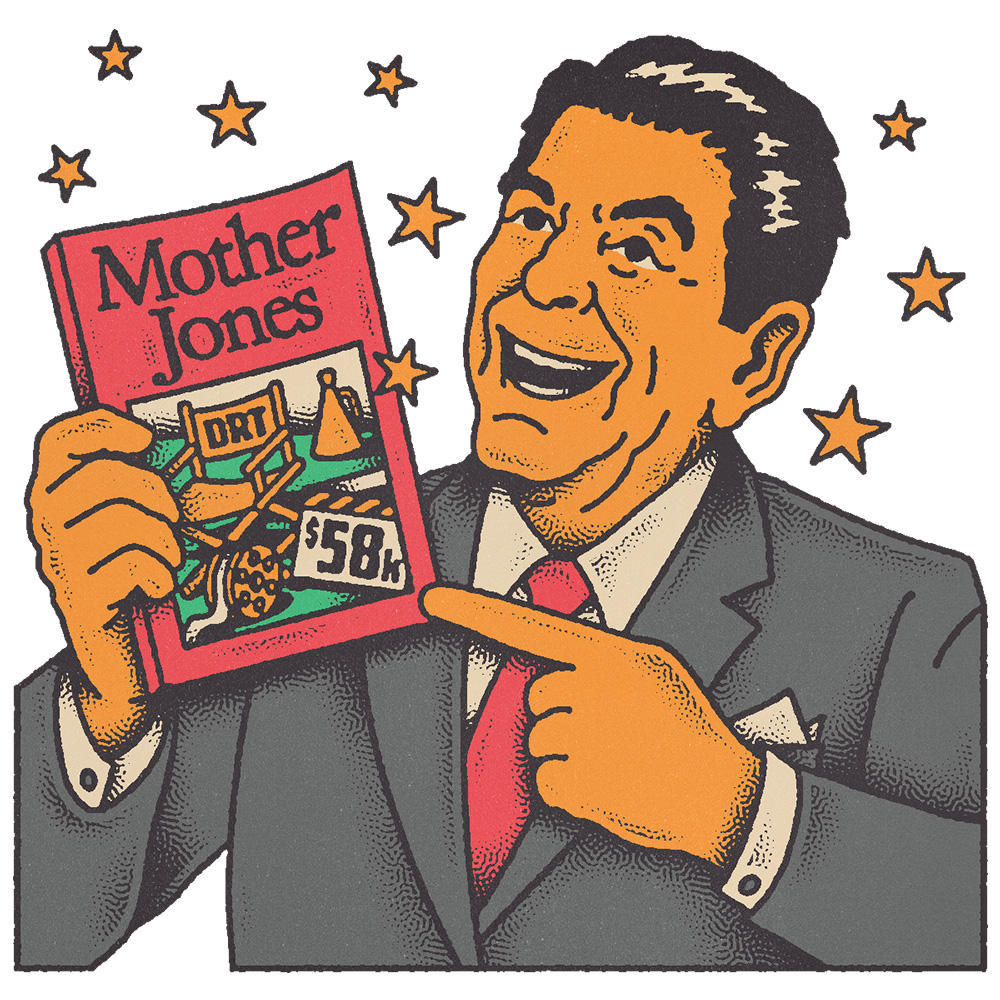
But it all worked out in the end. Moore sued for wrongful termination and received $58,000, which he put into Roger & Me, his celebrated 1989 documentary about General Motors plant closures in his hometown of Flint. While Berman’s article did not defeat Leninism, the spat his reporting inspired helped Moore build an audience of millions without having to kowtow to a publisher. It was an impressive win for political pluralism on the Left.
Read the full story at the source →
Source: Jacobin