
World · Jacobin · · 3h
From Solar Panels to State Terrorism
English (original) · Read in Deutsch ⇄
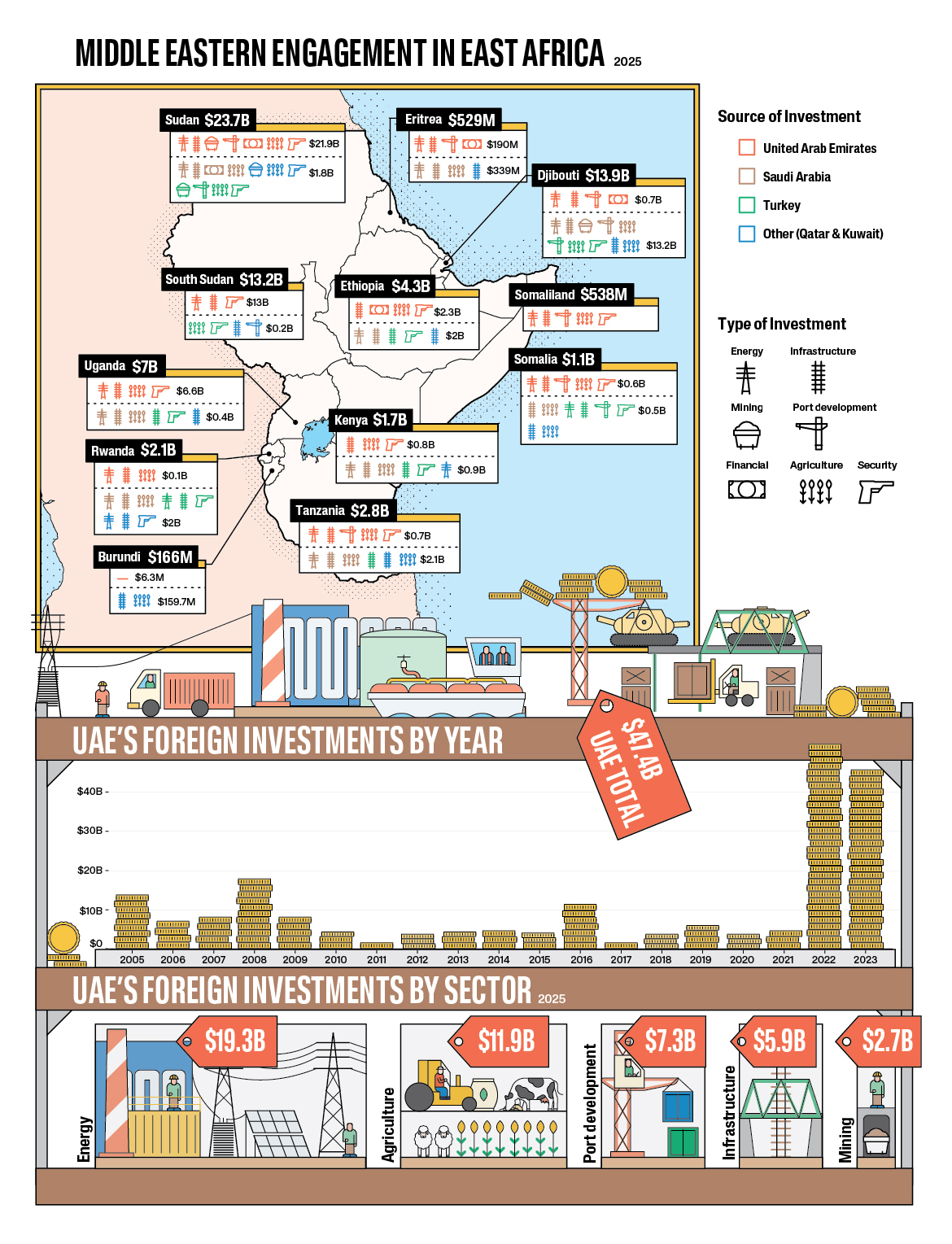
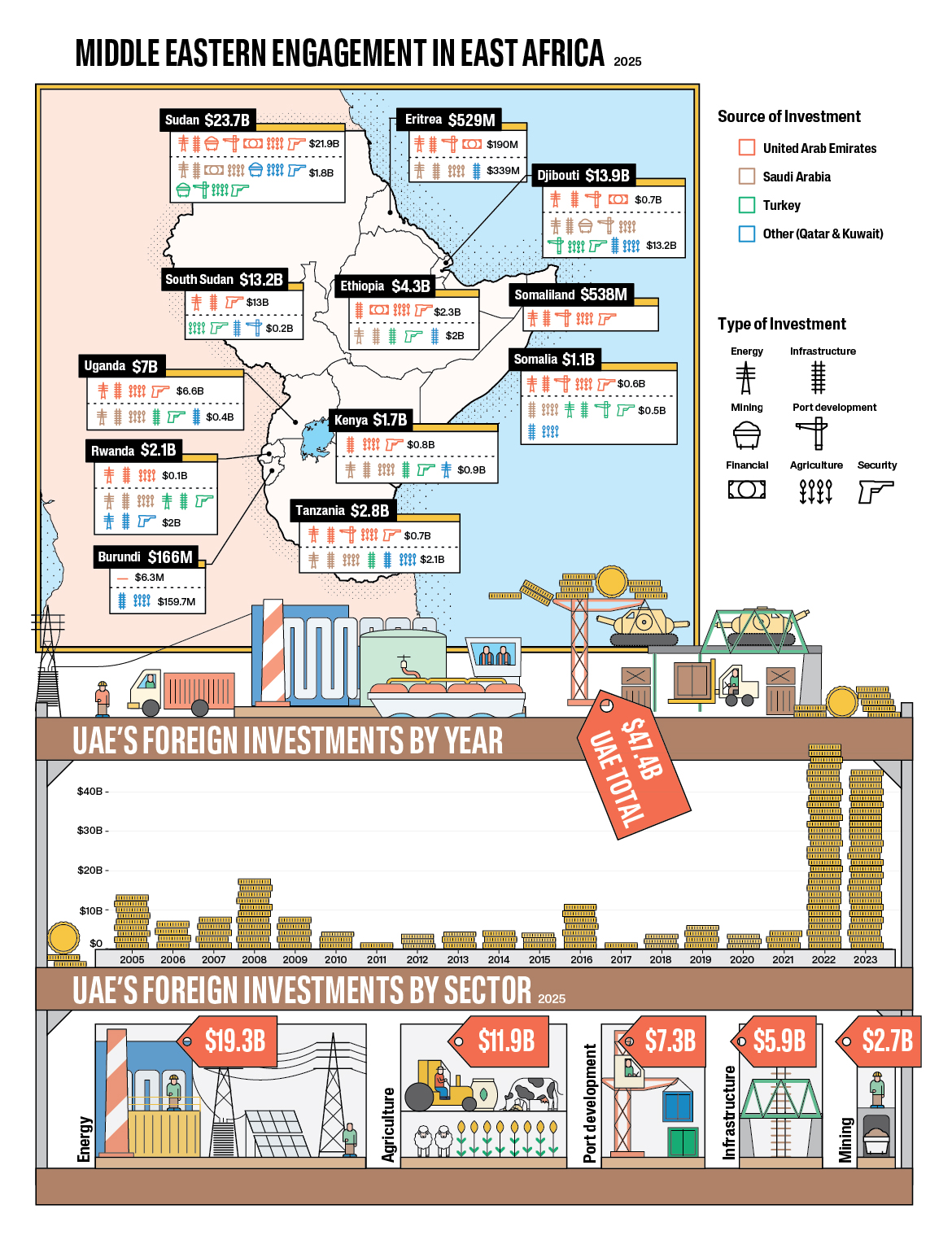
In 2022 and 2023, the United Arab Emirates (UAE) promised African nations $97 billion worth of investment in ports, energy, mining, agriculture, communications, manufacturing, real estate, and more. These commitments made the UAE the largest funder of new projects in Africa, and if it continues to invest at this rate, its portfolio on the continent will soon be larger than China’s.
Not everyone has welcomed the Emirati largesse, however. In addition to cutting ribbons at Zambian solar fields and Egyptian tourist destinations, the UAE is flexing its muscles in war-torn Sudan and the breakaway state of Somali-land, two sites of proxy battles between rival African nations and Gulf states.
When the Emiratis arrived in Berbera, Somaliland, in 2016, they brought $442 million for a state-of-the-art container port. Last year, they returned to break ground on a more ominous and secretive project: a military base for their forces as well as those of the United States and Israel, which became the first country to officially recognize Somaliland in 2025. For the UAE, Somaliland’s leading foreign investor, the base offers a way to project power in nearby Yemen, where a Saudi-backed government counteroffensive crushed the Emirati-backed Southern Transitional Council earlier this year. Israel will have its sights trained on Yemen’s Houthis and may be dreaming of resettling Gazans in Somaliland. Meanwhile, the United States is eager to replace its base in Djibouti, which also allowed China to establish a base in the country and forbids US troops from using its territory to launch strikes in Yemen.
The geopolitical cost of the Berbera base lies in its potential to aggravate tensions between the Emirati-Israeli and Saudi-Turkish alliances that have emerged within the pro-US Middle Eastern bloc; it may also incur the wrath of African leaders, who generally oppose the recognition of breakaway states like Somaliland. Indeed, Somalia has already canceled its port and security contracts with the UAE for facilitating Israel’s entreaties to Somaliland. Elsewhere on the continent, the UAE is courting controversy by taking Ethiopia’s side in its dispute with Eritrea and funding Libyan rebel leader Khalifa Haftar. The UAE has built valuable infrastructure in many of the countries it supports, but its influence has often been extractive or violent: it has gobbled up agricultural land and mining rights in an attempt to limit its dependence on imported food and critical minerals, and it has made several of its African partners into waystations for arms shipments to its proxies in Yemen and Sudan.
Somaliland has previously served as a base for the funneling of weapons to Sudan, a country where the Emirati-Saudi rivalry has led to even more bloodshed than in Yemen. The UAE imports virtually all of Sudan’s gold and funds the Rapid Support Forces (RSF), while Saudi Arabia backs the Sudanese Armed Forces (SAF). Both sides have committed numerous war crimes during a three-year conflict that has displaced more than 14 million people and left hundreds of thousands dead. Yet to the horror of human rights organizations, the RSF’s and SAF’s patrons have lately started flooding the country with the types of deadly drones that have terrorized soldiers along the Russia-Ukraine front. Should Berbera become another node in the Emirati weapons network, the US presence on the base will mark Washington’s complicity in this trade and the suffering it entails.
Read the full story at the source →
Source: Jacobin