
World · Jacobin · · 2h
Francis Fukuyama Is Welcoming History Back
English (original) · Read in Deutsch ⇄
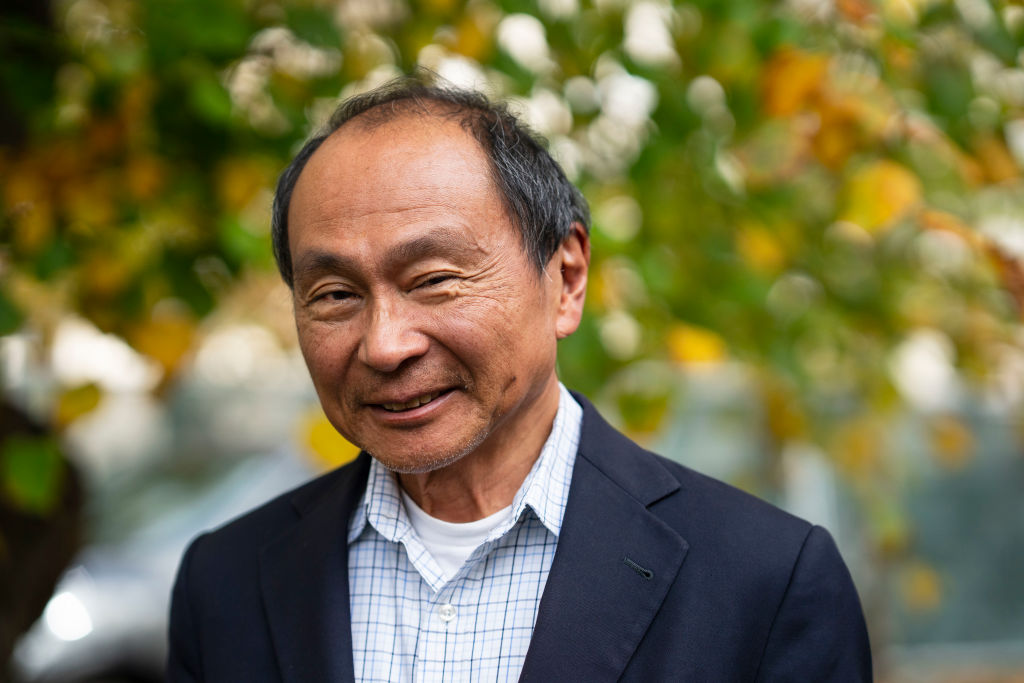
In his new autobiography, Francis Fukuyama boasts that for decades “students in introductory classes in international relations all over the world were required to read [Samuel Huntington’s The Clash of Civilizations] alongside The End of History.” The flex is warranted; during my undergrad we were assigned both essays in one of my classes on international law. Many intellectuals dream about reaching this level of notoriety. But for Fukuyama, fame came at a heavy price. Namely, he became the kind of thinker whose ideas everyone has an opinion on even while they resolutely avoid reading him (see 99 percent of recent conservative commentary on Karl Marx and Marxism for an example).
For years, Fukuyama’s problematic but provocative thesis about reaching the “end of history” was subjected to a lot of superficial criticism from the Left and the Right. A standard move by critical intellectuals was to hold Fukuyama up as the poster boy for smug triumphalist neoliberalism, resting thoughtlessly on its post–Cold War laurels. This was true even if, as Slavoj Žižek often points out, in practice most leftist intellectuals and parties seem to have accepted the inevitability of capitalist realism. On the other side of the fence, right-wing critics like Huntington chastised Fukuyama with a kind of squishy liberal optimism, hypothesizing that humanity wasn’t quite done clashing with itself yet.
A Portrait of the Last Man as a Young Man
In the Realm of the Last Man is an unusual book; an autobiography that pulls triple duty, it ruminates on its subject’s complex life, sets the record straight on past debates and criticisms, and closes by defending liberal democracy against rising competitors on the Left and Right. The book pulls off the first two admirably, though the apologia for liberal democracy highlights some of Fukuyama’s limitations as a commentator.
The self-portrait Fukuyama paints is of an intellectually inclined man who has always tempered his speculative impulses while keeping one foot firmly on the ground. Aside from giving himself the occasional and by and large justified pats on the back, Fukuyama comes across as a confident but relatively humble man well aware of what he owes to others. The long sections on how his ethnically Japanese family was interred in concentration camps during World War II are filled with righteous indignation. Honestly describing his complex relationship with his professor father, Fukuyama notes how he “remained a diehard liberal his whole life.”
The elder Fukuyama was disappointed when his son gravitated toward moderate conservatism. This rightward shift “pained my father greatly”, we are told. “He didn’t really understand what had changed my thinking; he told his friends that one of my professors had gone to work for the Pentagon and ‘brainwashed’ me after returning to academia.” Fukuyama admits to regretting some of this youthful animosity toward his father and ending up now committed to the kind of progressive liberalism he dismissed as a young man.
This transition from left to center-right to center-left critic of radicalism on either side takes up the bulk of Fukuyama’s reflections. Early on, he became fascinated with postmodern critical theories of Michel Foucault, Jacques Derrida, and other French philosophers. These were all the rage in the 1970s, and Fukuyama recounts that his “fascination with postmodernism led me to graduate from Cornell early and move to Paris so I could study with the masters.” Unfortunately, this exposure to unfiltered postmodern theory led him to conclude that these ideas were part of a project that was ��essentially nihilistic, built on the assertions of the impossibility of reasoned discourse, inference from empirical evidence, and ultimately of philosophy itself. Truth claims simply masked the assertions of power by a dominant social actor at the expense of groups that were marginalized.”
The Burdens of History
Frustrated by postmodernism’s endless criticism, Fukuyama chose to move in the opposite direction. Before graduating he fell under the influence of Alexandre Kojève, Allan Bloom, and Leo Strauss, among others. Though they differed substantially in their theoretical and political beliefs, they were united in their conviction that philosophy’s pursuit of capital T truth was a noble enterprise.
Of particular importance to Fukuyama was the debate between Leo Strauss and the Hegelian philosopher Alexandre Kojève. In Natural Right and History, Strauss famously repudiated the strong versions of historicism — the view that social values and institutions were entirely the product of historical developments rather than human nature — associated with Edmund Burke, Georg Wilhelm Friedrich Hegel, and Karl Marx. Whether in its more conservative or radical forms, historicism led to the view that what counted as true and good was largely settled by the norms of the time. Strauss was famously guarded about his own philosophical preferences but expressed a qualified admiration for the commitment to discovering timeless truths one saw in ancient philosophy.
Kojève, however, famously interpreted Hegel as arguing that human nature developed over time, and with it our ability to more richly understand our relation to truth and to one another. Consequently, the philosopher’s goal wasn’t to understand transcendent truths but rather the process of how our conceptions of truth became richer over time. Kojève gave this idea a political spin, hypothesizing that one day we would reach the “end of history”; there would be no more debates worth having because we will have worked out how to offer meaningful recognition to each and all.
Fukuyama describes his own view as “middle ground between the Strauss and Kojève positions, and indeed the middle ground is what I tried to elaborate in The End of History and the Last Man.” He is sympathetic to the view that historical processes shape human convictions, and that changes in politics and society are possible. This includes the prospect of improvement through the cautious application of reason; most radically, this increasingly includes the ability to apply science to alter major features of human biology even prior to conception. The prospect of endless unconstrained change worries Fukuyama, who insists that there is such a thing as human nature. What he means by this is a “core set of faculties and inclinations that ultimately served to limit human autonomy and ensure that there was also continuity in the human experience over time.”
One of these core human inclinations is what he, drawing on ancient Greek philosophy, calls the thymotic desire for recognition. In his book Identity, Fukuyama describes thymos as the “third part of the soul” alongside desire and reason. Thymos is “the seat of judgements of worth. . . . [individuals driven by thymos] also crave positive judgements about their worth or dignity. Those judgements can come from within. . . . but they are most often made by other people in the society around them who recognize their worth.” Fukuyama thinks that while liberal societies have done much to rationally organize societies to secure many human needs, they have long struggled to offer anything like equal recognition to all their members. This stirs the thymotic yearnings of the soul, leading to resentment of those who are recognized as greater or more valuable.
Fukuyama is not usually understood as a thinker interested in human psychology, but this is more a product of a general failure to read more than the title of The End of History and the Last Man. Few familiar with this work ever “ bothered to read the last five chapters of my book, which dealt with the problem of the last man.” The book is a considered rumination on whether liberal capitalism was indeed the last ideology standing at the end of history. At the time Fukuyama hypothesized it might be, left-wing alternatives to liberal capitalism were lifeless — the Soviet Union was still tottering on in 1989 when Fukuyama wrote the essay, “The End of History?”, on which he based his book, but it collapsed two years later, as if to promote his hardcover.
The fall of the Soviet Union profoundly discredited communism, while many of the Left’s brightest minds had become enamored with trendy but ultimately “nihilistic” postmodern critical theory of which Fukuyama had always been wary. Drawing on Friedrich Nietzsche, the last chapters of The End of History make the case that many right-of-center personalities will remain driven by “megalothymonia” — a yearning for a sense of superiority and greatness that makes them discontented with merely being the well-paid but bored technocratic managers of docile nations and respectably successful companies. As he put it near the close of The End of History:
It is reasonable to wonder whether all people will believe that the kinds of struggles and sacrifices possible in a self-satisfied and prosperous liberal democracy are sufficient to call forth what is highest in man. For are there not indeed reservoirs of idealism that cannot be exhausted — indeed, that are not even touched — if one becomes a developer like Donald Trump, or a mountain climber like Reinhold Messner, or a politician like George Bush? Difficult as it is, in many ways, to be these individuals, and for all the recognition that they receive, their lives are not the most difficult, and the causes they serve are not the most serious or the most just. And as long as they are not, the horizon of human possibilities that they define will not be ultimately satisfying for the most thymotic natures.
Fukuyama remains committed in broad strokes to the story he told more than thirty years ago. Liberal democracy provided material affluence and rational government for many. But personalities like Trump did indeed find simply being real estate developers and New York playboys destined for an esteemed place in the Epstein files unsatisfying. They wanted to be Alexandrian men of destiny, but they could only do this by smashing the liberal order and replacing it with one of their own making.
Fukuyama shows real insight into the enduring populist appeal of the Right when he notes that liberals failed to recognize how these prejudices concealed a yearning to make moral judgements about the world that were more forceful than what mere toleration seemed to allow. In addition to failing to address the emotional needs of those who had no interest in just being an equal citizen in a society of equal citizens, liberalism failed to recognize the need people have for meaning beyond living day-to-day.
These dissatisfied constituencies were primed to listen to megalothymotically driven populists who stoked their anger at being looked down upon by self-righteous liberals that chastised their moral views as so many racist, sexist, homophobic, and nationalist prejudices. What Trump et al. offered them was confirmation of their own moral superiority over those who pretended to be their betters, alongside a sense of cosmic significance in combating the evils of a decaying elite liberal order. For Fukuyama, the January 6 protesters didn’t just riot because they thought the election had been stolen from them. They wanted to “play-act at being armed revolutionaries defending their way of life” against sinister globalists and immigrant baristas making $7.50 an hour alike. The reality was that “they were simply dupes enlisted to soothe the ego of a single narcissistic fraudster.”
Liberalism After History Restarted
The end of history ended after about twenty-five years, give or take, and we are very much in an era in which liberal democracy faces pressure on all fronts. Fukuyama has deep insights into the roots of the attack from the Right, which makes a great deal of sense given his early attraction to Strauss, Bloom, and the neoconservative movement — although his understanding of the Left’s impulses is more questionable. Throughout In The Realm of the Last Man he expresses considerable regret for where this early attraction led him. He signed a periodical calling for the United States to invade Iraq and unseat Saddam Hussein in the late 1990s. This of course ended in the death of almost a million Iraqi people and thousands of Americans troops. Fukuyama admits that he was driven to sign the letter more out of group loyalty than hawkishness. “The problem was psychological, and not a matter of policy judgement or moral disagreement. The issue was a mental block against taking a public stand against the views of longtime friends.” When Fukuyama did eventually break with the neoconservatives, it came at a significant cost, though he admits it was “liberating” to abandon right-wing orthodoxy and adopt more social democratic positions.
Despite Fukuyama’s journey of maturation to the social democratic left, he still struggles with understanding the instincts and ideas that animate it. His curt dismissal of complex thinkers like Foucault and Derrida is just the tip of the iceberg. Fukuyama rather lazily dismisses the students who set up pro-Palestinian encampments as privileged ne’er-do-wells who “want a break from their lives of steady and unheroic striving” and quips that they are not “similarly outraged at the situation of Ukrainians besieged by Russia or victims of the civil war in Sudan.” The difference — that America’s government isn’t allied to Russia or Sudan’s Rapid Support Forces but is deeply committed to supporting Israel — seems not to register to Fukuyama.
Elsewhere in In the Realm of the Last Man, Fukuyama complains that there is “no clear systematic vision on the left for what kind of society should replace liberal democracy, as there once was.” He is deeply wary of the recent tendency of young people to become “more sympathetic to socialism or Communism than previously” since in the past these have led to “nightmares.” This take is wildly out of date. Proposals for everything from “Nordic socialism” to “socialism in the twenty-first century” to “liberal socialism” abound. Moreover, these didn’t come out of a vacuum. Any decent history of socialism would show it is a political and economic tradition that’s as internally diverse as liberalism and conservatism are.
A general refusal to draw too deeply on left-wing insights limits major dimensions of Fukuyama’s diagnosis of liberalism’s woes. He’s absolutely correct that the Right has always had a significant constituency made up of people who are dissatisfied with the prospect of being their brother’s equal and keeper. They want to conceive of themselves, and be acknowledged as, “recognizable superiors”, as Friedrich Hayek noted in his thoughtful essay “Why I Am Not A Conservative.” Many of the resentments that appear on the Right are fueled by anxiety around dispossession; that the unworthy, unwashed multitudes of the world are threatening to take away the hard-earned riches of citizens or positions at Ivy League universities. This combination of believing oneself to be simultaneously a superior and also a victim of the weak is very powerful and has given the Right a lot of cultural pull.
But Fukuyama’s book doesn’t sufficiently interrogate the social origins of these attitudes, perhaps because its author remains at least somewhat sympathetic to them. He often chimes in to acclaim the importance of meritocracy and even gives one cheer for megalothymia as a “necessary motivator of any kind of human excellence. . . . ” What this doesn’t interrogate is just how the very emphasis liberals place on meritocratic mythologies has contributed to festering social resentments. Given his stated admiration for Michael Sandel, Fukuyama might have engaged with the former’s important book The Tyranny of Merit. Sandel is very critical of how the meritocratic myth that everyone ought to be given a (very unequal) opportunity to succeed while acknowledging that most will not succeed has produced pathological results. We have a vulgar ruling class that increasingly tells itself it owes nothing to anyone, and worse, many poor and lower-middle-class people who are told that if they can’t make it they have no one to blame but themselves. The message for the poor under meritocratic liberal capitalism is simple: save your pennies, cut out the Budweiser, and either go to college or invest early in Bitcoin. It should come as no surprise that a society riven by such toxic ideas would generate mass forms of resentment, and much of the blame must be laid at the feet of liberals who propagated meritocratic mythologies even in the face of mounting evidence showing the immeasurable amount we owe to others for whatever success we are lucky enough to achieve.
At the conclusion of the 1989 essay, Fukuyama admitted he could “feel in myself, and see in others around me, a powerful nostalgia for the time when history existed”. Now history is once again back, the older Fukuyama mainly seems to feel a powerful nostalgia for the post-historical 1990s. He should be careful what he wishes for. It is perhaps appropriate that he would remain, to the last, someone whose political allegiances are stamped by the ideological parameters established back when neoliberal hegemony seemed untouchable. Over time, Fukuyama has steadily moved from the neoliberalism and neoconservatism of Ronald Reagan and George W. Bush to the moderate progressivism of Bill Clinton and Joe Biden. But it was the failure of just these forms of centrism that paved the road to Trumpism — and they will not save us from it.
Read the full story at the source
Source: Jacobin