
World · Jacobin · · 4h
Frances Stonor Saunders Exposed the Cultural Cold War
English (original) · Read in Deutsch ⇄
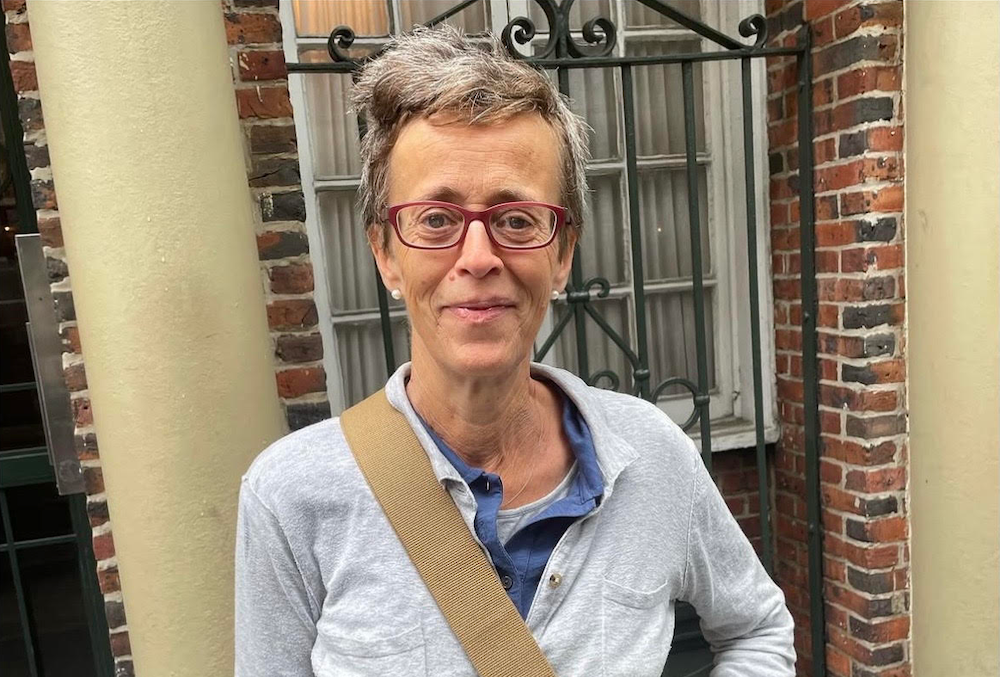
With her landmark 1999 debut, Who Paid the Piper? The CIA and the Cultural Cold War, Frances Stonor Saunders “single-handedly established a new branch of sub-history,” as novelist Ian McEwan observed. The book won many accolades, though sympathizers of Western anti-communism clamored to downplay its revelations: that between 1950 and 1967, intelligence agencies partnered in a covert front, launched by the Central Intelligence Agency (CIA), to manipulate Cold War intellectuals in a program whose basis was propaganda and censorship.
With abstract art exhibits and classical music tours, the CIA’s Congress for Cultural Freedom also founded dozens of intellectual magazines (most famously Encounter in London) while its associated fronts funded press agencies, anti-communist student activists and labor unions, ethnic studies, and the pro-war Vietnam Lobby; sent moles into Hollywood back offices to censor scripts; and used its growing apparatus to enforce Western cultural domination. Though Saunders was born the week the Congress for Cultural Freedom was exposed in the New York Times as a CIA front, The Cultural Cold War, as her debut was called in the United States, was an invaluable guide to many writers publishing in her footsteps — including me, in writing my first book Finks: How the CIA Tricked the World’s Best Writers.
Saunders died of a brain tumor on August 31 at age sixty. She published three other works of nonfiction, a feature documentary, and a miniseries for British Channel 4. After learning that her own manuscript was dropped by her original publisher, I came to view the censorship we face today — on college campuses, in nongovernmental organizations, in the media, and in the broader culture wars — as seeded by this official covert anti-communism revealed in The Cultural Cold War. The below is adapted from my profile of her in my 2024 book Flights: Radicals on the Run.
If her editor had gotten his way, Frances Stonor Saunders’s history of literary spooks may have remained a casualty of censorship. Her book The Cultural Cold War: The CIA and the World of Arts and Letters examined the CIA’s meddling in literature, magazines, and media. But in a late draft, her editor insisted she praise the CIA as “with the angels.” Her refusal almost tanked the US edition.
It’s worth celebrating Saunders’s investigative triumph — one that has spurred ongoing debate, helping launch an academic cottage industry that has been dubbed “cultural Cold War studies.” Scholar Edward Said called The Cultural Cold War “a major work of investigative history,” adding that “the dispiriting truth it reveals, or confirms, is that few of ‘our’ major intellectual and cultural figures resisted the blandishments of the CIA.”
But today, many misrepresent what the cultural Cold War actually was, suggesting that the program was an unmitigated success, helping “win” the Cold War, or that vast swaths of the rebel left are “synthetic” still — that is, counterfeit, as if the Left were created out of whole, fake cloth by the state.
When I met her for lunch on a rainy September day on Grove Street, she is still livid, twenty-five years later. I place a transcript of my 2016 interview with her on the table, and she orders smoked salmon and eggs with crème fraîche and capers. She makes small notes in the margins, amplifying or augmenting her struggle to tell the story of the Congress for Cultural Freedom (CCF) properly.
“If I’m going to do this,” she vowed, “I’m going to be absolutely clear with anyone I’m talking to; I’m not doing anything off the record,” lest she continue “repeating some of the errors of the whole program.” After interviewing a key player in the Congress for Cultural Freedom, she grew demoralized, an obstacle course of sorts having spread before her. And yet, after wringing the truth from those who were expecting more praise and whitewash, she was most taken aback when her own editor nearly tanked the book before it could be published.
Old News
Starting out, one of the Congress’s sentinels, Irving Kristol, browbeat her with a disingenuous warning. “It’s an old story,” he said. “Everybody knows this. . . . Why are you doing this now?” Growing nervous, she “almost fell for it.” “Oh, God,” she recalls thinking, “there’s a whole library out here on this stuff,” and it was already mossy.
To protect the secret program’s crown jewels, the old saw that the CIA’s involvement in American cultural institutions was an “old story” was honed. Overshadowed by Vietnam, the CCF scandal erupted in the New York Times eleven days after Saunders was born.
Born in London, Saunders studied English at St Anne’s College, Oxford. On her mother’s side, she hails from a blue-blood pedigree that occasionally embarrassed itself in correcting for extremism. (In a much-discussed memoir, her mother exposed her grandmother’s Nazi sympathies).
On her father’s side were Jews exiled to England during the war. The mash-up spawns a twin persona — the dispassionate proceduralism of a well-heeled Oxbridge barrister colliding with the radical cussing of a Vivienne Westwood Aries. Dressed in preppy but understated layers, she dons glasses with red frames and simple pearl earrings.
The phrase she has done most to popularize was used in 1968 by the historian Christopher Lasch, who described the same New York Intellectuals like Kristol — who formed the American CCF and later neoconservatism — as a clique of “high-level McCarthyites” who sometimes supported Sen. Joseph McCarthy explicitly. Critics like Lasch went ignored in the debate that followed revelations of the CIA’s subsidies to intellectuals. It is only for this reason that those who further his critique — like Saunders — can be called “revisionists.”
In this light, Saunders felt it to be “a story that hadn’t been told fully. I just felt like” Kristol’s “was a strategy and he was trying to put me off. He was calling all his friends, saying, ‘Don’t talk to this woman.’” So when the cohort insisted, “You’re fifty years too late,” she started to realize, “They don’t want me to do this.” One claim was, “Yes, it was a necessary evil” to use CIA funds, “but none of us did or said or wrote anything that we wouldn’t have otherwise, and freedom of expression was in no way curtailed. It was, instead, advanced by this [program].’ That was the Gloria Steinem line. We still hear it all the time.” (Steinem served as the director of the Independent Research Service, which sent American students to communist-sponsored international youth festivals to promote American-style politics and counter Soviet influences in those festivals, in the late 1950s and early 1960s. She long defended her engagement with the organization.)
Saunders found it contradictory. “What a peculiar defense of the organization built covertly for the theft of culture — saying it didn’t matter because they were going to do it anyway.” On the other hand, some of those she interviewed were bluntly honest. “The ones I have more respect for said, ‘You know, it was a question of exigency, and we did it and we’re glad we did it. . . . But the number of people trying to keep every level of their involvement secret, it just made me think that these two things don’t sit together.”
Digging into the archive, she read the former operatives’ letters. But the old secrecy kicked back in. A few of the guardians of free speech blocked her with threats over copyright. “You can’t on one hand say, ‘It was necessary and worth it, I’m proud I was associated with it,’ and at the same time say, ‘I don’t want any of the details of this to come out, and I’m not going to give you copyright to print my letters.”
Saunders adopted a savvy counteroffensive, showing up to interviews with her notebook hidden, hoping to establish trust. In one case, she met a former CIA officer in a bar, as he drank himself silly on cheap wine. Her patience yielded if not a “smoking gun,” then an opening.
After Thomas Braden worked directly for CIA Director Allen Dulles (under the pseudonym Homer D. Hoskins), in his post-CIA life he was cohost of Crossfire and creator of My Three Sons. But sitting with Saunders, he let slip “that the CIA had a power of veto” over its editors and writers — a euphemism for censorship. She convinced him to admit this by guessing, asserting it with conviction, watching him calculate, then agree. Initially, it stunned her. “Okay, that’s interesting,” she recalls thinking.
But again the narrative defaulted to stonewalling; and her doubts returned. “For a long time, I believed pretty much what I’d been told, that it was really theoretical,” that the veto “was never used, and it didn’t need to be, because everybody was seeing it from the same” script. As the cover stories knocked her off the scent, she came to view the uniformity as “interesting in itself. Because people were agreeing” on what to publish.
By uncovering the agency’s veto, she wielded new leverage in interviews. As she read Encounter’s editorial letters, she knew what to look for, and found “at least twenty or thirty instances of direct intervention stroke censorship by the CIA acting as executive editors.” (“Stroke” in the Queen’s English is like “slash” in the colonies.)
After our first interview, she emails me a list of fifty entries. Referenced by date and subject, each letter records CIA officers invoking the need to censor its authors — exercising this infamous “veto” over its editors’ judgements. In one letter, CCF executive Nicolas Nabokov reminds his editors of a rule from the magazine’s founding: that anything politically controversial must be okayed at Paris headquarters. The letter proves that agency censorship was explicit and structural. When enforced, it warned editors away from controversy or criticism of US policy — especially foreign policy.
For three decades, CCF veterans had maintained three holy tenets: 1.) they never censored; 2.) the CIA never meddled; and 3.) they published great writers. With the Nabokov letter and the larger batch, Saunders killed the first two tenets. (Gabriel García Márquez caveated the third, when he wrote his editor, “I will never write for you again.”) But the CCF would not relinquish its story readily, and she considered how to frame it against an anticipated chorus of denial.
For the examples of censorship she found, she imagined “many, many more. But I would still say that it’s a small percentage of the total output, in all media, of what the Congress for Cultural Freedom and these other CIA fronts were doing. It would be wrong to say that they had a department in the CIA that was frantically trying to keep this riotous lot in order.”
But if the CIA embarrassed its editors by making them undo an acceptance, as happened in the 1950s, the editors’ embarrassment was itself instructive. Saunders came to view it as “a very cleverly developed and maintained consensus that was funded and delivered unto the world as a defense of liberalism, and all the cherished liberal principles of free democracy, where freedom of expression is paramount.” Yet “if you weren’t within those orthodoxies and were receiving CIA dollars — there was a lot of heterodox opinion — it just didn’t get heard. It did not get as much airtime for that brief period of what? Seventeen years? Because it wasn’t in the fold of the CIA, MI6, CCF family.”
As evidence in other genres, she recalls figurative or social realist painters who couldn’t get exhibitions during abstract expressionism’s secretly subsidized reign. (I read of Black social realist artists Charles White and Elizabeth Catlett, who at the dawn of the Cold War lit out for Mexico City. Things in the United States got and stayed so bad, Catlett never came back.)
After the Bay of Pigs and the rise of the New Left, the subsidized editors got even more effective at camouflaging their sponsorship. At the BBC, they called insertions included to mask their bias “credibility items,” an acceptable critique meant to gain uptake among particular audiences. A counterfeit progressivism, yes, but used by nonprogressives in the interest of fooling and discrediting very real ones.
Chestnuts Kept Falling
With enough to start writing, Saunders returned to England. She likes to write in “a shed under a chestnut tree. The falling chestnuts hitting the roof in autumn keep me awake.”
Her coverage proved broad, spanning laws that gave birth to the CIA; how it was funded; how funds from the Marshall Plan were used, sub rosa, to beat the Soviets in cultural funding; how the CIA and MI6 used taxpayers’ funds to sponsor classical music tours, to organize abstract expressionist exhibits in Europe, and to launch magazines.
Her most troubling findings traced the overlapping personnel who created Encounter with those who were launching international crimes like the overthrow of Iran’s elected prime minister, Mohammad Mossadegh. Which gave us the shah. Which gave us the ayatollah. CCF anti-communist talking points spread from dozens of small-circulation intellectual magazines like Encounter, where Kristol was editor, into other magazines, finding their way ultimately into mass media.
Since the CIA was banned in its charter from operating at home, this flow was a crime. And this influence was rampant, resulting in congressional hearings.
Saunders revealed moles in Hollywood whose connivance kept American poverty and racism out of the industry’s films. One mole got multiple films stalled for depicting the United States in an unflattering light — poverty and racism washed out, foreshadowing the age of Zero Dark Thirty collaboration and the Marvel spectacle that we live in today. In the most ironic revelations, The Cultural Cold War examines operatives at publishing houses like Praeger, who could get your book killed if it failed to celebrate the West.
As she stitched together archives in the United States and the UK, she lifted the veil of occlusion. “The most effective kind of propaganda,” she quotes one of her sources, “is defined as the kind where the subject moves in the direction you desire for reasons which he believes to be his own.”
At Faber, the book was approved, intact. But at Free Press, a large independent New York house that was dissolved after Simon and Schuster swallowed it, her editor suggested a surprising disclaimer. She saw her Free Press editor as an odd fit. When “offered to every publisher in New York, no one took it except for the Free Press.” But the press published at odds with her viewpoint.
Founded in 1947, the Free Press took a new approach under neoconservative Edwin Glikes’s leadership in the Reagan era. It published Robert Bork’s The Tempting of America and Allan Bloom’s The Closing of the American Mind. Under Adam Bellow’s leadership it grew worse, publishing Dinesh D’Souza’s Illiberal Education, David Brock’s The Real Anita Hill, and Charles Murray’s racist classic The Bell Curve. In 1989, it crowned its canon with The Liberal Conspiracy, the book she hoped to correct for its whitewash, and which praised the CIA for the CCF scandal.
Saunders asked her agent, “‘Why would they take it? I mean, they publish half the people I’m going to be writing about, and not very favorably.” When the deal went through, Saunders met her editor in New York. “Are we absolutely clear that if I find any prima facie evidence that is not necessarily entirely flattering to do with any of your authors that this is not going to be a problem?” she asked. “‘Don’t worry,’” she recalled him saying. As long as it wasn’t ad hominem, “‘I can handle it.’”
Faber and the Free Press agreed “that the same manuscript would be used for both books, and that meant [the US editor] would play second fiddle to my editor here.” But while her US editor “initially was really pleased and loved it,” he asked during the first edit to make “adjustments.”
He suggested a Trojan horse disclaimer, reversing her argument. “All I needed to do,” she told me, still livid twenty-five years later, “was to say that the CIA were on the side of the angels, and that America’s was a good cause. I was like, ‘No, I don’t think so. I’m not going to change the polemic.” After faxes seeking clarity went unanswered, “they dumped the book.”
But falling victim to corporate censorship wasn’t the worst of it. For failing to tell a more useful story of the American century, the Free Press then billed her. “They said I owed them the $15,000 they had paid me as the first advance. And it was an incredibly distressing time, because I had no money and I’d spent what little money I had just getting flights to the States and paying for a month’s motel in Abilene, Kansas,” where Dwight D. Eisenhower’s papers are located. Stepping back, her tale suggests that by never being held to account, a batch of shady “centrists” who penetrated publishing and media in the 1950s were active and spawning, there to “veto” critiques like hers quietly.
Finally, socialist author and New Press publisher André Schiffrin “came to the rescue.” Her experience had been so unpleasant that Saunders tried to fall on her sword. “‘I don’t think, legally, I can give you this contract,’” she recalled telling him. “‘Don’t worry,’ he said. ‘We’ll sort it out.’” He brought in “a lawyer who did a lot of work for the ACLU,” saving her book.
Some reviewers, like Joseph Joffe in the New York Times, quoted her selectively, suggesting an innate inability to hear criticism of the West on its merits. Implying that Saunders was antisemitic — despite her father’s background — Joffe demanded more on “Communist manipulation” in a book explicitly about the capitalist kind. A magazine man, Joffe would found the American Interest after Nixonites ate the National Interest. Climaxing to a chorus of “moral equivalency,” he wrote. Using nineties lingo for “wokeism”: “Echoing the conventional multiculturalist critique, Saunders relentlessly equates the sub rosa subsidies of the West with Moscow’s heavy-handed propaganda efforts.” Except she didn’t.
The book was short-listed for the Guardian’s first book award and won the Royal Historical Society’s William Gladstone Memorial Prize. In 2018, she was elected as a Royal Society of Literature Fellow. As Diego Rivera’s biographer recalled of his abandoning cubism, to read Saunders is “like watching [someone] focusing [their] eyes after an extended period of blurred vision.”
After my own book came out and was met with selectively dishonest readings by one or two of its (conflicted) reviewers, I emailed Saunders to bitch and moan. She writes, “I understand why you’re unhappy with the review you’ve sent me, and I’ll only say that I had to put up a fight before, during and after the publication of my book, and it was exhausting. Was it Thomas Mann or [Johann Wolfgang von] Goethe who said you should never answer a critic unless he accuses you of stealing twelve silver spoons?”
Read the full story at the source
Source: Jacobin