
World Jacobin
Eugene Debs’s Life Speaks to Today’s Socialist Movement
Eugene Debs’s greatest achievement was not any particular vote tally. It was his making socialist partisans understand that the socialist movement arose out of the American political tradition’s most
English (original) ·Read in Deutsch ⇄
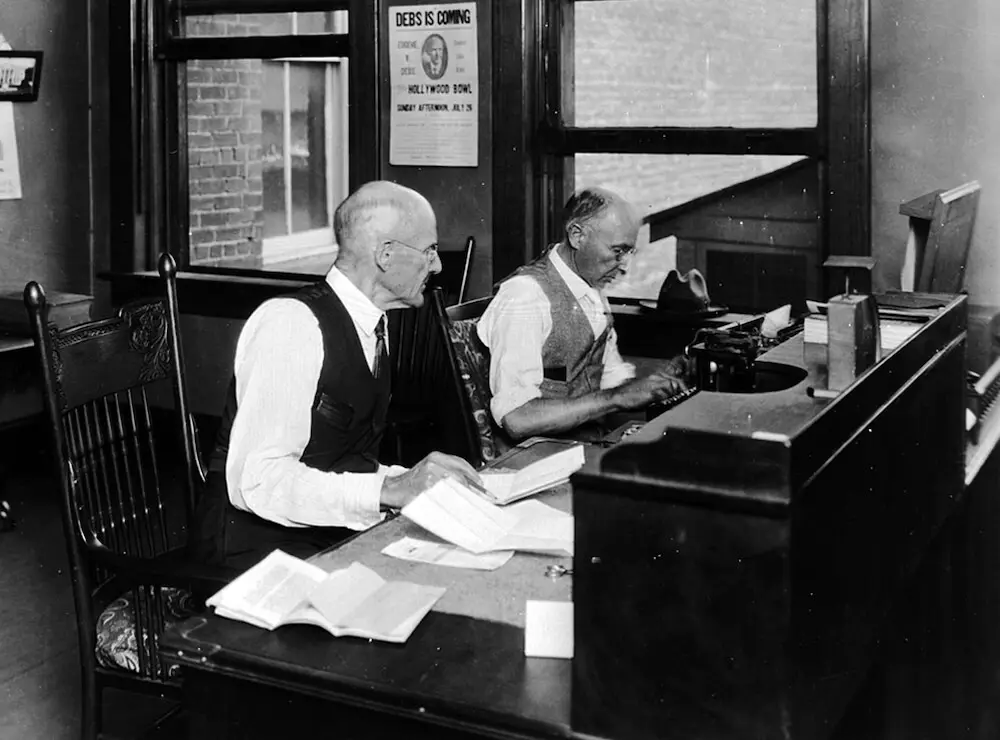
Shawn Gude’s splendid new biography of Gilded Age Socialist Eugene V. Debs could hardly have arrived at a more propitious moment. Perhaps as many as half of all young people tell pollsters they prefer socialism to capitalism. Gude, a member of the 130,000-strong Democratic Socialists of America (DSA), calls that organization, whose activism and endorsements have put eight self-professed socialists in the new Congress, the “institutional descendant” of Debs’s Socialist Party of America. In his victory speech right after winning the New York city mayoral election in 2025, Zohran Mamdani, an unapologetic DSAer, quoted Debs: “I can see the dawn of a better day for humanity.” And when Bernie Sanders and Alexandria Ocasio-Cortez made their “Fighting Oligarchy” tour in the months after Donald Trump’s 2026 election, their critique of the billionaire class echoed Debs’s blistering denunciations of Gilded Age wealth when the barnstorming five-time presidential candidate denounced the Rockefellers, Morgans, and Carnegies of his day.
Gude has written a Debs biography for our time. He emphasizes the rootedness of the Indiana railroad fireman in middle-American culture and Christianity, downplays more than other historians the ideological divisions endemic to the early twentieth century Socialist Party, and emphasizes the degree to which Debs, like Bernie Sanders and some of his contemporary comrades, could appeal to such a remarkably wide variety of constituencies. Gude’s biography also offers a full-bodied sense of Debs as a fragile and contradictory personality in which his constant travel, the crowd’s applause, and the opportunities thereby created for liaisons with the opposite sex, may well have compensated for a childless and increasingly distant marriage, as well as a distaste for the conflicts, political and personal, attendant upon leadership in any mass organization.
An American Democratic Socialist
The story of Eugene V. Debs’s life,” writes Gude, “is the story of one man’s radicalization — and of the country he helped radicalize in turn.” During the first decade of his working life, Debs was a conventional railroad unionist often hostile to strikes and largely uninterested or ignorant of the radical currents, social and ideological, that were on the rise in Gilded Age America. He disdained not only the violence of the 1877 rail strike but also the rise of the Knights of Labor, a more inclusive union formation. Debs happily endorsed the “Benevolence, Sobriety, and Industry” that were the watchwords of his Brotherhood of Locomotive Firemen.
But soon enough he was mugged by capitalist reality, most dramatically in the depression of the early 1890s that sparked the great Pullman boycott and nationwide rail strike Debs led in 1894. Jailed by the federal government for defying a union-busting injunction, Debs, like so many other imprisoned radicals in Russia, Prussia, and far-flung colonies, now had the time and incentive to read his Karl Marx. After six months in a Woodstock, Illinois, jail, he emerged a socialist.
By the start of the new century, when Debs stood proudly as the nation’s most forceful and popular anti-capitalist tribune, the Socialist Party seemed as American as the corn its members grew in Oklahoma, the copper mined by its Montana adherents, the cars built by Flint autoworkers, the apparel sewn by Lower East Side immigrants, or the sermons and editorials offered by advocates of the Social Gospel. With more than a hundred thousand members, some 1,200 socialists held elected office, including eighty mayors in thirty-six states.
And as Gude rightly asserts, Debs’s great achievement arose not out of any particular vote tally — he would win almost a million votes when he ran for president in 1912 and 1920 — but by making socialist partisans, as well as many of their opponents, believe that the movement he championed arose out of the American political tradition’s most democratic currents, from the revolutionary struggle against the British monarchy to the abolitionist fight against slavery. He was one of America’s great critics of the plutocracy, but more Christian agitator than political tactician. When, in early 1919, Debs was imprisoned for his opposition to World War I, his moral stature was crowned with martyrdom.
As if to even more firmly link his life and fate with that of our own time, Gude references Debs as a “democratic socialist.” That is an anachronistic phrase when applied to the early-twentieth-century movement led by men and women of a Debsian persuasion. In the years before the rise of Stalinism, not to mention German “national socialism,” almost all socialists described themselves as just socialists, or perhaps social democrats, because inherent in the idea of socialism was the democratic control of both economy and polity. (Before 1917, the Bolsheviks were a faction within the “Russian Social Democratic Labour Party.”) Neither Debs nor many of his contemporaries spent much energy thinking about precisely how a nationalized railroad or steel mill would be governed, an issue that bedeviled radicals of a later generation.
It was Michael Harrington who popularized the phrase “democratic socialism” when, in the early 1970s, he proved instrumental in the formation of the Democratic Socialist Organizing Committee, forerunner of today’s DSA. So while semantically inaccurate, Gude’s deployment of the phrase “democratic socialism” to the movement led by Debs serves to make abundantly clear the tutorial purpose of this biography.
Debs the Tribune
Debs was a socialist tribune, a clever and powerful wordsmith whose rhetoric combined outrage and moralism, denunciation and inspiration. He was not an original thinker, avers Gude, but that hardly prevented thousands from coming to hear him orate.
More than any other socialist of his time, writes Gude, Debs had a “seemingly intuitive sense of how to connect with the US working class in all its heterogeneity.” He was an abolitionist opposed to the Old World tyranny of aristocrats and kings.
“Workers weren’t just poor, they were serfs,” summarizes Gude in explaining the Debs appeal. “Capitalism didn’t just impoverish, it enslaved. . . . And through solidarity would come freedom.“
However, when it came to actually running the Socialist Party and participating in its internal debates, Debs was almost always absent, out campaigning or ill at home, even as his own sentiments and inclinations usually tilted left. Debs was a founder of the Industrial Workers of the World, which he projected as a far more encompassing and radical labor formation than the increasingly stolid American Federation of Labor. And Debs was ambiguous when it came to socialist party advocacy of those reforms that might serve the immediate interests of the working class.
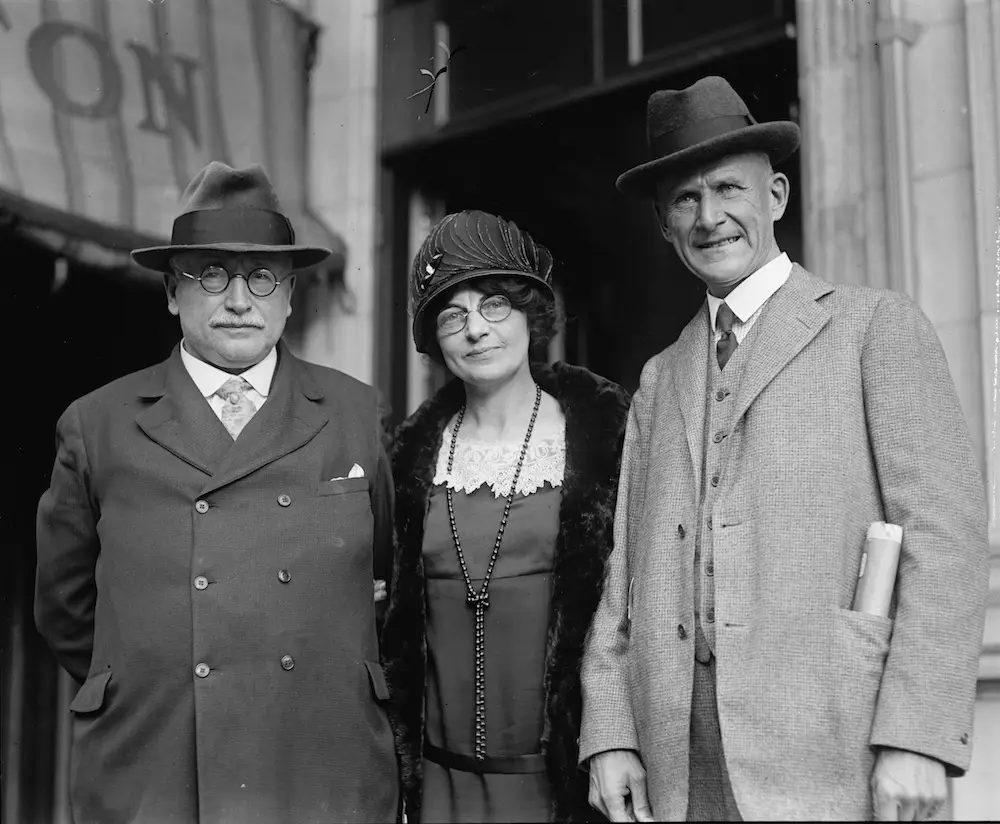
Debs did not directly polemicize against the “sewer socialists,” notably those holding municipal office in Milwaukee, Butte, Reading, and other cities, where their innovative public health regimes proved enormously beneficial to thousands of residents. But he was not interested in forging the alliances and legislation that would advance such reforms as an integral component of socialism’s electoral appeal: “What we want is not to reform the capitalist system. We want to get rid of it.”
Here’s an instance where Debs hardly offers contemporary socialists much inspiration. Both Bernie Sanders and Zohran Mamdani would fit easily on the Socialist Party’s right wing, not far from Milwaukee’s Victor Berger or New York’s Morris Hillquit, both of whom often bested Debs when it came to internal party debate. Mamdani boasts of filling thousands of New York City potholes and opening a set of city-owned grocery stores, and he seems to have forged a working relationship with a New York governor several steps to his right. Meanwhile, Sanders links a forthright denunciation of American capitalism with a set of concrete reforms whose realization requires a very messy set of alliances and incremental steps forward that Debs would assuredly find utterly distasteful. And of course, much of this twenty-first century politicking will take place within, rather than in opposition to, the Democratic Party.
Debs Portraits Past and Present
Gude did not exactly rediscover Eugene V. Debs, because his life and times have long attracted the attention of latter-day radicals, especially during those eras when the Left has been on the rise. It’s instructive therefore to compare the Gude biography with two other narratives that saw publication in years past when other varieties of American radicalism seemed to have much ideological and social wind at their back.
Ray Ginger published the first comprehensive biography in 1949, The Bending Cross: A Biography of Eugene Victor Debs. Ginger was just twenty-five and still in grad school on the GI Bill. It’s hard to know how he found time to write the book. At the University of Michigan, the army put him in all-day classes learning Japanese, and for a time after the war he worked in a Detroit auto factory. Meanwhile, Ginger had joined the Communist Party in 1944 or 1945, when both the party and the industrial union movement it championed were at their apogee.
Ginger’s biography is not a party-line publication, and there is some indication that he clashed with Communist officials when they read the nearly completed publication. Still, its structure and argument reflects a species of 1930s and ’40s Popular Front Marxism. The table of contents constructs a teleological scaffolding that moves ever upward in both consciousness and organization, from “The Railroad Brotherhoods,” (mere trade union consciousness) to “The American Railway Union,” (Congress of Industrial Orgnaizations–style industrial unionism), and on to “American Socialism” and then “World Socialism,” the longest chapter in a book written during a half-decade when fascism was vanquished and the Cold War began.

Ginger’s career was a tragic one. Harvard fired him in 1954 when his Communist ties became known, after which he took jobs in New York advertising and publishing, all the while writing book after well-received book, most on Gilded Age America. He taught at Brandeis in the 1960s, but lost his post there after an affair with an undergraduate. An alcoholic, he continued to teach and write at various universities until cirrhosis of the liver took his life in 1975 when he was but fifty years old.
While Ginger is as appreciative of the humanity and transcendence of the Debsian revolutionary visions as is Gude, he takes aim at the socialist tribune’s failure to combine his popular appeal with a necessary engagement with the Socialist Party’s complex and contentious inner life. Gude gives Debs something of a pass on this score, perhaps reflecting the high-profile role now being played by Bernie Sanders, who is not even a member of DSA, or Alexandria Ocasio-Cortez, whose DSA linkages are complex and somewhat attenuated.
But when Ginger was writing his biography, you did not have to be a Leninist to understand the importance of forceful leadership. The progressive trade unions and the various left-wing parties of that day considered it vital to put forth public spokesmen and women fully engaged in shaping the program and politics of the institution over which they presided. Consider Dorothy Healey’s unorthodox leadership of the California Communist Party or Walter Reuther’s skillful rise to power in the United Auto Workers. Both were exciting speakers but also deeply enmeshed in organizational politics. Debs did none of that.
Although he was by far the most popular figure in the Socialist Party, after 1904, Debs refused to attend party conventions or serve on leadership committees. His absenteeism created a vacuum filled by Berger, Hillquit, and others to his right. “Comrade Debs is no doubt a great orator and a fiery revolutionist,” wrote one socialist “rightwinger” quoted by Ginger, “but he is also one of the poorest generals and tacticians that our movement has.. . . . He has shown himself utterly unreliable in the meeting of the practical problems of the day and the selection of his advisors.”
Ginger’s admiration for Debs was therefore mixed with a certain condescension. He called him “more Midwestern than a worn and rotting plow-handle buried deep in the soil of a Kansas farm.” It is not that Ginger wanted a Vladimir Lenin or a Leon Trotsky, but when the author asserted in the last sentences of his book that Debs’s “finite self seemed to merge with the agonized wanderings of the nameless multitude,” the assessment was not entirely complimentary.
Nick Salvatore’s 1982 study, Eugene V. Debs: Citizen and Socialist, turned much of Ginger’s critique on its head. Debs was indeed as American as that rotting Kansas plow-handle, and that’s the whole point. Salvatore’s perspective, largely echoed by Gude, had a twofold origin. As a militant unionist and civil rights activist, Salvatore, who died in 2025 after a distinguished career as a Cornell historian, was in the 1960s and ’70s looking for a way that could enable the New Left to speak American, to evoke a new radicalism out of native values and context. One could find that impulse in the 1962 Port Huron Statement and the Free Speech Movement at the University of California, Berkeley, where Salvatore a few years later wrote a dissertation that became his prize-winning Debs biography.
The rediscovery, by an older generation of historians, of an eighteenth to nineteenth century “republican” tradition gave Salvatore the tools to understand Debsian radicalism as contiguous with many of the main cultural and social currents emblematic of the Protestant small-town America that an earlier cohort of radicals — think H. L. Mencken and Sinclair Lewis — had once disdained.
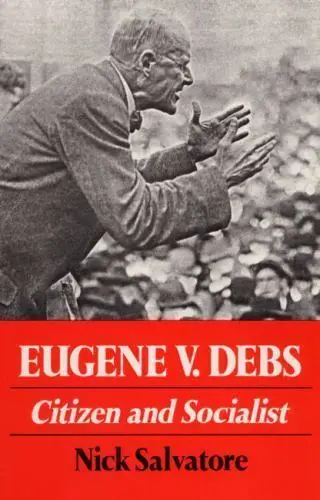
Salvatore wrote a “social biography” steeped in the “new labor history.” He postulated that Debs’s radicalism arose out of the culture found in Terre Haute, his preindustrial hometown, wherein a “manly” independence, evangelical Protestantism, and a republican understanding of the responsibilities and privileges of a virtuous citizenship engendered a democratic America. Like E. P. Thompson and Herbert Gutman, pioneering historians of working-class formation, Salvatore found nineteenth century radicalism, socialist or otherwise, emerging out of the clash between those republican virtues and the oppressive structures engendered by Gilded Age industrial capitalism.
Encapsulating all this, Gude writes of Debs, “His genius was assembling a mix of ideological ingredients familiar in working-class circles — Christianity and labor republicanism, Marxism and the American revolutionary tradition — and alchemizing them” into an all-American vernacular. “I like the Fourth of July,” Debs told a crowd on his first run for president in 1900, “It breathes a spirit of revolution.”
Debs and the Race Question
There was however, one aspect of the Debs praxis that Gude shows to be very much at odds with the dominant culture and the sentiments held by many of his erstwhile comrades. Debs did once assert, “We have nothing special to offer the Negro, and we cannot make separate appeals to all the races.” Abolishing capitalism was the solution to the Negro problem, the woman question, and the persistence of antisemitism. Until then, it was fruitless to seek any sort of particular amelioration, because the ruling class itself fostered and advanced such discriminations and oppressions. “The Negro is not one whit worse off than thousands of white slaves who throng the same labor market to sell their labor-power to the same industrial masters.”
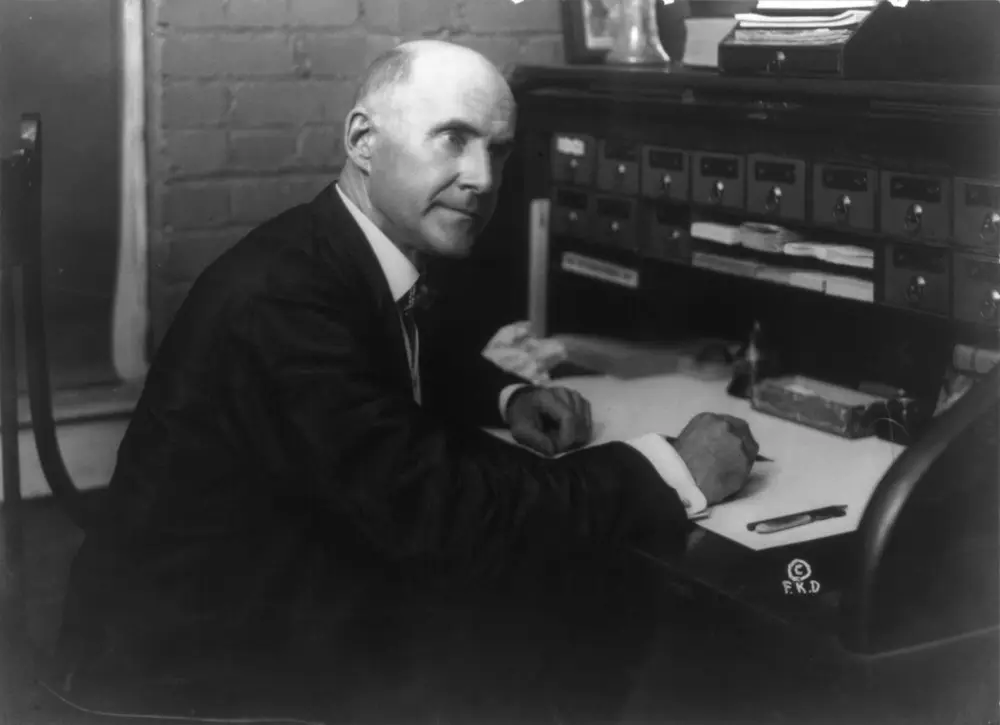
And not only that: thousands of dedicated socialists were also dedicated racists who saw poorly paid Asian immigrants and African American strikebreakers as debased elements of the working population not all that different from what Marx identified as the lumpenproletariat. This was an era when manliness and whiteness were seemingly intertwined.
But Debs would grow in moral and social intelligence when it came to the causes and remedies of American racism.
On speaking tours of the South he was appalled at the brutal racism and Jim Crow practices he observed. He probably read W. E. B. DuBois’s new book, The Souls of Black Folk, afterward asserting that “The whole world is under obligation to the negro and that the white heel is still upon the black neck is simply proof that the world is not yet civilized.” When the film Birth of a Nation was shown in Terre Haute, Debs was aghast at this cinematic celebration of the Ku Klux Klan.
He applauded the anti-racist agitation of the young black socialists A. Philip Randolph and Chandler Owen, and by the time of the bloody race riots of the World War I era, he saw that the battle against racial oppression did require something “special” on the part of socialists and other progressives. As early as the 1912 election, W. E. B. DuBois judged Debs the only candidate, who “by word and deed, stands squarely on a platform of human rights regardless of race or class.”
Debs’s salutary evolution on this issue put him far to the left of most socialists and trade unionists of his time. And that was just the problem, because Debs rarely sought to leverage his popularity to make his party adopt a truly progressive posture on an issue of such vital import to the twentieth-century American left. Thus, in the 1930s and ’40s, it would be the Communists and not the Socialists who would stand out as civil rights pioneers.
What American Socialists Can Accomplish
Despite the Debsian appeal of a century and more ago, as well as the contemporary enthusiasm engendered by its twenty-first century revival, American socialism was and is a minority current in both politics and culture. The obstacles to its success are legion: sectarian infighting of the sort that helped destroy Debs’s party right after the Bolshevik Revolution; the long-standing religious, racial, and occupational divisions within the working class; and of course the enormous power of capital and its many ideological and political handmaidens.
But I don’t think a socialist movement has to achieve majoritarian hegemony to make an impression on the polity. Conservative denunciations of “creeping socialism” have not been entirely unfounded, either in 1930s or today.
When Norman Thomas, who succeeded Eugene Debs as the Socialist Party’s Great Depression–era leader, complained that “[Franklin Delano] Roosevelt stole our program,” he was also boasting of how a few thousand organized activists can make their presence felt when circumstances combine to offer them historical influence and leverage. The same may be true today.
This article originally appeared in Jacobin, a democratic socialist magazine publishing long-form essays and analysis on politics, economics, and culture. Subscribe to the print edition for $20 a year.