
World · Jacobin · · 1h
An Empire on the Edge
English (original) · Read in Deutsch ⇄
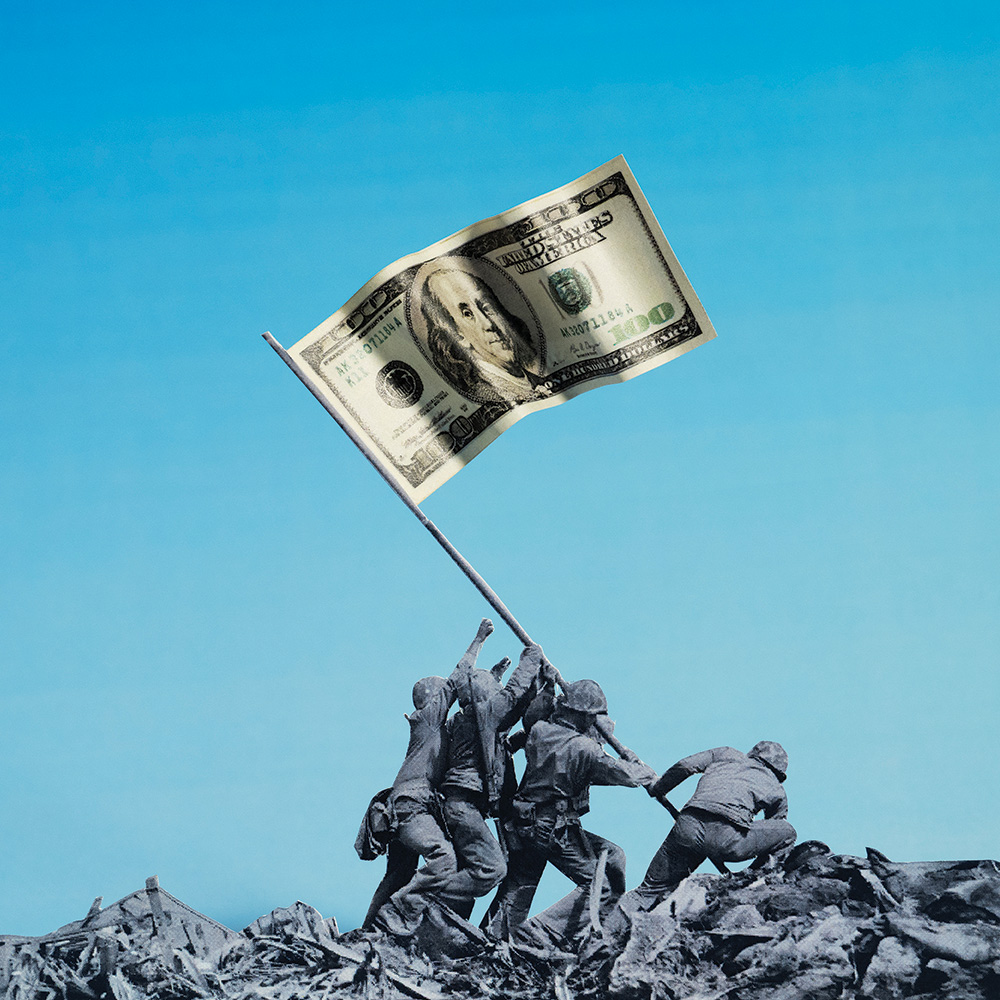
With more than half of global trade conducted in dollars, the United States is still the world’s largest economy as well as its dominant military and political power. But Donald Trump, in his second presidential term, has put both these facts at unprecedented risk, using America’s global position for political gain and personal enrichment all while undermining the pillars of the nation’s financial dominance, such as the rule of law and the security of global trade flows.
Yet according to economist Mona Ali, little of this behavior is truly new. The global financial system is, at its core, a political system, though Trump and his advisers are admittedly wielding this system more carelessly than any administration has in a generation. In a wide-ranging discussion, Ali explains who benefits from the dollar’s dominance and whether the world’s reserve currency has any plausible challengers.
Jacobin
It is often said that the dollar is the world’s reserve currency. What does this mean, and how does it relate to the currency’s dominance?
Mona Ali
The dollar’s dominance is often attributed to its status as the key international reserve asset. This shorthand lends the impression that money is a commodity — a thing — when in fact, for the most part, money is credit — a social relation. While it is true that trillions of dollars are held as safe assets by investors and governments around the world, the bulk of these dollars in countries’ foreign reserves are credit contracts, predominantly US Treasuries.
While dollar dominance is often attributed to its reserve currency role, the dollar’s entrenchment in the financial system arises from its dominance in international credit creation. The dollar is the unit of account undergirding the world’s deepest and most dispersed credit system. This includes, but is hardly limited to, Treasuries and bank loans. The power to create dollar-denominated credit isn’t restricted to the United States’ monetary authorities; foreign banks issue more dollar loans than US banks.
Crises in the dollar system — a globe-spanning credit regime — have global consequences. When excess credit creation results in financial crisis, the United States’ central bank, the Federal Reserve, steps in to stabilize dollar markets. While analysts emphasize the ex post, ad hoc nature of Fed bailouts, the Fed’s interventions reveal the stratification embedded in the international monetary hierarchy. Rich countries with standing access to dollar loans through Fed swap lines enjoy ease of access to emergency dollar liquidity. Low- and middle-income countries, which do not have easy access to the Fed’s credit facilities, must face discipline and punishment by international bond markets.
Facing acute dollar shortages, many countries have little choice but to seek costly and conditionality-laden credit from the International Monetary Fund (IMF). Almost a hundred countries were in IMF loan programs in 2022–23. The dollar’s public backstop — Fed lines for the few, IMF loans for the rest — is imperial in structure.
Perhaps paradoxically, the dollar is also the preeminent source of US hegemony. The global demand for dollars is robust. Because the US monetary authorities issue the world’s most powerful currency, the United States enjoys a softer budget constraint. It allows the United States to devote more than a trillion dollars toward military expenditures every year. But as Darializa Avila Chevalier has pointed out in her “Babies, Not Bombs” platform, it is the hallmark of a decaying polity that it neglects working-class communities at home while fighting pointless wars abroad.
The fact is that the dollar empire is largely in private hands. Like dark matter in the physical universe, dollar balance sheets are invisible to the public eye. Dollar dominance runs the gamut from the centrality of dollar-denominated debt instruments in financial markets to the sensitivity of the global economy to movements in the dollar’s exchange rate, which systemically impacts global trade and financial conditions.
While Treasuries and the bulk of US bank loans have been backstopped by the Federal Reserve, large parts of the system aren’t governed by US monetary authorities and policymakers. Most credit contracts in the global dollar system aren’t protected by the Fed. These shadowy parts of the dollar system exist offshore and off–balance sheet, in short-term funding instruments such as foreign exchange (FX) swaps. Derivative contracts in which one currency is exchanged against another, FX swaps are a predominant source of dollar borrowing even if, technically speaking, they aren’t credit instruments.
With trades averaging $4 trillion per day, the FX swaps market, in which one currency is exchanged for another by means of a derivative contract, is by far the largest market in dollars globally. Lightly regulated, large in transactional amounts, and informal in governance, which occurs by way of a voluntary global FX code, the market in FX swaps is at times prone to a liquidity mirage. In other words, true liquidity may be overstated. These instruments are the “known unknowns” of the dollar system. The potential vulnerabilities in this fast-growing $130 trillion market remain obfuscated.
It should be clear that the markets that comprise the dollar system aren’t just prone to volatility; they are dysfunctional. Rather than raising capital for factories or infrastructure, dollar funding markets are largely in the business of refinancing debt contracts. Three out of every four transactions in financial markets involve refinancing of some sort.
For several decades, the United States has run trade deficits, the largest component of its current account balance, by importing more goods than it exports. The US current account balance (-$1.18 trillion in 2025) gets much more attention, but its financial account balance, which represents net US borrowing from foreigners, is larger still (+$1.3 trillion in 2025). The United States has principally shaped global imbalances, the large financial and trade imbalances that have been a defining characteristic of the world economy over the last quarter of a century.
As the issuer of world money, the United States can finance its trade deficits more easily than other countries can. At present, the United States’ ability to borrow via the Treasury market — the deepest pool of government debt in the global liquidity system, one-third of which is held overseas — depends less on sovereigns such as Japan or China and more on the calculus of private investors such as hedge funds. From 2022 to 2023, higher interest rates and a stronger dollar drew 41 percent of global financial inflows to the United States. This uphill flow of capital into the United States was even greater in 2025.
Trade imbalances have been explained in binary terms: as either benign or downright bad. The twentieth-century American economist Charles P. Kindleberger held a benign view of the US balance-of-payments deficits. The United States runs a current account deficit, he argued, so that it can throw dollars into the world economy. For Kindleberger, the role of the United States as the world’s banker was akin to peacekeeping. His more subtle point was that US deficits should be understood as deficits only in accounting terms.
The fact is that US trade deficits and even larger financial inflows derive from the centrality of the United States in global trade and financial networks. US consumers have benefited from cutting-edge and cheaper products made in the rest of the world. Their spending in turn galvanizes growth in poorer places. Financial flows are much larger than trade flows. Global finance has profited from dollar trades and higher US interest rates.
American exceptionalism is usually understood in purely financial terms, rooted in the power of the dollar, yet it also derives from the fact that US corporations capture the lion’s share of profits across a whole host of far-flung supply chains. Reduced costs from economies of scale and cheaper labor involved in overseas production redound to US firms and consumers. The ensuing US trade deficit is correlated with rising corporate profits.
The dollar is not fully to blame for deindustrialization in the United States. Offshoring was a choice made by US corporations. However, the fact that prosperity in the Global South depends on accumulating dollars by selling to the US market makes for a very asymmetric global economy. The world economy runs on dollars, but from the perspective of the rest of the world, dollar dependence isn’t always benign; it can be explosive, as in 2022–23, when dollar shortages made for sovereign debt crises.
Even for the US government, whose borrowing shows little sign of receding as interest rates on Treasuries climb (most recently because of the United States’ war on Iran), it is clear that borrowing from credit markets isn’t limitless. It involves costs — net interest payments are more than a trillion dollars this year — even for the monetary superpower. And there are real costs, such as the time to make weapon systems; concerns about exhausting matériel such as interceptors have driven the current pause in US air strikes on Iran.
Jacobin
Some economists have described the United States’ ability to use massive global demand for its currency as an exorbitant privilege, because it allows America to run large deficits and live beyond its means. Is this a privilege that benefits all Americans, or even all sections of American capital, equally?
Mona Ali
For several decades, the United States has run trade deficits, the largest component of its current account balance, by importing more goods than it exports. The US current account balance (-$1.18 trillion in 2025) gets much more attention, but its financial account balance, which represents net US borrowing from foreigners, is larger still (+$1.3 trillion in 2025). The United States has principally shaped global imbalances, the large financial and trade imbalances that have been a defining characteristic of the world economy over the last quarter of a century.
As the issuer of world money, the United States can finance its trade deficits more easily than other countries can. At present, the United States’ ability to borrow via the Treasury market — the deepest pool of government debt in the global liquidity system, one-third of which is held overseas — depends less on sovereigns such as Japan or China and more on the calculus of private investors such as hedge funds. From 2022 to 2023, higher interest rates and a stronger dollar drew 41 percent of global financial inflows to the United States. This uphill flow of capital into the United States was even greater in 2025.
Trade imbalances have been explained in binary terms: as either benign or downright bad. The twentieth-century American economist Charles P. Kindleberger held a benign view of the US balance-of-payments deficits. The United States runs a current account deficit, he argued, so that it can throw dollars into the world economy. For Kindleberger, the role of the United States as the world’s banker was akin to peacekeeping. His more subtle point was that US deficits should be understood as deficits only in accounting terms.
The fact is that US trade deficits and even larger financial inflows derive from the centrality of the United States in global trade and financial networks. US consumers have benefited from cutting-edge and cheaper products made in the rest of the world. Their spending in turn galvanizes growth in poorer places. Financial flows are much larger than trade flows. Global finance has profited from dollar trades and higher US interest rates.
American exceptionalism is usually understood in purely financial terms, rooted in the power of the dollar, yet it also derives from the fact that US corporations capture the lion’s share of profits across a whole host of far-flung supply chains. Reduced costs from economies of scale and cheaper labor involved in overseas production redound to US firms and consumers. The ensuing US trade deficit is correlated with rising corporate profits.
The dollar is not fully to blame for deindustrialization in the United States. Offshoring was a choice made by US corporations. However, the fact that prosperity in the Global South depends on accumulating dollars by selling to the US market makes for a very asymmetric global economy. The world economy runs on dollars, but from the perspective of the rest of the world, dollar dependence isn’t always benign; it can be explosive, as in 2022–23, when dollar shortages made for sovereign debt crises.
Even for the US government, whose borrowing shows little sign of receding as interest rates on Treasuries climb (most recently because of the United States’ war on Iran), it is clear that borrowing from credit markets isn’t limitless. It involves costs — net interest payments are more than a trillion dollars this year — even for the monetary superpower. And there are real costs, such as the time to make weapon systems; concerns about exhausting matériel such as interceptors have driven the current pause in US air strikes on Iran.
Jacobin
Trump said tariffs would rebalance trade and strengthen America’s economic position. What has actually happened to the dollar, the Treasury market, and the trade deficit since Liberation Day?
Mona Ali
Having declared a trade war on allies and adversaries alike, Trump momentarily tarnished the safe-haven appeal of the dollar and the United States. A 10 percent decline in the previously expensive dollar has been the one silver lining of the Liberation Day storm. However, capital flows into the United States were unprecedented in 2025.
Trump’s decisions are whiplash-inducing. While he has expressed preference for a lower dollar for, among other things, “rebalancing” trade, what the next four years of on-and-off presidential decrees will do to the dollar’s status will ultimately be decided by how financial markets, whose size vastly outweighs global trade, digest forthcoming shocks. While market volatility hurts households and Main Street, trading volatility has proven hugely beneficial for the big global banks such as JPMorgan Chase and Goldman Sachs, whose trading revenues have been at a decade high.
The tremors in the Treasury market, adjacent Treasury repo market, and far bigger interest-rate swap derivatives market in April 2025, evidenced by widening interest-rate swap spreads, did not threaten US credit markets. However, Trump’s blustering that the United States should annex Canada and Greenland prompted Canadian and Danish pension funds to announce they will invest less in US private equity. As inflationary concerns rise again with the Iran war in 2026, Treasury yields have been going up once more. For the first time since 2007, thirty-year Treasury bonds were auctioned at 5 percent. With rising interest rates and the doubling of hedge-fund holdings of US Treasuries, the likelihood of an untoward credit event has increased.
Trump’s much-watered-down tariff regime has diminished the US current account deficit only slightly, while the US financial account continues to record new peak inflows. These inflows militate against the correction of trade deficits. Rebalancing these annual trillion-dollar imbalances through tariff revenues is a fantasy.
Jacobin
What would happen in the event of an economic crash?
Mona Ali
Crashing the global economy is a surefire way to reduce US external imbalances. The last time the US trade deficit sharply declined was during the Great Recession. As the global financial crisis deepened, by October 2009, unemployed workers in the United States topped 15.7 million. Despite the turmoil, the dollar remained a safe-haven asset, in part because of the institutional support of the Federal Reserve, which pumped liquidity into offshore dollar markets by way of dollar swap lines.
Also at play, albeit to a lesser extent, was adept financial diplomacy. Hank Paulson, the US Treasury secretary at the time, convinced China not to sell its holdings of US debt despite significant losses on China’s portfolio, which was heavy on agency mortgage-backed securities from the US housing market crash. Since then, portfolio losses on its US debt holdings as well as domestic political pressures have led China to reduce the share of its official FX reserves denominated in dollars.
The US-led immobilization of Russia’s reserves in 2022 highlighted the dangers of dollar dependence. There was much talk of de-dollarization among the BRICS nations. In 2024, China formally announced its plans to internationalize the renminbi. Early in the Iran war, the use of China’s Cross-Border Interbank Payment System (CIPS) ticked up as a mechanism for payments of internationally restricted oil. Alternatives to the dollar and its infrastructures, such as central bank digital currency and the China-dominated mBridge platform, have demonstrated increased activity after the breakout of the war.
The United States’ and Israel’s unprovoked bombardment of Iran and Lebanon and Iran’s retaliatory strikes on US military bases and energy infrastructures in the Gulf are perhaps the most serious challenge to US power in decades. The blockade of the Hormuz Strait has led to an unprecedented supply shock to the global oil market. By reducing its oil imports, China has helped stabilize that market. Its actions stand in sharp contrast to the disorder inflicted by the United States.
Trump’s 2025 tariffs had been particularly harsh toward China. From February 2025 onward, his administration ratcheted up tariffs on China from 10 percent to 145 percent. Although it ultimately lowered them, imports from China faced an additional “fentanyl” tariff of 10 percent on top of the baseline 10 percent general tariff. As Trump’s use of emergency powers to inflict tariffs on the rest of the world was struck down by the US Supreme Court, the executive office adopted a new tariff regime of 10 or 12.5 percent plus sector-specific tariffs using different legal provisioning, in this case sections 122 and 232 of the Trade Act of 1974. Trump has recently imposed 25 percent tariffs on Brazil and 50 percent tariffs on Canada using varying legal codes.
Despite the aggression unleashed by Trump on adversaries and allies alike — five months into the Iran war, he raised tariffs on sixty countries — the penchant for dollar assets hasn’t diminished. While financial inflows into the United States have contracted thus far in 2026, the share of dollar holdings in sovereign foreign reserves has slightly increased. We are in a period of flux.
Jacobin
What are the geopolitical threats to dollar dominance?
Mona Ali
The US-led immobilization of Russia’s reserves in 2022 highlighted the dangers of dollar dependence. There was much talk of de-dollarization among the BRICS nations. In 2024, China formally announced its plans to internationalize the renminbi. Early in the Iran war, the use of China’s Cross-Border Interbank Payment System (CIPS) ticked up as a mechanism for payments of internationally restricted oil. Alternatives to the dollar and its infrastructures, such as central bank digital currency and the China-dominated mBridge platform, have demonstrated increased activity after the breakout of the war.
The United States’ and Israel’s unprovoked bombardment of Iran and Lebanon and Iran’s retaliatory strikes on US military bases and energy infrastructures in the Gulf are perhaps the most serious challenge to US power in decades. The blockade of the Hormuz Strait has led to an unprecedented supply shock to the global oil market. By reducing its oil imports, China has helped stabilize that market. Its actions stand in sharp contrast to the disorder inflicted by the United States.
Trump’s 2025 tariffs had been particularly harsh toward China. From February 2025 onward, his administration ratcheted up tariffs on China from 10 percent to 145 percent. Although it ultimately lowered them, imports from China faced an additional “fentanyl” tariff of 10 percent on top of the baseline 10 percent general tariff. As Trump’s use of emergency powers to inflict tariffs on the rest of the world was struck down by the US Supreme Court, the executive office adopted a new tariff regime of 10 or 12.5 percent plus sector-specific tariffs using different legal provisioning, in this case sections 122 and 232 of the Trade Act of 1974. Trump has recently imposed 25 percent tariffs on Brazil and 50 percent tariffs on Canada using varying legal codes.
Despite the aggression unleashed by Trump on adversaries and allies alike — five months into the Iran war, he raised tariffs on sixty countries — the penchant for dollar assets hasn’t diminished. While financial inflows into the United States have contracted thus far in 2026, the share of dollar holdings in sovereign foreign reserves has slightly increased. We are in a period of flux.
Jacobin
Are there any genuine potential alternatives to the dollar as the world’s preeminent currency?
Mona Ali
The development of alternatives to dollar-dominated financial infrastructures in Europe and Asia is still in its early stages. A small but significant appetite for gold on the part of certain well-stocked central banks appears to be an inflation or geopolitical hedge rather than a threat to the dollar’s dominance. How much should we read into declining foreign holdings of US securities in New York? Could large Treasury holders such as Saudi Arabia or China, at least in theory, leverage their holdings in geopolitical gamesmanship? Saudi Arabia closely hews to US interests, but along with Iran, Indonesia, Egypt, and the United Arab Emirates, it has joined the growing BRICS coalition. China has expressed a lack of interest in shaping global geopolitics, which is why the symbolism of China’s Ministry of Finance issuing $2 billion in dollar-denominated bonds in Riyadh turned a lot of heads in November 2024. The yields on these two different bond issuances were just one and three basis points above US Treasuries for the three- and five-year maturities. While the bond issuance was small — symbolic more than anything else — such an extraordinarily low cost of sovereign borrowing was unprecedented in the offshore dollar bond market. In 2025, China bested this record, issuing $4 billion in dollar bonds in Hong Kong at rates equivalent to US Treasuries.
China, which has a stellar credit rating, is an active player in the global dollar system both as creditor and, more recently, as borrower. It has increasingly shown that it too can play hardball. China retaliated against Trump’s assaults by imposing tariffs on the United States, temporarily pausing its imports of US liquefied natural gas, and suspending exports of critical minerals and rare earth magnets to the United States — materials critical to American auto, semiconductor, and aerospace manufacturing. After the Iran war began, China issued blocking orders against US sanctions on Iranian oil, permitting its processing in its small “teapot” refineries. More recently, China has temporarily limited the reexport of helium, necessary for semiconductor chip manufacturing, which it imports from Russia.
China faces its own troubles, however, not least of which is slowing growth. So-called virtuous creditors (trade-surplus-generating countries) face certain problems associated with low yields on government debt in the global dollar system. Low interest rates on China’s government bonds have dampened foreign investor demand. For China, internationalizing the renminbi through more debt issuance will involve reducing its deflationary trade surpluses. It appears that China’s path toward hegemony in the Global South is evolving from Belt and Road Initiative credit arrangements to green and AI-related investment.
Jacobin
People like Leo Panitch, Sam Gindin, and Peter Gowan link the dollar to American military and political power. In the context of decades of slow relative economic decline, the Trump administration has pursued tariffs and warmongering. What does the war with Iran mean for the future of the dollar?
Mona Ali
For now, the dollar is hardwired into the global economy. As the fallout from sanctions and debt crises shows, the dollar is also a great source of international volatility. But if American hegemony meant that allies were protected by the US security umbrella and that the US market ensured prosperity for the rest of the world, the second Trump administration’s actions — tariff wars, threatened invasions, and, most egregiously, its war on Iran — have sundered the already contestable notion of hegemonic stability. The destruction of US military installations and the expending of its very expensive arsenal have eroded America’s power projection. The greatest beneficiary of the Iran war is undoubtedly China.
Whether America will prove capable of managing the dollar’s exorbitant privilege depends in part on the state of US democracy. The current administration has shown its complete disregard for technocrats. Its ideologically driven encroachments on the Federal Reserve are for now muted, but Stephen Miran, a Fed governor until recently, is a proponent of weaponizing the dollar in ways that resemble the coercive sterling area policies of 1940s British imperialism.
Yet we aren’t in a completely weaponized dollar bloc as of yet, and the most positive blowback from US-led financial weaponization is the rise in alternatives to the dollar. Larger renminbi and euro debt markets are easy wins for China and the European Union, ones they should double down on, especially as dominance without hegemony gets even uglier.
Read the full story at the source →
Source: Jacobin