
World · In Defence of Marxism · · 2h
The Trumpification of Latin America – what next?
English (original) · Read in Deutsch ⇄
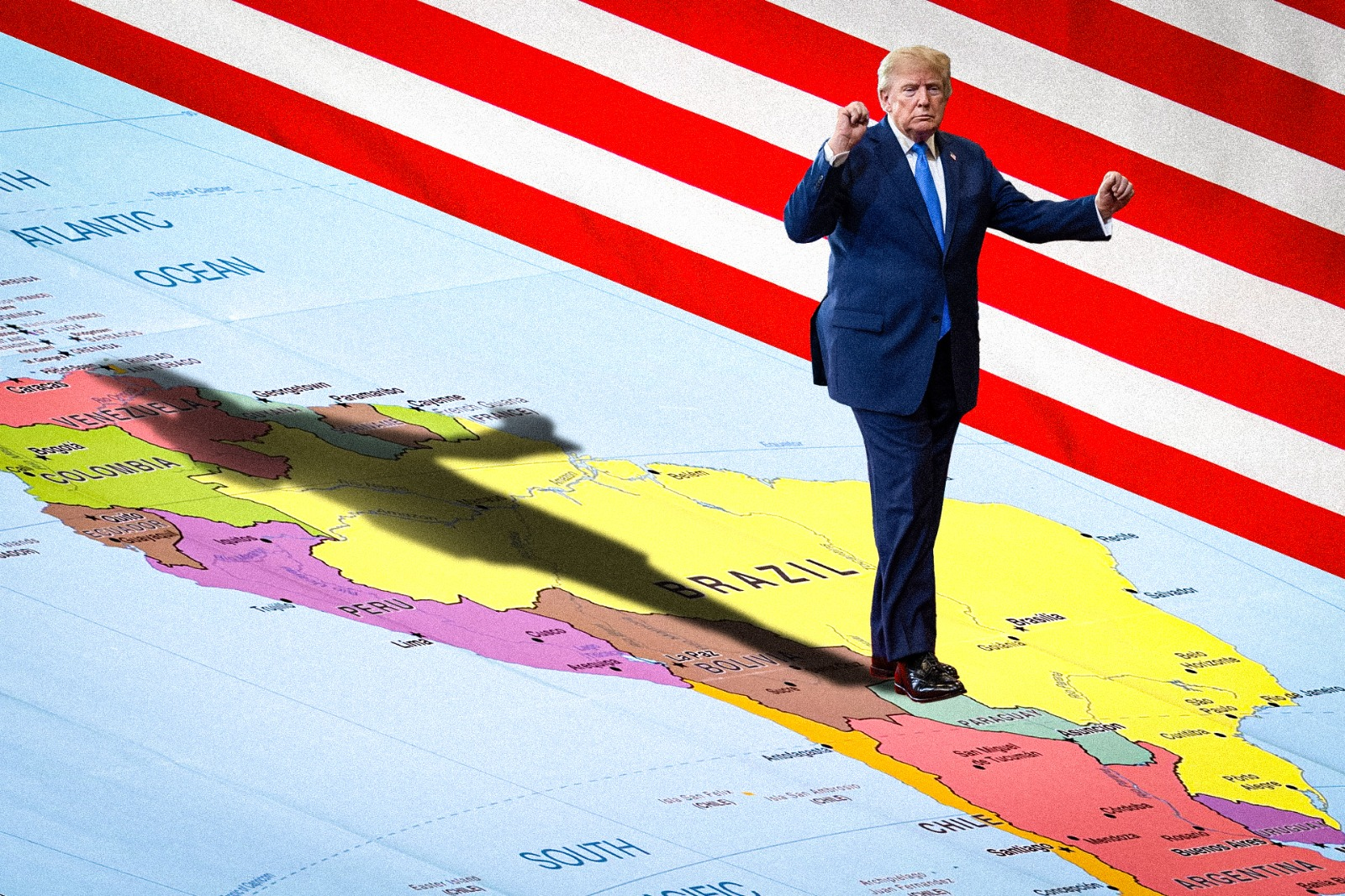
Virtually all of Latin America is now led by cheap Trump knockoffs.
This isn’t exactly new. The domination of the continent has only been possible through the use of a league of local stooges at every level of government. But what’s happening now is the mirror image of the Pink Tide of the 2000s. Every single election during Trump’s second term has been won by the right: Argentina, Chile, Costa Rica, Bolivia, Honduras, Peru, and Colombia. This is on top of the military domination and cowardly surrender of Venezuela, and the tightening of the noose in Cuba.
These governments aren’t mild right-reformists either. They’re the type of criminals, clowns, liars, and cowards characteristic of the Trump era. When they’re not bombing their own civilians, they’re threatening neighbouring countries.
Mexico is now the only left-wing government in power with significant popular support. In Brazil, Lula might even lose to Bolsonaro’s Trump-loving son in next month’s election.
This is what The Economist calls ‘The dramatic Trumpification of Latin America’, where it says “No prior political ‘wave’ has run at this pace, breadth or uniformity. Nor is this a return to the centre-right, but to a harder Trump-imitating politics.”
Those “Trump-imitating politics” are well known: stopping illegal migration, fighting ‘narco-communism’, giving tax cuts to the rich, and inviting American companies with open arms.
The recently elected right-wing presidents have embraced AI, social media, and unorthodox campaigns aimed at the youth, exiled petty-bourgeois, and disaffected voters.
Latin America, at least from the surface, looks to be the most Trumpian part of the world.
Of course, looks can be deceiving, and superficial glances do not tell a full story.
First, Trumpism is a spectrum. You have everything from the cartoonishly evil Nayib Bukele, Abelardo de la Espriella, and Javier Milei, who ape Trump (they even have the same stupid hats), to more ‘outsider’ figures like Rodrigo Paz in Bolivia, and establishment politicians like Keiko Fujimori, who only won by the narrowest of margins after running four times.
MAKE ARGENTINA GREAT AGAIN WITH MILEI 🧢🇦🇷🇦🇷🇦🇷 pic.twitter.com/KUgvABbpjW
What unites them is they’re all foot soldiers of the Donroe Doctrine. All are signatories to the Shield of the Americas strategic partnership, and all have welcomed American troops, even when their own constitutions ban it. They are all too willing to isolate Cuba, vilify communism, and open their arms and embassies to Israel.
What do they have to gain from this? How do presidents who present themselves as nationalists square this circle of kissing the feet of American imperialism?
For one, the US has made them an offer they can’t refuse. The kidnapping of Maduro shows the US is not afraid to use military force when necessary. And they’re not exactly subtle in their threats. Just last month, Rep. Carlos A. Giménez, one of the ‘Crazy Cubans’, tweeted an AI picture of Lula being kidnapped (in the style of Maduro) titled “what awaits you…” Trump has also used tariffs as a blunt tool to beat governments in line.
🚨O que o espera… #Brasil🇧🇷 pic.twitter.com/lPOgoZeTvq
Second, one of the most pressing demands of people is security. In Brazil, polls indicate 38 percent of voters list violence as their primary concern – nearly double those who prioritise the economy. Right-wing leaders can point to the apparent effectiveness of heavy-handed tactics in El Salvador to fight crime, and say they need US military hardware and intelligence to help.
Lastly, they can use the US for their own preservation. A mass movement in Bolivia earlier this year threatened to overthrow the government. The Shield of the Americas made a collective statement of support for Bolivian President Rodrigo Paz, saying the protests were funded by “dirty money from drug trafficking and transnational crime.” Days later, Bolivia signed a $20 million military deal with the US to train and arm the Bolivian army. The message was clear: any revolution in Latin America will have to contend with American-funded counter-revolution.
The stooges of Trump have a lot to gain, but it is not an equal trade. The US benefits even more from this set-up.
As we have detailed extensively, American imperialism has declined relative to where it once stood in the world economy. It is reentrenching itself in its backyard, which it sees as belonging to the American ruling class. It is looking for markets to exploit, cheap resources, and cheap labour.
Unfortunately for them, China does over $500 billion in trade with Latin America and has dislodged the US as the main economic partner for South America as a whole. The Americans’ plan is clearly stated in their National Security Strategy, where they say “we will work with allies and partners to maintain global and regional balances of power to prevent the emergence of dominant adversaries.”
The US knows it cannot expel China from the continent, but it wants to dominate all strategic chokepoints and deny China any military leverage. The best way to do this is by ensuring governments are politically reliant on the US.
Donald Trump and Marco Rubio are therefore doing everything in their power to get these Trump clones to win.
Besides direct military intervention, the US has no problem using direct corruption and deception tactics to help their candidates, as was clearly shown in the Hondurasgate scandal. Leaked recordings revealed a network of corruption involving Trump, Javier Milei, and Benjamin Netanyahu meant to undermine leftist governments. Marco Rubio even personally signed a memo for ICE to arrest a well-known left-wing social media figure who criticised Abelardo de la Espriella and supported Gustavo Petro.
No tactic is off the table when trying to mould Latin America in Trump’s image.
With such a grim outlook, what’s there to do? Gustavo Petro did not paint a rosy picture when José Antonio Kast won the presidential elections in Chile, saying:
“Fascism is advancing… It’s sad that Pinochet had to impose himself by force, but it’s even sadder now that people are choosing their own Pinochet: elected or not, they are children of Hitler, and Hitler kills people.”
In a similar vein, it’s common to see self-righteous comments blaming the working class of these countries. One comment under a video of workers in Argentina being beaten by the police said:
“Argentinians never learn. Seriously, did they really believe that a fascist moron was going to fix that country? Enjoy what you voted for.”
It is a fatal mistake to think the Trumpist governments of today are as strong as the dictatorships of the 70s and 80s, much less Nazi Germany. Neither can this turn be explained by saying the working class has turned to the right or loves to be oppressed. It ignores the evidence behind the superficial appearances.
To start, virtually none of these governments were elected with a majority. Several won by incredibly small margins or with record-low voter turnout. These aren’t strong mandates by any stretch.
It would also be giving Trump far too much credit to say he got these governments elected. His support can even have the opposite effect, as Hungary’s Victor Orbán found out when his popularity fell after being visited by JD Vance. Right-wing leaders in France, Italy, and Germany have distanced themselves from Trump, who is incredibly unpopular in Europe.
Latin America is no different. The movement in Bolivia was vocally opposed by Trump, but one of the main drivers of anger was astronomically high fuel prices, exacerbated by the war in Iran that Trump started. It was not uncommon to see graffiti across cities like Cochabamba saying ‘Paz: your homeland is the USA.’
It was not uncommon to see graffiti across cities like Cochabamba saying ‘Paz: your homeland is the USA’ / Image: Enrique Rodriguez Pamanes
Of course, there is a positive pressure for the right when Trump steps in. After all, 12.9 million Colombians voted for de la Espriella, who is a millionaire criminal with US citizenship.
The key, however, is that Trump’s belligerence is like a giant rock being dropped into a lake, creating waves in all directions. It catalyses class anger at both poles. The question is who will use this to their advantage.
In Colombia, the left wing utterly failed to use Trump’s support against the right.
Petro was always most popular when he called Trump a murderer and denounced the Republicans as “a clan of paedophiles who want to destroy our democracy.” Unfortunately, in March, Petro capitulated to Trump and accepted a signed MAGA hat and copy of Trump’s book, The Art of the Deal.
This, along with a poorly-run campaign, ensured the right could squeak into power in an election the left should have handedly won.
It’s easy to blame the left’s mistakes on Trump, but US imperialism remains unpopular. A recent Pew Research Center survey shows Latin Americans now see China more favourably than the US, mainly because of a drop in popularity of the latter.
Even the main reason the capitalist press gives for the rise of the right wing – security – is not so easy to explain. The regions in Colombia most devastated by guerilla violence and illegal mining overwhelmingly voted for the left in the 2022 and 2026 elections. They lived through the US’ Plan Colombia, which meant bombed peasant housing, destroyed infrastructure, summary execution of civilians, and an avalanche of war crimes.
In this context, it would be more instructive to say the left has lost than that the right has won.
The start of the 21st century was characterised by the massive discrediting of bourgeois democracy and all of its institutions. This was spurred by the South East Asia crisis of the 90s, which workers in Latin America felt strongly through a plummeting in state investment and the standard of living.
This drop, combined with corruption scandals, led to only 25 percent of the population across the continent being ‘satisfied with democracy’ in 2001. For the first time, the proportion of those who believed that ‘democracy is better than any other form of government’ fell below 50 percent across the region.
These were times of titanic struggles where workers and peasants put their lives on the line to fight the state: the Bolivian water and gas wars of the early 2000s, the Argentinazo of 2001, uprisings in Ecuador in 1997 and 2000, the Arequipazo in Peru in 2002, the Oaxaca commune in Mexico in 2006, Venezuela’s Bolivarian Revolution and many more. Capitalism was ripe for overthrow had there been a revolutionary leadership organising and linking up these movements.
But this anger was funnelled to the election of left-reformist governments. Instead of doing away with bourgeois democracy and capitalism, they rescued both. The governments of Néstor Kirchner (Argentina, 2003), Evo Morales (Bolivia, 2005), Rafael Correa (Ecuador, 2006), and others left capitalism intact and restored equilibrium to the situation.
This process was continued with the election of Pedro Castillo (Peru, 2020), Andrés Manuel López Obrador (Mexico, 2018), Gustavo Petro (Colombia, 2022), Lula (Brazil, 2022), Gabriel Boric (Chile, 2021), and Xiomara Castro (Honduras, 2021). With the exception of Hugo Chávez in Venezuela, not a single one made steps to break with capitalism.
This was a recipe for disaster. While being able to deliver important reforms during the period of high commodity prices at the beginning of the century, they were never able to rid themselves of the root of the crisis or throw off the yoke of US imperialism. By sowing illusions in capitalism, they prepared the ground for their own defeat and the discrediting of the establishment left when the crisis returned, raw material export prices fell, and they had to attack the working class. They lost their base of support and allowed the rise of the right wing we have now.
Most recently, instead of taking an internationalist stance, the governments of Mexico, Colombia, and Brazil all cowered and refused to send oil to Cuba, further advancing this process and alienating the most radical left-wing layers of society.
The left reformists have, unfortunately, learnt very little. Petro, now the leader of the Colombian opposition, has taken the time since the Pacto Historico’s loss to write a book on the growing threat, not of capitalism, but of “hyper-fascism”, while refusing to develop a programme that would attack capitalist property relations. Similarly, Peru’s Roberto Sánchez ran on a programme to the right of Pedro Castillo, and lost to Keiko Fujimori.
Unfortunately for the right, they have just as many solutions for the crisis as the left reformists. They’re going to have to contend with an economic situation even worse than in the 2000s. In Colombia, the right wing might even regret winning.
Colombia’s National Association of Financial Institutions warns that the projected deficit for 2026 will be 6.5 percent of GDP and require $63 billion in cuts by 2027 to balance the books. This is impossible without a frontal attack against the working class.
Trump’s lackeys will have to face these problems with a weak government that barely won the elections, and an opposition with millions of people behind it. In fact, losing the election has saved the Pacto Historico from having to make these cuts themselves.
The rest of the right wing in Latin America is just as weak. The election in Peru was decided by 0.27 percent of the vote. Rodrigo Paz in Bolivia has almost been overthrown numerous times and hasn’t even been in power for a year. Milei in Argentina has seen massive mobilisations against the proposed labour reforms the IMF demands. Kast in Chile was up against mobilisations weeks after taking power.
The entire continent is a pressure cooker, and the patron saint of the Latin American right, Donald Trump, is making the entire situation worse.
If there’s one thing to take away from this political shift it is that society is being polarised to an extreme degree. Workers are looking to radical solutions to the crisis and are as distrustful of the left reformists as they are of the derechita cobarde.
The Trumpification of Latin America is a protracted process. It is not easily explained by this or that voter demand. It does not mean the working class has been radicalised to the right, but it does mean that, disappointed by the left-reformist governments, a section of them are temporarily attracted by right-wing demagogues who present themselves as being anti-establishment. Trump’s belligerent attacks, dislodging productive Chinese trade, and overthrowing governments is only accelerating a process already at play with the disintegration of world capitalism.
Those capitalist commentators who celebrate the so-called Trumpification are in for some surprises / Image: The Communist
Lenin, speaking after the defeat of the 1905 Revolution, said the reaction “serves only to intensify hatred, to spread determination and concentrated readiness for battle.” Marx also spoke of the zig-zag trajectory of the class struggle, saying: “That spasmodic form of anonymous class despotism cannot last long, can only be a transitory phase. It knows that it is seated on a revolutionary volcano.”
But this process only creates the possibilities for the working class to win. The experience of the 2000s shows capitalism will not overthrow itself, even when all the objective conditions exist.
The main task of eradicating the scourge of Trumpism lays squarely on the US working class. The Latin American oligarchy would run like rats if they couldn’t rely on American bombs and guns.
The job of the Latin American working class is similarly to overthrow their own cowardly national capitalists and link their struggles across borders. They must also warn that the solution to their problems, caused by the crisis of capitalism, cannot lie in relying on Chinese imperialism.
Only by the working masses of Latin America taking control over the region’s vast natural resources into their own hands can the acute problems of housing, healthcare, pensions, education, crime and also national sovereignty, be addressed.
Those capitalist commentators who celebrate the so-called Trumpification are in for some surprises. The brazen character and the arrogance with which US imperialism acts in the region, the open way in which they loot natural resources – none of that will go down well in Latin America. What is being prepared is a new wave of revolutionary explosions across the region. This will take place in different ways and at different rhythms in different countries as the movement of workers and peasants recover confidence in their own forces.
Over the last 25 years, the masses of Latin American workers, peasants and the youth have shown enormous determination, heroism and self-sacrifice and attempted once and again to fundamentally transform their living conditions through mass struggles, uprisings and election contests.
What is required is to build a revolutionary leadership that, by learning the lessons of the limitations and shortcomings of the so-called progressive governments of the previous period, can offer a way forward.
What we can guarantee is that the picture of Trump, standing shoulder to shoulder with his Latin American stooges, will not age well.
Read the full story at the source
Source: In Defence of Marxism