
Housing Green Left (Australia)
We need rent controls now!
A new rental affordability snapshot has found that essential workers are unable to afford rising rising rents. Isaac Nellist argues that rent controls, and a mass build of public housing, is urgently
English (original) ·Read in Deutsch ⇄
Even essential workers are struggling to afford rising rents as wages continue to fall behind, the latest Rental Affordability Snapshot by Anglicare Australia has found.
The report surveyed almost 50,000 rental listings across the country and found that affordability has worsened for almost all essential workers. It said that despite some workers having won wage rises, “these boosts are quickly eaten up by rental price growth”.
Of the 16 essential worker categories surveyed, 13 struggled to afford the rents. Aged care workers, early childhood educators and school teachers are particularly hard hit by the rise in rents.
This reveals two things. First, wages are stagnating and any rise in pay is often below or only just keeping up with inflation. Second, rents continue to spiral out of control while governments do little to address the housing affordability crisis.
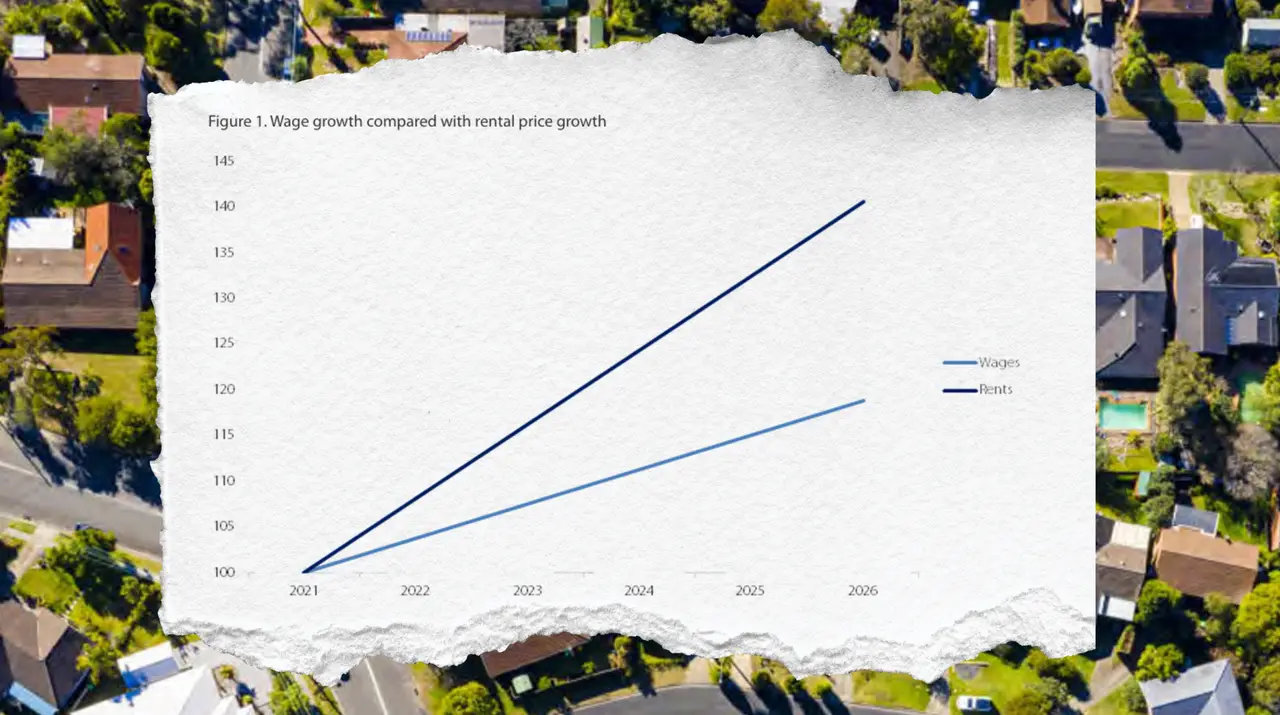
In the past five years, rents have risen at more than twice the rate of wages.
Rents rose by 40.6% between 2021 and 2026, while Australian Bureau of Statistics data over the same period shows that wages grew by just 18.8%.
Workers who do win substantial wage rises see it absorbed into higher rents and other cost-of-living costs.
Addressing the housing affordability crisis will require both significant wage rises, across all industries, and government policies to control and cap rents and invest in public housing.
However, Labor’s response has been to do the bidding of its corporate mates. It has ensured private developers have carte blanche to pursue more development, in particular in the high end, high-rise apartments.
It continues to argue that increasing private supply is the best way to bring down housing prices, despite mounting evidence that this is not the case.
In Sydney’s Inner West, residents are campaigning to stop the mass re-zoning of suburbs to allow for unfettered private housing developments being pushed by NSW Labor and Labor-dominated councils.
The plans include demolishing and privatising existing public housing to make way for public-private development, like what has been done in Waterloo South. The other early victims of the so-called Fairer Future Plan are low-income renters living in some of the more affordable, older apartment blocks, that are being targeted for demolition and new high rises.
Developers are salivating at the chance to make mega-profits; they have no interest in providing affordable homes.
Meanwhile, housing activists are continuing to campaign for serious government investment in public housing, which has declined to just 4% of housing stock.
The Victorian Labor government has refused to budge from its plan to demolish and privatise 44 public housing towers in Naarm/Melbourne.
Australian governments lag far behind the Netherlands, Austria, Denmark and Britain where public housing is between 17–29% of housing stock.
Alongside a big build of public housing, immediate action to support renters is needed.
Jenny Leong, NSW Greens MP, has a rent control bill in NSW Parliament which, if enacted, would put a 12-month freeze on rents, a 2% cap on future rises, two-year fixed terms and strong rights for renters.
Government data suggests that a 2% rent increase cap between 2023 and 2026 would have saved people $4555 in Sydney’s Inner West.
There is strong public support for rent controls. An Australia Institute poll found that 78% of people support government regulation of rents and 55% agree that rent rises should be tied to inflation.
Green Left has long supported those campaigning for housing affordability and against those who believe in the for-profit housing system. Housing is a human right.
If you want to help us counter the housing developer lies and expose governments’ refusal to address this crisis, become a Green Left supporter or donate to our 2026 Fighting Fund.