
World Green Left (Australia)
States refuse to act on South East Asia’s transboundary haze
Wildfires in parts of Indonesia, which started in early September, have impacted communities across South East Asia. Malaysian climate activists Syafiq Fadli and Huei Ting Cheong look at the origins o
English (original) ·Read in Deutsch ⇄
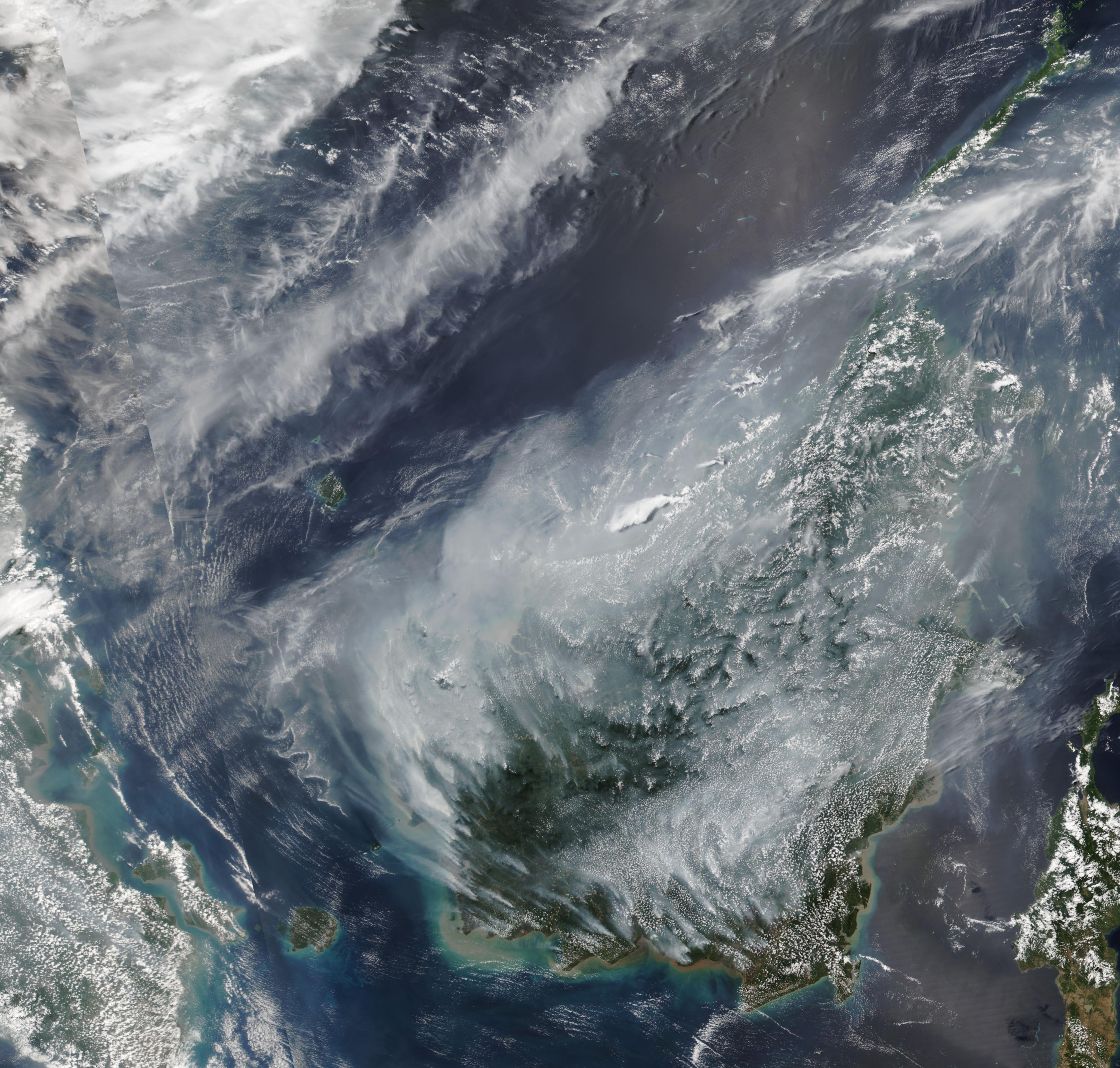
The recent State of Global Air report published by the Health Effects Institute and published on the Copernicus Atmosphere Monitoring Service website, identified Southeast Asia, East Asia, and Oceania as the region with the fourth-highest death rates attributable to air pollution, at 100 deaths per 100,000 people.
The World Health Organization reports that “when inhaled, health-damaging pollutants including small particulates can penetrate deep into the respiratory system and enter the bloodstream, allowing them to reach almost all organs within the body, including but not limited to cardiovascular, reproductive and metabolic systems, brain, liver and kidneys.”
The wildfires in parts of Indonesia, which started in early September, have impacted communities across South East Asia. Malaysian climate activists Syafiq Fadli and Huei Ting Cheong look at the origins of this toxic air pollution and why governments still refuse to take serious action to protect lives.
Transboundary haze has been a recurring environmental issue in Malaysia and the Southeast Asia region since the late 1990s, caused by slash-and-burn land clearing methods to cultivate palm oil plantations and a highly humid tropical climate with temperature fluctuations. It is a form of air pollution characterised by fine particles in the atmosphere that comprise pollutants such as smoke, dust, and industrial emissions, which combine with water vapour. This massive scale of air pollution has occurred so frequently it is now referred to as the “haze season”.
But this year’s haze has been extremely serious. It has been going on for about 2 months and no indication of stopping, further exacerbated by the El Niño weather system, which has brought drier conditions to the region. It is still treated as a “natural disaster”, however, ordinary people are suffering the consequences of actions by large agriculture companies, proven by countless studies and activists on the field.
Oil palms are not native to Malaysia or Indonesia, yet these two countries are at the heart of Southeast Asia’s palm oil empire, accounting for roughly 85% of global palm oil production. European colonial powers first introduced oil palms to the region as ornamental plants. However, as rubber markets declined after World War I, colonial plantation economies began shifting towards oil palm as a new profitable commodity, transforming vast stretches of land in Malaya and Indonesia into plantations.
This shift came at a devastating cost. Native plants, traditional food systems and self-sufficient ways of life were disrupted or destroyed to make way for commercial agriculture. Indigenous communities and local populations were displaced and subjected to exploitative labour systems, including indentured and contract labour, under colonial plantation regimes in the region. What was once a landscape shaped by diverse ecosystems and local livelihoods was increasingly reorganised around extraction and profit.
Today, the colonisers have left, but the plundering and destruction continues - this time by modern capitalist forces, driven by agribusinesses across Malaysia, Singapore and Indonesia. Vast areas of biodiverse tropical rainforest in Malaysia and Indonesia have been cleared for palm oil plantations, contributing to severe biodiversity loss, habitat destruction and deforestation.
The fires and transboundary haze that plague the region are also linked to a complex web of corporate ownership, plantation concessions and business interests. Companies identified in reporting and investigations into plantation-related fires and land clearing include Malaysian firms and Indonesian plantation operators connected to Singapore-based business groups.
Examples include: PT Damai Agro Sejahtera — affiliated with Singapore-headquartered Bumitama Agri Ltd; and PT Arjuna Utama Sawit — identified as part of First Borneo Plantations, a plantation business with reported Singapore connections, and more.
The underlying pattern remains strikingly familiar: land and forests are treated as resources to be extracted for profit for the colonial powers back then and agribusinesses today, while indigenous communities, local livelihoods and the environment bear the consequences. When the profit is fully extracted, no compensation is given to the people, and barely any conservation efforts are made.
Such is the case with capitalism, where the world’s resources are exploited for the benefit of the few, while ordinary people are left with the consequences and the bill.
If agribusinesses are working across borders to keep businesses running as usual with no regard for people and the environment, so are the ruling classes of Indonesia and Malaysia. Indonesia’s environment minister claims the forest fire will clear up in 1 month. Malaysia's Deputy Prime Minister, Datuk Seri Dr Ahmad Zahid Hamidi, claims any action regarding the haze will strain Indonesia-Malaysia ties. Both are asking citizens to “be patient” and “brave this issue a little longer” while letting countless people continue to suffer.
This lackadaisical attitude shows that health and safety are not the primary concern of those in power. Surely a simple statement to Indonesia to prevent this situation from happening again could be the domino effect for lasting change. To do nothing means allowing this to continue and people to suffer. They have not done nearly enough within their role as the people’s representatives to protect people’s interests.
Suggestions have been made, for example by the Malaysian Human Rights Commission, to use the Association of South East Asian Nations (ASEAN) as a mechanism to put pressure on member states. Even if that suggestion is not taken up, something else could be done. A statement, denouncement, or the cutting of ties would put pressure on the perpetrators and protect citizens.
Deliberate state inaction is lazy and assumes people will just accept what is being said. But if those who hold the power to change policies and influence relations with other nations won’t take action, then the people must come together, demand change and hold the politicians and the companies accountable for their actions.