
War & Militarism Green Left (Australia)
Publicly-funded inquiry calls for AUKUS to be scrapped
A crowd-funded inquiry into AUKUS has delivered a damning report on the Labor and Coalition-backed military agreement which integrates Australia even more into the United States war machine. Pip Hinma
English (original) ·Read in Deutsch ⇄
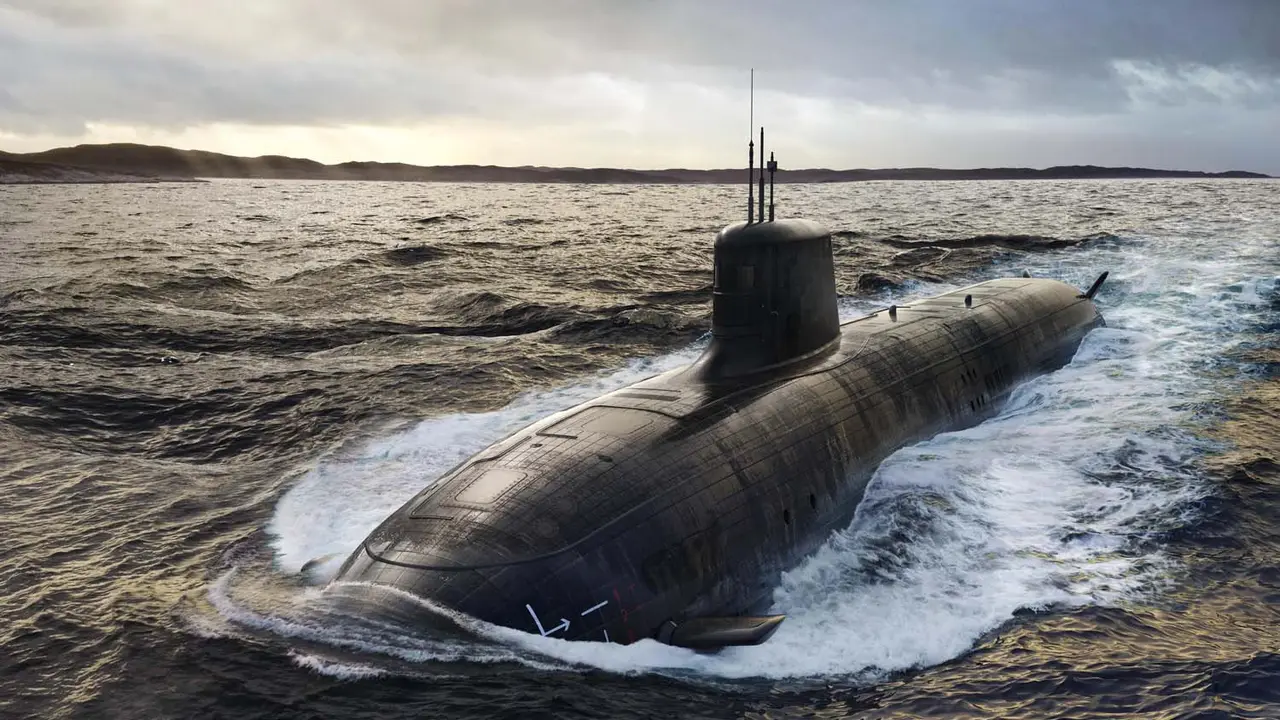
A crowd-funded inquiry into AUKUS has delivered a damning report on the Labor and Coalition-backed military agreement which integrates Australia even more into the United States war machine.
The 113-page final report, Surrendering Australia – The AUKUS Deception, which heard submissions for four months, was tabled at the National Press Club in Canberra on November 4.
It described AUKUS as the “worst, riskiest and most costly defence decision ever made by an Australian government”. It makes for compelling reading, as neither major party in government has been willing to host a parliamentary inquiry.
The inquiry received more than 1000 submissions and heard from more than 150 witnesses over 10 days of public hearings in eight cities across the country. It also organised a special consultation with First Nations elders and community members.
Some 9400 people attended in person or online. All of this was possible because the Australian Security and Peace Forum raised $220,000 in crowd funding.
Commissioners Peter Garrett, Carmen Lawrence, Chris Barrie, Karina Lester and Leanne Minshull worked pro-bono.
The inquiry’s key question was: “Will AUKUS keep us safe?” It concluded that AUKUS Pillar 1 should be scrapped and that Pillar II should be “renegotiated”.
It said the secrecy surrounding the pact, devised by then-Coalition PM Scott Morrison and supported by current PM Anthony Albanese, and governments’ refusal to seriously debate Australia’s largest ever defence acquisition program means they have something to hide.
What is known to the public has left many people, including current and former MPs, campaigning for a rethink on defence strategy.
The AUKUS deal allows Britain and the United States to walk away without delivering the submarines, while retaining the billions of dollars Australia is producing to support their submarine building industries.
It also allows the US and Britain to “rotate” nuclear-armed submarines in Australian ports, near to homes and workplaces. In Western Australia, this will happen from 2027 at Cockburn Sound near Walyalup/Fremantle, where the report states “another US base” will be created.
It states the current Virginia class submarines can be nuclear-armed and the next generation under construction (Blocks V and VI) will be nuclear-armed,
“Australian citizens are being kept in the dark about the presence of nuclear weapons,” the report said. Australia has also accepted a version of the US policy of “neither confirm nor deny” on whether or not these naval vessels will be nuclear armed.
The inquiry notes that in the event of a war between the US and China, the Stirling Naval Base and Henderson naval precinct near Rockingham “would almost certainly be targeted by nuclear capable inter-continental ballistic missiles resulting in significant Australian civilian casualties.
“Based on the information presented to us, we concluded that the risks from the current Force Posture Agreement with the US were extremely high and not well understood by most Australians.”
It found that the presence of US nuclear weapons on Australian territory undermines commitments to the Nuclear Non-Proliferation Treaty and the Rarotonga Treaty for a nuclear-weapons-free zone of peace in the southwest Pacific.
It recommended the “immediate cancellation” of AUKUS Pillar 1 and argued that by extending the life of six Collins-class submarines or acquiring a replacement capability — suitable for defending the country’s northern borders and “trade choke points” — would maintain Australia’s “sovereign” marine capacity.
Many submissions would have taken issue with this alternative defence arrangement, based on the fact that the US, not China, is the aggressor. Many said the billions of public funds being funnelled to AUKUS would be better spent on mitigating the biggest security risk of our time — human induced climate change.
The report made clear its opposition to the use of highly enriched uranium (HEU) since “HEU weapons-grade waste cannot be safely stored and protected, and the risks are potentially catastrophic for generations to come”.
AUKUS Pillar II, which sets out cooperation between the three countries for advanced weapons and other technology sharing and interoperability, was also criticised for its “less beneficial” set-up in relation to Australia. It recommended that Pillar II be “reviewed”.
The report concluded that AUKUS was not the security strategy Australia needed in a “rapidly changing world”. It said the US alliance needed to be “recalibrated” since being automatically involved in supporting the US in a war against China, including a dispute over Taiwan, would be a “nightmare to be avoided at all costs”.
Meanwhile, an Australia Institute-commissioned poll, released in October, found that two in five people view the US as a threat to Australia and one in six people see it as a close friend.
[The AUKUS report can be viewed here. Pip Hinman and Peter Murphy addressed the AUKUS public inquiry on behalf of the Sydney Anti-AUKUS Coalition.]