
World · Green Left (Australia) · · 2h
Lizzie O’Shea: ‘Surveillance technology is a threat to democracy’
English (original) · Read in Deutsch ⇄
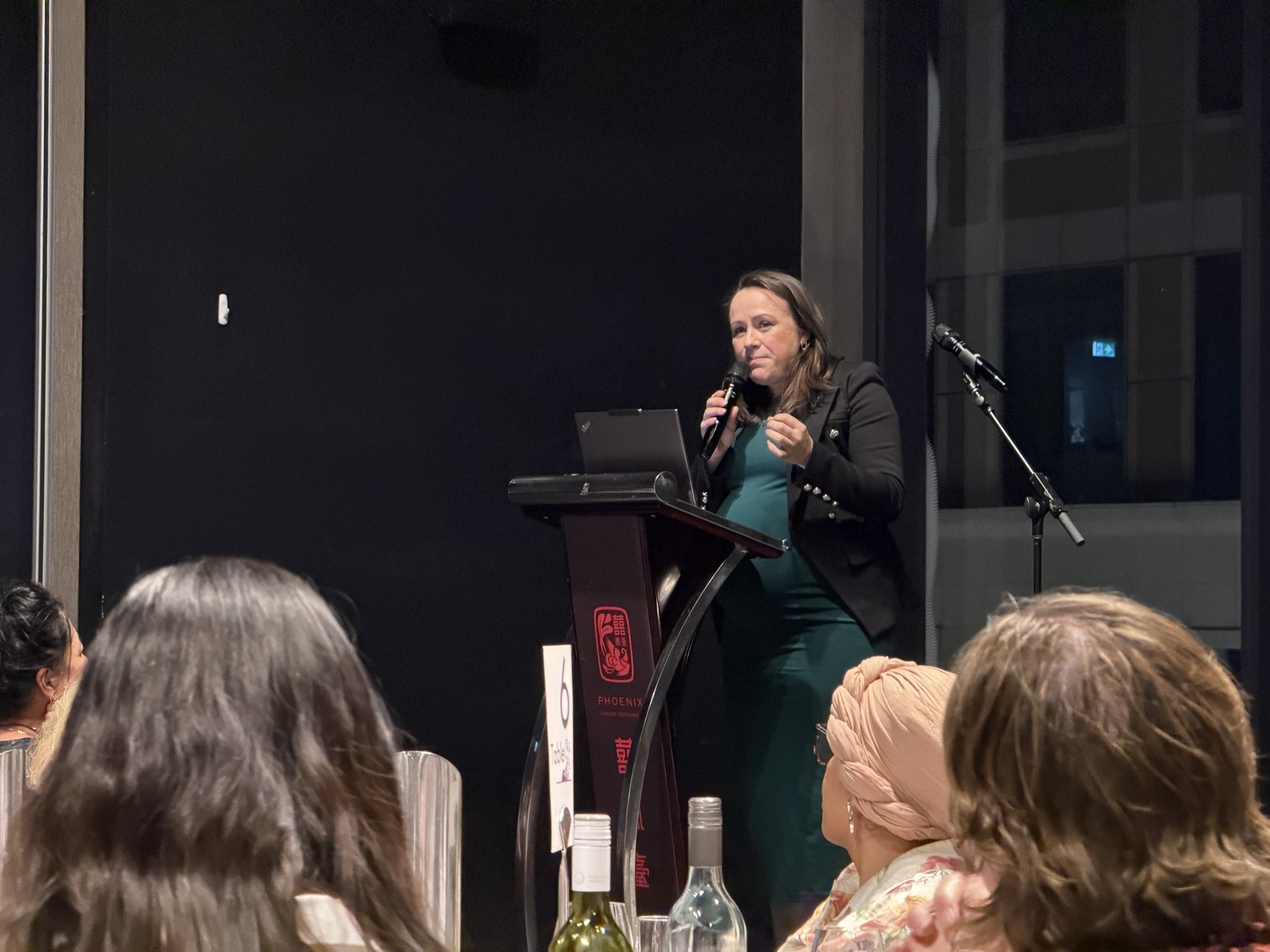
Lizzie O’Shea, writer, lawyer and founder of Digital Rights Watch, told the New South Wales Council for Civil Liberties’ (NSWCCL) annual fundraising dinner and journalism awards on October 1 that the rapidly developing surveillance technology is throwing up many challenges.
Digital technology and democracy are in a “significant amount of tension”, O’Shea said. She added that defending civil liberties is not about “clever people working to impose civil liberties on everybody else”, but that campaigners “have to convince a critical mass that they have to defend their own rights”.
Referencing the origins of professional policing in London in the late 18th century, she described it as “a period of immense technological disruption” as the Industrial Revolution was reshaping society.
The new police force, O’Shea said, was used to “monitor, enforce and impose the new conditions of social order”. Specifically, it ensured merchants’ profits and prevented dockworkers from supplementing their wages by pilfering stock. The idea was to get the state and industry to collaborate, with a “form of surveillance of everyday people”.
“Policing was talked about as a new science in the detection and prevention of crime,” she said. The spectacle of force “offered an economical and effective way of maintaining order”.
O’Shea said it helps explain the state’s decisions in the digital age. “Like their historical counterparts, modern police understand the power of surveillance in enforcing a form of discipline.
“‘Safety’ is about preserving social order, rather than reducing harm. By allowing law enforcement and intelligence agencies to tell us what is safe, we allow them to use technology in increasingly oppressive ways.
“Rapid technological advances have been accompanied by disruptive transformations in social relations and an acceleration of policing has often been a response.”
O’Shea described advances in technology in the 21st century as being “a fundamental threat” to democracy. She said more than 100 “security” bills have been passed over the past two decades, connected to surveillance, national intelligence agencies and law enforcement, and 875 new offences have been created.
Many have sought to re-purpose existing systems of corporate surveillance for state surveillance, while surveillance technology companies receive lucrative government contracts.
O’Shea also said Labor has “effectively abandoned” regulation of artificial intelligence (AI) and facial recognition technology.
“Less than 10% of Australians think it’s reasonable for a retailer to ask for your biometric information to access their services, but on an almost daily basis they will experience this.
“Everyone is telling us that AI is fundamentally important — politicians, the financial markets, a media that takes industry sources as truth — but a study by the University of Melbourne found that Australians are among the least optimistic in the world about artificial intelligence.
“More people are concerned about negative outcomes than the benefits … 87% would be more inclined to trust and use AI products if international standards were in place to protect them.”
O’Shea pointed to the campaign to remove Palantir from Coles stores and the defeat of a data centre proposal in Lane Cove as examples of where most people’s attitudes lie.
“The hand of power is seeking to crush us, but we have the capacity to land a counterpunch,” she said. “This is the time for organisers, agitators, lawyers, ratbags and policy nerds to work together to build an alternative future where civil liberties are protected and our democracy can flourish.”
NSWCCL President Timothy Roberts told the gathering that the NSWCCL aimed to be an “ever watchful guardian” of civil liberties, noting the huge challenges. He referenced last year’s March for Humanity, across the Sydney Harbour Bridge, when 300,000 people marched to protest Israel’s genocide in Gaza and demand Labor act.
“It felt like the flame of liberty could not burn brighter or stronger and we must continue to celebrate that occasion as an example of the collective exercise of our human rights,” Roberts said.
The NSWCCL’s journalism awards went to Guardian journalists Ariel Bogle and Nino Bucci for uncovering the use of “less-lethal” weapons by police. Star Observer journalist Jacques Nieuwoudt won the young journalist award for his coverage of police raids of LGBTIQ spaces on Oxford Street.
[Isaac Nellist was able to attend the fundraiser after being given an activist ticket, generously funded by others.]
Read the full story at the source
Source: Green Left (Australia)