
World · Green Left (Australia) · · 2h
Greens divided over koala park carbon credit scam
English (original) · Read in Deutsch ⇄
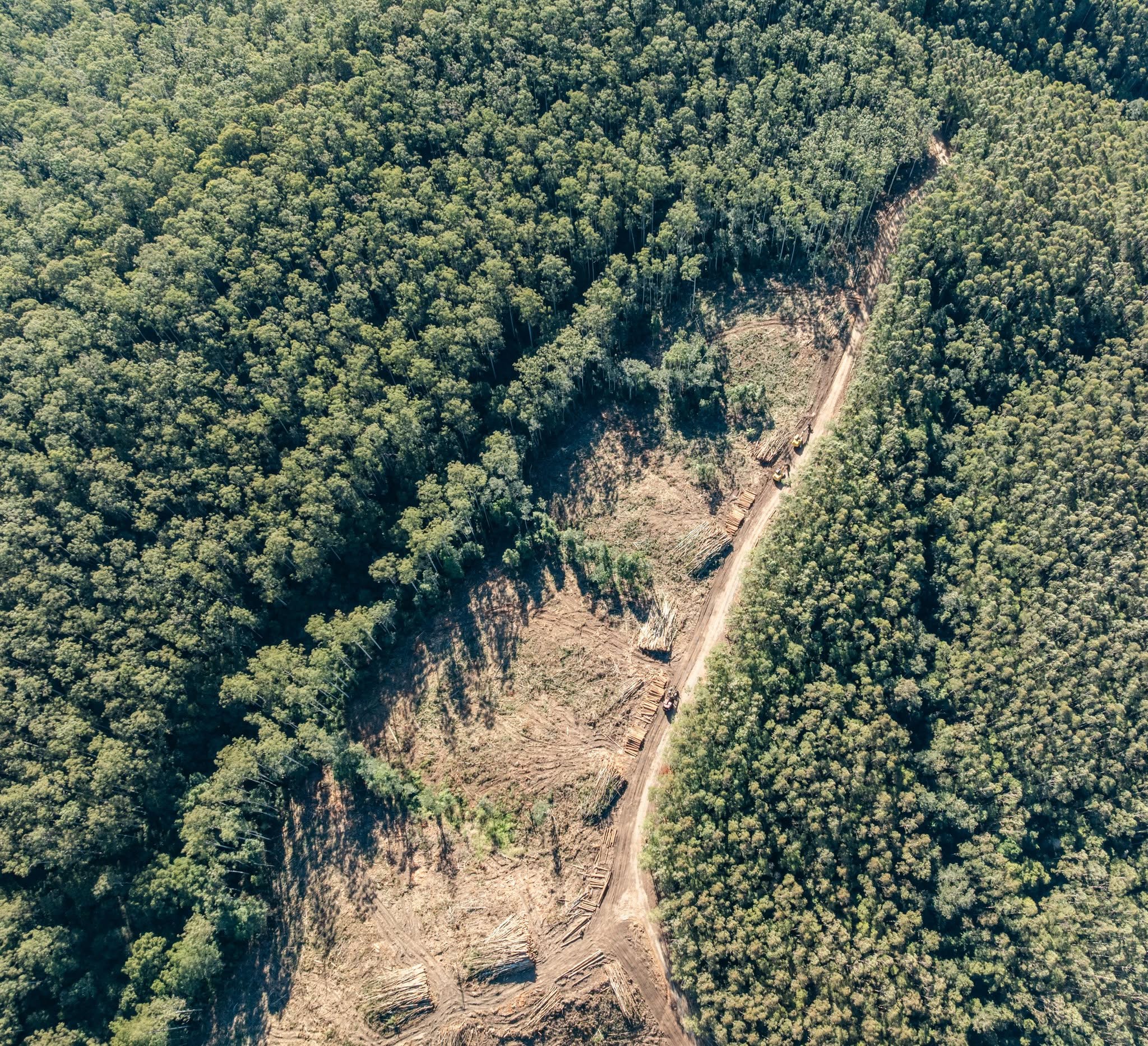
Federal Labor has maintained its unwavering support for the fossil fuel industry against persistent community demands for genuine climate action by voting down a disallowance motion that would have blocked the so-called Improved Native Forest Management (INFM) system.
Controversially, seven of 10 Australian Greens Senators voted with Labor on September 10. But Greens Senators Nick McKim, Jordon Steele-John and Vanessa Bleyer supported the motion, although not because they agreed with the Nationals-One Nation movers.
The WA Greens MPs said that they “strongly opposed” the INFM method and were “disappointed” that colleagues voted with Labor, “thereby allowing the INFM method to remain in place”. They said the INFM system could generate 1.5 million carbon credits.
Supporters of the Labor-Green deal say it will save koalas and forest habitat.
Greens leader Larissa Waters said: “These improvements will help deliver the Great Koala National Park (GKNP) in NSW, protecting 176,000 hectares of native forest and safeguarding habitat for around 12,000 koalas and more than 100 other threatened species”.
However, it also means that saving forests and koalas relies on creating new carbon credits in an already dodgy carbon trading market.
While the INFM method of creating carbon credits is, possibly, less dodgy than other methods, even Forestry Australia (FA) says the method is “structurally biased towards over-crediting”.
FA President Michelle Freeman said: “These [modelling and accounting] choices mean the climate benefit claimed by the INFM method could be overstated by 40 to 100 per cent ... For a method that might generate [carbon credits] worth hundreds of millions of dollars this is a material issue.”
Regardless of the effectiveness of INFM offsets, the Labor-Green plan reinforces the idea that we have to accept dubious carbon trading systems as the main way to reduce emissions.
It also sets a precedent that new national parks and conservation measures can only be created with carbon credits. As Bob Brown told Green Left: “If Labor gets away with this, we have this new dynamic whereby future national parks will depend, to some degree or another, on whether the corporate sector can extract money as a result.”
It will lead to more carbon credits in the market. The bigger the supply means a lower overall price which suits polluting fossil fuel corporations because they will pay less for carbon offsets.
The whole process will delay real emissions reduction in favour of cheap offsets — as BHP is doing.
Richard Denniss, co-CEO of The Australia Institute (TAI), criticised the Greens’ decision to support the INFM system.
Denniss told the Greens-aligned Serious Danger podcast that Labor in opposition promised a GKNP in 2015 and repeated it prior to, and after, the 2023 election. There was no mention of offsets.
Denniss said the Liberals had said they might introduce offsets, but Labor has said it was a “bad idea”. After Labor won the election, NSW environment minister Penny Sharpe rejected the use of offsets, saying the GKNP would be established without them.
But now NSW Labor says that the GKNP is “dependent” on income from carbon credits, as part of the Australian Carbon Credit Unit Scheme project registration.
This claim is not credible. NSW Labor has budgeted $140 million for the park. It could have established the GKNP without carbon credits, as promised, as every one of the more than 500 other National Parks have been set up.
TAI argues that “taxpayers will pay for 95% of the costs of the Great Koala National Park, while carbon offsets will pay for about 5%”.
Sue Higginson, NSW Greens Member of the Legislative Council, is critical of carbon trading, but said her federal colleagues had no option but to do a deal with Labor less risking the GKNP. Sections of the forest movement argued that Greens MPs must do a deal with Labor, or face being wedged.
Labor will always try to wedge the Greens and the environment movement because its neoliberal approach is to pit reducing carbon pollution against jobs and livelihoods.
However, the science says that for a safe climate, native forests must be saved and carbon pollution stopped, regardless of someone being able to make money from it.
The Greens took on the neoliberal argument against carbon trading in 2009, when their MPs took a stand against the Carbon Pollution Reduction Scheme, negotiated by Kevin Rudd with the Coalition. Their vote increased as a result.
The Greens are in a stronger position today to explain to the public how carbon credit schemes are being used by fossil fuel corporations to buy their way out of reducing emissions.
The Greens could have could have organised a popular campaign, including on the streets, for Labor to uphold its promise to establish the GKNP, and push for genuine climate action, including no new coal and gas.
As the WA Greens said: “Offsets do not work to bring down carbon pollution … [and] we cannot support a system that enables carbon polluters to keep polluting.”
Even if the INFM’s credits are quarantined from coal and gas companies, as they will be in the NSW, they can still be sold to polluters, such as Alcoa in WA and Tomago Aluminium in NSW.
Climate action is urgent, as is protecting the endangered koala.
If Labor’s INFM system was going to protect even some native forests without a carbon trading scheme, it could be supported. But its scheme is designed to enshrine a neoliberal agenda that puts a price on the commons.
[Alex Bainbridge is a member of the Socialist Alliance National Executive.]
Read the full story at the source
Source: Green Left (Australia)