
Housing Green Left (Australia)
Australia can build public housing, end homelessness
The Fuggerei is the oldest public housing project in the world, housing people for more than 500 years. John Tully argues that Australia should be investing in similar projects to address homelessness
English (original) ·Read in Deutsch ⇄
I often walk my dog in Nipaluna/Hobart’s beautiful Rivulet Linear Park, which winds up from the city to the foothills of Mount Wellington. If you’re lucky, you can spot a platypus in the rivulet, there are flocks of gorgeously plumed parrots, and the marsupial population is thriving.
But that’s not all you’ll see, for half-hidden in the bushes there are tent encampments: places of last resort for some of Lutruwita/Tasmania’s homeless people. Others huddle on pieces of cardboard in shop doorways in the CBD or in other parks.
Sleeping rough exposes people to the vagaries of the elements, the threat of theft and violence and a constant battle to maintain good health and sanitation.
A fine line now separates countless numbers of working-class people from a similar fate. With the country’s median rents at $705 per week — an increase of 40.6% in the past five years — half of all people who live in rental accommodation are struggling to put food on the table and pay rent and other bills.
About 45% of families with children struggle to buy sufficient food — an estimated 3.6 million people, 69% of whom report they are facing food insecurity for the first time.
The link between the cost-of-living crisis and soaring rents is clear: 1.26 million households are forced to pay more than 30% of their disposable income on rent, which doesn’t leave much for food, utilities, education and medical care.
This crisis disproportionately impacts renters — though this is not to downplay the struggles of many to pay their mortgages with rising interest rates.
Unforeseen bills can send renters into a downward spiral of debt and homelessness. Elderly and middle-aged women, often with little savings to fall back on, can find themselves out on the street.
About 48% of 18–34-year-olds find themselves in precarious living circumstances.
While the United States/Israeli war on Iran turbocharged the cost-of-living crisis by forcing up the price of fuel and fertilisers, this conjunctural crisis only added to the existing pressures in a country where millions of people are priced out of home ownership and are reliant on the private rental market.
It doesn’t have to be this way. Australia is the third wealthiest country in terms of median wealth, and the fifth wealthiest in terms of average wealth.
However this wealth is not distributed evenly. The top 1% are wealthier than the bottom 50$ combined, and much of their wealth is in property and real estate.
With Labor, the Coalition and One Nation pushing politics further to the right, there is little challenge to the neoliberal dogmas that had led us to this crisis.
Those three parties are firmly wedded to the private rental market. Indeed, many politicians have a personal interest in maintaining it.
According to the Guardian, at least 55% of federal politicians own multiple properties, and between 50 to 92 are actively receiving rental income.
Meanwhile, public housing has declined to only 4% of housing stock.
This is an ideological choice with disastrous consequences. While Australia does better than the US, where less than 1% of households live in any form of social or public housing, we compare poorly with most OECD countries.
Countries like the Netherlands (29%), Austria (24%), Denmark (21%), Sweden (17%) and Britain (17%) have far greater percentages of public housing stock than Australia. In Vienna, and other city centres that have consciously prioritised public housing, that figure can rise to more than 50%.
Social housing is nothing new — at least to those who care to look.
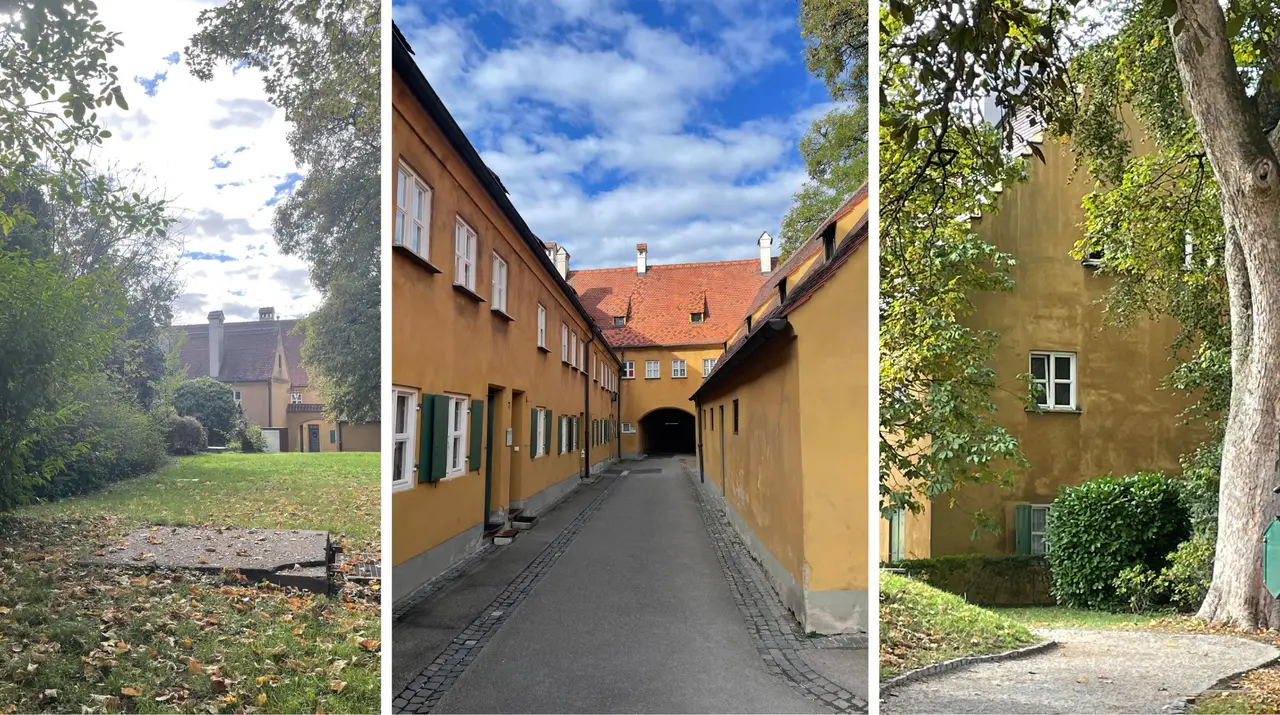
I recently visited the oldest public housing project in the world, the Fuggerei, in the southern German city of Augsburg, founded in 1521. The project’s museum points out that “people have continuously been living in the Fuggerei for half a millennium”.
One of the early residents was Wolfgang Amadeus Mozart’s great-grandfather, the impoverished bricklayer, Franz Mozart. “When the project’s major donor, the banker Jakob Fugger, died in 1525, there were 52 houses in the complex. Today, the Fuggerei consists of 140 flats in 67 houses, with other buildings for administration, a museum and workshops.”
The Fuggerei is not a ghetto of poverty and despair. It is a beautiful place, with homes meeting modern living standards with heating, modern bathrooms, television and the internet.
It has some strict conditions for residence, designed for “Catholic Augsburg residents in need”, who must contribute three prayers a day and 88 euro cents in annual rent.
If such a project could be built and maintained for more than 500 years, why is it that a wealthy country like Australia fares so poorly?
Safe, secure, affordable and well-maintained housing should be regarded as a human right, not as a cash cow for wealthy landlords.