
Politics Freedom News (UK)
Serbian anarchists: Student List perfectly in line with neoliberalism
Interview : Klasna Solidarnost members explain how popular assemblies were abused to install yet another pro-EU capitalist government The post Serbian anarchists: Student List perfectly in line with n
English (original) ·Read in Deutsch ⇄
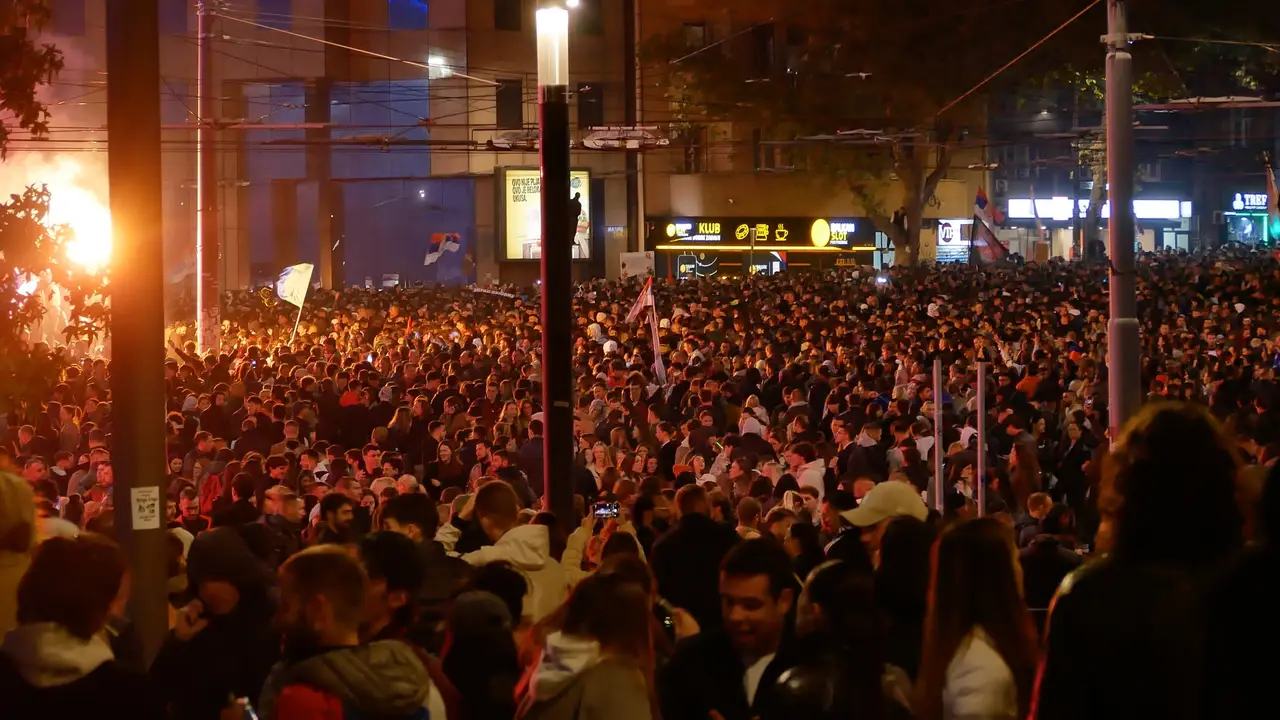
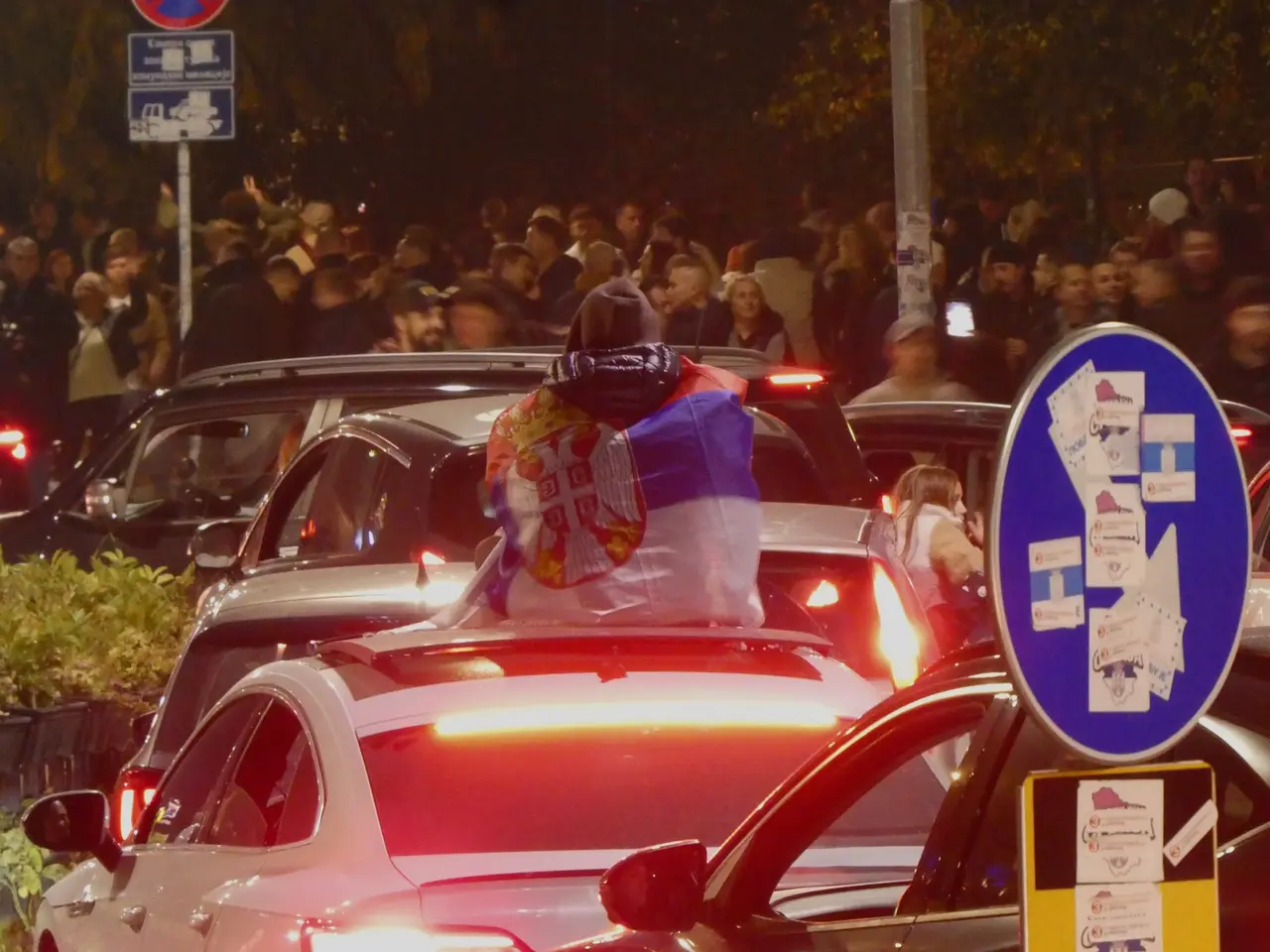
On 25 October, the “Student List” won a projected 140 of 250 seats in the Serbian parliament, defeating the ruling party that has been in power for 14 years. The electoral victory comes on the back of a student movement that began on 1 of November 2024, when a newly renovated canopy fell at the railway station in Novi Sad and killed sixteen people. Since then, people in Serbia have organised mass protests and assemblies.
We reached out to Klasna Solidarnost (Class Solirarity), founded in Belgrade in 2016, which grew out of an anarcho-syndicalist movement. Its members continue to participate in student occupations while critiquing electoral strategies. They are also active in antifascism, solidarity with Palestine, antimilitarism, support for workers, and the “Solidarna kuhinja” free kitchen, as well as political analysis and publications.
The mainstream media has presented the student movement as “decentralised” and highlighted the appointing of non-politicians to parliament; is this an accurate reflection of the movement now?
The appointment of non-politicians to parliament is one of the main talking points of the Student List. There were over 160 candidates with PhDs on the list, which was highlighted as a key reason why the new government should be “better” than the old one in which it turned out that even some ministers had fake PhD diplomas. The Student List basically has a technocratic structure and by what we’ve seen so far, it aims to create a “government of experts” which is perfectly in line with the dominant neoliberal ideology that convinces us that the society will be better as a whole if we have experts leading the government.
For us as anarchists, this of course is a fairy tale because we know how technocratic governments ended in countries like Italy and Greece in the last 10-15 years, where they simply ushered in the most brutal neoliberal reforms, bringing down the life standard of the working class even more than their predecessors. And this is actually one of the key elements that show us there probably won’t be much improvement in the working class’s life standard.
During the Student List’s electoral campaign, the focus was on defeating the political mafia regime of the SNS (Serbian Progressive Party), which had been in power for 14 years. The movement focused on the regime’s criminal acts and massive corruption scandals, but it barely mentioned any economic measures to improve the everyday lives of the working class.
Now that the SNS regime is finally gone, it remains to be seen what the economic policy of the new government will be, but from what we’ve heard so far, there isn’t any mention of substantial changes in the economic position of Serbia as a client-state of the European Union, and a partial economic partner of the US, China, and Russia.
How does it compare to former “decentralised” parliamentary movements such as Podemos in Spain?
It’s quite problematic for us that a decentralised, direct-democratic movement ended up fighting to replace one capitalist elite in power with another. Compared with Podemos, one key difference is that Podemos was explicitly a leftist movement addressing some of the working class’s pain points in Spain. Of course, as all leftist movements that participate in capitalist parliamentary politics, they ended up in reactionary politics, without introducing any benefits for the working class once they gained power.
The Student List, on the other hand, isn’t leftist in any way. It’s essentially a broad liberal right-wing candidate list, which may well split into different factions once the government is formed. In fact, given the major differences between candidates, it would be logical to see the Student List establish multiple political parties, ranging from extreme neoliberal to centre-right and conservative. There isn’t an even remotely left-wing current among the Student List candidates.
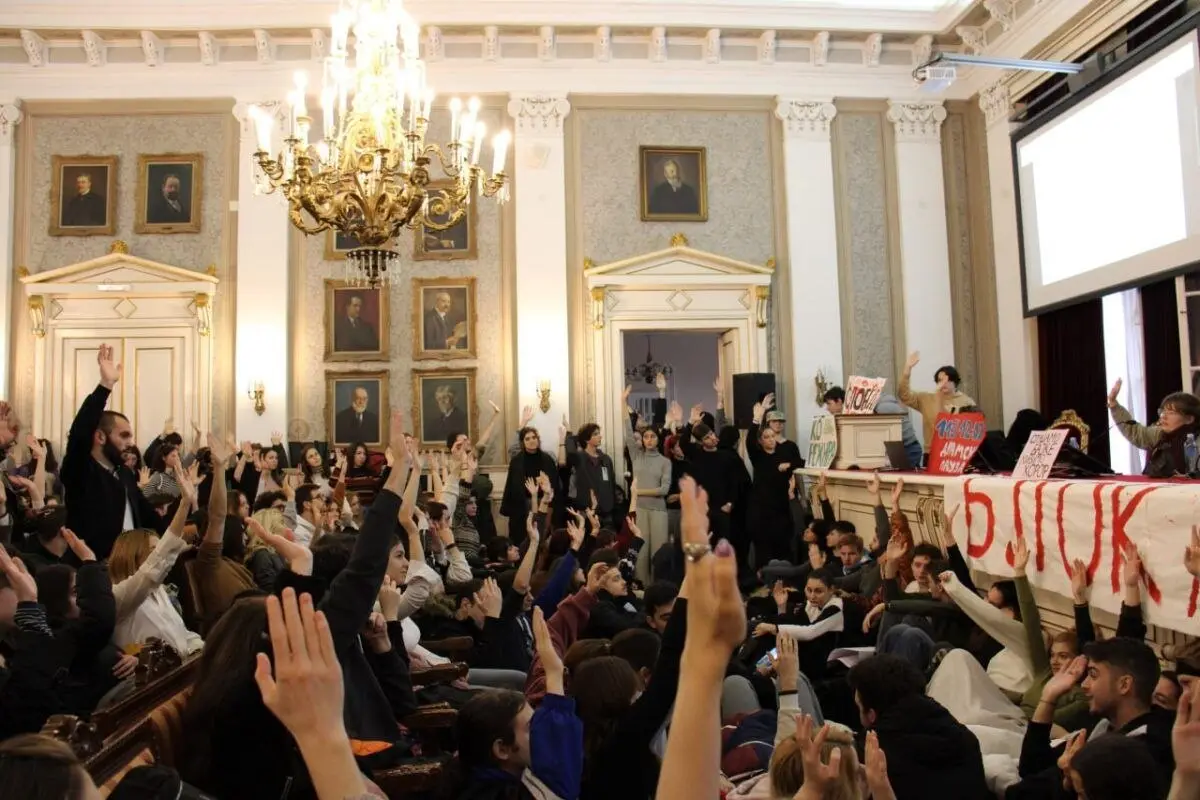
One of the key lessons from the history of the movement in Serbia for us as anarchists is that in the absence of a massive anarchist movement capable of effectively participating in the assemblies, the dominant, neoliberal ideology and its political forces were the ones who won, despite the movement being based on anarchist organising methods. The method isn’t enough if you don’t have a movement capable of articulating the ideology behind it. We saw how an anarchist organising method was abused to oust one pro-EU capitalist government and install another pro-EU capitalist government in power.
Can you tell us about decentralised organisation in Serbia in general: what are Zborovi and plenums? How widespread have these sorts of leaderless structures become?
Zborovi and plenums are the same thing, just in different contexts. Both words mean “direct-democratic assembly”. A plenum is a student assembly of a specific faculty, while a zbor is a people’s assembly, usually for a specific neighborhood or a small town.
The student movement that developed after the state murder in Novi Sad on November 1st 2024 was based on Blokadni kuvar (Occupation Cookbook), a short anarchist student book written by comrades in Zagreb, Croatia, after the massive student blockade wave in the country in 2009. That occupation wave was inspired by the first faculty occupations in Serbia in 2006 and 2007. At that time, there were close connections between politically active anarchists in Serbia and Croatia, which resulted in shared experiences, ultimately resulting in the birth of the Occupation Cookbook, which Serbian anarchists then republished in Belgrade in 2011, creating a blockade blueprint that can easily be distributed. Dozens of Occupation Cookbooks were distributed among students in November 2024, ultimately leading to the adoption of firm direct democracy among students. For coordination between faculty plenums, confederal direct democracy was adopted.
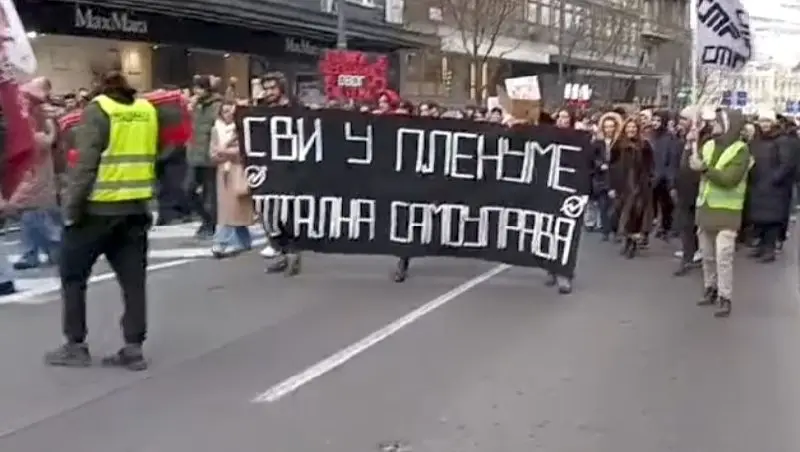
However, it was far from ideal. In fact, on many faculties, political interest groups, liberal NGOs and members of various political parties tried from the start to manipulate the direct democratic mechanics. While the radical left elements of the student assemblies fought the liberal right-wing parts of the movement as best as they could, in the end the liberal current won and essentially ousted any leftist elements of the movement by marginaliszing them.
People’s assemblies had a critical roleFrom our perspective, the truly direct-democratic period of the student movement lasted between November 2024 and February 2025, when the liberal elements managed to consolidate power because initially they were disorganised and confused about direct democracy. They were used to hierarchical, authoritarian structures, and since plenums are leaderless, egalitarian structures, they couldn’t just corrupt prominent individuals. Their financial and infrastructural backing from individuals and political organisations keen on taking ruling power in Serbia enabled them to outplay the radical-left elements of the movement and impose complete liberal ideological and political hegemony.
Of course, anarchists continued participating in the movement’s activities that retained a progressive character, which is especially true for the zborovi. In spring 2025, the plenums published an open letter to the people of Serbia, calling on them to begin self-organising into people’s assemblies. Soon after, assemblies began popping up across Serbia. In major cities like Belgrade, there were more than a dozen assemblies across various neighbourhoods and inter-assembly coordination was established.
The people’s assemblies had a critical role in expanding the struggle from the faculties into the streets. In fact, the assemblies opened up a new frontier for people, because they suddenly realised they could be used to organise around local issues, such as local criminal landlords, infrastructure problems, ecological questions, and even antifascist events.
Even though the movement ended up focused on an electoral victory, we believe there is still potential for radicalisation, especially now that we’ll have a new capitalist government. As anarchists, we believe unavoidable disillusionment with the new government, from a working-class, anti-capitalist perspective, could catalyse radicalisation in both student and people’s assemblies.
The movement against the government in Serbia has faced intense repression by the state, including the use of a sonic weapon, mass arrests and hospitalisation, and intimidation at ballot boxes. How has the movement sustained itself in spite of this?
Yes, state repression was intense in some periods of the movement, but it was essentially non-existent during extended periods. The first blockade of the Faculty of Dramatic Arts in Belgrade was a reaction to an attack by SNS party members on a student protest. In the beginning, a common form of violence was the attack on student protests with cars, during which multiple students were injured by SNS regime supporters who rammed their cars into protests. In fact, the state chose to avoid any direct police repression up until one of the major protests on the 15th of March 2025, when apparently a sonic weapon was used on thousands of people in Belgrade during the 16 minutes of silence for the 16 victims of the state murder in Novi Sad. The state continues to deny the use of a sonic weapon to this day.
After that, the state entered a new period of relative silence, until the massive protest in Belgrade on the 28th of June 2025, after which riots broke out. This period lasted over a week, and that is when we witnessed mass police oppression, brutal beatings of protestors across Serbia, as well as coordination between police and fascist state thugs in civilian clothes who began systematically attacking protestors.
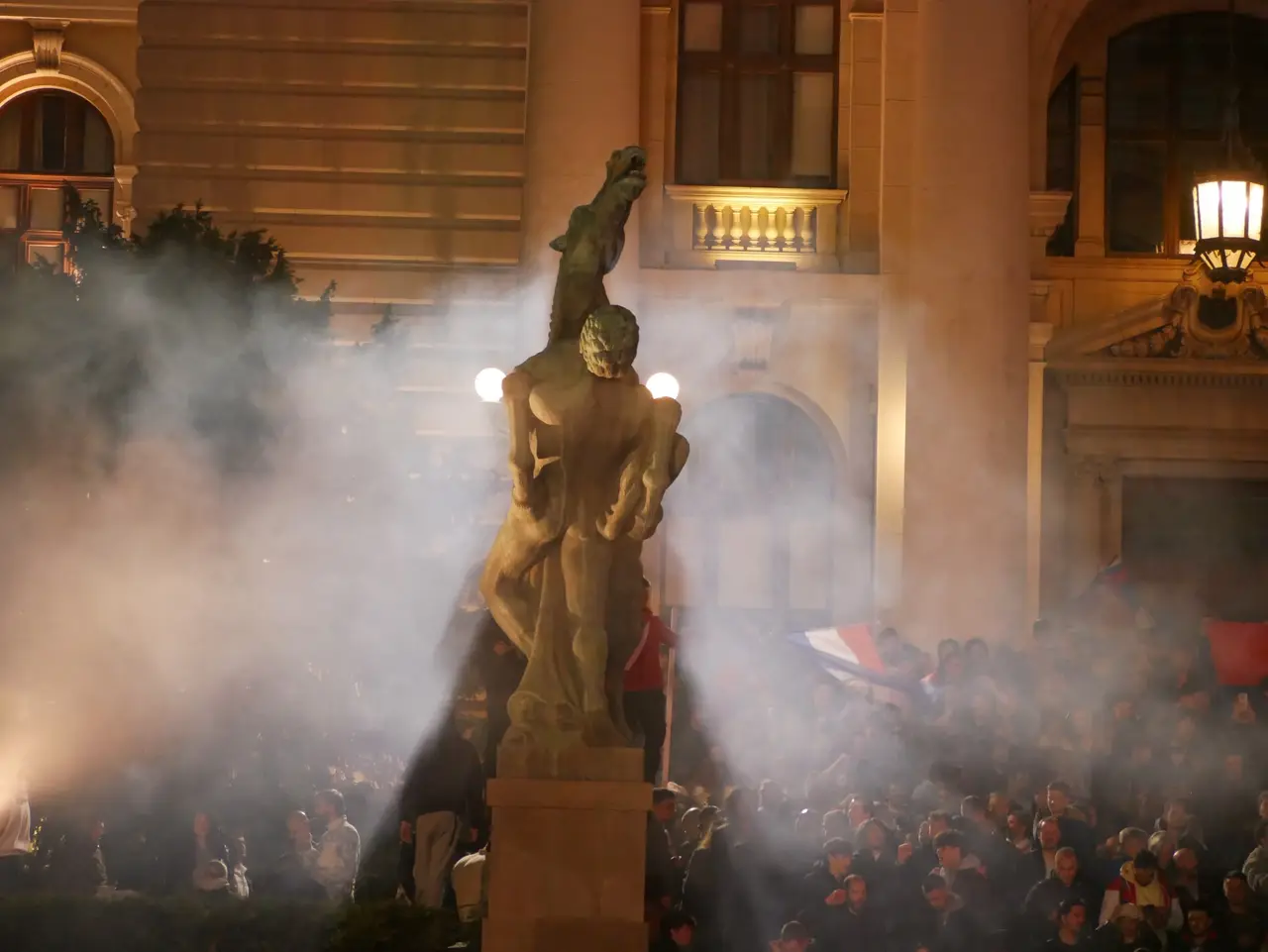
There was another wave of riots at the end of last summer when organised state-backed thugs began attacking student protests. However, after that wave, repression and state violence dramatically subsided, leading to a year of relative calm, both on the student movement’s side and the state’s activities to undermine it with violence. Both sides focused on an electoral campaign through a propaganda war.
So although these episodes of state repression have been violent, they were a very short period during the last two years. And even during the riots, the scale of state repression wasn’t even remotely comparable to the violence and repression horizontal movements experience in Western Europe, like the student movement in France during the past month, where we saw thousands of arrests, brutal violence, and even mutilation of protesters.
What does the fall of SNS mean for the repression (both by state and non-state actors) of anarchist organising in Serbia?
The anarchist movement wasn’t under much repression in Serbia during the SNS government’s time in power, in fact most of the repression against our movement happened during the previous government of the Democratic Party (DS), between 2009 and 2011 when anarchists in Serbia were being arrested for numerous acts of protests, including for organising a protest against the then largest-ever NATO conference in Europe, which was held in Belgrade.
During the SNS government, state repression was much more focused on the liberal opposition than on anarchists or other leftists. One reason is that liberal opposition parties challenged the SNS regime by seeking to take over political power, and they were correctly perceived as the main danger. Regarding non-state actors such as fascist and neonazi groups, there weren’t many problems with them in the previous period, and we don’t expect any in the future, however, we remain vigilant as always in order to firmly stand our ground and physically protect our members and events.
It remains to be seen how the new liberal right-wing government will treat the anarchist movement, especially since we plan to actively contribute to the movement’s radicalization by focusing on targeted critique of the new government’s moves.
Is there anything else you think our readers should know about the situation in Serbia, and do you have any ways they can support you?
The best way to support Klasna solidarnost is to share our publications online or translate and publish our articles about current developments in Serbia to spread the word about an anarchist perspective from inside the movement. When there’s such deep political turmoil in a region, it’s easy for observers elsewhere to jump to conclusions and assume things are more radical than they are. We’ve seen this from people abroad who think there’s some kind of “revolution” going on in Serbia, when in fact what happened was a government change driven by a truly grassroots direct-democratic movement, but no systematic, anticapitalist change.
The change is welcomed and necessary as a step toward building a radical, anticapitalist movement in Serbia, but it’s in no way a revolutionary change. It’s more of a shift within the liberal capitalist right-wing, supported by the EU, which used the grassroots movement as a tool for regime change.
We anticipate that the period ahead in Serbia will be extremely politically volatile, with many dangers as different interest groups fighting for power within the new government. For us anarchists, this is the time to return the movement to its radical, direct-democratic roots, now that electoral politics are out of the picture. It’s time to build alternative structures that won’t focus on parliamentary politics, but on systemic change that challenges the logic of the capitalist socioeconomic order.
The post Serbian anarchists: Student List “perfectly in line” with neoliberalism appeared first on Freedom Press.