
World · Freedom News (UK) · · 1h
Kropotkin’s lifeboats: Mutual aid VS welfare chauvinism
English (original) · Read in Deutsch ⇄
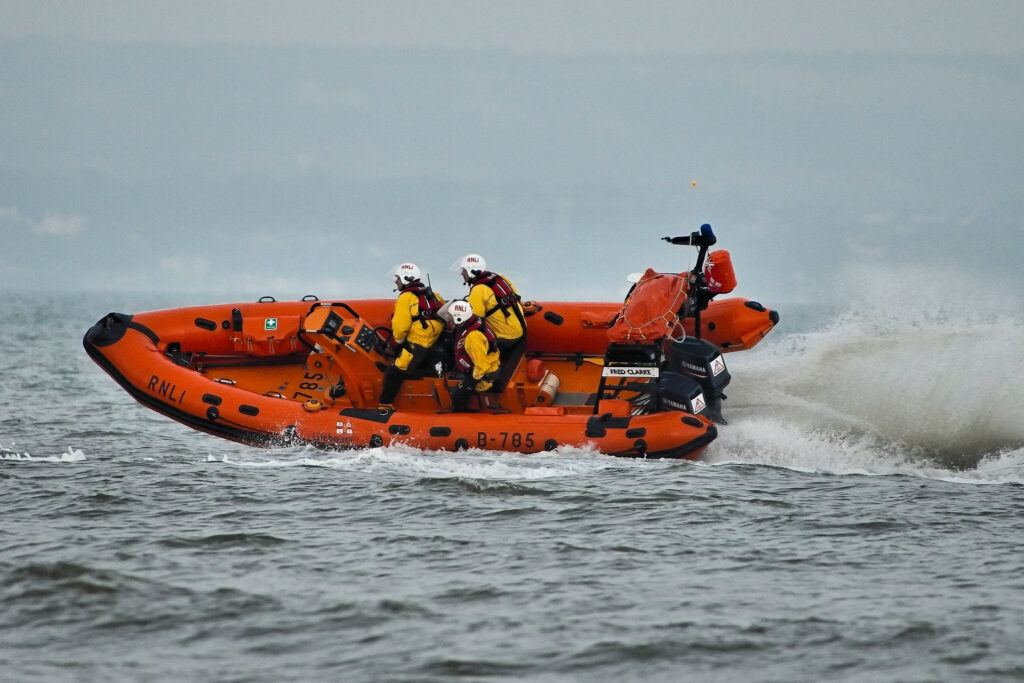
Royal. National. Traditionally British. The Royal National Lifeboat Institution (RNLI) seems an odd target for the enmity of so-called ‘patriots’. Yet RNLI volunteers are today being subjected to far-right abuse. Crew are doxed online alongside accusations that they are “traitors”, and Portsmouth lifeboat station was forced to close as volunteers faced down threats of fascist violence.
The government, which can treat pensioners as terrorists for protesting genocide, deploy facial recognition on the streets, and jail climate protestors for peaceful protests, could only meekly warn RNLI volunteers to disguise themselves to avoid attack.
The far right’s hatred of the RNLI goes beyond anti-immigrant rhetoric and scapegoating. The volunteer organisation’s cosmopolitan philosophy undermines a cornerstone of the far right’s worldview.
In fact, Peter Kropotkin, co-founder of Freedom Press, was fascinated by the British lifeboat movement. He returned to it repeatedly when explaining mutual aid and voluntary organisation, and in 1965 the RNLI’s own journal acknowledged him as a “profound admirer” of the lifeboat service.
Kropotkin saw in its lifeboat crews a fundamental anarchist principle: ordinary people organising together, without central authority, without promise of reward, to meet the community’s needs. Without asking who deserves to be saved.
Local people knew their coastline. Volunteers possessed the practical expertise. Crews organised around a common purpose. No state bureaucrat sitting safely behind a desk hundreds of miles away could dictate decisions about risking life to save life.
To go out in the worst of seas, they needed to trust their crew and their boats – which meant knowing and trusting the men who designed and built them.
Kropotkin saw voluntary association, local knowledge, co-operation and practical solidarity. He tells the story of a wreck in which villagers saw that the sea was too dangerous to enter. They watched the stranded crew signalling from the ship. Time passed. Eventually, they could no longer bear to watch.
The explanation Kropotkin records is beautifully simple:
There was no pay, no bonus, no profit in it.
They knew it was almost certain death – and some did die in the rescue attempt. But they turned helplessness into determination.
They did not know the people they were trying to rescue. They did not ask their nationality, tax status or religion.
This is why the lifeboat mattered to Kropotkin. Mutual aid was not merely a moral aspiration for some future anarchist society. It was defining something human beings already did.
When the institution was founded in 1824, its original principles stated that people of all nations should be treated equally, “in war as in peace”. That principle remains part of the RNLI’s historical charter.
Someone is in danger – our view is that you rescue them. The far-right view is to let some drown.
Nigel Farage called the RNLI a “taxi service” for migrants in 2021. Recent protesters have repeated the accusation and attacked volunteers for bringing people ashore.
The numbers shouldn’t matter – I only share them here to expose the disinformation. In 2025, RNLI lifeboats launched 9,058 times. Only 109 launches, around 1.2 per cent, involved small boats in the Channel. The RNLI says that 94.3 per cent of people recorded crossing the Channel in small boats that year were assisted by other agencies, including Border Force.
Farage’s taxi metaphor casts the person in danger as a passenger, the rescue as transportation, and the volunteers as co-conspirators.
Welfare chauvinism is the ‘look after our own first’ claim that collective provision should primarily, or exclusively, benefit members of a national or ethnic in-group.
It’s a defining feature of far right propaganda, especially used to target the working class, playing on genuine problems but scapegoating immigrants rather than billionaires.
They claim that limited resources belong to “our own” – often meaning white, British, and Christian. That migrants compete with British citizens for housing, healthcare or welfare.
Reform UK’s recent Operation Fortress policy promises military interception of Channel boats while declaring that it will put “British people first”.
The rhetoric, of course, does not match their actions, which instead seek to cut the minimum wage, cut welfare and cut the National Health Service.
The lifeboat operates according to an almost perfect inversion of welfare chauvinism.
There is no question of ‘deservingness’ It does not ask the politics, religion, nationality or immigration status of the person disappearing beneath the water.
A human being is in danger — that is enough. The RNLI expresses the principle in six words: “Anyone can drown. No one should.”
That is remarkably close to the universalism Kropotkin identified. And that is why the argument over the RNLI is about considerably more than boats.
Anarchists don’t romanticise institutions. The modern RNLI is not the decentralised federation Kropotkin described. Nor does the existence of a voluntary lifeboat service prove every anarchist argument about how a society should operate.
But as an example, it matters first because it saves lives, second because it is a teaching moment.
The RNLI has reported a significant increase in donations since the attacks on its volunteers. That response offers its own small demonstration of the same principle. When people try to intimidate rescuers, support the rescuers.
We can’t all go to sea, but we can look at our communities and build the lifeboats we need: mutual-aid networks, migrant solidarity groups, community organisations. Learn first aid. Know your neighbours. Organise horizontally.
Faced with strangers in mortal danger, the volunteers did not ask ‘should anyone go?’; they did not ask ‘who should go?’
Roderick McMillan is author of “How can Stoicism be reconciled with anarchy?” and co-owner of New Internationalist magazine. Image: Airwolfhound on Flickr CC BY-SA 2.0
Read the full story at the source
Source: Freedom News (UK)