
World · Freedom News (UK) · · 3h
Book Review: Animal Nightlife
English (original) · Read in Deutsch ⇄
Max Porter used the crow to convey the burden of grief. Betty Davis — an introvert with a fearless stage persona — suggested Crow had always been with her in some form. Crow was her spiritual muse, a driving force, a path to the music that shaped her. A dark and commanding bird which had evolved out of a smaller, brighter order. Crow empowered her to be bold by conventional standards.
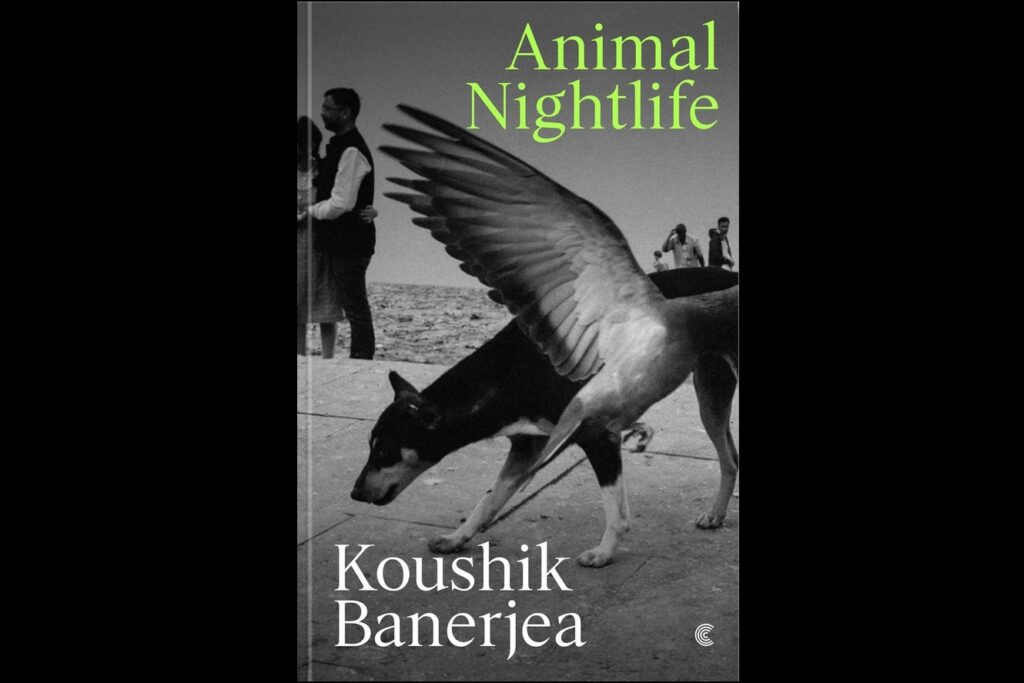
Crow in either context wouldn’t be out of place in Koushik Banerjea’s third novel, Animal Nightlife. The birds, lions, and rats that shape this story are shapeshifters, or Multiples, hidden in plain sight, working jobs, going to school. They’ve got rich immigration stories, complex family histories, the savvy to code switch for survival’s sake while they’re trapped in London amid humans who don’t have much to boast beyond their lives at face value. On the worst of days, they’ve got no choice but to exercise that savvy. Their animal identities are the parts of them that defy assimilation — they transition into birds that rise above city noise, rats that understand when to get lost or blend in. They live “as fragment rather than coherent whole.”
At the core of Animal Nightlife, a confident book at once biting, bitter, and empathetic, are Vikram and Ravi, friends since 1974, and a third friend, Sean, whose best mate is a dog named Lady Marmalade. There’s Vikram’s young, vague business associate, Luke — a whiz at coding, a born problem solver, and a rat, which may or may not align as his Chinese zodiac sign. And then there’s Ravi’s romantic partner, Nicolette, herself a Multiple who takes advantage of being nobody in particular to fly under the radar and try her hand at writing.
We’re set up to expect a gritty tale, but what actually unfolds is context for a greater warning of what’s to come. As Nightlife is released, Cuba is more than six months into an oil blockade, leaving residents without electricity. London is currently in a drought. Pakistan has been deemed the country most vulnerable to climate change. It’s been three years of a genocide that has shrunk Gaza down to a string of tent cities. And all across the U.S., water consumption is sparking pressure to push back against the development of new AI data centres. Nightlife is a strong reminder of the world a select few have built to enable these outcomes, and how those forced to migrate, to start over and rebuild, have spent generations developing the know-how to outlast what they’ve been handed.
Not that the book is without humour or joy; it shines brightest when its writer has the opportunity to go off on tangents, do a little flexing, lean in and tell you all about the thrill of a record or a meaningful football game. He’ll have been thinking about American Fiction as often as he’ll have been revisiting The Sopranos. And there’s a clear soundtrack woven throughout Nightlife — why shouldn’t it include two-plus pages of backstory on Augustus Pablo to paint a picture of Luke’s family history in Havendale? Pablo’s written here as someone not of this world, the way one might speculate about which planet David Bowie’s been transported back to, or how Mariah Carey spends her days after stepping back into the sea on December 26.
Though Banerjea’s got much writing left to do, Nightlife feels like a swan song, a culmination, rounding out a trilogy of novels in which his characters are built of the same generation, in an overlapping world, without knowing one another or being part of a series. While his characters are wary of being hit with slurs, or worse, he’s still got a deep nostalgia for his ‘70s South London childhood and a wealth of cultural references from a time when people danced in public without worrying about being filmed. He mourns the past by way of musical memories, and by reminding us that this gastropub, the place “that used to be something else, though no one says so any more […] could be anywhere but isn’t.” He’s thinking about mortality and midlife, and has a bit of disdain for the present, something we saw screaming hints of in his previous novel, Category Unknown.
As with those earlier novels, Nightlife is neatly tied together by the stories of its protagonists’ parents. Banerjea seems to have a particular affinity for Vikram’s parents, and the backstory on his father, Sailesh, captures the great point of the entire book, including a quick and dispiriting shrug of a name change from Sailesh to Simon, rechristened as he begins factory work in London. The language in Sailesh’s story sings when we join him in flashback at the cinema, where he goes unbothered by the others, they themselves Multiples: “And where others, often certain important People, would never look beyond dark hands and implacable faces offering service or servitude, their true majesty was only properly visible to kindred, wherever else they may have started out in that Great Chain of Being.”
Echoing Banerjea’s past work as well, Nightlife has few supporting female characters, but respectfully and quietly makes them some of the strongest hubs here. Banerjea briefly credits Nicolette, Ravi’s partner, with expanding Ravi’s musical horizons, and though Ravi and Nicolette eventually come out on top as a team, it is Ravi’s willingness to elevate Nicolette’s work that makes their new life possible. Vikram’s mother, who has read up on and rejected feminist theory, is treated with care, not as someone who blindly chooses a life of service over sisterhood but as someone who rejects a culture of individualism and, presumably, the lack of nuance and intersectionality applicable to the earlier waves of her generation. Even Lady Marmalade is written with tenderness and wisdom; her relationship with humans echoes a bigger picture which absolutely applies to the setting and alliances that exist in this world, and in ours: “And if I remember big hands, bad ones ripping me from my comforts before I was even old enough to resist, then I am also wise enough to recall other hands which freed me from my desperate abandonment.”
It would require a bit of dancing to talk about Animal Nightlife without addressing its publication with Conduit Books, currently focused on reviving fiction by men about contemporary men’s issues. Though it would be easy to point to the mission of this new publisher as short-sighted, given that women have only come to dominate the publishing industry well within the last decade (by all counts), it is also a timely call for fiction that resonates with men as part of a movement linking empathy, relationships, and mental health. Nightlife was written before Conduit’s launch, but it absolutely meets that call — so much of this book is about friendships between men, the friendship between their fathers, the influence of these fathers on their sons, and the ability of these men to hold up their partners as deserving of more. We’re regularly reminded of community as a theme, and the small ways in which community begins with relationships. The Multiples here ultimately look after each other, support each other’s asks and needs, and live by an approach collectively antithetical to a culture of individualism. Antithetical to “the singulars who’d never seen the bigger picture from above.”
Animal Nightlife by Koushik Banerjea – Conduit Books, 2026. £12.99
Read the full story at the source
Source: Freedom News (UK)