
World · Freedom News (UK) · · 3h
Barry Pateman (1951-2026)
English (original) · Read in Deutsch ⇄
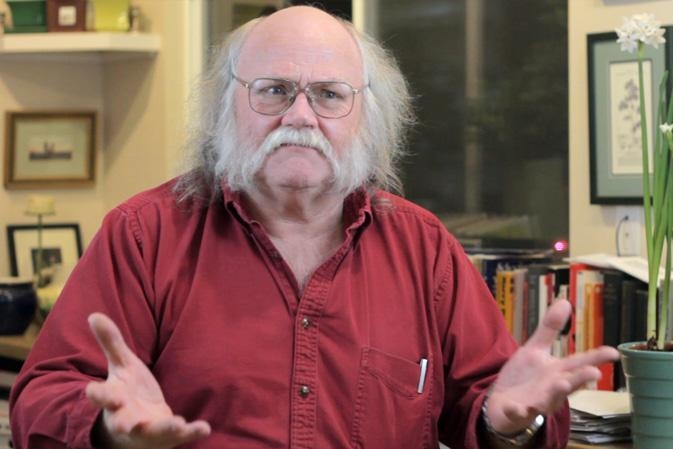
Barry was born March 4th, 1951 in Doncaster. His father worked in the coal mines for many years and his mother worked cleaning homes and other odd jobs. He was an anarchist before he really knew what anarchism was – his dissatisfaction with how he saw the communist organizations treat workers compelled him to seek other ways of thinking. He was the first in his family to graduate university and earned a PhD at the University of Warwick studying Spanish anarchist exiles. He helped organize the Anarchist Black Cross, the papers Black Flag and The Cambridge Syndicalist, the Alexander Berkman Social Club, and Rebel Press in New Zealand and many other projects and groups. He was also the curator and heart of the Kate Sharpley Library for 35 years.
Barry was quick to remind us all that anarchism is so much more than the big names with the long books – it’s the people who set up the tables and chairs for lectures and workshops – and the Kate Sharpley Library dedicated itself to recording the names and stories of those people that would otherwise not make the history books. He also highlighted the practice of incorporating anarchy into our everyday lives and the importance of the anarchist milieu not becoming so sub-cultural that it cannot interact with ordinary people. He was a fan of sports, particularly cricket, but also baseball, American football, actual football and rugby. He is survived by his partner Jessica, son Paul, granddaughter Lila, and former students, mentees, historians, and book collectors all over the world from the UK to California to New Zealand. Barry touched the lives of so very many.
I only had the pleasure of talking to Barry at length in person once at the first North American Anarchist Studies Network meeting in Hartford, CT (2009). He delivered an address to all of us and it lit a fire in my heart that remains burning; I was 24 at the time, about to finish my undergraduate studies, and hearing someone talk about anarchist history beyond the Big Events of Spain and Ukraine was exactly what I needed.
Hillary Lazar: I will always remember the first time I met Barry Pateman. He was the assistant editor of the Emma Goldman Papers and I had just been hired on as a researcher, one of a dozen or so students and recent college grads, working on a multi-volume anthology of her writings. We were walking across the Berkeley campus to the library, where he was going to show me how to look through microfilm of hundred-year-old newspapers for ads about Goldman’s speaking tours.
While walking, Barry asked if I was an anarchist. I said yes. Then he said with a grin and twinkle in his eye, “Oh! So, then, you have tattoos?” Flustered, I shamefacedly admitted, no, as the imposter syndrome welled up and I was certain I had just lost any punk points I had managed to score. Who was I to call myself an anarchist with this guy, who had clearly been in the trenches for decades?! But he chuckled and said, “Bugger it, we’ll keep you on, anyway.” I breathed a (still uncertain) sigh of relief.
What I didn’t yet realize about Barry, is that despite the gruff facade and wild hair, he was one of the most thoughtful and genuine anarchists out there. Barry wasn’t just the “coolest boss” and mentor that a fledgling anarchist could have (though he was), he was someone who showed that it was ok for anarchists to care deeply about ideas and that intellectual inquiry, a love of books, and pursuit of history weren’t reserved for stodgy academics. He showed us that it’s ok to be authentically yourself. Unapologetically crass, yet also unapologetically caring. Funny as hell, brilliant, and deeply serious about work.
He also modeled what it meant to be a committed mentor to a whole generation of us. The wellspring of tributes to his memory this past week alone is a testament to that. How many of us crossed paths with him over the decades and came away inspired to stay in the struggle and, even more so, stay true to our radical paths–be it as teachers, or writers, or organizers, or fighters, or stewards of radical texts as he and his partner Jess were for the Kate Sharpley Library for so many years.
And, while he may not have known it, in many ways, without Barry, I never would have landed where I am–a now-lifer, aging anarchist, who works with radical-curious college kids myself. He was the one who encouraged me to pursue grad school all those years ago, and reassured me that it was alright to be a revolutionary who was committed to mutual aid and struggle in the street as well as hanging out in archives and bookfairs. In fact, my very first published article, on immigrant solidarity and antifascist resistance, was based on research about a 1930s newspaper he suggested I check out.
To be frank, there are countless others who are better positioned and have more of a right to be writing a tribute to Barry than I do. But I feel like there are probably also countless others like me out there as well. The ones who knew him briefly, long ago, or not so long ago, or maybe even just in passing. Yet, fleeting as it may have been, Barry left an indelible impression, forever changing us, as we carried on in life while holding him and his inspiration in our hearts..
The post Barry Pateman (1951-2026) appeared first on Freedom Press.
Read the full story at the source
Source: Freedom News (UK)