
World Freedom News (UK)
A regressive love-letter to traditional journalism
Film review : The Social Reckoning is both deeply attached to the liberal United States and terrified of what it has become The post A regressive love-letter to traditional journalism appeared first o
English (original) ·Read in Deutsch ⇄
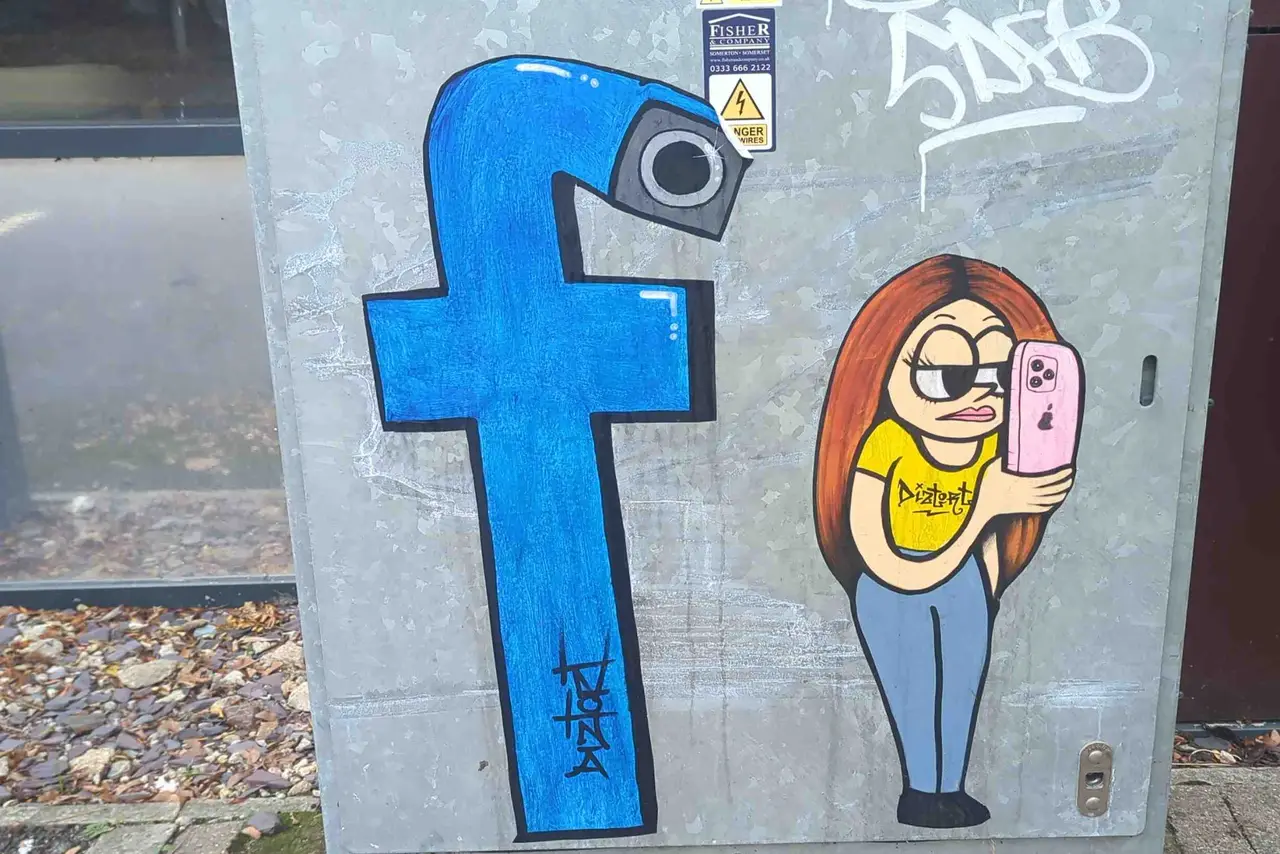
When history is written, how will the last 30 years be remembered? If The Social Reckoning is anything to go by, it will be as a slow slide into a paranoid dystopia. This film presents the most depressing view of the contemporary United States that I have seen to date, and that it does so from the heart of the Hollywood mainstream only makes this more striking. This is a shamelessly conservative romance that idealises middle-class, liberal and sexist American values in contrast to today’s proto-fascist, hyper-capitalist hellscape.
Frances Haugan, whose ethical compass is the film’s North star, is in a codependent relationship with her company. She loves Facebook, but when she stumbles on evidence of its corrupting influence, she is unable to raise the problem internally, and expects to be caught and punished for blowing the whistle. Like a late-period Stasi spy, she quickly comes to distrust her superiors, her society, and the other side, while remaining attached to a myth of instant, universal connection.
In the USSR, that myth was of communism as an approaching, abundant and benevolent equality. Here, Frances’s utopia is a world without “human friction”, where everyone communicates and everyone gets along. The spanner in the works is the profit motive. Its representative, Mark Zuckerberg, seems cut straight out of an Ayn Rand novel: buff, dominant and visionary, anti-social and intensely self-interested.
The reality of Facebook was already far more compromised than this film wishes to suggest – from its origins as a mysogynistic comparison app, to its key role in the Cambridge Analytica scandal in 2018 – but this would complicate the film’s regressive love-letter to traditional journalism. It is Jeff Horwitz’ role to discover the truth we all already know, that massive corporations with a free at the point-of-use model cannot be trusted.
This is a film which is both deeply attached to the liberal United States and terrified of what it has become. This is an America in which corporations are “post-government”, in which coup attempts are whipped up by false information, and in which a “free speech absolutist” cynically stokes conflict to sell more ads. This is an America that is twilit both literally and metaphorically, and where our hard-working, middle-class heroes are reduced to a whisper. This is an America that is a long way from a happy ending.
The film is also a kind of heteronormative romance. Haugan, presented as single, isolated, and girlish, is slowly seduced into disclosing the truth by Horwitz’ older, experienced journalist. He is respectful, modest, and a listener, the opposite of the Silicon Valley bros she is surrounded by. As she becomes a source, she is increasingly – and unnecessarily – sexualised. In the final scene she appears without the ankle and wrist warmers she wears to help with the symptoms of coeliac disease – she doesn’t want to look like a “freak” – and he holds her by the wrists.
The degree of conservatism here is a marker of just how far to the right the mainstream has shifted. “I work at the Wall Street Journal, so my cred as a free-market capitalist is solid” intones one, well-meaning-but-tough stereotype of the female boss, “and even I think this needs government intervention.” This is not the place to look for the sort of revolutionary propaganda of Sorry to Bother You, or even the deeply compromised Hollywood radicalism of One Battle After Another. This is movie shot through with conservative nostalgia for the pre-internet status quo.
And yet, as shoe-leather journalism disappears further and further into the rear view and AI gobbles up the last of the intellectual jobs already taken by neoliberalism and social media, there is something worth holding onto in this tradition. As me and my partner were walking home, we watched an unconfirmed but deeply concerning story from Facebook about a young girl being followed by racialised men was reposted onto our local group chat, without context, by several well-meaning activists in the area. In these moments the value of trustworthy people investigating the truth behind rumours, distortion, and sensationalism is immediately clear.
From behind a screen, these narratives can stoke any number of anxieties, from fears the far-right will whip up racial violence from false accusations, to concern that gender-based abuse is being perpetrated without consequence. We need to support people to dig into the facts, as well as the perspectives and interests of all those involved, if we are to build a society we can feel safe within.
This film presents a conflict between two poles. On one side is an emerging alliance between libertarian monopoly capital and the fascist right. On the other is an idealised coalition of middle-class professionals, competitive businesses, and small-c conservatives. As anarchists, we have to construct an anti-statist egalitarian movement that can challenge both these alternatives. To do so, we must learn how to trust each other, organise, and represent a genuinely progressive future.
The post A regressive love-letter to traditional journalism appeared first on Freedom Press.