Germany · CrimethInc. · 1970-01-01
Syriza cannot save Greece
Deutsch (original) · Auto-translated to English

After years of economic crisis and austerity measures, Greek voters decided on January 25 that the Syriza political party should take the reins of the state. Syriza – made up of a coalition of socialists, communists and greens – appears to be favorable to autonomous social movements; their leaders promise to take action against austerity policies and police violence.
Many outside Greece first heard of Syriza in December 2008, which at the time - as a radical left-wing group with less than 5% of the electorate - was virtually the only partyriotsnot condemned ones that followed the murder of Alexandros Grigoropoulos by the police. Syriza has now become the most powerful party in Greece. She gets a lot of votes from voters who previously supported less radical parties - and also from some who were involved in the movements and who previously did not support any parties at all. Even some Greek anarchists hope that Syriza's election will provide them with a much-needed respite after years of intensifying state violence and repression.
But will Syriza's victory give the movements for social change breathing space - or stifle them? We have seen such promises of “hope and change” before; namely when Obama won the presidential election in the United States, but also when Lula and other left-wing politicians came to power in Latin America. When Lula was elected in 2002, Brazil had some of the world's most powerful social movements; his victory was such a setback for the grassroots movements that it was for the Braziliansneeded until 2013, until they could once again mount a real challenge to the neoliberal project he inherited from his predecessors.
The impact of Syriza's success will be felt around the world, especially among the participants in the social movements that the party seeks to represent. Syriza-style parties are on the rise across Europe. The international financial institutions are watching the Greek laboratory, as are millions of people who are tired of being on the losing side of capitalism - but also nationalist and fascist groups hoping to benefit from the anger of the many. We need to understand why such parties gain so much support, what their structural role is in maintaining capitalism and the state, and how their rise and inevitable fall will shift the framework of resistance. In particular, anarchists must prepare for the intense struggles that will ensue if the situation changes, otherwise we will find ourselves alone and backed into a corner.

Political parties in the age of insurrection
Poverty, unemployment, prohibitive costs of education and healthcare, homelessness, hunger, migration forced by necessity, racism, criminalization, alienation, humiliation, suicide... These are not simply consequences of the financial crisis, but the conditions that billions of precarious people have been confronted with every day for decades because they serve as laboratory rats in the neoliberal experiment. However, due to the unequal distribution of the effects of theFordist compromiseMany Europeans were spared this reality for a long time, until the collapse of the welfare state began in 2008.
With the onset of the financial crisis, many who had previously lived relatively comfortable middle-class lives were plunged into poverty overnight. Years of rebellion followed across Europe – not just in Greece, but also in Iceland, Spain, England and Turkey. Almost every European country experienced a widespread popular rebellion after 2008, all the way up to social democratic Sweden. Most of them began as movements around individual demands - the student revolt in Croatia, the protests against the gold mines in Romania, the protests against corruption in Slovenia - but quickly took on a more fundamental character and opposed austerity policies, the political system or even capitalism and the state. Mayors and ministers resigned, police stations and parliaments burned, and governments fell. At the core of these movements were not only anarchists - in some countries such as Ukraine and Bulgaria the movements headed in a nationalist direction. But everywhere these protests opened a space in which people who had never previously associated themselves politically could express their anger together; in many places, such asBosnia, the most combative participants consisted of people who had never taken to the streets before. Confidence in parliamentarism plummeted to record lows and people rediscovered direct action.
These protests were anything but unified and remained more reformist than fundamental. Many culminated in small victories, such as the resignation of the government (Slovenia) or the promise of negotiations with the political elite (as in Bosnia). Participants who expected easy-to-achieve changes ended up disappointed. But the unstable situation posed a growing threat to the established order.
The state's first reaction was to criminalize resistance. On the one hand, this was intended to intimidate those protesting for the first time: the harshest judgments were often pronounced against the most inexperienced participants, who had no support from networks. On the other hand, the repression targeted anarchists and other staunch opponents of the existing order. In the last decade, numerous autonomous centers have been evacuated (Ungdomshuset in Denmark, Villa Amalias in Greece, Klinika in Prague) and “anti-terror” raids have been carried out against any apparent dissent, such as Operation Pandora in Spain and the ongoing oneHarassment of anarchists in Britain. Spain, Greece and other countries also introduced stricter demonstration laws.
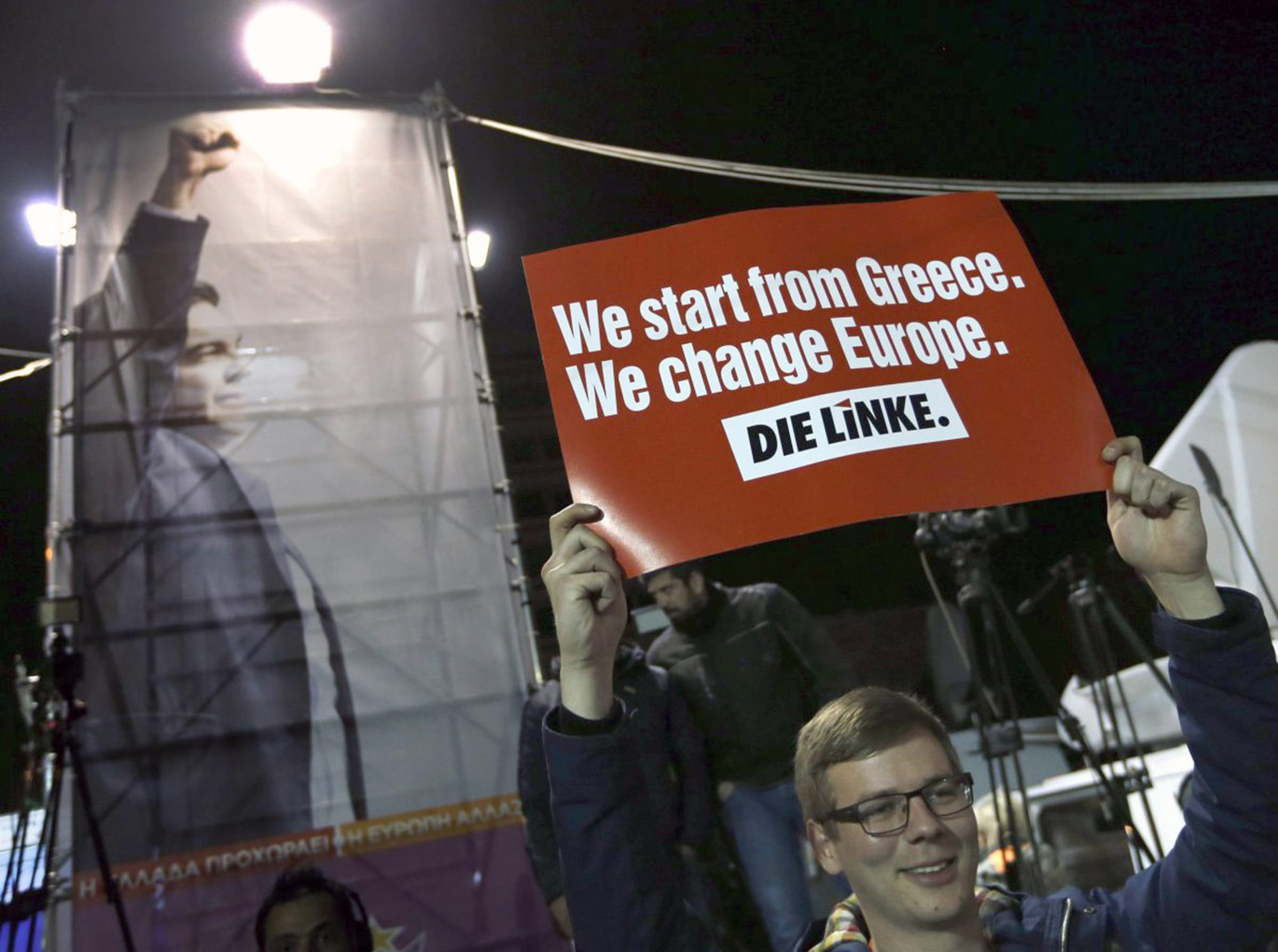
The other answer was to try to co-opt these movements. The protesters had shouted: “NO ONE REPRESENTS US!” – meant not just as a complaint against the existing parties, but as a rejection of the principle of representation and liberal democracy. People just discovering their political power experimented with direct action and collective decision-making, such as popular assemblies in Spain, Greece, and Bosnia. In response, paternalistic intellectuals and the hysterical media landscape have demanded that protesters form political parties to unite their voices and negotiate with the state. At the same time, new political parties positioned themselves in these movements by defending captured Protestants (like Syriza in Greece), supporting the goals of the protests in the media and in parliament (like Združena levica in Slovenia), and providing them with their resources (like Die Linke in Germany). They apparently developed a party-movement model and integrated the protest groups and their demands into their organizational structures.
Syriza has its own specific origins in the particular context of Greece. Likewise Podemos in Spain, Die Linke in Germany, the Parti de Gauche in France, Radnička fronta in Croatia, Združena levica in Slovenia and Bloco de Esquerda in Portugal. At this moment in history, however, they serve the same fundamental function. Confronted with such strong resentment, new radical political parties suddenly come in handy for the ruling order, especially if they promise to embody the calls for “true democracy” within the existing system. Whatever the intentions of their members, the structural role of the new parties will be to restore trust in representative democracy, neutralize the uncontrollable extra-parliamentary movements and re-establish capitalism and the state as the only conceivable social order. When they enter the halls of power, they commit themselves to perpetuating the authoritarian institutions and unequal distribution of wealth that gave rise to the movements from which they themselves originally emerged.
In such times, those who benefit from the existing order will be willing to risk small changes to prevent big ones. The growing popularity of all these parties in elections across Europe shows that the chapter that began with the Greek uprising in 2008 has been closed. If everything goes as in the previous examples, these parties will re-stabilize capitalism and state power and then disappear from the stage of history to make way for the next defenders of the current state - or they will become them themselves.
Greece, the periphery of the future
Greece has played a pioneering role in these processes from the beginning. Greek comrades took to the streets years before the revolts spread from Egypt to Brazil, and they have never really left them since. Meanwhile, the lenders that bailed out the Greek economy - the troika of the European Commission, the European Central Bank and the International Monetary Fund - imposed one austerity package after another.
What does it look like upon closer inspection? A few years ago, anarchist groups across Europe raised money for a Greek comrade who had to take her child out of the country for vital surgery. The reason was that the Greek state had simply stopped certain operations as a result of the financial cuts. This story is just one of many, and many people don't have the privilege of having a community that supports them in this way. While the Golden Dawn fascists are murdering comrades like Pavlos Fyssas in the streets and the police are killing migrants on the Greek borders of Fortress Europe, the state is killing the poor people at the hospital gates by denying them health care.
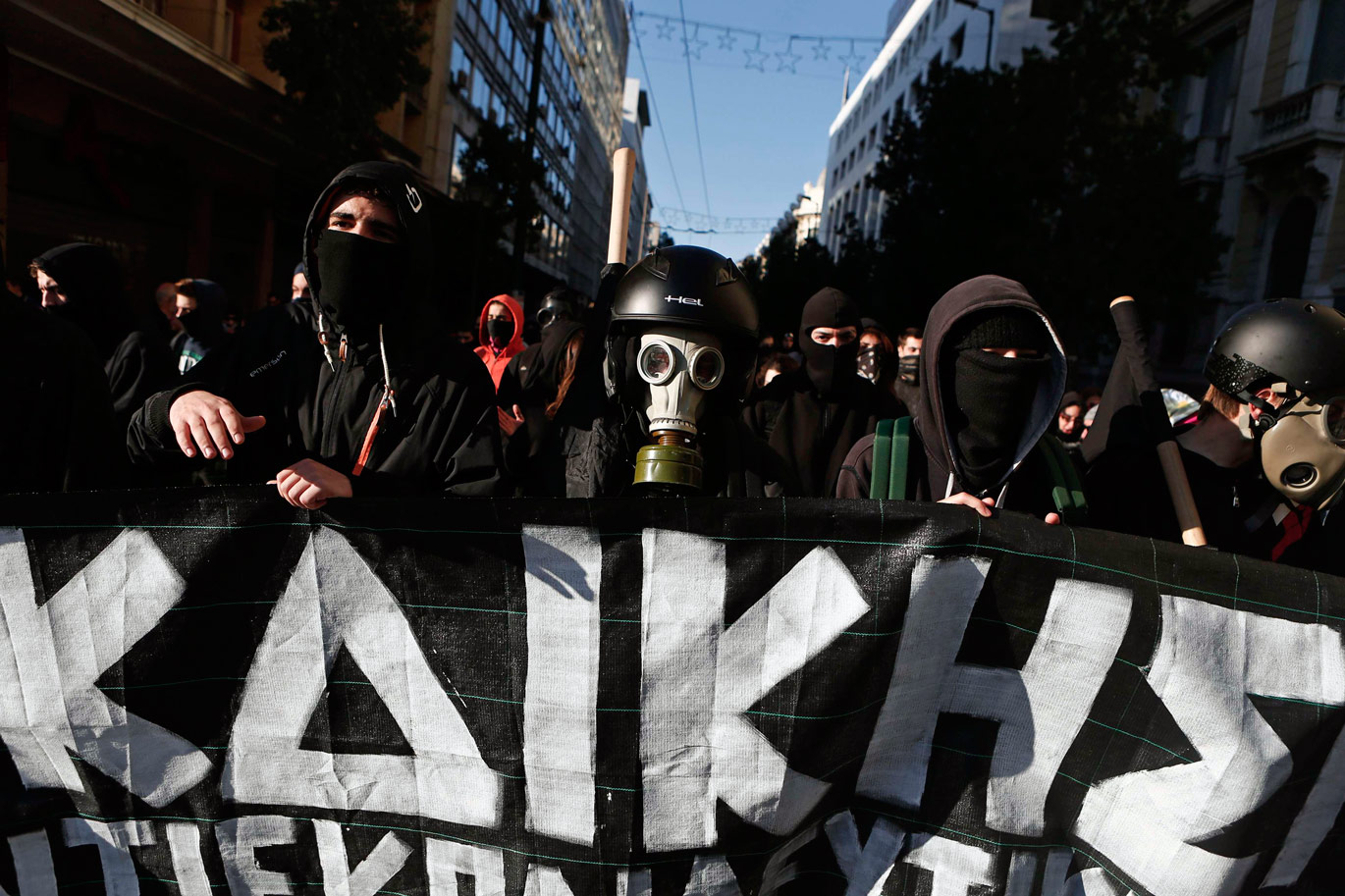
As the state closed hospitals, television stations, schools, and kindergartens, anarchists and others self-organized to establish independent clinics, educational projects, public kitchens, social programs, and neighborhood meetings. In the years that followed, the Greek anarchist movement became one of the main social forces, mobilizing thousands to fight alongside them. At the same time, this ideological polarization also benefited the fascists in Greece. Golden Dawn gained seats in parliament while police officers swelled their ranks. Police repression against anarchist demonstrations now became permanent and mercilessly violent. The far-right-controlled media covered this with a wall of silence, and the new high-security prisons built by the most conservative government since the fall of the military junta in 1970 filled with prisoners.
These were the conditions under which a small coalition of Trotskyists, Maoists, Greens and Social Democrats under the name Syriza and the leadership of Alexis Tsipras gained popularity. As thousands of people who belonged neither to anarchist nor left-wing groups marched with the anarchists and clashed with the police - in the fight against gold mining in Halkidiki, in the defense of the autonomous center of Villa Amalias, in the fight against Golden Dawn and in solidarity demonstrations for migrants - Syriza took a stand on the same issues. They addressed them in Parliament and their members took part in demonstrations. Whenever possible, they took advantage of these battles to gain media attention.
Syriza promised an end to austerity - although that rhetoric was toned down for the election into a promise to renegotiate the terms of Greece's debt. She promised to dismantle the most brutal police forces - but because of the election that has been reduced to disarming officers who come into direct contact with protesters. Syriza promised to leave NATO - because of the elections this was reduced to not taking part in foreign missions. Syriza promised to close maximum security prisons and make universities a no-go zone for police again, a legal privilege the movement lost after December 2008, which proved a major setback in clashes with police.
Syriza has less power to bring people to the streets than anarchists, but the party knew how to get people to the polls. This aptly describes the change that Syriza's alleged opponents would like to see in social movements in Greece and across Europe. While some spread rumors that a Syriza victory could lead to electoral fraud or a military coup, others claimed that Syriza's victory would lead to Greece's bankruptcy. At the same time, Europe's ruling class is hiding the fact that it got a good deal with Syriza compared to the social movement from which the party emerged. Just likePolice violence tends to catalyze resistanceRather than suppressing it, electoral fraud or military intervention could trigger a new wave of movement in Greece and Europe. Reactions to Syriza's election will be harsh in rhetoric but conciliatory in practice. Faced with the challenge of maintaining state power, Syriza is likely to offer much less than the party promised. In a globalized world where a country can go bankrupt overnight, capitalists do not need to organize a coup to get their way.

Our dreams will never fit into their ballot boxes
Anyone who sees no connection between the way the politics of...Elections and Capitalism Concentrate Power, for whom it is tempting to imagine that a new political party will finally make the system work “as it is supposed to be”. But even anarchists who do not believe in representative politics or reform may hold hope that a Syriza government could create an environment more conducive to resistance. In fact, it is an open secret that Syriza members have worked as lawyers for many anarchists; why shouldn't they continue to play a protective role when they are at the controls of power?
All of this is hopelessly naive. In the long term, no party can solve the problems created by capitalism and the state, and Syriza's victory will only hinder the revolutionary movements we need. _These are the reasons:_
Syriza will restore the legitimacy of the institutions that are causally responsible for the crisis.
In fact, Syriza's rise to power has already legitimized government institutions for many who had lost trust in them. Regardless of Syriza's intentions, this is the same government apparatus that is forcing the effects of capitalism on people by denying them access to the resources they need. Even if Syriza were able to use state power to combat the consequences of capital accumulation, sooner or later government power would be taken back by those who normally hold it. If this happens, efforts to delegitimize the government will have to start all over again.
This cycle of disillusionment and restoration of legitimacy has served for centuries to preserve the authoritarian structures of the state, always postponing the fight for real freedom until the future. It is an old story, stretching from the French revolutions of 1789, 1848 and 1870 to the Russian Revolution and national liberation movements of the 20th century to the election of Obama.
Syriza itself will do nothing to undermine the basic hierarchies of politics. Many of these new parties began as seemingly horizontal networks that promised true transparency and democratic decision-making processes. But as they grow larger, they inevitably abandon horizontal structures and begin to emulate the older parties they claim to be fighting. These changes are often justified as political pragmatism or as solutions to the problem of large numbers - and in fact the needs of representative politics do not fit the horizontal, autonomous structures that can emerge in genuine grassroots social movements. Therefore, we can be sure to find a charismatic leader like Alexis Tsipras, Luka Mesec or Pablo Iglesias at the head of every successful party like Syriza, Združena levica or Podemos. The personalities of these leaders intertwine with their parties in a way reminiscent of Hugo Chavez or other famous politicians of the left. Anyone who builds a party to play by the rules of the state will end up with a structure that is a reflection of the state. This internal transformation is the first step in restoring the status quo.
Left parties have always displayed a contradictory attitude towards the state. Theoretically, they assert that the state is only a necessary evil on the path to a classless society; However, in the field of realpolitik they always defend its repressive mechanisms - since no one who wants to exercise state power can do without them. Some of these new parties don't even wait until they come to power to take this path; In Slovenia, the left-wing opposition party Združena Levica demanded that the police receive better equipment and more staff as part of its fight against austerity measures. Today, these new political parties see state power as a necessary condition for their fight against neoliberalism; They reject the privatization of state-owned companies and recommend nationalization as one of the main measures against the effects of the economic crisis. Their goal is not to abolish the state and the economic inequalities it enforces, but rather to preserve the bourgeois ideal of the welfare state through a neo-Keynesian economic program.
If this was possible in the past, it was only for a few privileged countries and at the expense of millions of exploited people around the world - and even the beneficiaries of this order were not sure whether they wanted it, as the countercultural rebellions of the 1960s showed. Today, when capital accumulation has intensified to such an extent that only massive austerity programs can keep the economy running, the old compromises of social democracy have become impossible, and no one but left-wing quacks doubts this. The doomsday prophecies of German economists who predict that Syriza will ruin the Greek economy are entirely true: in a globalized world economy, you cannot redistribute wealth without causing capital flight unless you are prepared to abolish capitalism and the state structures that sustain it.
Most of those involved in the movements of the last seven years are not yet ready to go that far. They took to the streets out of dissatisfaction with existing governments, but they saw these movements as a way to find an immediate solution, not as a mere stage in a centuries-long struggle against capitalism. When the protests failed to produce immediate results, they joined parties like Syriza that promised quick and easy solutions. But what seems pragmatic today will be an embarrassing mistake that everyone will remember with a headache tomorrow. Isn't it always like that with parties?
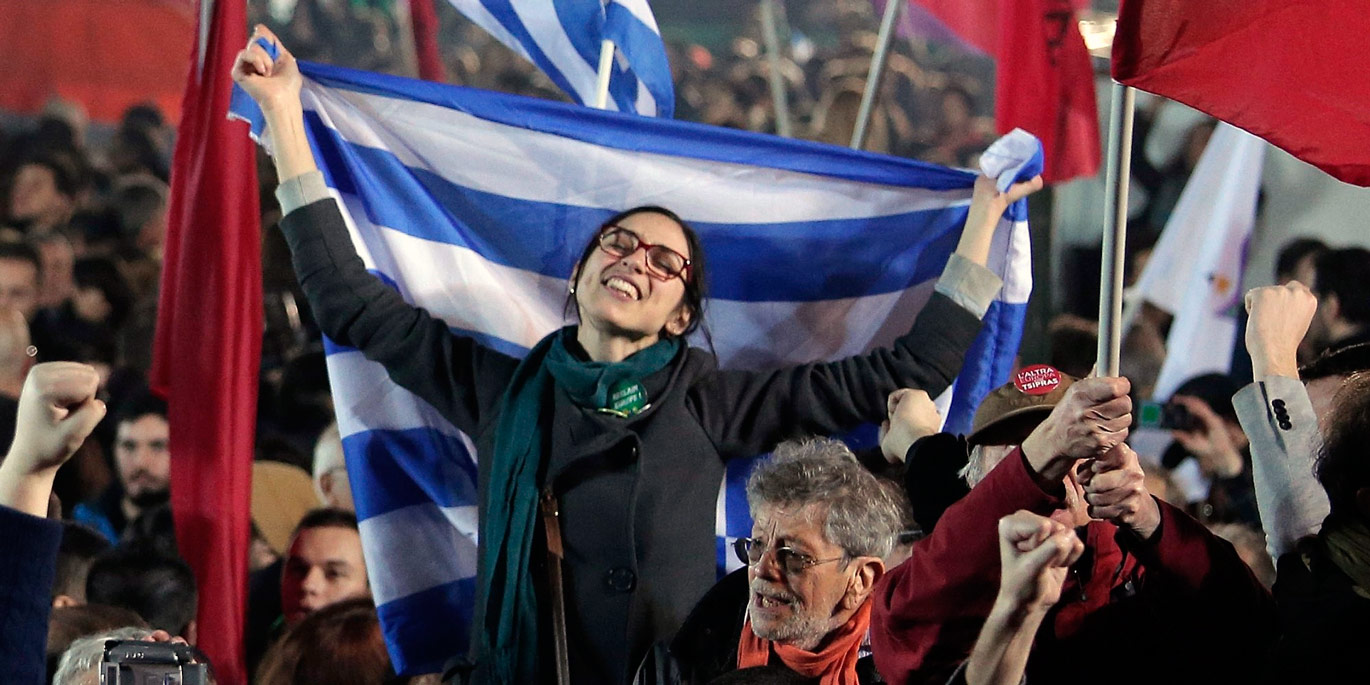
Syriza now has no choice but to impose law and order by quieting the movements that propelled the party to power.
It is still too early to anticipate the exact relationship between the new ruling party and the movements that brought it to power. We can only speculate based on past examples.
Let's go back to the Brazilian example. After Lula came to power, Brazil's strongest social movement, the 1.5 million-member land reform movement MST (Movimento dos Trabalhadores Sem Terra), found itself in a significantly worse position than it had been under the previous conservative government. Although many members and leaders of the movement were also active in Lula's party, the constraints of the state leadership prevented Lula from supporting the movement. Although the MST was able to wrest many land occupation legalizations from the previous government, it was no longer able to make any progress under Lula. The same pattern happened everywhere in Latin America. The politicians betrayed the movements that had previously brought them into office. This is a good argument for building forces independently instead of trying to help well-intentioned politicians get into office - because once they are in office, they have to act according to the logic of their position, not that of the movement.
Syriza came to power by aggressively seeking votes and watering down its demands. Representative democracy tends to reduce politics to a lowest common denominator affair as parties jockey for votes and coalitions. Syriza's first official act was to enter into a coalition with the right-wing Independent Greeks. In order to maintain this coalition, Syriza will have to make concessions to its partners' goals. This will mean, firstly, enforcing unwanted right-wing policies among your own membership - and then forcing them on everyone else. There is no way around the essentially oppressive nature of all governance.
Many anarchists hope that Syriza will put a stop to state repression of social movements and thereby give them the opportunity to develop more freely. Didn't Syriza fundamentally support the 2008 uprisings? At the time, however, they were a small party looking for allies; now they represent the ruling elite. To remain in power, they must show that they are willing to enforce the rule of law. While they may not pursue smaller protests as aggressively as a right-wing government would, they will have to divide activists into legitimate and illegitimate ones - a strategy from the counterinsurgency playbook that governments and occupying armies around the world follow. This would be nothing new for Greece; This is exactly what happened under the social democrats of PASOK in the early 1980s. Even if Syriza does not seek to maintain the previous intensity of repression, its function will be to divide the movements, assimilate the compliant and marginalize the rest. This may prove to be a more effective repressive strategy than the use of brute force.
Under these new conditions, the movements themselves will change. Syriza is already involved in many grassroots social programs; They will probably offer more resources to the most cooperative among them, but only with the influence of the state. It will become increasingly difficult for grassroots activists to remain truly autonomous and to show the difference between self-organization and top-down management. Something similar is already the casehappens in the non-profit sector in the USA, with devastating effect. We can also point here to the government influence on supposedly self-organized neighborhood assistance in Venezuela under Hugo Chavez.
This type of incorporation into the logic of the state is essential to parties like Syriza. They need movements that know how to behave and that can be used to legitimize parliamentary decisions without too much fuss.In fact, from 2012 onwardsThe mere prospect of Syriza coming to power kept the streets of Greece largely clear of protests, thereby increasing the risk to anarchists and others who continued to demonstrate. Parties like Syriza can pacify the public without even gaining office.
What happens now to the rest of the movement, to those who continue to maintain their autonomy and try to build their own power according to their own rules outside of the institutions? That is the question that confronts us.

Where Syriza fails, fascism will grow.
Facing international pressure, a divided electorate and the structural relationship between state and capital, Syriza cannot hope to solve the everyday problems that most Greeks face as a result of unbridled capitalism. In the long term, this could open the door to the only form of government Greece has not yet tried: fascism.
A profit-driven economic system inevitably concentrates wealth in the hands of fewer and fewer people. In a globalized world, every country scares away investors when it tries to reverse this process. This is also why the social democratic infrastructure is now under attack, even in the richest countries, as market mechanisms are kept running at the expense of the ordinary population. This problem could be solved with the revolutionary abolition of private property and the state that protects it. However, there is only one way to simultaneously maintain the social democratic infrastructure and capitalism: limiting the number of those who benefit from it. This is the purposefood distribution program, organized by the Golden Dawn party “only for Greeks”. Seen this way, nationalist and fascist parties have a more realistic plan to maintain the social safety net for the white middle class than the usual socialist parties.
This is why it is so dangerous for parties like Syriza to emphasize the idea that the problems of capitalism can be solved through social policy measures. If they fail to deliver on their promises, some of those who believed in them will turn to radical right-wing parties that claim to have a more pragmatic approach to achieving the same goals. This is already happening across Europe. In Sweden, the flagship of social democracy, the maintenance of state social policy was propagated for decades through left-wing agitation. This then paved the way for the fascists to demand that the borders be closed in order to maintain these programs.
But fascists don't need to come to power to become dangerous. They are dangerous because, just like anarchists, they can pursue their goals directly without needing the help of the state apparatus. We may actually be entering an era in which many political actors find it more expedient to position themselves outside the government rather than allow themselves to be discredited by it. Now that the state can no longer mitigate the effects of capitalism, people are bound to become more disillusioned and rebellious. Wherever left-wing parties hold state power and try to appease their former comrades who still take to the streets, it becomes increasingly easier for right-wing extremist groups to present themselves as the real resistance fighters - as in Venezuela, for example. The uprisings of the last few decades will certainly continue, the only question is in what way. Will they unite the people with their collective forces and usher in the final abolition of capitalism or will they be more like what happened in Ukraine last year?
Given the rise of anti-Islamic hysteria across Europe and nationalist movements such as Germany's PEGIDA, fascism is not just a future threat, but a clear and acute danger. Leaving it to governments to counter the fascist threat with constitutional means is dangerous in two respects: it replaces the ability of grassroots movements to act with the mediation of authorities, and – once again – it legitimizes state institutions that could fall into the hands of fascists. Some may see Syriza as a bulwark against fascism, but only autonomous movements can defeat it, not only through reactive combat, but above all by presenting a more enticing vision of social change.

Fight harder, want more
If Syriza's victory leads to lulling those who once gathered on the streets back into the role of spectator and isolation, the window of opportunity that opened up opportunities for change during the uprisings will close again. This would make Syriza itself obsolete and provide a blueprint for how to pacify social movements around the world. Syriza is playing with fire, promising solutions that the party cannot implement. While their failure could open the door to fascism, it could also spawn a new phase of movements beyond and against all authority.
To make this possible, anarchists in Greece and around the world must distinguish themselves from all political parties and invite the general public to join them in spaces beyond the influence of even the most generous social democrats. This includes turning away from the opportunistic politicians who once joined them on the streets. It won't be easy, but it's the only way. If it is the only thing, now that the election is over and Syriza is on the other side of the wall of power, at least the boundaries are clear.
Abolishing capitalism and the state is still unthinkable for most people. However, as Greece has learned, the measures that could stabilize capitalism for the next generation are even more unthinkable. In the everyday practices of Greek anarchists - the occupation of social centers and university buildings, the self-defense patrols against Golden Dawn, the social programs and meetings - we can see the first steps towards a world without property and government. If these practices led to a dead end in 2012, it was also because so many people abandoned the streets again in the hope of a Syriza election victory. And yet these are exactly the examples that should be followed as a model - and not the Syriza model. Let's stop wasting time with wrong solutions.
Translation of magazine:Original and PDF
Read the full story at the source →
Source: CrimethInc.