
Germany · CrimethInc. · 1970-01-01
Crimeth Inc. Lecture tour – report
Deutsch (original) · Auto-translated to English
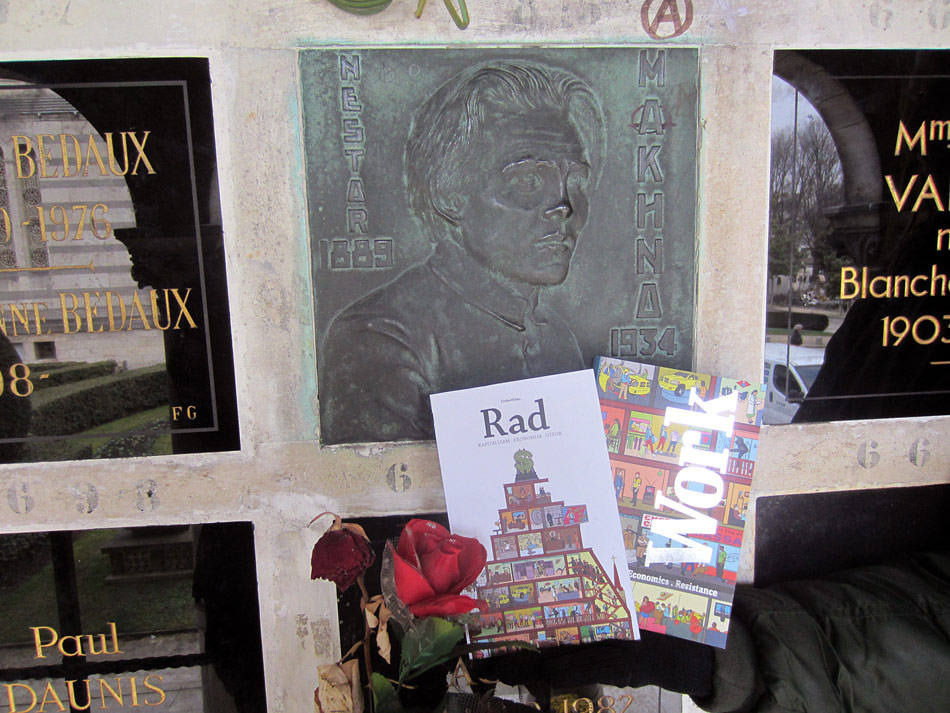
_Here you can find a report about the two-month CrimethInc. tour through Northern Europe. We from the bm crew would also like to thank all visitors, hosts and speakers once again - it was a wonderful, inspiring time!_
Crimeth Inc. Lecture tour report
Crimeth Inc. Agents are currently short of one2 month lecture tourcompleted with 45 events in Northern Europe. We would like to thank all the countless organizers, hosts and participants, you made this all possible and gave us a lot of inspiration along the way.
These were some of the highlights of the tourZrenjanin Antifascist Festival, in which anarchists from over a dozen countries took part; Walks in the footsteps of radical history through Helsinki and some other cities; the candle-filled Skogskyrkogården Cemetery on All Saints' Night; and traveling with our companion fromBlack Mosquito, whose hard work got the tour started in the first place. We were speechless at the high number of participants - at the peak there were almost 120, but regularly there were 50 or more people. This seems to show a growing interest in anarchism throughout Northern Europe.
And not a moment too soon. So far, the countries of Northern Europe appear to have remained islands of relative economic stability and social peace, while the continentis already on fire in the south– but it won’t stay that way forever. Outside ofOslo(a European Dubai still sustained by oil money), the growing strength of the fascists on the streets and in parliament confirms the popular belief that it is only a matter of time before capitalism abandons its historically most privileged middle classes. As faith in capitalism crumbles, it is particularly important that anarchists can offer a vision of liberation rather than simply preserving subcultural ghettos or taking an quixotic stand as the last defenders of social democracy. One of the reasons we decided to tour Northern Europe at this time was to offer the companions there a glimpse into the context in which they may soon find themselves and in which we already find ourselves in the USA. What happens in Northern Europe over the next few years could set the framework for what is possible in the rest of the world.
_Message in a Bottle_, the German-language text collection that we presented on this tour, is in Europe at Black Mosquito, among a lot moreCrimeth Inc. material, available. Black Mosquito is also working on a translation of our current book_Work_and would be happy to receive help. TheSerbo-Croatian version of _Work_is among other thingsŠto čitašavailable in Zagreb. Even though we didn't make it to Russia on this tour, these are_Work Book_and oursPoster describing the capitalist pyramidnow available in Russian, just like_Recipes for Disaster_.
Below you will find a fragmentary collection of tour material, a summary of our talk and a look ahead to what happens next.
Selected material from the tour
-an audio recordingof our lecture in Laidak, Berlin
-an audio recordingof our lecture at the KTS, Freiburg
-“Anarchy in the USA”, a book review by_Message in a Bottle_in New Germany
-Join the Resistance – Fall in Love: ZAF 2012, every little view– a report about the Zrenjanin Antifascist Festival and our lecture; there is alsoa Serbo-Croatian translationfrom the script of our lecture.
-Anarkistite retkelläandCrimeth Inc. kävi Suomessa – mitä sitten?, two articles in the Finnish newspaper _Voima_
- Avideo, which illustrates the audio recording from Tampere (Finland).
-An interview, which we gave to the left-wing weekly newspaper Jungle World.
- Anotherrecordingfrom the event in Münster
Summary of the lecture
What do we mean when we say we are anarchists? Of course we want freedom and reject the state, capitalism and all hierarchies - but we also see anarchism as a more passionate way to live our lives. Abolishing capitalism means not only reorganizing the economy, but also developing a new understanding of value. We don't have to be experts to understand economics; we can fight capitalism from every standpoint, inside and outside of our roles within it. Capitalism is not the only system that makes us unhappy, so we fight not only this economy, but all forms of domination.
We can summarize the starting points for anti-capitalist resistance in three terms: production (our jobs and defined roles in the economy), consumption (the things we buy; our subcultures; things we do when we are not at work), and precarity (the instability that affects more and more people within capitalism today).
In the classic idea of an anti-capitalist revolution starting in production, workers take over the means of production and use them to develop a proletarian utopia; this has never happened in the US. This is because revolutionaries and radicals have been separated from these struggles; One could date this to the time when Henry Ford compromised to pay workers enough to buy the products they made, thereby laying the foundation for the middle class. This gave the unions a role within capitalism, stabilizing it rather than maintaining the revolutionary demand that we be allowed to use our potential however we wish.
Not everyone was included in this compromise; Women, migrants and people of color in particular were left out, cementing racism and sexism into the foundation of the economy within the peace treaty between capitalists and the new middle class. When the feminist and civil rights movements emerged to challenge these hierarchies, reformers could demand to be included in this compromise; By granting this demand to some and simultaneously crushing the revolutionaries in these movements, the state managed to stabilize society without challenging the oppression at its foundation.
However, many of the next generation in the United States rebelled against this compromise, rejecting the promise of the mass consumer society in favor of individuality and counterculture. Since the 1960s, rebellion against capitalism increasingly began in the area of consumption rather than production: for example, in clothes and music. However, this rebellion merely identified something that the market could provide and encouraged a new generation of capitalists to shift the emphasis from conformity to individuality, thus further expanding the market. Even the reforms demanded by social movements adopted this consumer logic, allowing profits to increase without fundamentally questioning oppression.
Within this framework, punk subcultures articulated seemingly radical anti-capitalist demands: _do it yourself (diy)_ and _become the media_ (see e.g. Indymedia) rejected the consumer spectacle and supported self-organized, horizontal and participatory networks to create and disseminate culture and information. In the age of Facebook and YouTube, we have all "become the media" without becoming a bit freer, while some companies have made huge profits by responding to our demand to do it yourself. Even the revolutionary potential of the resulting communication tools (like Twitter, which was launched in 2004txt.mobinvented by anarchists) has simply opened the door to a new era of surveillance and repression. If we make demands that can be met within the capitalist logic, they ultimately do not bring us closer to an anti-capitalist revolution, but can only expand and stabilize the market.
Within just a few generations in the United States, workers locked into the Fordist compromise can watch their stable positions in the economy disappear as the aforementioned global telecommunications structure integrates the entire world into a single factory floor. Jobs move across borders whenever a barrier to trade arises, leaving us all increasingly precarious. Now that much of the production is done by machines or workersSweatshopsis done, the majority of workers in the USA work in the service sector, in jobs that do not produce anything useful at all and that obviously cannot form the basis for a post-capitalist world. Many get by with temporary work, which offers no security and forces us to compete with the rest of the precarious population; others are forced to work in illegal capitalism. Prisons have spread to unprecedented levels in the precarious economy, as have unemployment and homelessness. Here we can see the end result of globalized capitalism: humanity is thrown like trash into the wasteland created by an economy that no longer needs us - and there is no escape.
So what does resistance look like in this context? How will we abolish capitalism in the 21st century? Let's break this question down into four aspects.
First. Who will fight? What will be the basis for coming together in the coming years? Both the struggles arising from production and consumption have reached limits; Although workers will still organize and even take their jobs and punks will still form bands and politicize people through music, we do not believe that this will grow as a site of resistance as it did in the last century. Instead, people will increasingly come together on the basis of our precarity, our shared vulnerability to the changing economy, our inability to rely on capitalism to secure a future.
We saw this in the social movements that emerged in the United States after the economic crisis hit. The 2008 factory occupation in Chicago,2009-10 the university occupations in New York and Californiaand theProtests against welfare cuts in Wisconsin, in which a government building was occupied, all responded to conditions affecting more and more people, but none of them could go beyond their inherent limits. Why not? Because we cannot allow struggles to be based on positions within the economy that we cannot hold. The Occupy movement spread like no previous movement because it started outside of workplaces, schools/universities, or any fixed position in the economy. This shows us a direction from which resistance can develop in the future.
Second. What will we do together in these movements? What tactics and practices will enable movements to continue and grow? The Occupy movement quickly died out after the camps were evacuated in many places - because holding plenary sessions and holding up signs wasn't enough. Two examples of movements that have gone beyond protest to disrupting the economy show the direction anti-capitalist struggles must take to continue to grow. Occupy Oakland called for a general strike after their camp was evacuated. Today, when many people don't have jobs, or have constantly changing or meaningless jobs, this can't simply mean not showing up for work; instead, people have blocked the port and the business district, stopping the economy from functioning outside of the roles they have within it. Likewise havestriking students in Montreal, after being evicted from the occupied university/school buildings, decided to embark on a campaign to disrupt the economy, disrupting “business as usual” and fighting the police. This type of action is the only way for movements in this context to stay together and exert influence.
Third. What is our overarching strategy against capitalism? The left's traditional strategy is based on organizing more and more groups to win small reforms, build influence and gently pave the way to the biggest reform of all - revolution. It now sounds unlikely that this will succeed, both because the reforms of previous struggles have stabilized rather than threatened capitalism, and because many of these reforms are no longer even possible in today's precarious economy. Even kind and generous capitalists cannot offer higher wages and more stability if the economy simply withdraws capital from their companies as soon as they detect a sign of a threat to profits. The movements we have spoken of have won almost no single reform; we need a different strategy if we cannot expect to build the revolution through small victories.
Today, revolution might be more realistic than reform. In Egypt, workers' movements have failed to win reforms in decades of struggle, but a mass movement successfully toppled the entire government within weeks. It is almost impossible to imagine further revolutions these days, but capitalism simply cannot be reformed. If we can't count on winning these smaller battles, it's how we fight that counts. If we act in such a way that we demonstrate the possibility of a world without capitalism and in the process create new examples of struggles, then even without winning reforms we can create space in which revolution becomes conceivable and contexts can shift. The most interesting thing about the revolutions in Egypt and Tunisia is not that anarchist utopias emerged there (far from it), but that the struggles that emerged there spread across the whole world. Today we should measure our effectiveness not by the reforms won, but by whether our way of fighting demonstrates new possibilities and spreads.
Finally – what is the role of anarchists in today’s anti-capitalist struggles? We can change the perception of what is _possible_ and what is _legitimate_ in these struggles. We can experiment with and advance new tactics, opening up spaces for new possibilities in which people can engage in actions that are more radical than the ideas they claim to represent. We can explain our actions in analyzes that challenge all authority and prevent social movements from being co-opted by left or right authoritarians. We are not avant-garde, but we can make an important contribution if we go beyond trying to win victories for ourselves as anarchists and start spreading anarchist tactics, such as ways of fighting that distribute power horizontally rather than vertically. If we do this, and our tactics spread beyond the self-proclaimed anarchists into the vast masses of precarious populations who are increasingly less involved in maintaining capitalism, then we can make a real contribution to a revolutionary struggle.
What happens now?
We would like to continue to expand the connections we have started with companions in Europe. Here are a few possibilities what that could look like:
- Anyone is welcome to join CrimethInc. Translate material – and also adapt it to other contexts. If you are interested, write to us and we will help you however we can.
- We would welcome anarchist analyses, reports of current struggles, insightful stories and other material not in English and perhaps distribute them in English-speaking countries. For this we need help from native speakers who can translate the texts into English.
- We will do our best to help collectives from Europe and the rest of the world with tours and other events in the USA; write to us for support.
- Finally, we welcome all news about anarchist organizing outside the USA, about upcoming meetings and demonstrations, information about repression and calls for solidarity
Read the full story at the source →
Source: CrimethInc.