
Politics · CrimethInc. · 1970-01-01
Seven myths about the police
Deutsch (original) · Auto-translated to English
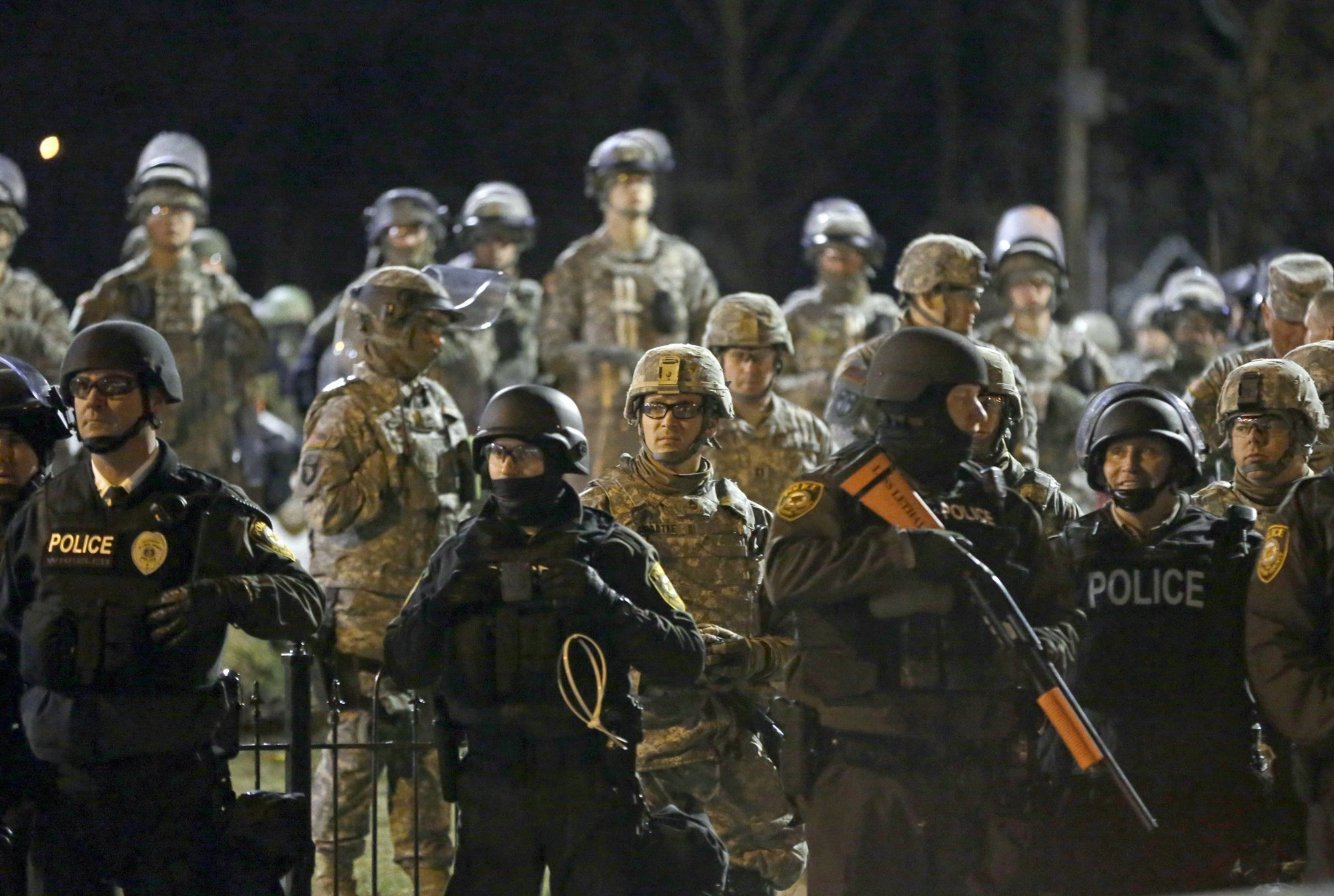
The police are a lawful authority. Average police officers are not legal experts: they probably know their department's internal policies and regulations, but know very little about the actual laws. This means that their law enforcement is largely bluff, improvisation and dishonesty. The police regularly lie: “I just received a report about someone matching your description committing a crime nearby. Can you identify yourself?”
But that doesn't mean that we should unthinkingly accept the laws as legitimate. The entire justice system protects the privileges of the rich and powerful. Obeying laws is not necessarily morally right – it may even be immoral. Slavery was legal, helping escaped slaves was illegal. In Germany, the Nazis came to power through democratic elections and passed laws according to the procedures established by law. We should strive to do what we believe is best with a clear conscience, despite laws and police intimidation.
The police officers are ordinary workers just like us – they should be our allies. Unfortunately, there is a big gap between “should be” and “are.” The role of the police is to serve the interests of the ruling class; Anyone who hasn't had a bad experience with the police is probably privileged, submissive, or both at the same time. Today's police officers know exactly what to expect when they join the force - people in uniform don't just pick cats out of trees. Yes, most people do the job out of economic necessity, but income is no excuse for throwing families out of their homes, bullying young people because of the color of their skin, or pepper-spraying protesters. Those whose consciences can be bought are potential enemies of all, not allies.
This tale is more convincing when expressed in strategic terms, for example: “Every revolution succeeds the moment the armed forces refuse to wage war against their fellow men; That's why we should focus on getting the police on our side." But police officers are not just any workers, they are the ones who have chosen to make a living by defending the established order. That is why they are the last people who will show sympathy for those who try to change what exists. In this context, it makes more sense to oppose the police as such rather than seek solidarity with them. As long as they serve their rulers, they cannot be our allies; By denouncing the institution of the police and by demoralizing individual officers, we encourage them to find another way to make a living so that one day we can find common ground.
There may be a few bad apples, but some police officers are good people. Perhaps some police officers have good intentions, but again, to the extent that they obey orders rather than their consciences, they cannot be trusted. We need to understand the systematic nature of institutions rather than attributing every injustice to the weaknesses of an individual. Do you remember the story of the man who, plagued by fleas, managed to catch one between his fingers? He examined the flea long and carefully before returning it to the spot on his neck where he had caught it. His friends, confused, asked him why the hell he did that. "It wasn't the flea that bit me," he explained.
The police can win any confrontation, so we should not make them our enemy. With all their weapons, equipment and surveillance capabilities, the police can seem invincible, but that is an illusion. They are limited by all sorts of invisible constraints - bureaucracy, public opinion, communication breakdowns, an overloaded justice system. If they do not have vehicles or facilities to, for example, transport and house large numbers of arrestees, they cannot carry out mass arrests.
This is why a ragtag crowd, armed only with the tear gas shells fired at them, can stop a larger, more organized and better equipped police force; A showdown between social unrest and military forces will not be fought according to the rules of military combat. Anyone who has studied the police, who can predict what they are prepared for and what they can and cannot do, can often outsmart and outwit them.
Such small victories are especially inspiring for those who suffer from police violence every day. In the collective unconscious of our society, the police are the ultimate bulwark of reality, the force that ensures that everything stays as it is; Taking on them and winning shows, even if only in the short term, that this reality is surmountable.
The police are merely a distraction from the real enemies and therefore not worthy of our anger or attention. Tyranny is not just a matter for politicians and leaders; they would be powerless without those who obey their orders. When we question their rule, we also question the subjugation that keeps them in their position; and sooner or later we can be sure that we will be confronted with those who submit.
With that said, it is true that police are no more essential to hierarchies than are the oppressive dynamics in our own communities; it is simply the external manifestation of the same phenomenon - on a larger scale. If we want to challenge domination everywhere, instead of specializing in a fight against certain forms of domination - while leaving others untouched - we must prepare for a confrontation on the one hand in the street and on the other in our own homes: we cannot expect to win on one front without fighting on the other. We should not fetishize confrontations with uniformed enemies, we should not forget the hierarchies within our ranks - but neither should we be content to simply deal with details of our own oppression in a non-hierarchical way.
We need the police to protect us. According to this line of thinking, even if we aspire to live in a police-free society in the distant future, we need police today because people are not yet ready to live peacefully together without armed law enforcement. As if the social inequalities and the fear spread by police violence were peace! Those who argue that police sometimes do good things bear the burden of proving that the same thing could not have been done by other means.
In any case, it's not the case that a police-free society will emerge overnight just because someone spray-painted "Fuck the Police" on a wall. The protracted struggle that will be necessary to free our communities from police repression will likely last until we learn to live peacefully with one another; A community that cannot resolve its own conflicts cannot expect to triumph over a more powerful occupying force. In the meantime, resistance to the police should be seen as a rejection of one of the most horrific sources of oppressive violence. We must not assume that without the police this violence would no longer exist. But if we can ever defeat and dismantle the police, we will certainly be able to defend ourselves against less organized threats.
Defending yourself against the police is violent - that doesn't make you better than them. If we proceed from this statement, violence is fundamentally a form of domination and cannot be reconciled with combating domination. Anyone who uses violence is playing the same game as the oppressors and has therefore lost from the start.
This is dangerously simplified. Is a woman who defends herself against a rapist on the same level as a rapist? Were the revolting slaves not one bit better than the slave owners? There is such a thing as self-defense. In some cases, violence creates power inequalities; in other cases violence challenges it. For people who still have faith in an authoritarian system or in God, the top priority is to obey the rules in all circumstances - whether legal or moral: they believe that they will be rewarded for doing so, no matter what might happen to others as a result. Whether these people call themselves conservatives or pacifists ultimately makes no difference. On the other hand, for those of us who take responsibility for ourselves, the most important question is what can serve to create a better world. Sometimes this can include violence.
Police officers are people too and deserve the same respect that we show all living beings. The point is not that they deserve to suffer or that we should take them to court. The point, pragmatically, is that they must not be allowed to treat people brutally or impose an unjust social order on them. It can be empowering for those who have been oppressed throughout their lives to think about getting back at their oppressors. But liberation does not mean demanding revenge, but rather making it unnecessary. Therefore, while it may sometimes even be necessary to set police officers on fire, this should not be done with a sense of vengeful self-righteousness, but rather from a standpoint of care and compassion - if not for the police, then at least for everyone who would otherwise suffer at their hands.
Delegitimizing the police not only benefits their victims, but also the families of the police officers and the officers themselves. Not only do police officers have a disproportionately high number of cases of domestic violence, they are also, unlike most other parts of society, at greater risk of being killed, committing suicide or becoming addicted to drugs. Anything that might encourage police officers to leave their profession is in their best interest, as well as in the interest of their loved ones and society at large. Let's create a world in which no one is oppressed or oppressed, in which no one has to live in fear.
Poster versions in different languages are available here. Download this text as a zine
CrimethInc.com Now Fully Functional in Portuguese
Including Books, Zines, Posters, and Articles
Eight Myths that Keep Your Eyes on the Clock and Your Nose to the Grindstone
Read the full story at the source →
Source: CrimethInc.