
World · CrimethInc. · · 1h
"Never Again": Czechoslovakian Hardcore in the Syrian Civil War
English (original) · Read in Deutsch ⇄
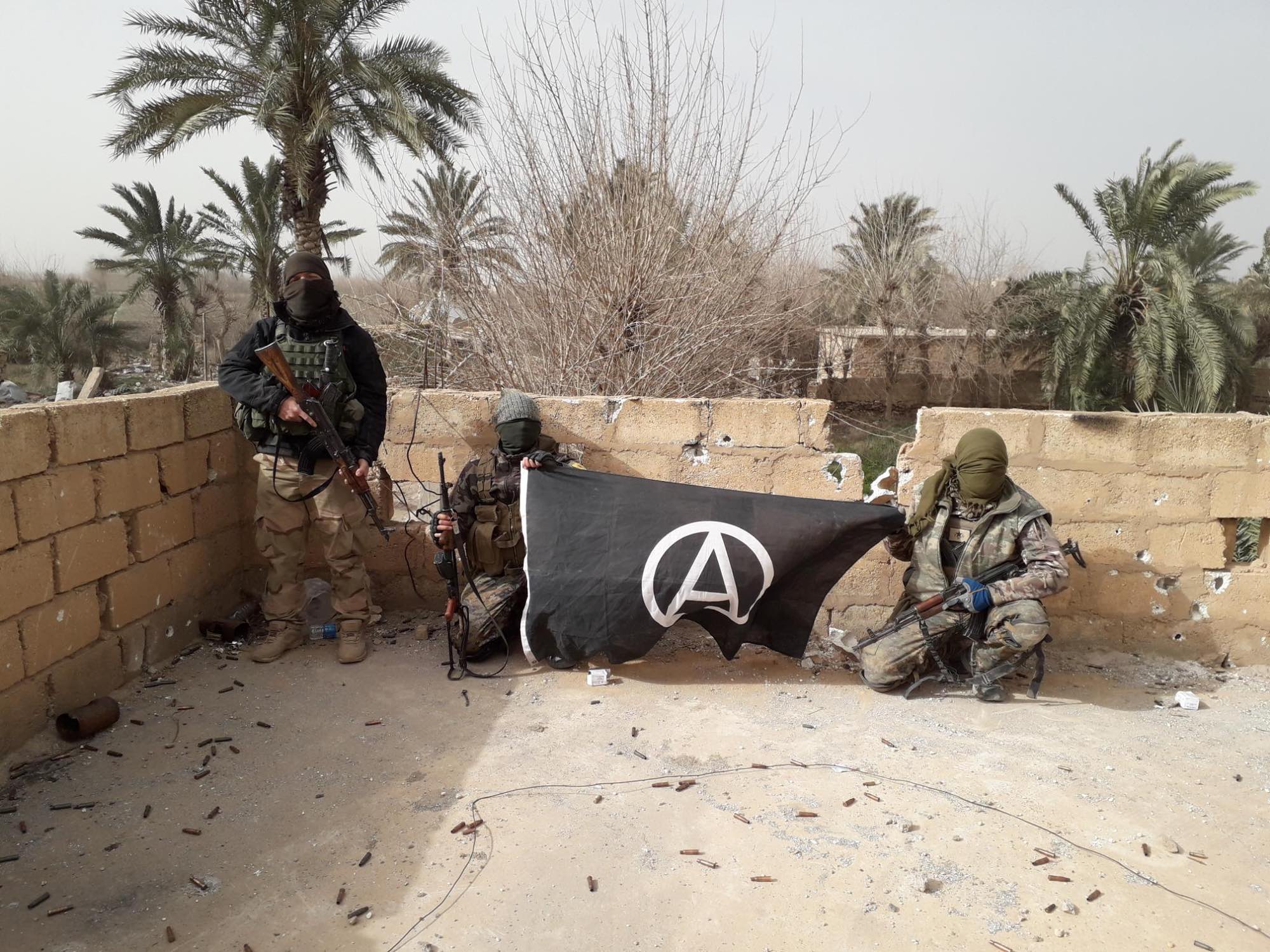
In the following narrative, anarchists who participated as internationalist volunteers in the fight to defend Rojava against the Islamic State describe the role that the anti-militarist hardcore song “Už Nikdy” (“Never Again”) by the Czechoslovakian hardcore band Kritická Situace played in their experience.
This text is adapted from the newest issue of the anarchist hardcore publication Inside Front. We share it here to explore the importance of revolutionary music and culture in social movements. The personal is geopolitical.
These events took place in March 2019, near the end of the fight against the Islamic State. At that time, the Turkish army and its Syrian proxies had brutally seized the majority-Kurdish district of Afrin in northwest Syria, and Donald Trump was signaling that he would permit them to attack the rest of Rojava as well. At the same time, the Islamic State still controlled territory in Deir Ezzor in the southeast, where the final battles took place at al-Baghuz Fawqani.
As soon as the Islamic State was defeated, the United States government gave Turkey the green light to butcher those who had defeated it. In 2024, Turkish-backed forces came to power in Syria, creating new challenges for the multiethnic revolutionary experiment in Rojava. Nonetheless, the fight for free life continues—in Rojava and the rest of Syria, in Turkey, in Czech Republic and Slovakia, and even in the United States. The struggle continues.
“Už Nikdy” by Kritická Situace.
We received the following accounts of the same events from two different correspondents.
Account I. — “Never Again”In March 2019, I was in Syria, an internationalist volunteer in the midst of the civil war.
We were fighting on two fronts. To the northwest, our comrades were locked in a defensive war with Turkish proxies and the Turkish state itself, whereas we were engaged in an offensive war with Daesh in the southeast. To the northwest, death from above—snipers and drones; in the southeast, death from below: snipers and mines.
My friends and I were positioned on the second floor of an abandoned building in the ruins of the town of Al-Baghuz Fawqani. A Tweety Bird blanket was hung over one of the blacked-out windows in our room. There was a small kitten who would sleep with us. The comrades in the hospital to the north had sent us there with an ambulance. We took it forward to retrieve casualties from the front line, administering what care we could. Usually, I drove.
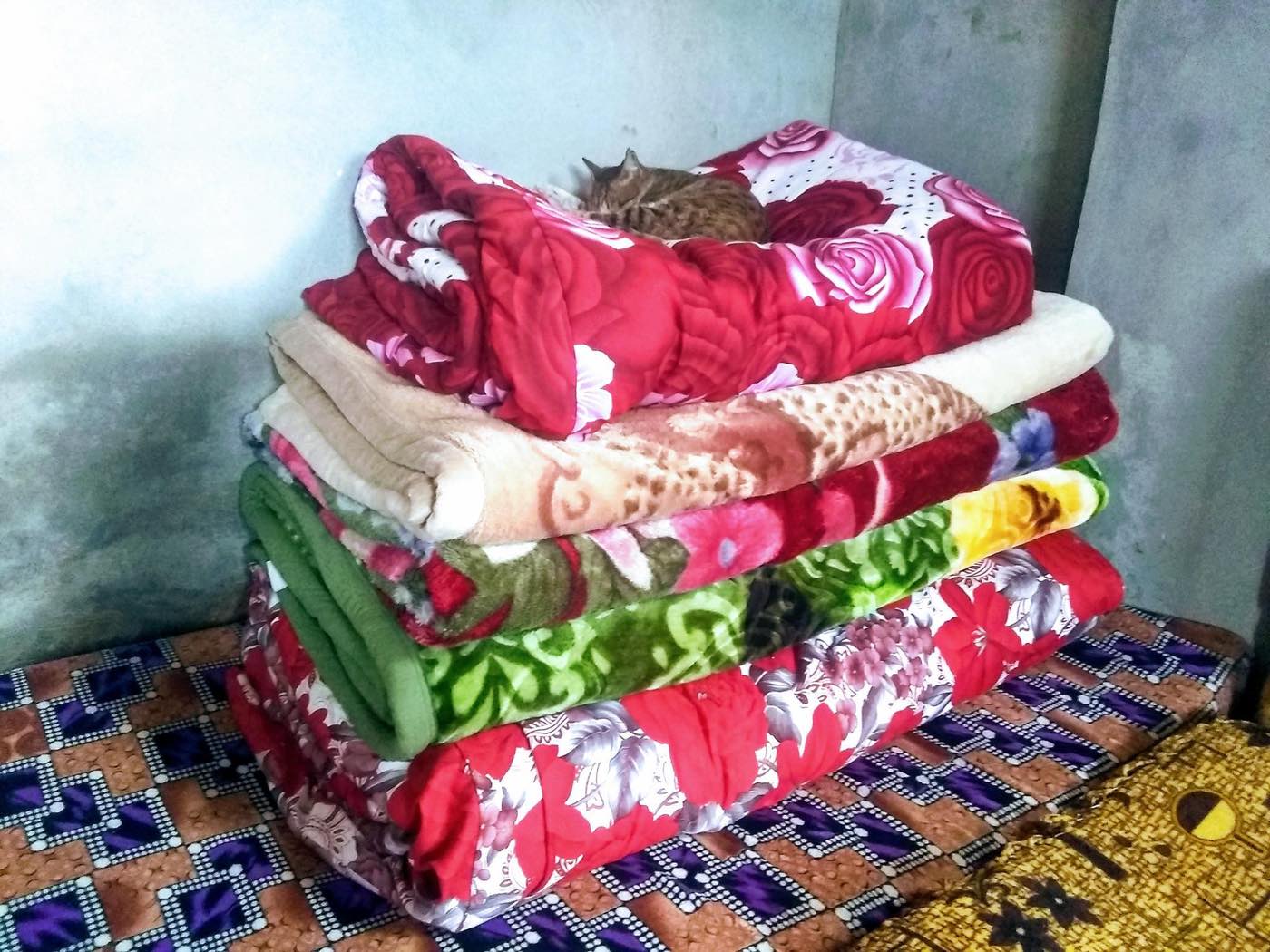
This cat briefly held the most advantageous position in the Syrian civil war.
In our group, there were volunteers from around the world who had come to Syria to defend the revolution. We found ourselves there in the last days of the last battle of the territorial war against the Islamic State in Iraq and Syria. In our ambulance unit, none of us shared common citizenship or a native tongue, but we soon found that we did share a background in the global punk counterculture.
One of the comrades described to me the sadness he had felt on the day that he had been forced to shave off his mohawk and flee his country. “But punk is not here,” he said, pointing at his hair. “It is here,” he said, pressing his fist to his heart.
By leaving my phone on the roof for several hours, I had managed to download a song titled “Never Again,” recorded in 1992 by the Czechoslovakian band Kritická Situace. The song had come to my attention in the year 1998, when it was featured in a memorable and impassioned review in issue 11 of the North American hardcore publication Inside Front. It tells the story of a conscript fleeing from the army through the wilderness, vowing that his superiors will never be able to force him to kill.
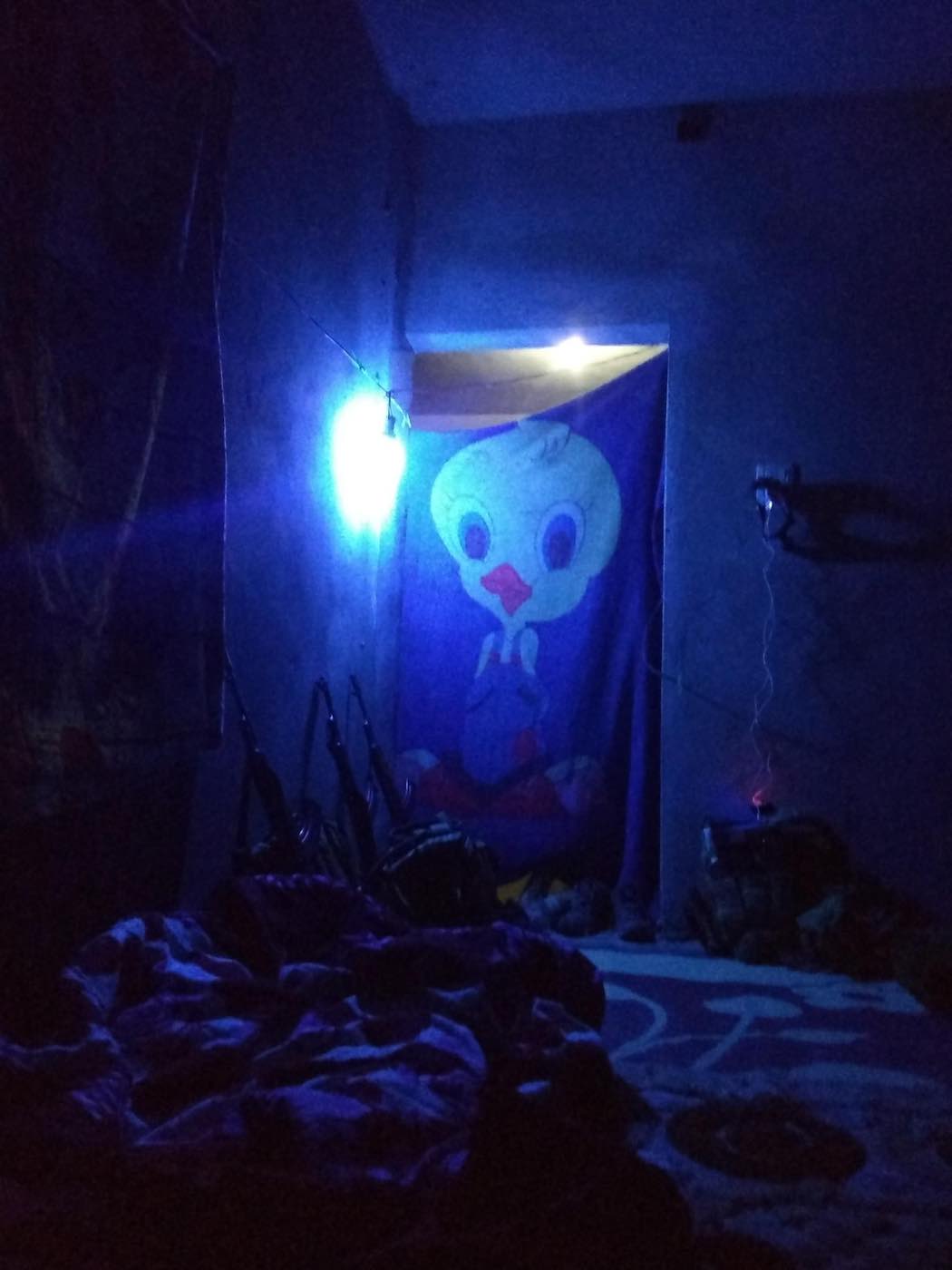
“A Tweety Bird blanket was hung over one of the blacked-out windows in our room.”
My friends and I were now in the exact inverse of that situation as internationalists who had crossed the world voluntarily to defend the principles of autonomy, ecology, and women’s liberation that the social movements in northeastern Syria were putting into practice. Still, war is war. Many nights, after tekmil, we would sing “Never Again” together quietly in the darkness, to the sound of gunfire, mortar fire, and bombs. Those fluent in Slavic languages would sing the words, and the rest of us would carry the rhythms and harmonies as best we could.
In a dark dungeon, in the glow of torches,
You hide from the exercise of power.
You do not believe in happiness or salvation,
You trust only in the black cloak of the night.
Only fate knows what will happen to you when the day comes,
For now you are left to dream of a lover’s embrace
You light a fire, its smoke repels insects
and the barking of dogs will soon wake you from your dreams.Deserter!
With the unknown before you
And the mercenaries behind you
You hope to pass through the mire
Always on the run.
Run from the army
Across the evil, spiteful land.
Most of us survived.
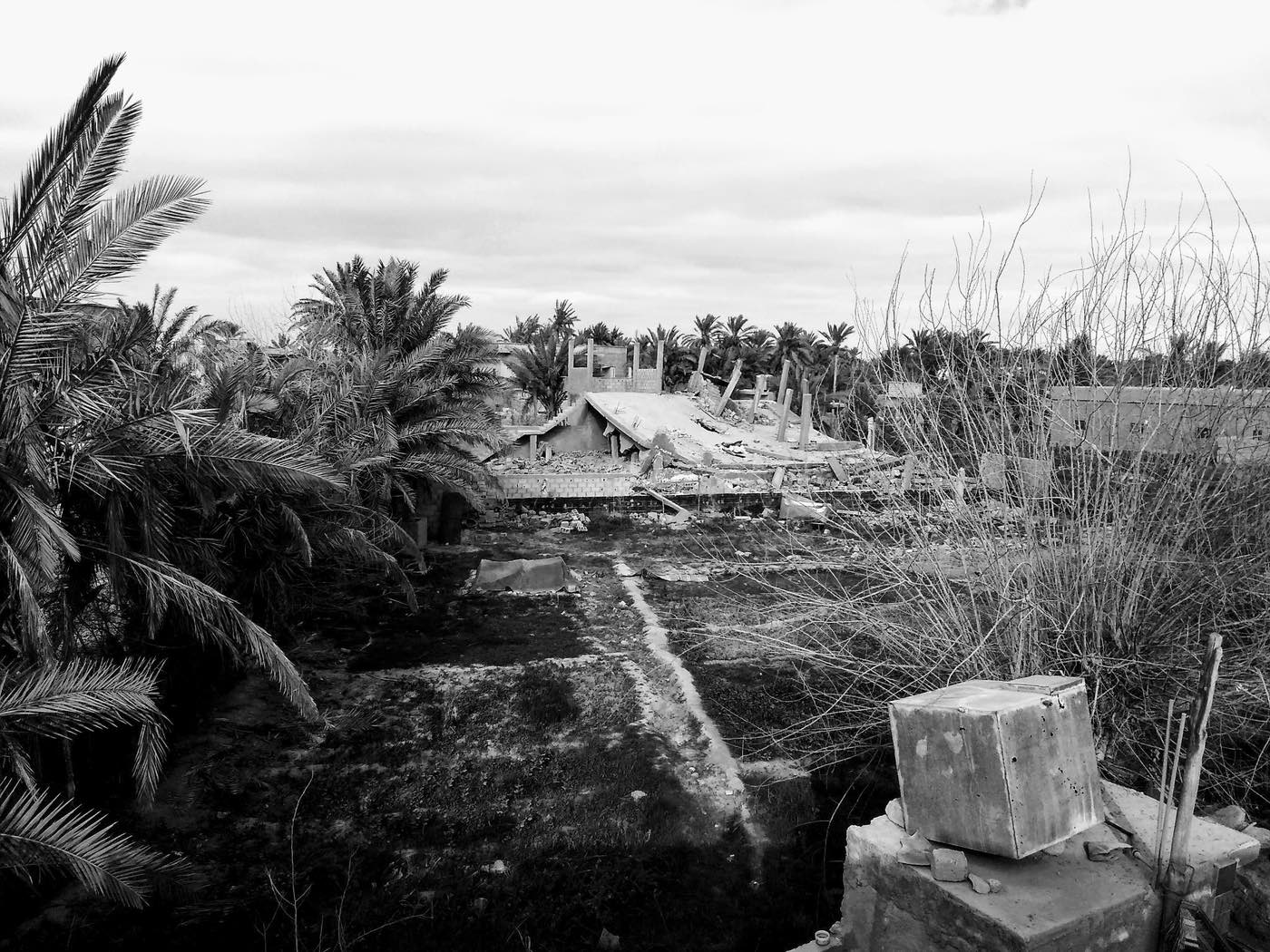
“Nothing is more tragic than records and other works of art lost like this one, forgotten by time, unable to touch the human beings for whom they were made, unable to provide the beauty and hope those people sorely need,” concluded the 1998 article about this record. Wherever the members of Kritická Situace are today, I would like them to know that their song was there for us when we needed it.
After I returned home from Rojava, an old friend and I recorded a piano duet of “Never Again” to send to those who were still at the front.
I remember one moment clearly.
Some comrades from our group have roots in the punk subculture. As one of them always said, it’s not about your haircut, it’s about what’s inside.
Myself, these past years, I listen to hardcore punk very rarely; and after arriving in Rojava, I found that culturally it was so far out that I didn’t even dare to listen it. Yet, as the months passed and I often felt alienated, missing home or my own roots, I realized that without certain bands or people I met in the punk scene, I would have never ended up in an anarchist group striving to follow the heritage of Maria Nikiforova, Nestor Makhno, Buenaventura Durruti, and others.
So from time to time, I caught myself listening to bands I liked ten or fifteen years earlier. The local comrades have a longstanding culture of revolutionary music, but we have something like that, too, and in addition to the traditional revolutionary songs and hip-hop, punk is essential revolutionary music for some of us.
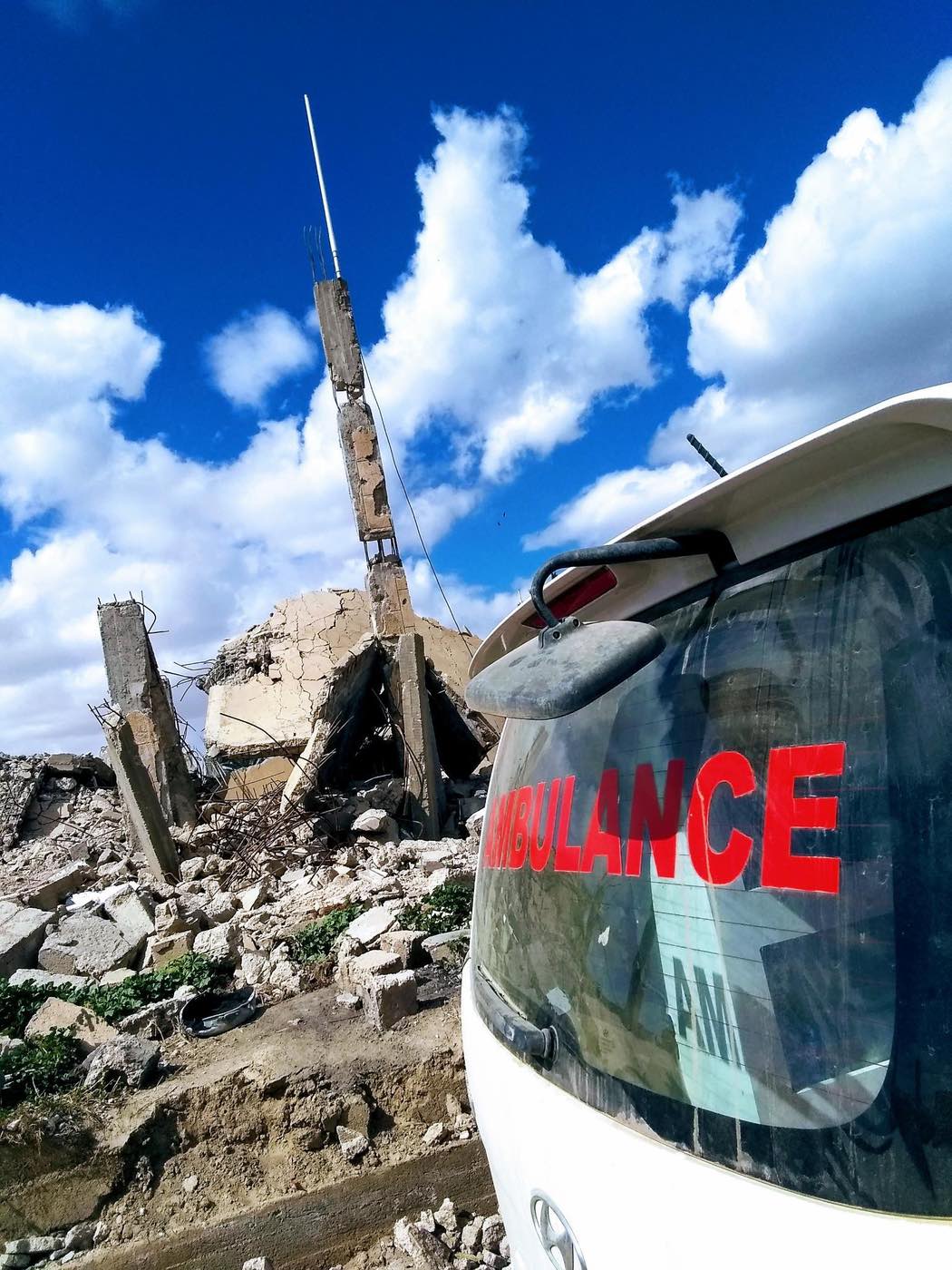
“The comrades in the hospital to the north had sent us there with an ambulance. We took it forward to retrieve casualties from the front line.”
In Deir Ezzor, a friend told me that he had a melody in his mind a lot and asked if I knew it. “It goes like this: ‘Tu-dп-pпnn-pnuuu—tu-du-pп-рпpnun-pnnии.’”
It immediately rang a bell, and I could join in with buzzing the guitar melody, yet I couldn’t recall what song it actually was. Another friend of ours joined in immediately and we realized that we all know it. It was the Kritická Situace song “Už Nikdy” (“Never Again”).
We had very limited access to internet, and when we did get it, everyone from the unit wanted to contact their relatives—so listening to the song or downloading it was impossible. We tried to for many days. We managed to get a message to a friend overseas who immediately recognized the song, yet it wasn’t any easier to receive it over Signal. Up on the roof of our building, it was sometimes possible to get a little Iraqi cell data service bleeding over from across the border, but it was not safe to be on the roof in the midst of a shooting war. A comrade took the risk of taking his phone up there and leaving it there for hours at a time, hoping to download the Signal message with the song in it.
It took a week or two of attempts, but he succeeded. The moment we got the song was like a group therapy. We sat in that house without windows in the middle of Baghouz, put the phone in the middle of our little circle, and pressed play. Three friends coming each from very different places, from different parts of the world, but all knowing this song thanks to punk. We sang along over and over and were carried away for the moment. It felt like back in the days when I got my first LP and sat home with friends to listen to it.
The interesting part is that the song is about running away from military duty:
“Už nikdy nevezmeš pušku do svých dlaní, nikdy se neozbrojiš žádnou zbrani, už nikdy nezamířiš na bratra svého, už nikdy netrefiš se, přímo do černého. Dezertére!”
Never again will you take a rifle in your hands
Never again will arm yourself with a weapon,
Never again will you aim at your brother,
Never again will you strike the target.
Deserter!
It is not a war song. But actually, it felt just right. We all felt rooted and at peace. As anarchists, we didn’t come to Rojava to kill or fight. We did not join the armed struggle for that. Rather, we understood the necessity of self-defense and the people’s struggle for self-determination, a revolutionary attempt to create a new society based on equality and women’s liberation.
The band wrote this song at the end of what is called the era of “real socialism” in Czechoslovakia, when punk rock was forbidden and all men had to serve in the state army directly under the control of Moscow. I am not trying to argue that today the members of the band would support using arms because we are in a different context and time, but I see a huge difference myself. I am fighting for a utopia, a world without weapons and wars. Paradoxically, it is this desire for total liberation which drove me to take part in what we know as the Syrian civil war.
I think that once an anarchist puts on a uniform and takes up a firearm to participate in such a conflict, they had better retain as much of a “hippie” approach as possible to balance the toughness needed to survive in war. Especially those who come to the Middle East from the so-called West. А self-reflective mindset and a determination to analyze toxic masculinity is very important, lest we end up on a slippery slope towards becoming what we fight against. So yes—NEVER AGAIN!
I wish this, anyway.
A few days ago, on the Summer Solstice, sitting around fire, we played a game. I had to describe a book I liked. Without thinking, I picked The Fifth Sacred Thing by Starhawk, which I read just before coming here and I felt again that it all kind of made sense to me. The distance between utopia and reality is sometimes very far, yet we must not forget our utopias.
We must not forget our utopias.
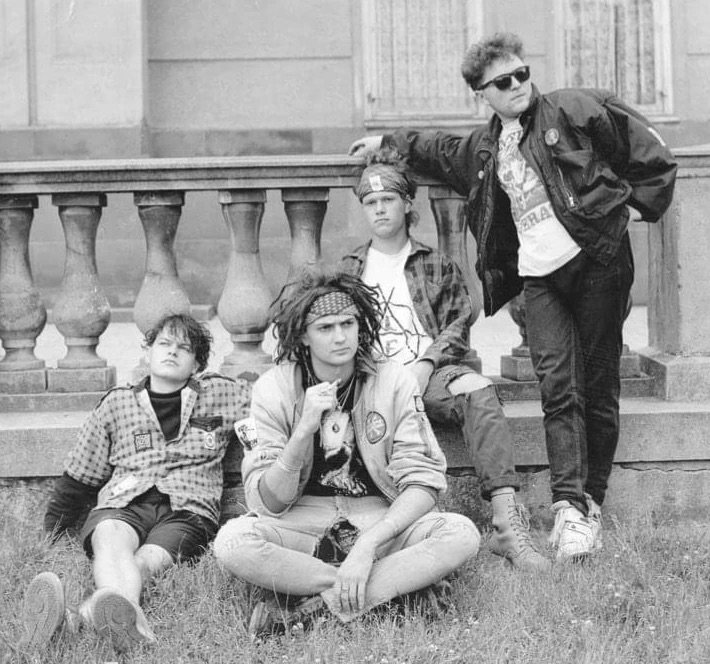
A photograph of Kritická Situace in the year 1990.
Read the full story at the source
Source: CrimethInc.