
World Autonomies
Giorgio Agamben: The countless people
One of the fundamental political problems — if not the most urgent — is how to conceive of an uncountable multiplicity (or multitude). As a political concept, the people only makes sense on condition
English (original) ·Read in Deutsch ⇄
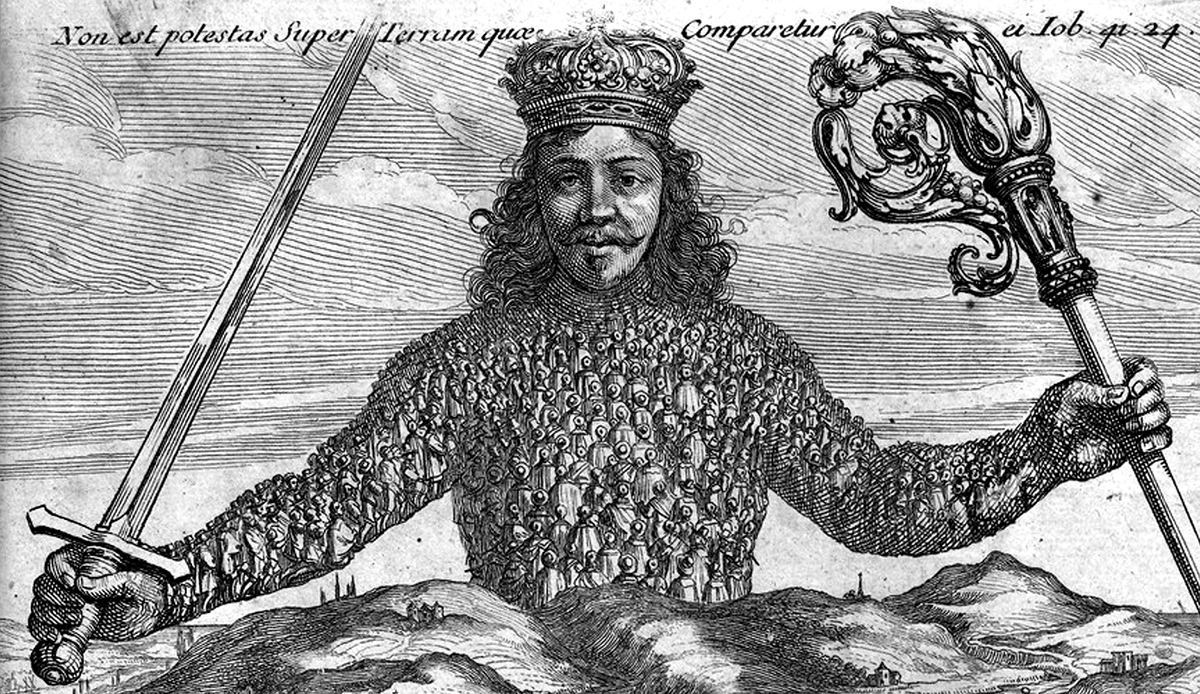

One of the fundamental political problems — if not the most urgent — is how to conceive of an uncountable multiplicity (or multitude). As a political concept, the people only makes sense on condition that it is uncountable; if it can be counted, then what is decisive is no longer the people as such, but a numerical quantity — the so-called majority — into which the people dissolves according to the perverse mechanism of elections or plebiscites. The people—like the human race—are not a collection of countable singularities: the “popular” or “generic” character—that is to say, the political character—must belong entirely to the singular as such. This is what Marx sought to articulate through the concept of Gattungswesen (“generic being”), which defines each individual and not a countable quantity. Insofar as each individual “refers to himself as the present and living genus”, the people cannot be a numerical sum of individuals, but is an essential reality fully present in each one. If the people, as the generic being, are counted, they are divided not only into a majority and a minority, but also into factions, amongst which a civil war is inevitably waged. Hobbes, in Leviathan, attempted to resolve this aporia by hypothesising a countable multitude—which he calls the multitudo disunita—that is constituted as a unity within the body of the sovereign; but this implies that the people possess no unity unless they abolish themselves in the artificial person of the sovereign. How, then, might one conceive of an uncountable multitude? Popularity and political agency are not definable properties which, like racial unity for the Nazis, can be attributed to each individual. Rather, they arise from the absence of a common identifying element that would determine one’s belonging to this or that group, to this or that class, and thereby render it countable as such. Like the proletariat according to Marx, the people cannot coincide with itself; it is constitutively not-all. If one attempts to grasp it as a whole, it resists all definition, and this resistance, this innumerable remainder, is the people; it is the genuine political element.
Quodlibet, 23/10/2026