
World · Africa Is a Country · · 3h
Why the US should not recognize Somaliland
English (original) · Read in Deutsch ⇄
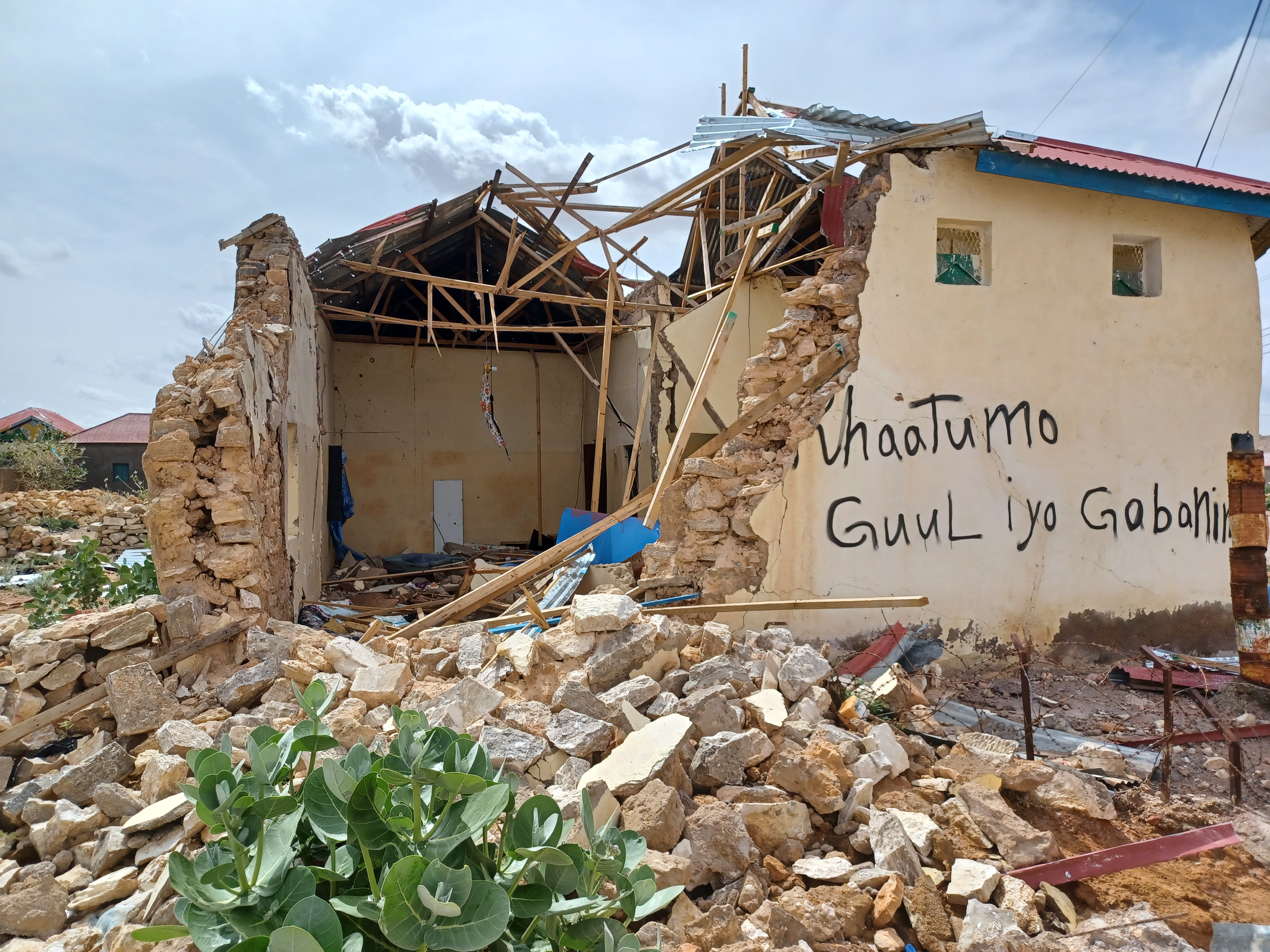
Steven A. Cook argues in a recent piece on “Why the United States Should Recognize Somaliland” that the main reason for recognizing Somaliland is geostrategic. The stakes at play are “confronting the IRGC [Islamic Revolutionary Guard Corps] and the Houthis as well as shoring up freedom of navigation” (through the Strait of Hormuz and, by extension, the Red Sea and the Suez Canal). He mentions in his account that besides many positive aspects, there were some problems in Somaliland. Concretely, he stresses that “there is opposition to the government among some clans, especially in the east, where sentiment runs in favor of ties with Mogadishu rather than Hargeisa — Somaliland’s capital. This raises the possibility of violent inter-clan conflict in Somaliland. It is a legitimate concern. The good news is that [Somaliland’s President] Irro says he is committed to peaceful dialogue.” This is quite naïve, or willingly ignores the more complex facts. The opposition of those clans in the east is long-standing. Somaliland actually never really controlled the eastern territories, except Lasanod from 2007 to 2022. Armed rebellion emerged there as early as 2009, and in 2023 the militias of the clans in the east defeated the Somaliland army. Since then, a new administration, the North East State (NES) of Somalia, has been established there. Its capital is Lasanod. The NES is recognized by the government in Mogadishu. In August 2026, the Somali prime minister visited Lasanod to discuss, among other things, establishing a base of the Somali National Army (SNA) there. This means that external pushes for Somaliland’s legal independence will likely trigger not only inter-clan conflict but war. In any case, this is well beyond “peaceful dialogue,” and President Irro’s legitimacy ends, at the latest, in Oog, which is an Isaaq-inhabited town some 85 kilometers west of Lasanod. Isaaq, as a rule, support Somaliland. Members of the Dhulbahante and Warsangeli clans in the east typically are Somali unionists.
Steven A. Cook continues in his text that “even taking into account this problem [the contestation of Somaliland in the east], Somaliland stands in contrast to Somalia itself, which has been a fount of terrorism, piracy, and extremism in the Horn of Africa for decades.” Now, ask yourself why Somalia is in such bad shape. Just recall the interventions conducted or backed by the US in Somalia, starting with “Restore Hope” in 1992, which was aborted in 1994, and continuing with the counterterrorism interventions conducted by Ethiopia in December 2006, strongly supported by the US. The first intervention actually fueled the market of violence in Somalia. Some warlords were elevated to “partners” (potential presidential candidates), others were considered villains. When US troops attempted to arrest Mohamed Farah Aideed, they were attacked in the streets of Mogadishu. “Black Hawk Down” ended in 18 Marines being killed and partly mutilated and foreclosed direct US engagement abroad for years. Thus, Washington resorted to indirect interventions, financing warlords and encouraging Ethiopia to do the dirty work in Somalia, especially when, after 9/11, Somalia was (partly wrongly, as declassified US secret service sources show) considered a hotbed of Islamic terrorism. Washington sanctioned the extremely brutal Ethiopian intervention from December 2006 onward, in which thousands — many of them civilians — were killed in Mogadishu and the surrounding areas. This carnage was a main reason why Somalis from across the Horn, including Somaliland, started viewing al-Shabaab as a legitimate defender of the Somali nation. Until the end of 2006, al-Shabaab had a few hundred active fighters. By mid-2007, this number had grown to several thousand, with some young men coming from Hargeysa and elsewhere in Somaliland to volunteer to defend Mogadishu against the Ethiopians (and the Ugandans and Burundians who had entered after February 2007 as part of the African Union mission, which also caused havoc for years). Counterterrorism produced massive terrorism in Somalia and made al-Shabaab big (see here for a longer argument).
Now, just briefly: Compare what came out of the many interventions in Somalia with what came out of non-intervention in Rwanda. When the genocide happened in Rwanda in mid-1994, the UN and the US actively ignored it, refusing to openly state what many already knew — that genocide was happening, and that one could have seen it coming. This was extremely tragic and cost the lives of at least 800,000 people, if not more. But ex-post, one could say that non-intervention allowed the Rwandan Patriotic Front (RPF), Paul Kagame’s army, to end the genocide and establish a new and stable Rwanda. And yes, the RPF itself likely killed hundreds of thousands of fleeing Hutu; and yes, Rwanda turned into an authoritarian state, and human rights are precarious, especially for opposition members. But the same could be said about Uganda, Ethiopia, and, in part, even Israel. The latter are reliable friends of Washington, it seems. So let’s be honest: Human rights do not count when it comes to political interest.
The lesson to be drawn is this: Interventions in Somalia perpetuated conflict and instability. The, back then tragic, rejection to intervene in Rwanda in retrospect proved a factor supporting the building of a stable country after brutal conflict. To argue, as Steven A. Cook does, that Somalia is “a fount of terrorism, piracy, and extremism” is dishonest; it is, as Roland Marchal has argued a while ago, also distorting critical analysis; finally it is a sign of a quasi-colonial argument being made here. Somalis are presented as “unable” to keep political order. Yet, many of Somalia’s problems since 1991 (and even in the 1980s, during the Cold War) have been co-produced by the US and its allies in the Horn of Africa.
Now, to come back to Somaliland: Any intervention to recognize Somaliland against the will of Somalia and many Somalis in the region (including the clans in the east of Somaliland, which today is the North East State of Somalia) is likely a further contribution to externally created instability. It potentially creates another war in the Somali Peninsula.
Read the full story at the source
Source: Africa Is a Country