
World · Africa Is a Country · · 1h
Who profits from ‘saving’ women?
English (original) · Read in Deutsch ⇄
During a recent dialogue convened by Liberation Alliance Africa’s Building Knowledge Bridges Community of Practice on Recentering African Feminist Epistemologies to Prevent and Respond to Sexual Violence, bringing together activists, writers, and independent researchers from across the continent, an important and thought-provoking conversation emerged. While participants acknowledged the significant contributions of civil society organizations, development agencies, and other actors in advancing efforts to end violence against women and girls, there was also a collective reflection on the ways in which this support is framed and delivered.
I was struck by how this discussion raised critical questions about funding priorities, whose interests are ultimately served, who benefits most from existing interventions, and whether the structures and language designed to address violence may, in some instances, inadvertently reproduce inequalities or overlook the needs and voices of those most affected. The conversation challenged me to think beyond the availability of resources and examine the political, economic, and institutional dynamics that shape responses to violence against women and girls across the continent.
In my early days in feminist activism, I often highlighted to funders how our interventions had shifted away from speaking on behalf of women to “giving them voice.” This was widely regarded as progressive, even transformative, evidence that we had moved beyond paternalistic approaches and were empowering women to speak for themselves. It became a powerful narrative, one that resonated strongly with donors and development agencies alike.
Yet, over time, this language began to lose its appeal, as I started to interrogate the assumptions that underpinned it. Were women truly without voices, or were their voices simply being ignored, dismissed, or rendered unintelligible within systems of power?
The notion of “giving voice” positioned organizations like ours as benevolent intermediaries bestowing agency on those presumed to lack it. In doing so, it risked obscuring the fact that women had always spoken, resisted, negotiated, and articulated their realities, often in ways that did not fit donor expectations or development frameworks.
What does it mean to “give” women a voice? And who has the authority to bestow something that women have always possessed?
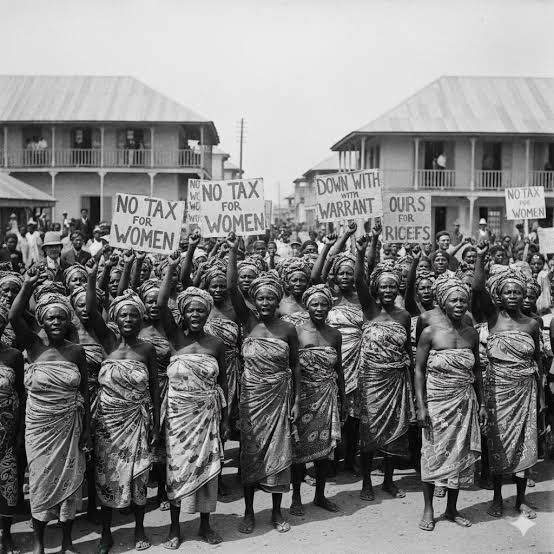
There is a long history of women’s resistance and political agency in Africa. In Nigeria, the Women’s War of 1929 stands as a powerful reminder that women have never been silent. Thousands of women in eastern Nigeria organized, mobilized, challenged colonial authority, and articulated their demands with remarkable courage and clarity. Their actions were neither facilitated by development projects nor enabled by donor-funded interventions. They emerged from women’s own collective consciousness, an inherited legacy of women’s determination to resist injustice.
In the Bamenda Grassfields of Northwest Cameroon, women organized one of the most significant grassroots uprisings against colonial authority in Central and West Africa. Faced with colonial policies that threatened their farmland, the women of Kom fought back.
Using Anlu, a traditional practice where women collectively sanction men who violate community norms, they organized marches and used satire to name and shame colonial collaborators. Through their actions, they brought administrative and economic life in the region to a standstill for months, and their protest ultimately forced the colonial government to reverse the land policies and contributed to the broader political shifts that shaped Cameroon’s path toward independence and reunification.
In Eastern Africa, Queen Muhumuza led a movement against British and German colonialists from Southern Uganda. According to the historian Murindwa Rutanga, Queen Muhumuza was the first major leader to mobilize peasants in Kigezi into organized anticolonial resistance against British rule starting in 1909. Drawing on her political experience and spiritual authority, she raised consciousness about the dangers of colonialism and united a broad sector of the Bakiga and neighboring communities in armed resistance. Under her leadership, communities resisted colonial boundary demarcations, obstructed missionaries and colonial agents, and challenged the expansion of colonial authority despite violent repression. Her efforts established her as one of the earliest and most influential women leaders of anticolonial resistance in the region.
These are just a few of many organic movements led by women in colonial-era Africa.
This realization forced me to confront a troubling possibility: The language of “giving women a voice” does not recognize women’s agency as much as it obscures it. Rather than acknowledging the voices that women already possess, such language implies that women were previously voiceless and required external actors such as NGOs, donors, activists, or development institutions to make them audible. This framing represented a subtle but significant erasure of women’s historical struggles, leadership, and resistance.
At what point did development discourse shift from supporting women’s struggles to positioning itself as the source of women’s agency?
How did a narrative emerge in which organizations and projects could claim credit for creating voices that had existed long before their arrival?
These questions matter because language is never neutral. The stories we tell about social change shape who is recognized as an agent of transformation and who is remembered merely as a beneficiary. When we say that women are “given a voice,” we risk centering the intervention rather than the woman, the funder rather than the movement, and the project rather than the history.
Long before the language of “women’s empowerment” entered donor reports, African women were already exercising power. Giriama women in Kenya challenged colonial rule under Mekatilili wa Menza, a woman leader who led her community in the early 1900s; market women in Ghana shaped economic and nationalist politics through organizing food distribution and rallying around food pricing, as well as using their income to support nationalist struggles; and Queen Mothers exercised political authority in precolonial governance systems. Women did not discover their voices through NGOs. Rather, development institutions entered landscapes where women had long been speaking, organizing, resisting, and transforming society.
The challenge before us is to recognize, amplify, and create conditions in which women’s voices can be heard, respected, and acted upon. As feminists, we need to ask ourselves harder questions about the stories we tell and the systems we inhabit. What would change if we began from the assumption that women have always had voice, agency, and political consciousness? How might our work look different if our role was not to create power, but to recognize and stand alongside the power that already exists?
It is time to move beyond the language of rescue and empowerment and toward what bell hooks called the language of solidarity, accompaniment, and collective struggle. It requires us to think about our own herstory of resistance and mobilization. This also requires donors, NGOs, and activists to reflect on how power operates within our own institutions. Whose knowledge is considered legitimate? Whose voices are amplified? Who receives recognition for social change, and who remains invisible within the narratives we produce?
Finally, we must commit to preserving and honoring the histories of women’s resistance. From the Women’s War to the struggles of market women, Queen Mothers, community organizers, and contemporary feminist movements, these histories remind us that women have never been passive recipients of change but its architects.
Our role is not to give women a voice but to ensure that our work does not drown out the voices that have always been there.
Read the full story at the source
Source: Africa Is a Country