
World · Africa Is a Country · · 3h
What replaced the slave trade?
English (original) · Read in Deutsch ⇄
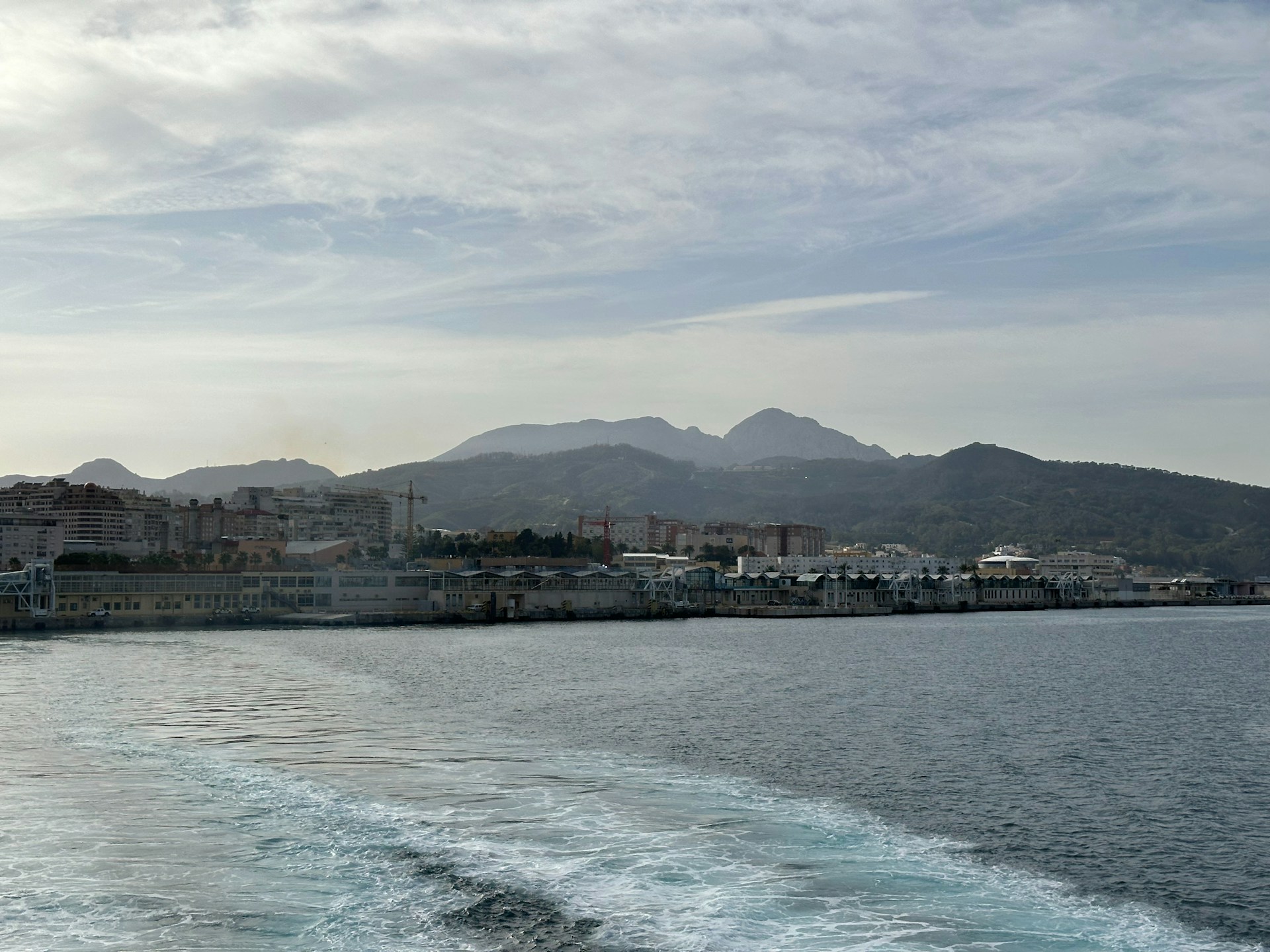
The first thought came out ugly because the event itself was ugly: tens of thousands of people moving at once toward Ceuta, a Spanish city in North Africa, beaches and roads filling, people dying, police lines folding, rumors moving faster than governments. I looked at Morocco on one side, Spain and the European Union on the other, and thought: What exactly is being traded here?
I don’t mean that migrants are slaves. They aren’t. That isn’t the argument, and collapsing the two would make the argument stupid. Slavery means ownership: a human being captured, bought, sold, inherited, coerced, and legally treated as property. A migrant is not somebody else’s property simply because a state wants to stop him, move her, return them, admit them, or keep them out.
What I’m asking is what came after. What happens to economies and states that once participated in systems where human movement itself generated external value? Does abolition erase that logic, or does value move somewhere else?
Ceuta is where the question became impossible for me to ignore. On July 30, more than 70,000 people crossed or attempted to cross from Morocco into the Spanish enclave in the largest such surge the border has seen. Current reporting doesn’t support the easy conspiracy version. Economic frustration mattered. False claims spread online that the border was open. Smugglers and informal networks mattered. Moroccan security forces were overwhelmed, and Morocco later reinforced the frontier and prosecuted people accused of facilitating the crossing. If I have to invent a secret order from Rabat to make my argument work, then I don’t have an argument.
But I don’t need one. Europe already pays for migration control in public.
In 2023, the European Union announced a €152 million migration program for Morocco covering border management, anti-smuggling work, migration and asylum policy, voluntary returns, and reintegration. The EU describes cooperation with countries of origin and transit as a core part of its migration system. In July 2026, on the very day the Ceuta crisis exploded, the European Commission announced new funding calls for migration partnerships, border management, and internal security with partner countries.
That isn’t a scandal by itself. Borders cost money. Refugees need housing. Smuggling networks need to be investigated. Returns require cooperation between governments. A state beside a major migration route will obviously spend resources managing it, and there is nothing inherently corrupt about Europe sharing that cost.
The problem appears when I follow the incentive one step farther.
If Europe places a high political value on keeping irregular migration outside Europe, then the government that is capable of helping to accomplish this goal possesses something Europe wants. Geography becomes valuable. Police cooperation becomes valuable. Readmission becomes valuable. Hosting becomes valuable. The ability to make movement harder becomes valuable. And, in the darker version, the possibility that cooperation might disappear becomes valuable too.
Nobody has to sell the migrant. The migrant can still generate leverage simply by being movable.
That’s the distinction I keep coming back to. Under slavery, the person was the commodity. In the modern system, control around the person can become the asset.
The literature already has pieces of this. Scholars write about migration diplomacy, refugee rentier states, remittance dependence, border externalization, and coercive migration. I’m not trying to rename their work. I’m trying to put those pieces beside the historical question that bothered me in the first place: After an economy loses the legal right to trade people, what actually replaces the external income and political structures that trade supported?
My first formulation was too clean. I thought: These countries stayed poor because they never replaced slavery with productive economies. Morocco itself disproves that sentence. It manufactures cars. It exports phosphates and fertilizers. It has tourism, agriculture, logistics, major infrastructure projects, and growing industrial capacity. The IMF estimated Moroccan real GDP growth at 4.9 percent in 2025. In the first four months of 2026, automotive products were its leading export. This is not an economy that can honestly be reduced to migration.
But that correction doesn’t kill the question. It makes it better.
A country can build a modern productive economy and still benefit from human mobility in several directions at once. Moroccans working abroad send money home; those remittances are an important source of foreign currency. Morocco is also a country of origin, destination, and transit. Europe pays for cooperation because Morocco sits where it sits. That combination means migration is not merely a humanitarian problem passing through the country. It is part of the country’s economic and diplomatic relationship with Europe.
The same logic appears in different forms elsewhere. A country that hosts a large refugee population can receive international aid partly because richer countries have an interest in those refugees remaining where they are. A labor-exporting country can receive remittances from citizens whose productive work happens abroad. A transit state can receive financing, equipment, or diplomatic attention because it can influence a route. None of these arrangements are automatically abusive. What matters is whether the state begins depending on the rent produced by movement, or by preventing movement, strongly enough that solving the underlying problem becomes less attractive than managing it forever.
Europe is not an innocent customer standing outside this system. It helps create the price.
The more European governments promise their voters that irregular migration will be stopped before it reaches European territory, the more valuable neighboring enforcement becomes. Every agreement that pushes the border outward makes the partner on the other side of that outsourced border more important. Europe can call this cooperation, and often it is cooperation. But dependency changes the bargaining relationship. If Spain cannot manage Ceuta without Morocco, Morocco knows it. If the EU cannot return people without agreements from countries of origin, those governments know it. If European elections can be destabilized by the sight of uncontrolled arrivals, everybody watching Europe knows that too.
This is why I don’t think the useful question is whether Morocco “weaponized” every crossing. That word can become an excuse to stop thinking. Sometimes a migration crisis really is deliberately engineered. Sometimes a state simply stops doing as much as it used to. Sometimes the state loses control. Sometimes people move because they have their own reasons and governments are scrambling behind them. Those things need to be separated.
The harder question is why the capacity to stop movement carries so much value in the first place.
I also don’t want to turn Africa into one economy with one history. The trans-Saharan and Atlantic slave trades were different systems. North African states had different relationships to them. Colonial labor regimes were different again. Algeria is not Morocco; Morocco is not Senegal; Libya is not Ghana. If there is a historical line here, it has to be proven country by country and institution by institution. Otherwise “Africa” becomes a story Europeans tell themselves instead of a continent full of actual economies.
But there is still a structure worth investigating. Abolition ended legal property in human beings. It did not make human movement economically irrelevant. Colonial systems reorganized labor. Postwar Europe recruited workers from North Africa. Permanent diasporas formed. Remittances grew. Refugee systems created international hosting arrangements. European border policy moved more enforcement into countries outside the EU. At every stage, the legal form changed. At every stage, somebody still had an economic interest in where people could and could not go.
That isn’t slavery returning. It is exactly why I keep saying replacement rather than equivalence.
I don’t want to flatten the moral distance between a chained captive on a slave ship and a Moroccan graduate deciding, however desperately, to cross toward Spain. The graduate has agency. He may be lied to, impoverished, exploited by a smuggler, constrained by a passport, and surrounded by governments making decisions about him, but he is still a person making a choice. The enslaved captive was denied even that legal personhood.
The continuity I’m interested in is not ownership. It is extraction around movement.
If that distinction holds, then the political question changes too. Europe does not need to reconquer anybody, and it certainly does not need some fantasy of a new colonial war. It needs to stop building migration policy around dependencies it later experiences as blackmail. That means being capable of controlling its own borders lawfully, deciding asylum claims quickly, returning people who have no legal right to remain, opening legal routes where labor is actually needed, and paying partner countries for real costs without making any single government indispensable.
For countries of origin and transit, the development question is just as uncomfortable. Remittances can keep households alive and finance education and businesses. Migration can spread skills and create networks. Border cooperation can pay for legitimate public capacity. None of that should be dismissed. But an economy eventually has to answer a more demanding question: Are these flows helping build a country people can prosper in without leaving, or are they becoming permanent substitutes for doing so?
It wasn’t that I looked at Ceuta and saw slaves. I looked at a continent and a sea with a very long history of putting prices on human movement, and wondered where the price had gone.
Process disclosure: The author used generative AI as an accessibility, research-organizing, and drafting-support tool under his own direction. The originating question and argument are his; he determined the claims, evidence boundaries, structure, and voice, and reviewed sources and approved the final text.
Read the full story at the source
Source: Africa Is a Country