
World · Africa Is a Country · · 1h
Old Nollywood 2.0
English (original) · Read in Deutsch ⇄
Scroll to the comments under the movie Love in Every Word on YouTube, and you will find viewers from Lagos to London, Accra, Houston, and beyond, tagging sisters to “come and watch this.” Even though the movie had no cinema release and no streaming deal, it reached 15 million views within a week of its March 2025 release on the Omoni Oboli TV YouTube channel. It reached roughly 30 million by year’s end. Actress and filmmaker Omoni Oboli and her business partner, Tomi Adeoye, launched Omoni Oboli TV in December 2023. Since then, the channel has gained more than two million subscribers. The success of Love in Every Word and its sequel pushed their YouTube television channel past 182 million total views across 550 videos, and it was named YouTube Nigeria’s Top Creator Channel of 2025.
The story and style of Love in Every Word are typical of Nollywood cinema, but there is something about the success of its format that raises questions. Is it an example of a new paradigm for how we understand the present-day movie industry in Nigeria? Or is it marking a return to the spirit of the original Nollywood? Does this format’s mix of “New Nollywood” and “Old Nollywood” betoken a new concept? Perhaps we could call it “Old Nollywood 2.0.”
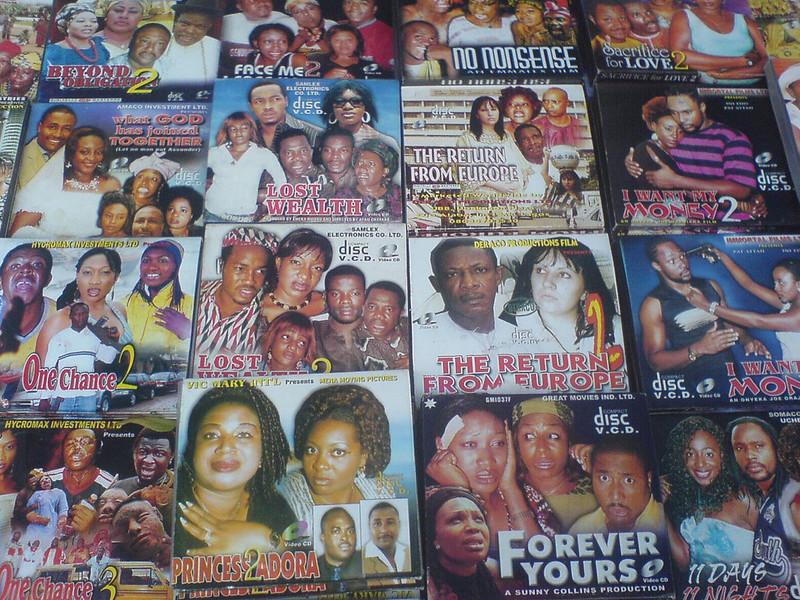
Sometimes journalists and scholars like to divide film history into neat periods of succession. But looking at the history of Nollywood cinema, the reality is that there have been overlapping industrial formations. For the past three decades, the Nollywood phenomenon and its global impact have been described, analyzed, and debated, and the storyline goes something like this. Once upon a time, in the late 1980s, in the street markets of Onitsha and Lagos, movie theaters were declining because the cost of production and distribution of celluloid films was prohibitive. Independent producers were shooting television drama on video, working with Nigerian television networks, while the Yoruba traveling theater troupes were experimenting with video. Alongside this development, traders and marketers, who were already distributing imported and pirated Hollywood and Bollywood films, began to make and market their own cheaply produced melodrama on VHS.
Before Nollywood, there was a politically Pan-Africanist movie industry across Africa into which the recently liberated postcolonial nation-states enthusiastically invested. In the 1970s, the Nigerian government expanded its involvement in film and cultural production when it hosted FESTAC ’77 and repositioned the existing Nigerian Film Unit (formerly Colonial Film Unit) into the Nigerian Film Corporation, with a mandate to broaden its responsibilities and foster development of the national film industry. Filmmakers such as Ola Balogun and Adamu Halilu made artistically stunning films, sometimes collaborating with Black artists from across the world.
With the onset of structural adjustment policies imposed by the International Monetary Fund (IMF), alongside the devastation of civil wars and repressive regimes, the state’s investment in a liberated media crumbled. What some consider the “golden age” of artistically brilliant, politically progressive Nigerian cinema was diminished. Into the void stepped entrepreneurial, commercially minded filmmakers who took advantage of the straight-to-video format and what economists call the “informal market” of the street. The new “video-films” (first made on VHS and then on VCD and DVD) were quite popular for a multitude of genres, from crime (Issakaba, 2001), domestic melodrama (Violated, 1996), and family drama (Rattlesnake, 1995), to religion (Agony of a Mother, 2002), romance (Keeping Faith: Is That Love?, 2002), slapstick comedy (Osuofia in London, 2003), social mobility (Glamour Girls, 1994), urban aspiration (Domitilla, 1996), and occult and supernatural narratives (Living in Bondage, 1992, and Nneka the Pretty Serpent, 1994). The rapid success of these movies far exceeded expectations.
Nollywood’s enormous local and global popularity attracted new investors and renewed interest in theatrical exhibition. The opening of new multiplexes from 2004 created another route to audiences and encouraged a strand of filmmaking characterized by larger budgets, improved production values, and theatrical premieres. The transformation did not stop at the cinema. The South African company MultiChoice/Africa Magic expanded its investment in Nigerian content, while digital distribution and, later, global streaming platforms created still more routes to audiences. Netflix became available in Nigeria in 2016, followed later by Amazon Prime Video’s more substantial engagement with the Nigerian market.
Journalists branded the movies and business that came from this “New Nollywood.” Champions of New Nollywood included filmmaker Kunle Afolayan with The Figurine (2009), Phone Swap (2012), and October 1 (2014). Others include Chineze Anyaene with Ije: The Journey (2010); Obi Emelonye, who went transnational with Mirror Boy (2011) and also made Last Flight to Abuja (2012); Biyi Bandele, who adapted Chimamanda Ngozi Adichie’s novel Half of a Yellow Sun in 2013; Stephanie Linus, who made Dry in 2014; and Kemi Adetiba, who made The Wedding Party in 2016 for EbonyLife Productions, owned by Mo Abudu. Many of these films premiered with cinema runs and then transitioned to DVDs before streamers came around to lease them for internet consumption.
Soon, everyone was talking about the difference between “Old Nollywood” and “New Nollywood,” whether one was a professor of literature at the University of Ibadan or a taxi driver in Lagos. The salient features of the old Nollywood in the 1990s were low-budget and fast film production, direct distribution through the Alaba Market and Onitsha Market, moral and lesson-driven storytelling, familiar character types and stereotypes, family stories, and religious themes. Often, dancing and other public performances were used as marketing tools. More often than not, what sold the movie was the image and the name recognition of the actors and actresses. We see those features in the classic movies such as Living in Bondage, Nneka the Pretty Serpent, Domitilla, and Glamour Girls.
A good example of Old Nollywood is when filmmaker Amaka Igwe famously boasted back in 1995 that she made her movie Rattlesnake in just two weeks. Rattlesnake is a crime drama about the double life of its main character. It is typical of “Old Nollywood” movies in the way it interrogates the corruption behind wealth through the formal genre conventions of exaggerated melodrama. In contrast, what was called New Nollywood had much larger budgets and production quality good enough for premiering with the public pomp and fanfare of red carpets and large-screen theaters and got recognition at both local (the Africa Movie Academy Awards, or AMAA) and international film festivals (the New York African Film Festival and FESPACO, the Pan-African Film and Television Festival of Ouagadougou). For example, one of the films that ushered in New Nollywood is The Figurine by Kunle Afolayan, which brought the public back into the cinema halls. Because it matched international standards for cinematography and sound design, and because it offered audiences a morally ambiguous, complex plot and realistic acting, it premiered at prestigious international film festivals, thus marking a shift away from Old Nollywood’s grassroots style.
Love in Every Word is an example of what we are calling “Old Nollywood 2.0.” Beyond its impressive viewing numbers, it quickly became a social event. Viewers shared clips on WhatsApp, created memes on TikTok and Instagram, and tagged friends and family across Nigeria, Ghana, and the African diaspora, extending the film’s reach beyond YouTube itself. The movie is about the romance between Chioma and Odogwu, played respectively by the former Big Brother star Bamike Olawunmi-Adenibuyan and Uzor Arukwe. As the plot unfolds, the relationship between the two protagonists is affected by familiar Nollywood topics, such as career pressure and family matchmaking, but Chioma also has a troubled past that makes her guarded against men who in any way resemble her wealthy, distant father, whose rejection scarred her as a child.
This story became a pop culture phenomenon when phrases and character types from the movie translated to memes across social media. For example, the phrases Odogwu paranran (a rich provider “Igbo” man who loves loudly) and Achalugo (a beautiful girl who lives softly and receives the love graciously from her Odogwu) adapt the nicknames of the characters to describe real relationships that fans of the movie might have (or fantasize about having). Some fans even made their own videos with voiceovers from the movie, where girls might recreate the story, manifesting the Odogwu paranran soft life for themselves.
The success of the movie is just one example of how filmmakers and film audiences are finding new ways to produce, distribute, promote, and consume motion picture entertainment. Other examples include Head of House (directed by Ruth Kadiri in 2024), My Crazy Rich Girlfriend (directed by Ben Cassie, 2024, for Uchenna Mbunabo TV), and Momiwa (directed by Biodun Stephen in 2025). Interestingly, although the YouTube channel owners are well-established filmmakers, they often hire directors and talented professionals to produce movies for their channels. The statistics are remarkable: Head of House reached more than 6.3 million views, My Crazy Rich Girlfriend reached more than 19 million, and the recent film, Momiwa, had reached 1.3 million when we last checked. In the past, journalists and scholars had to beg theaters, producers, and streaming services for statistics about sales in order to gauge a movie’s popularity and worried that the statistics were inaccurate. But YouTube does that for us.
The apparent dominance of YouTube productions in the Nigerian market comes at an interesting moment, historically, for African cinema. Around November 2024, there were rumors that Netflix was pulling out of the Nigerian market. Netflix denied this vehemently, but there have been fewer “Netflix originals” and fewer acquisitions from Nigeria on Netflix since then. Netflix, which entered the Nigerian filmscape in 2016 and produced the first Nigerian original, Genevieve Nnaji’s Lionheart in 2018, went on to partner with many Nigerian filmmakers, including Kunle Afolayan, Kemi Adetiba, Mo Abudu, and Bolanle Austen-Peter for originals while also leasing several titles. The rumor of Netflix’s departure from Nigeria came as a shock to the industry. Amazon Prime and Showmax have since followed suit.
For the past eight years, African filmmakers and film scholars across the continent have been debating whether the involvement of Netflix, Amazon Prime, DStv, Canal+, and other multinational corporations in African film industries would positively upgrade production quality and opportunities for local talent or would negatively undermine authentic African storytelling. By the year 2025, the market of production and consumption had already shifted from Netflix and DStv to YouTube — so much so that what we are calling Old Nollywood 2.0 seems to have responded to the departures of global investors such as Netflix with a shrug of indifference, as its star filmmakers and others have moved on to YouTube, blazing a trail for sustainable production under new terms and conditions.
Does the success of these filmmakers on YouTube and the new ways of engaging with audiences suggest a paradigm shift in Africa’s movie industry? That is the argument of a new book about African cinema, Contemporary African Screen Worlds (2025), edited by Lindiwe Dovey, Añulika Agina, and Michael W. Thomas, which celebrates what they see as a grassroots, authentic relationship between artists and audiences. These scholars challenge the gatekeeping function of cineplexes, television stations, journalists, academics, and anyone who aims to be the curator of what is and what isn’t worthy of public consumption. The authors gush about the techno-utopian promise of YouTube, TikTok, WhatsApp, and other social media to bypass the film critics and enable those who were left out of the conversation to have a more active voice. Their argument is compelling, even though one might wonder if it’s mostly those with access to wealth and power that are able to bypass the critics.
We agree that social media has transformed how we watch and relate to cinema, but many of the qualities of YouTube Nollywood remind us of the “Old Nollywood” of the 1990s, and not in a bad way. The migration of Nollywood films to YouTube has created new possibilities for filmmakers, but it has not necessarily produced an entirely new cinema. In many ways, what emerges is recognizably Nollywood: familiar stories, stars, production methods, and narrative conventions, now operating within a different distribution and consumption environment. Nigerian films released on YouTube have attracted substantial audiences, but they also retain elements of the older Nollywood tradition.
The numbers also demonstrate the considerable audience available to YouTube Nollywood. Unlike Old Nollywood’s VHS and VCD circulation, however, the YouTube audience is now publicly measurable. Views and comments leave visible traces of consumption, while the channel allows filmmakers to gather audiences repeatedly around subsequent releases. In this sense, Old Nollywood 2.0 is not simply the old industry transferred online. Rather, YouTube changes the relationship between filmmaker, distributor, and audience even when some of the storytelling remains familiar. Arguably, if African cinema across the continent is entering a new era in which YouTube is the dominant form of media, then when journalists and scholars talk about cinema, they must pay attention to what is unique about YouTube — namely, its computer algorithms, its monetization structures and mechanisms for copyright control, the possibility for quick and easy cross-platform distribution and advertising from YouTube to TikTok to WhatsApp, and most importantly, the virtual spaces for audience participation.
The film Momiwa is an example. As with the majority of Biodun Stephen’s work, this movie bypassed theaters and streaming companies such as Netflix and was uploaded directly to Biodun Stephen TV on YouTube in early 2025. Stephen is known for writing strong and relatable female characters and is frequently credited as writer, director, and producer of her films. Momiwa bears some of the production characteristics of Old Nollywood: much of the action takes place indoors, with outdoor scenes largely contained within the compound and around the gate. The emphasis is therefore on story, character, and domestic conflict rather than spectacle. The actions of the selfish, absent mother are performed with exaggerated melodramatic flair by actress Iyabo Ojo, in stark contrast to the angelic, Christ-like performance of Blessing Obasi’s character Momiwa. Even the awkward gateman recalls the comic stock characters of older Nollywood, particularly Yoruba-language films where performers such as Baba Suwe often appeared across films in recognizable comic personas. The difference between movies such as Momiwa and “Old Nollywood” is partly technological: the images are cleaner and the production quality higher, even if still modest compared with Nollywood films commissioned for Netflix or Amazon Prime. It’s also a matter of distribution and the relationship to the audience, as the actors and producers are also social media personalities who reach out to audiences online.
YouTube appears to offer filmmakers greater autonomy: they can own their channels, choose their stories, determine their release schedules, and communicate directly with their audiences. But they do not own YouTube. Their visibility and earnings remain subject to the platform’s policies, monetization structures, and algorithms. Nollywood has moved from a marketer-driven distribution system to an algorithmically governed one.
Neither does the rise of YouTube mean that cinema or global streaming has disappeared. Nigerian films continue to circulate through multiple routes, sometimes moving from cinemas to streaming platforms while other films go directly to YouTube. These forms coexist and overlap rather than neatly replacing one another. Perhaps, then, Nollywood has never developed through the tidy periods that we sometimes impose on its history. Old forms persist, newer ones emerge, and practices thought to have disappeared sometimes return in altered forms.
“Old Nollywood 2.0” is not an attempt to announce yet another neatly defined and chronologically bound era of Nigerian cinema. It is a way of naming this particular moment of return and reinvention, and of asking whether what appears strikingly new about Nollywood today may also be remarkably old.
Read the full story at the source
Source: Africa Is a Country