
World · Tribune · · 2h
The UK Is Failing Palestinians At Home and Abroad
English (original) · Read in Deutsch ⇄
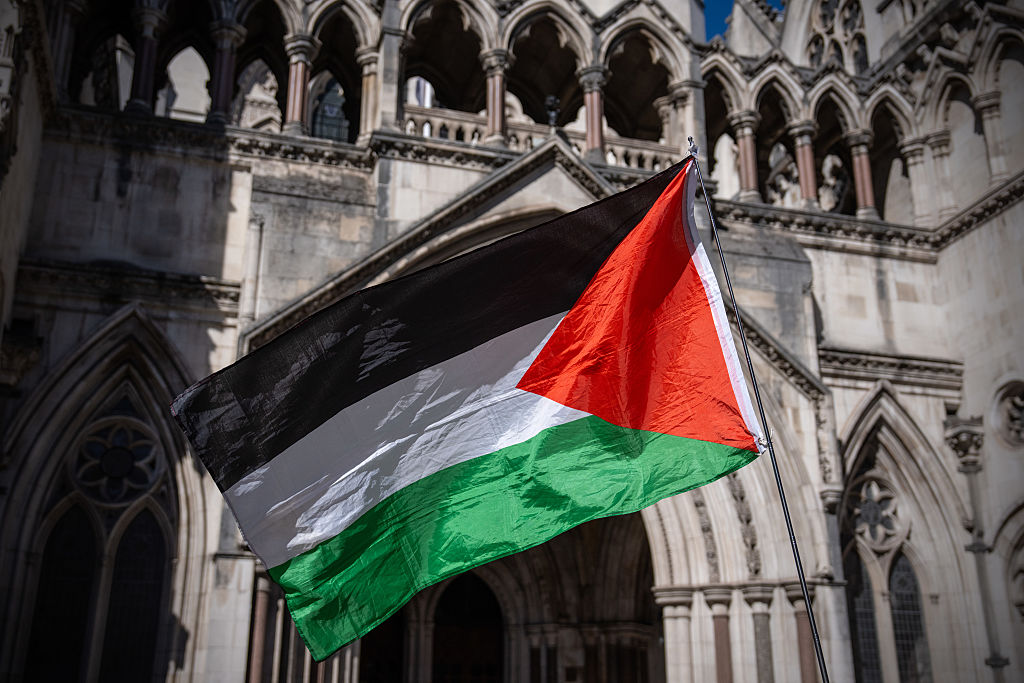
For Palestinians arriving in Britain after surviving Israel’s genocide in Gaza, crossing the border does not mean the end of the crisis. It means entering a new struggle for safety.
Their trauma moves with them. Spouses, children, parents and siblings may still be in Gaza. They continue to receive messages from relatives describing bombardment, starvation and the destruction around them. They wait for news of loved ones whose safety they cannot guarantee. They try to build a life in Britain while knowing that their families remain trapped in a territory annihilated by genocide.
Yet the British state treats their arrival as a standard immigration and administrative matter, as though the genocide ceases to exist in their lives once they are in the UK. Newly arrived Palestinians are forced to navigate the UK’s increasingly hostile immigration environment on their own, resulting in acute housing insecurity and insufficient mental health support as they struggle to recover from years of devastation. At the same time, the government continues to prevent spouses, parents, and children from reuniting, ensuring that the suffering of Palestinian families continues across borders.
Home Secretary Shabana Mahmood’s decision to restart the refugee resettlement scheme with a focus on Palestinians is progress. But it still falls far short of the scale of action that’s urgently needed amidst an ongoing genocide in which the UK itself is complicit. If this government is serious about rectifying Keir Starmer’s failures on Palestine, it needs to confront all of the policies that harm Palestinian lives — both abroad and here in Britain.
Enforced Separation, Enforced Suffering
There’s no official figure for the number of Palestinians who have arrived in Britain from Gaza since October 2023, but community data estimates the number to be around 2,000 people. In this time, Palestinians have entered the country through student visas, refugee family reunion (before its suspension), medical evacuation, and irregular routes, rather than through a dedicated scheme to quickly get Palestinians to safety.
The Ukraine Family Scheme, on the other hand, was introduced less than ten days after Russia’s invasion in 2022 to allow Ukrainians to flee violence and join their family members in Britain. The scheme recognised that ordinary immigration procedures were inadequate and provided a route designed around the realities of war. By the time it closed in February 2024, the government had granted nearly 75,000 visas.
Three years into the genocide in Gaza, there’s still no specific family route allowing Palestinians in Britain to temporarily bring their relatives in Gaza to safety. Such a scheme would only make around 5,000 Palestinians eligible for reunification, a figure that pales in comparison to the number of people who came to the UK through tailored routes from Ukraine, Afghanistan and Hong Kong.
Palestinian families are instead expected to navigate immigration routes designed for entirely different circumstances. The situation became even more difficult after then Home Secretary Yvette Cooper suspended the refugee family reunion route in September 2025, removing one of the few available paths for the reunification of refugees in Britain with their spouses and children abroad.
This decision has had a direct impact on Palestinian families, including for those who had already applied. In July, The Guardian reported that the Home Office has been blocking dozens of women and children in Gaza from reuniting with an immediate family member who has refugee status in the UK. Even though they had applied before route’s suspension, the Home Office has used legal challenges to actively prevent their evacuation and has even claimed that their small children pose a security risk to Britain. In response, a Home Office spokesperson simply said, ‘Under our reforms to create a fairer asylum system, family reunion will no longer be automatic. Those seeking to bring family members to the UK will need to meet stricter criteria’. Home Secretary Mahmood has not provided further explanation.
Yesterday, however, Mahmood announced that the Home Office will reopen the UK Resettlement Scheme, a different route that operates in partnership with the UN Refugee Agency, with twenty five per cent of arrivals to be Afghan women and girls and Palestinians. While this is a welcome development, the total number of people to arrive under the scheme will initially be in the hundreds and may only rise to thousands at some point in the future. Palestinians will make up less than a quarter of these refugees. This is not an adequate response to the demands of Palestinians in the UK who desperately want to bring their families to safety.
But even when Palestinians in Gaza are eligible for travel to the UK, they can face an impossible bureaucratic barrier: biometrics. The UK Visa Application Centre in Gaza has been closed since October 2023 due to Israel’s bombardment. Applicants are therefore expected to travel elsewhere to provide their fingerprints and photo, but Palestinians living under siege can’t simply travel to another country to complete their visa application. Rather than finding an alternative, the government has left them in Gaza, struggling to survive.
Of course, there is already a mechanism within the immigration system for dealing with exceptional circumstances, one which makes it possible to excuse an applicant from providing biometrics before travelling to the UK. Under the Ukraine scheme, for example, biometrics were taken upon arrival in the UK. This is also the arrangement for the small number of people who managed to leave Gaza through the UK’s medical evacuation and scholarship arrangements. In these cases, the Home Office conducts security checks using biographical information before departure, while visa processing and biometric enrolment are coordinated after people have exited Gaza with Foreign Office support.
A dedicated Gaza Family Scheme operating under this model would enable the Home Office to conduct the necessary eligibility and security checks while allowing eligible applicants who cannot access a visa application centre to provide their biometrics after leaving Gaza or reaching the UK. Once the Home Office has approved an application, the Foreign Office could then facilitate the person’s evacuation from Gaza and onward travel to Britain.
This is not a question of precedent or policy know-how; it’s a question of political will.
The Crisis Continues After Arrival
When Palestinians do enter the UK, they arrive having survived bombardment, starvation, forced displacement, the destruction of their homes and communities, and the loss of family members. Some have spent months or years moving between shelters, living without adequate food, clean water or healthcare, while watching their neighbourhoods disappear around them.
Yet even the few Palestinians who receive refugee or humanitarian protection are quickly forced back into housing insecurity and destitution. The British Palestinian Committee, where I work as a Senior Community Advocacy Officer, has documented several cases of Palestinians becoming homeless after receiving protection from the state since 2023.
One Palestinian man with serious physical and mental health needs was placed in unsuitable accommodation after receiving humanitarian protection. After being admitted to hospital, he returned to find that he had been refused entry to his accommodation because he had been absent. He was left homeless for five days, relying on emergency support from voluntary organisations. In Manchester, two Palestinian brothers were left homeless after being required to leave Home Office accommodation. Both approached the local authority for assistance but were ultimately left without stable housing.
The private rental market offers little relief. Refugees are expected to provide deposits, rent in advance, guarantors, references and proof of income — precisely the things that people don’t have immediately after surviving a genocide. Some Palestinians have been forced to borrow money from friends and community members simply to secure accommodation.
Palestinian refugees are also forced to navigate Universal Credit, banking, employment, and healthcare with little to no support. This is not successful integration, it’s precarity imposed on people who’ve already experienced catastrophic loss.
Housing has a direct impact on mental health. As one young Palestinian told the BPC, ‘How can I ask for therapy when I’m sleeping on the street, and my family is in a tent after our home was bombed?’
In 2025, the BPC conducted a six-month mental health programme, which mapped available mental health resources, supported access to care, and delivered community-based activities for newly arrived Palestinians. We found that mental health needs among Palestinians arriving in Britain are widespread, severe and frequently unmet.
The trauma experienced by Palestinians is cumulative and it continues even if a Palestinian is physically safe in Manchester or London, but their children remain in danger in Gaza. ‘I don’t have the luxury of thinking about my mental health. My wife and children are still trapped in Gaza and I still can’t bring them to safety” one Palestinian man told me. Newfound immigration and housing insecurity only exacerbate the situation.
The NHS has an essential role to play in supporting survivors of genocide, but Palestinians also suffer from the general crisis of mental health infrastructure across the UK. They are forced to endure long wait times, the absence of trauma-informed early intervention pathways, limited culturally and linguistically appropriate provision, and Britain’s failures to meaningfully integrate mental health services with housing, immigration, and welfare systems.
Yet even if care provision were perfect, no therapist can reunite a parent separated from a child trapped in Gaza, and no prescription can provide someone with a home.
Recognition Is Not Enough
Earlier this month, Foreign Secretary Ed Miliband acknowledged that ‘the most unimaginable trauma and suffering in the last three years — death, destruction and dehumanisation on an appalling scale’ has been perpetrated against Gaza. He announced the start of a new approach ‘that not only calls out injustice and suffering, but acts’.
But will these words mean anything for the Palestinians who arrive to the UK, or for their spouses and children waiting to be brought to safety?
Family reunification, secure housing, meaningful access to healthcare and a serious mental health response would be a start. These are not demands for preferential treatment. They are demands for a system capable of responding to exceptional circumstances — circumstances that the UK itself helped create.
Read the full story at the source
Source: Tribune