
World · Tribune · · 2h
Israel’s Accountability Theatre
English (original) · Read in Deutsch ⇄
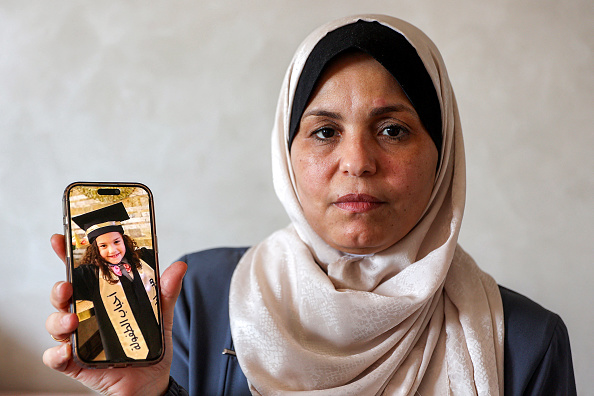
On the 19th of August, 933 days after the five-year-old Palestinian Hind Rajab was murdered, the Israeli army decided to open an investigation.
When Hind’s murder became global news, the world listened to the horrifying audio recording of a terrified child begging Palestinian paramedics to save her. We then learned that the paramedics sent to rescue her were killed too.
The Israeli military initially claimed that its forces were not even at the scene. Months later, it refined this position in a preliminary review: Israeli soldiers, it said, were ‘not present near the vehicle or within firing range’ of the car in which Hind, her aunt, her uncle and her four cousins were trapped.
That denial fell apart after sustained outside pressure, which came in part from The Voice of Hind Rajab, a film built around the real recordings of her final calls, which premiered at the Venice Film Festival in 2025. It also came from quality journalism: a joint investigation by Al Jazeera and The Hind Rajab Foundation placed an Israeli tank as close as 13 metres from the vehicle, well within view of the seven civilians. Only once that pressure had built for two and a half years did the Israeli military admit, on August 19, 2026, that its soldiers had fired on the car.
The Israeli military has designed the perfect sequence to protect itself from real accountability, while using selective investigations and admissions to deal with international condemnation. Its last comparable high-profile admission was over the killing of Al Jazeera correspondent Shireen Abu Akleh in 2022. At first the Israeli military attempted to shift the blame to a Palestinian gunmen, before mounting evidence and multiple investigations forced it to concede a ‘high probability’ that one of its own soldiers fired the fatal shot. The Military Advocate General ruled that the case did not meet the threshold for a criminal investigation, however, and closed the file before it a suspect was named.
That is the phase that Hind Rajab’s case is now entering. A review by Action on Armed Violence of 52 publicly reported Israeli military probes into incidents in Gaza and the West Bank found that 88 percent had either closed with no finding of wrongdoing or simply stayed open indefinitely, with no outcome ever made public. Since October 2023, despite the clear evidence of Israeli soldiers exterminating Palestinians, nearly 100 deaths of Palestinian detainees in Israeli military custody, and widespread documentation of Israeli soldiers looting Palestinian homes, there has only been a single conviction. Israel recently declined to open any investigation into three other notable lethal incidents, including the April 2024 killing of seven aid workers including 3 British Nationals John Chapman, James Henderson and James Kirby. In 2024, far right protesters, including sitting lawmakers, broke into the Sde Teiman base to try to stop military police from detaining reservists who sexually abused a Palestinian detainee. National Security Minister Itamar Ben Gvir publicly backed the soldiers, calling their detention ‘shameful’.
Even rare victories for ‘accountability’ tend to crumble on contact with Israeli politics. Elor Azaria, an army medic, shot Abdel Fattah al-Sharif, a wounded Palestinian, in the head as he lay motionless on the ground in Hebron in 2016. The shooting was captured on video. Despite pressure from right-wing politicians and protesters, Gadi Eisenkot, then chief of staff of the Israeli military, insisted Azaria stand trial. Eisenkot is now the leading challenger to Prime Minister Benjamin Netanyahu ahead of Israel’s election this October. Azaria was convicted of manslaughter in 2017 and sentenced to 18 months. Then Eisenkot himself cut that to 14. A parole board cut it again, to nine. Azaria walked free in May 2018 and was carried through the streets on his supporters’ shoulders as a hero. In July 2026, the same summer the IDF was quietly reviewing the Hind Rajab file, Israel’s own defense minister, Israel Katz, formally asked the president to expunge Azaria’s criminal record entirely, saying the conviction sent an unfair message to ‘our sons and daughters’ in uniform.
Taken together, these cases describe a system built to adapt to international pressure when it becomes necessary to protect Israel’s credibility with Western governments, while avoiding any real action against soldiers accused of abuse. Investigations are opened for their PR value and admissions are timed to relieve diplomatic pressure rather than to establish facts. This serves two purposes at once: it lets Israel off the hook with foreign governments, and it assures soldiers, and the public, that the army will protect them no matter what violence they inflict on Palestinians. Given that Israel’s ongoing state of war depends on a steady flow of soldiers willing to serve, that second message matters more than the first.
There is no doubt that Israel will try to repeat this same procedure with the newly opened Hind Rajab investigation. Whether it succeeds depends on the scale of the pressure we can apply.
Read the full story at the source
Source: Tribune