
World Tribune
Corporate Greed Will Kill the British Library
The British Library’s attempt to turn reading rooms into business spaces and outsource workers is an act of gross cultural vandalism — which will be resisted by a workforce who understand their worth.
English (original) ·Read in Deutsch ⇄
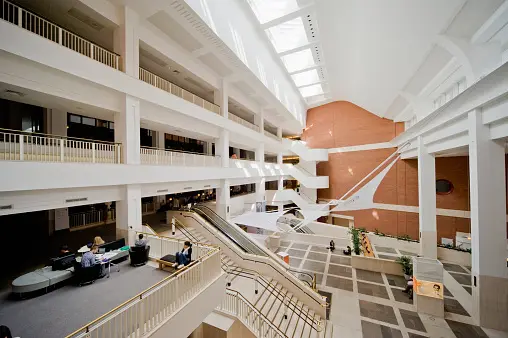
On 16 October, Jeremy Silver — then the interim CEO of the British Library — announced to workers that the Library was intending to outsource its entire workforce of security guards, completely restructure multiple departments, and replace its science reading rooms with coworking spaces operated by private businesses.
The call by BL management, which was condemned by the PCS union as ‘an attack on the public’s right to accessible, free and communal spaces’, was only the latest in a litany of crises and controversies that have dogged the Library in recent years. In October 2023, a reliance on outdated digital protection made the BL vulnerable to a massive cyberattack. Staff personal data was auctioned and published on the dark web. Basic services remained unavailable for months; though the live catalogue came back a year ago (like many library services, the BL uses the library management software proprietary to the Israeli Ex Libris group), readers still struggle to access some collections.
After the cyberattack prompted the resignation of CEO Roly Keating, he was replaced by Rebecca Lawrence, who curiously joined the Library from the Crown Prosecution Service in January 2025. Under Lawrence’s watch, the BL — still reeling from the cyberattack and operating in an ageing building — moved forward with a new financial agenda that has seen the rolling out of even more short-term, precarious contracts, and the severe understaffing of work in critical areas such as conservation.
This was another attack on an already burdened group of workers, who had recently told a union survey they struggled to save money, are in serious debt, work multiple jobs to maintain themselves and — in some cases — experience suicidal ideation.
Things came to a head in summer 2025, when workers rejected a derisory 2 percent pay offer. In the face of a tone-deaf employer who had suggested staff avoid buying Christmas presents to save money, BL workers belonging to PCS voted overwhelmingly for strike action, shutting down the institution for a combined three weeks from October to December.
The strike proved too much for Lawrence, who resigned after the first week to be replaced by Silver, a tech entrepreneur who already served on the Library’s board. As chaos raged at the top of the organisation, workers remained steadfast, securing an improved 4 percent pay offer in early 2026.
From Study to Sell Off
As an institution and physical presence on Euston Road, the BL has an illustrious past. A product of the post-war social democratic era, the impetus for its creation came from a growing conviction that both readers and collections were poorly served by the collective infrastructure of the British Museum and various national library collections. By the late 1960s, over 100,000 British Museum books were uncatalogued, understaffing across national libraries was rife, and storage areas and reading rooms were at full capacity.
Some politicians sensed the need for action. Recounting her visit to the British Museum in 1967, the Labour minister and Open University founder Jennie Lee told parliamentarians that its perilous state made her ‘scandalised beyond words . . . When we went down into the lower regions, where the wild cats live. I almost broke my leg, and I certainly broke my heart.’ A series of thefts in 1970 also sparked growing public criticism and concern among museum trustees, and parliament began developing the legislation to create an integrated national body.
Eventually, the 1972 British Library Act was announced. Absorbing various national libraries and collections into a single institution, the BL was spread across London for two decades before the purpose-built building on Euston Road was opened in 1997. Inside this building are 11 reading rooms open to the public, staffed with security guards ensuring collection safety, library assistants responsible for retrieval and delivery, and reference specialists, who are experts in their respective collection.
Now, the BL is rushing to outsource its security guards to the STM group — the transfer is to take effect in two weeks — without any clear indication of the real-terms savings the library is hoping to achieve. The three Science reading rooms on the Midland Road side of the Grade I-listed building will become inaccessible to the public. The fate of the expert staff working in them is subject to what management has billed a ‘co-creation’ process.
In an op-ed for The Times, Silver argued that research habits had shifted. He isn’t wrong, but to claim that turning free reading rooms in a taxpayer-funded building into a paid-for ‘separate flexible workspace’ is an attempt to meet changing research needs is disingenuous. While many of the BL’s diverse activities take place outside of the reading room, they are the pumping heart powering almost all of its functions.
Collapsing the Public Good
Although the current situation at the BL bears all the signs of managerial short-termism, it also reflects a wider move towards the commodification and reduction of public services. The anger at its flailing leadership is certainly justified, but the challenge must also be taken to Lisa Nandy, whose Department for Culture, Media, and Sport funds the Library as an arms-length body.
Today, the BL’s grant-in-aid is worth just two-thirds of what it was in 2010, which has already seen the institution forced to rely on other income streams to fund core services. While many cultural bodies have focussed on generating commercial and philanthropic income (and often at great operational and reputational risk), the BL’s social role as the backbone of the British knowledge and research infrastructure is unique, and must be protected at any cost. Keeping access free and maintaining independence both in the digital and physical realm are common goods not to be traded off for deals with commercial partners.
The BL’s financial woes are not at all dissimilar to the grim situation faced by hundreds of cash-strapped councils across Britain, and the libraries they run. Public libraries are holding a diminishing number of physical items per person and cutting their physical stock budgets while being locked into inflexible and expensive licensing agreements for digital resources.
Since 2010, the number of functioning libraries across the country have collapsed. Opening hours have been seriously reduced, and librarians are increasingly facing replacement by volunteers. The legal duties of these authorities to provide ‘comprehensive and efficient’ library services have been thoroughly degraded beyond recognition by austerity governments, and little political will seems to exist in reversing such damage.
But at the BL, workers aren’t accepting this creeping reduction in services silently (one placard on last year’s picket line fittingly read: ‘You cannot hush a librarian’). Since the 2025 strike, the PCS branch has enjoyed a surge in membership with over 360 members today. Both PCS and Prospect are now in dispute over the outsourcing of security staff, the reading room closures, and yet another below-inflation pay offer, over 16,000 people have signed a PCS petition calling to ‘stop the privatisation’ of the BL, and members of both unions protested over the last two weeks.
Prospect has just closed an indicative ballot and is planning to go ahead with an industrial ballot. PCS’s ballot for industrial action is open until early December. If the security staff’s transfer is enforced before that — as currently planned by the BL — the union will have to reballot those members at their new employer.
Others are keen to turn a new page for the Library’s future. On November 4th, Paul Bate — formerly of the UK Space Agency and private healthcare company Babylon Health — stepped into the CEO position, replacing Silver. He has been tasked to implement his predecessor’s plans; as part of a new capital project, the BL is currently tearing down its dedicated 16-year-old conservation studio to build a shiny 12-storey building. It won’t include any new reading rooms; instead, it will offer commercial spaces to let, as well as a new gallery. At the time of writing, no additional staffing has been proposed to run these labour-intensive spaces.
In the face of this drive towards the maximisation of profit at the expense of public knowledge, the British Library staff aren’t flinching. They are united around a much deeper, radical understanding of their work’s purpose, and understand that the wider public appreciate and support their stance. They will continue to acquire, catalogue, curate, conserve, protect, retrieve and deliver collection items to make them publicly accessible and free of charge for all. This is what their fight is about.