
World taz
Midterm elections in the USA: The most expensive election campaign of all time
Never before have such large campaign donations been made for midterm elections in the USA as this year. Some major donors particularly stand out. more...
Deutsch (original) ·Auto-translated to English
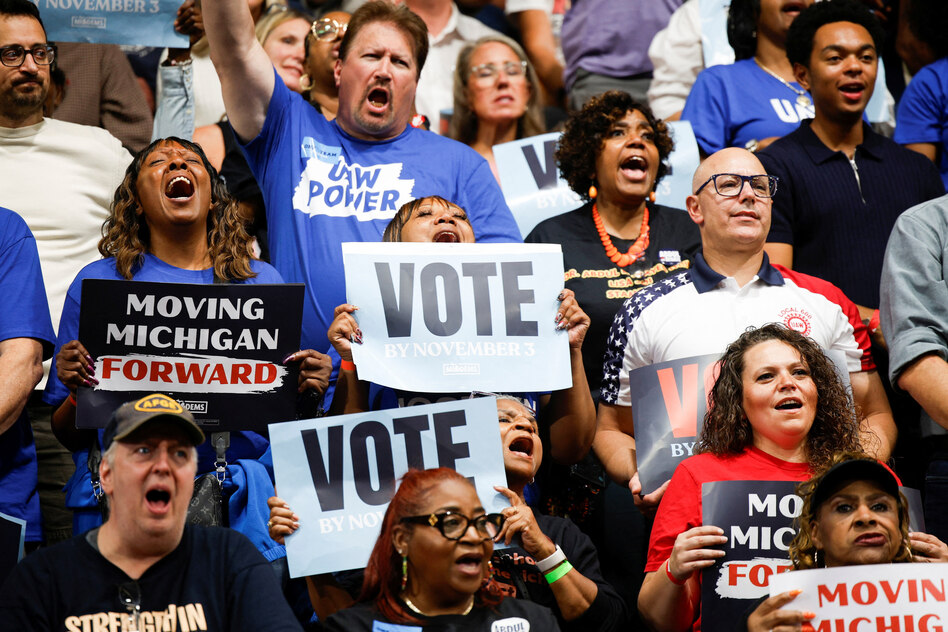
For Abdul El-Sayed, who alongside Texan James Talarico is probably the most prominent Senate candidate in this year's US midterm elections, the role of money in politics is one of the most important campaign issues. He accused his opponent in the Democratic primary in Michigan, Hayley Stevens, of accepting money from the pro-Israel lobby Aipac. His Republican opponent in November, Mike Rogers, is in thrall to the oil lobby, he said. And if he comes to the Senate, says El-Sayed, he will devote all his energy to curbing the absurd spending madness in US elections.
The numbers seem to prove him right. As of October 21st, public broadcasting reported that around $15 billion had already been spent on this year's congressional elections. But it doesn't end there: most advertising usually occurs in the last few days before the election.
For comparison: In November 2024, when both Congress and the President were elected in the USA, a total of $14 billion was invested in political influence. The congressional election alone only cost 9 billion back then.
The numbers reflect the importance this election has for the future of the country. The Democrats see it as the last opportunity to save the country from sliding into totalitarianism. Republicans are warning of a supposed return to “left-liberal madness” such as open borders, diversity and inclusion programs and trans people in sports, as well as impeachment proceedings against Donald Trump.
But that alone does not explain the explosion in spending. Such end-time rhetoric has been used in all elections since 2018. Every election is always the “most important” in history. Rather, it seems reasonable to assume that major donors are afraid of losing their influence on politics.
For Senate races considered to be close, such as in Texas or Michigan, Republican candidates accepted 946 million and Democratic candidates 624 million. The Brennan Center for Justice at New York University believes that Republican candidates overall will accept more than twice as much money as Democratic candidates. “This is probably the largest discrepancy in American history.”
The so-called mega-donors are not least responsible for the massive difference in the amount of campaign donations. Chief among these donors is, not surprisingly, Elon Musk. According to the New York Times, the trillionaire has given more than $276 million to Republican candidates so far.
Most recently, Musk donated 158 million to the Senate Leadership Fund. The fund is the largest Republican “Super PAC” – a structure that prohibits direct collaboration with individual election campaigns, but allows virtually unlimited donations. PACs (Political Action Committees) were one of the most serious consequences of the 2010 Supreme Court ruling that overturned the regulation and limits on campaign donations under the guise of free speech.
Meanwhile, mega-donors like Musk know what they get for their money. Defense Secretary Pete Hegseth, who calls himself Secretary of War, has just hired entrepreneur Musk to revolutionize the use of technology on the battlefield. AI and crypto investors Marc Andreessen and Ben Horowitz, who together have spent 115 million on Republican candidates, expect similar benefits. It continues with hedge fund investor Jeff Yass, with more than 90 million. On the Democratic side, George Soros put more than 100 million into the election campaign.
Election researchers like the group RepresentUs, meanwhile, believe that money alone doesn't buy election victory. The dynamic is rather the opposite: donors invest in candidates who they already consider to be promising in order to buy later access to the government.
However, there are plenty of examples that show that this calculation does not always work. In the mayoral election campaign in New York, Zohran Mamdani accepted 40 times fewer donations than his opponent and won. An example that El-Sayed or Talarico now hope to repeat in the midterm elections.