
Germany taz
On the Nord Stream process: The journalist who knows Ukraine best
The demolition of the Nord Stream pipelines has been under negotiation in Hamburg since October. The journalist Bojan Pancevski wrote a tell-all book about those behind it. more...
Deutsch (original) ·Auto-translated to English
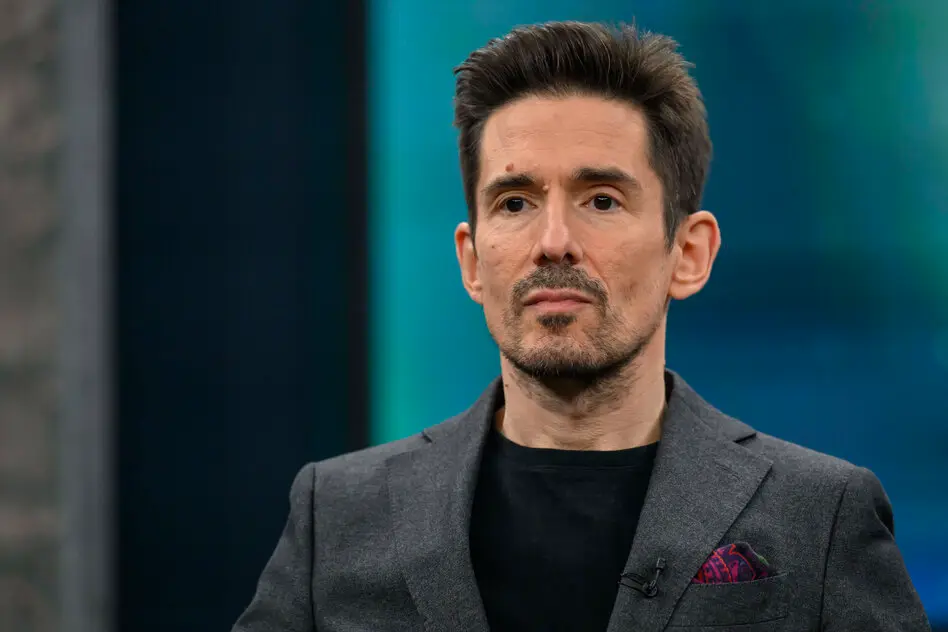
Bojan Pancevski sat down at the front on the wooden bench. From here he can clearly see the defendant behind the safety glass. Apart from him, none of the journalists in the Hamburg Higher Regional Court know the well-trained commander of the Ukrainian armed forces in the dock. He waves to his compatriots in the audience, raises his fist and forms the trident symbol of Ukraine with his fingers. Pancevski is a reporter for the Wall Street Journal and has written an investigative book about those behind the blowing up of the Nord Stream pipelines. It is precisely this attack that is now in court.
A small demonstration will take place in front of the courthouse on this day, showing solidarity for Kiev. Pancevski is on the side of the demonstrators. He says: “This is about a defender of Ukraine.” And the war crimes being tried in Hamburg? “You see them especially on the Russian side.”
He friendly gives short interviews to European colleagues in front of the courthouse. The man in his mid-forties, who was born in Macedonia, speaks politely and matter-of-factly. He spent three years researching the blowing up of the pipelines, the largest sabotage operation since the Second World War. He compares his work to that of a criminalist who searches for a needle in a haystack in a structured and unwavering manner. “I spoke to those involved and those behind the attack, to the German investigators and to all possible secret services, including the CIA,” says Pancevski.
After a long day in court, he stirs his cocoa in a café in Hamburg's Schanzenviertel. He remembers the riots of the anti-G20 protests in these streets, draws parallels to the current street battles in Paris and then ends up with the Berlin bubble. By this he means the federal politicians and capital city correspondents who only focus on themselves. He shakes his head. The chancellors of the last few years have really made him despair. And not just in terms of supporting Ukraine. He says: “Germany promised five thousand helmets, that was no help for Ukraine.”
Pancevski was already in Kiev in 2014 when the Maidan uprising overthrew the pro-Russian regime and Moscow then secretly supported the separatist war in Donbas. At that time, Nord Stream 2 continued to be built. In the embattled industrial city of Kramatorsk, the reporter came into contact with the military of the Ukrainian security service SBU. They are said to have later carried out the attack on the gas pipelines in the Baltic Sea.
A case of reporter luck or the result of a stubborn thirst for knowledge? Be that as it may, as a Wall Street correspondent he has now built up a good network and learns a lot that others don't know. In 2014, Pancevski learned that he was on a death list from the Russian secret service GRU. At this point, so-called “green men,” soldiers without badges, had occupied the Crimean peninsula.
In 2022, he met a personal contact, a four-star general in the SBU, the Ukrainian secret service. He told Pancevski that the SBU runs its own academy and university for its young people, its own police force and its own prisons. Apparently the SBU employs tens of thousands of people, even more than the CIA.
In a luxury hotel in Kiev he met the Ukrainian general, who already knew Putin's attack plan in detail. Pancevski says that his people work like James Bond, do espionage and counter-intelligence, carry out attacks on enemy territory and know how to use torture or survive. All things that the German BND has difficulty with. “They have legal limits when it comes to investigations that others don’t have.” The BND was probably completely surprised by the start of the war in Kyiv.
After Nord Stream was blown up not far from the Danish island of Bornholm in September 2022, little was known about the background. Conspiracy stories and a wide variety of speculations about the perpetrators made the rounds.
In a story by investigative reporter Seymour Hersh, the United States was named as the perpetrator. “I talked to him for a long time,” says Pancevski. "But he only had one source. Hersh had won the Pulitzer Prize during the Vietnam War and was respected for a long time. But this story was nonsense."
Pancevski begins to do his own research. He tells of a plot in which the now accused Ukrainian general, a colonel and twenty men from the armed forces were privy to. They developed various plans to destroy the Nord Stream pipeline, Turk Stream and the Yamal gas field. The goal: to dry up Moscow's money flow.
Because of his detailed knowledge, Pancevski was asked as a witness by the German police. “There was a summons for me.” However, he refused. "Because I have to protect my sources. It would also jeopardize my safety." In the USA, however, the authorities could force him to testify. “Constitutionally, journalists here are better protected against false imprisonment.”
Pancevski loves to research facts in depth. At his employer, the Wall Street Journal, research from other media outlets is not allowed; he has to do his own research. He himself researched Ukraine's involvement in the blowing up of the Nord Stream pipeline. Before the attack, he even met with the later masterminds of the attack on the northern European energy supply. “I didn’t know that at the time.”
But at the same time he had connections to the CIA and the American administration, including security advisors. In 2014 there was a revolution, Russia shot down the passenger plane of flight MH17 and denied it. But Merkel and her Foreign Minister Frank-Walter Steinmeier did not force Putin to give up his war actions. “They let Nord Stream 2 continue to be built,” said Pancevski. He could not approve of the German policy of appeasement in Minsk.
Despite his critical view of Germany, Pancevski soon comes back here. This time not to continue observing the process, but as a special guest for the 120th anniversary of the Foreign Press Association in mid-November.