
Germany taz
Ferment at home: Crystal becomes kefir
Fermented milk products are very popular right now. Our author thinks they taste particularly good when you make them yourself - and gives a few insider tips. more...
Deutsch (original) ·Auto-translated to English
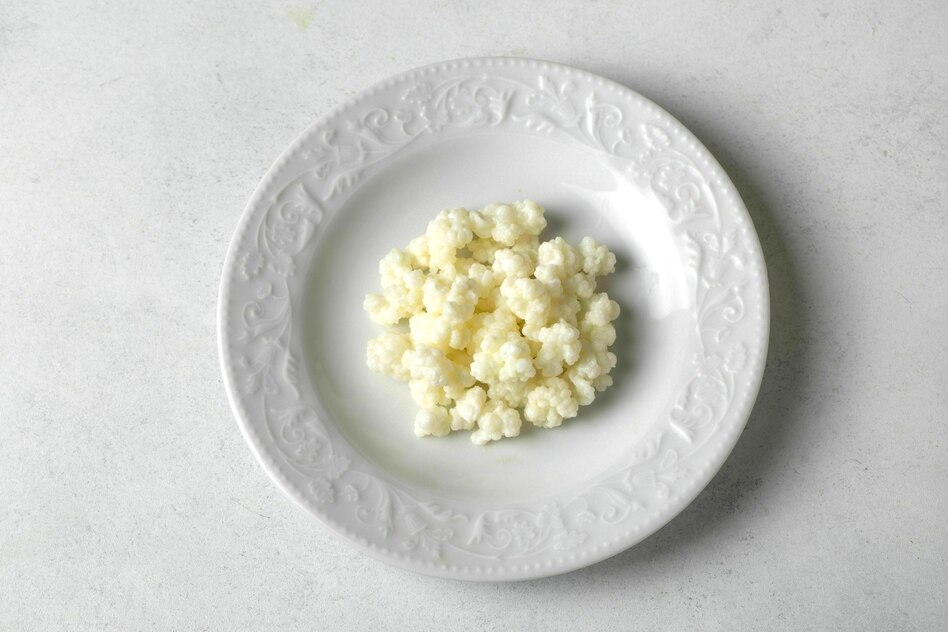
People ask me what's in the jars when they enter my kitchen for the first time. “Kefir,” I say, sounding like one of those people who makes everything themselves. I have a friend who makes tempeh and a friend who always has homemade noodles. I, on the other hand, neither bake sourdough bread nor have my own kombucha mushroom, and I rarely if ever pickle vegetables. Just kefir, I've been making it myself every day for more than two years.
When I say kefir, I mean milk kefir, not water kefir. It is created when kefir grains ferment milk. The nodules, which I affectionately call kefir crystals, are centimeter-sized, cartilage-like knobs. They consist, among other things, of lactic acid bacteria and yeasts, which convert the sugar in milk, i.e. lactose. This gives the sour milk product a certain taste and the small bubbling bubbles that indicate the activity of the ferment.
Kefir has its origins in the North Caucasus, but can now be found in any reasonably well-stocked supermarket. There it is usually placed between the milk and the yoghurt in the refrigerator shelf, where it actually fits well. Similar to yogurt, kefir also tastes sour, but the consistency of supermarket kefir is more similar to that of buttermilk.
The consistency of my kefir, on the other hand, is significantly creamier, almost like yogurt. I eat it for breakfast, where I use it as a base for my muesli. Raisins, nuts and cornflakes are my favorite toppings, oatmeal and fresh fruit also go very well. I once drank kefir with apricot jam in a café in Groningen and was amazed by the sweet and sour balance. Some people use kefir in salad dressings, but I don't think it has to be that way. It goes very well in cold soups, for example in cucumber soup or borscht.
This text first appeared in wochentaz, our weekly newspaper from the left!
Every week, wochentaz is about the world as it is – and as it could be. A left-wing weekly newspaper with a voice, attitude and the special taz view of the world. New every Saturday at the kiosk and of course by subscription.
The taste of my kefir is also different than that of supermarket kefir. To ensure that it always tastes the same, a simple and always identical kefir culture is used in laboratory-like conditions. I, on the other hand, work by eye in my kitchen, where sometimes the window is open, sometimes the coffee is brewing on the stove. Depending on how warm it is, how long I leave the kefir and how many kefir crystals are in the glass, the milder or more intense the taste is.
While supermarket kefir, also known as “mild kefir,” is pasteurized, mine contains all the wonderful probiotics that are so good for the gut. Kefir consumption has many positive effects on me - better skin, less sick, no cravings - the scientific evidence of which plays a minor role for me.
Fun plays an overriding role. When I come into the kitchen in the morning, I look forward to an almost meditative breakfast procedure. I take a glass of kefir out of the fridge and prepare a bowl of cereal. I pour the kefir into this through a sieve, helping with a spoon. The crystals remain in the sieve, which I rinse carefully. I wash the empty jar and boil it with hot water so that it is sterile. Then the kefir crystals - about a tablespoon full - go back in and are poured with milk - about 300 milliliters - but not so high that it later touches the lid, because kefir doesn't like metal.
Cow's milk and soy milk work best, but unfortunately it doesn't work with oat, rice or almond milk. A sweet Wikipedia quote: “Kefir grains can also acidify plant drinks once or twice, after which they have to recover in milk.” I put the freshly filled jar in my kitchen for about two days, where it ferments at room temperature. As soon as the milk looks like solid yoghurt, the jar goes into the fridge, where it can be stored for quite a long time.
When people leave my kitchen, I like to give them a glass. Because well-fed kefir crystals multiply, so they can be wonderfully shared with others. Thanks again, Barbara!