
Germany taz
Wolf Biermann in conversation: “The East has always drawn the ass card”
The songwriter Wolf Biermann is 90 years old. In the conversation he looks at his life, at old and new fascism and the Germans' relationship to democracy. more...
Deutsch (original) ·Auto-translated to English
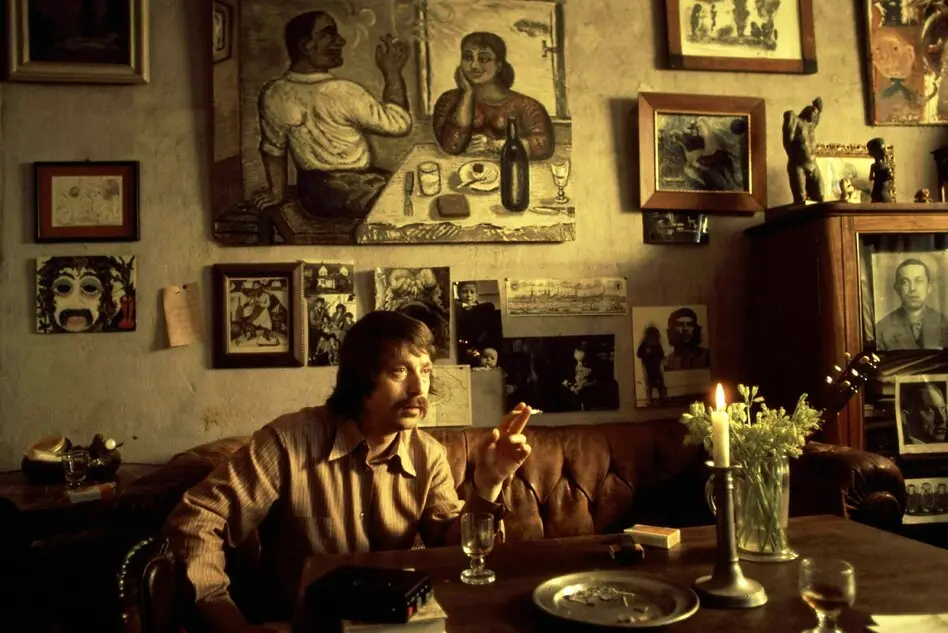
To reflect on his long life, Wolf Biermann reaches far back into his memories: “I was born in 1936, in the height of the Hitler era,” he says in Meiningen, where his songs are played at the theater with actors singing and playing music. “There was work again, fascism flourished.” Biermann's father Dagobert resisted, as did his rebellious son Wolf later.
As an active KPD member, he distributed the Hamburger Volkszeitung underground. For this he was sent to prison and had to cut peat. After his release, he worked at the Blohm+Voss shipyard in Hamburg and began carrying out acts of sabotage. Biermann's father was then arrested by the Nazis and murdered in the Auschwitz concentration camp.
With his mother, Wolf survived the Allied bombing raids on his hometown during World War II. “No egg can choose the nest in which it is hatched,” he says succinctly. “I came from a Jewish and communist family, which was inconvenient.” Later he wrote a song: “So we accepted the English bombs like gifts from heaven”, it was called “Purgatory of the Night of Bombs”.
At the beginning of the 1950s, Biermann voluntarily went to the socialist GDR. But of course he continued to carry the grief of his lost father with him, as well as the trauma from the Third Reich.
After 1945 and with the memory of the Holocaust, Wolf Biermann really wanted to go to the socialist Brecht Theater, today's Berliner Ensemble. There he learned about “self-congratulation,” a narcissistic style with a certain arrogance that some later accused him of. Nevertheless, he is willing to admit that he would not have become a poet without meeting Helene Weigel: “I would never have become a poet.”
As a young student, author and singer, he had to deal with the dramas of his early youth: “With my father and my shadow,” he says about the difficult fate he always had to bear. He had a lot of “dragons” to slay. FDJ leaders who denounced him as a Western class enemy. Socialist cultural leaders, for example, who imposed a ban on performing: "I was banned for twelve years. I sang in my room for years."
Friends, Western reporters and Stasi spies were interested in his apartment in East Berlin, where his famous album “Chausseestraße 131” was later recorded in the uprising year of 1968. The audio material was smuggled into West Berlin. Other GDR dragons urged him to expatriate in 1976 when he was allowed to play in Cologne on a concert tour through West Germany.
This is how the brave Biermann fights the ghosts of his past throughout his life. When the Berlin Wall almost fell, those who had been thrown out tried in vain to get back into their workers' and farmers' state. He wanted to be there on November 4, 1989 at the big democratic demonstration at Alexanderplatz, he told the border guards on Friedrichstrasse. “My own personal case is being discussed and I’m not allowed to be there.”
At that time, Wolf Biermann still thought: “We Germans are the luckiest people in the world.” After the racist riots, for example in Hoyerswerda in the 1990s, he began to have doubts about his compatriots and their democratic sentiments, which still resonate today. “I fear that after two world wars we are now in a kind of pre-war period, threatened from outside and from within.”
Today, the National Prize winner is very worried about the popularity of the AfD and right-wing radical parties in Europe. “At least the Nazis proved that democracy can be abolished through democratic means,” he says of Hitler’s election victory in the late Weimar Republic and his subsequent rise to power in 1933.
With his warning, the political singer draws an indirect comparison between the Third Reich and the Alternative for Germany, which tolerates many right-wing extremists in its ranks, such as the convicted Thuringian AfD leader Björn Höcke. "Hitler was not a little proud of it, and he often expressed it, that he made it through elections in a democracy. Not through the coup ten years earlier, but through elections in society."
We meet Wolf Biermann in Thuringia for a discussion.
taz: If we go to the present, can you say whether it hurts you as a Jewish communist son from Hamburg that the AfD is around 40 percent, especially in the east?
Wolf Biermann: Of course, like everyone else, I think about how it is that in the former GDR, of all places, so many Germans are now voting for this fascist party. Even a Dutchman like you suspects that I dislike this. Many people abroad can have a say because they also know the problem.
taz: Right. But in Germany things are a little different.
Biermann: The peculiarity here in Germany is that the East Germans, I don't know how else to say it, have drawn the ass card. Do you know the expression?
Biermann: Drawing the ass card means when you have the worst card in a game.
taz: You mean that East Germany was robbed of everything by the Soviets after the war?
Biermann: They always played the ass card. First: They paid for fascism because they were occupied by the Russians. They were robbed and exploited and oppressed again by the Russians. While the West Germans were given democracy as a gift...
taz: ... with the social market economy and the Mercedes star ...
Biermann: ... who didn't fight for democracy. They were pampered with the Marshall Plan. Do you know the word?
taz: Sure. There are diapers called that.
Biermann: That means the conditions were not entirely identical. No, they were even opposite, you see. And then comes the next more complicated ass card.
Biermann: They made a peaceful revolution in 1989. But actually it wasn't a revolution at all. It is a revolution without revolutionaries. And that wasn't necessary because the East Germans owe this revolution to the fall of the wall and the collapse of the dictatorship. And not their fight against the dictatorship. But because Mikhail Gorbachev came to power in the Soviet Union and, for the first time in such a situation, did not send tanks.
Biermann: Yes. Like in 1953, on June 17th in East Berlin, like in Budapest in 1956, like in Prague in 1968. That means that the Russians did not support the GDR dictatorship. And then comes the next ass card.
Biermann: Unfortunately, you have a brother who is very rich: West Germany. Who has a guilty conscience because he's not stupid. And knows that he was lucky at the end of the Nazi era. Do you understand?
taz: You mean the consequences when the Allies occupied the West and the Soviets occupied the East?
Biermann: Yes. If I were pious, I would say it like this: The East Germans were given this revolution as a gift from the gods. I say they got it by chance of history.
taz: Really? But in the fall of 1989 there were months of demonstrations.
Biermann: Nevertheless, they didn't fight for this revolution. And that's why democracy isn't worth that much to them. They owe the West Germans an incredible amount. And like everyone else, they have a problem when they owe someone too much.
Biermann: The Poles, the Hungarians, the Romanians and the Bulgarians didn't have such rich brothers. The East Germans do, and they have a bad conscience. So when you get so much, you want to return the favor.
Biermann: But if you can't reciprocate, you become toxic. If I do you a big favor and you have no chance to reciprocate. Then you have hatred against me because you cannot retaliate against me. You don’t have to be German or any other European to understand this. Every person understands that.