
Germany taz
Wolves in Brandenburg: A crack is followed by a shooting
The Brandenburg wolf management plan allows the shooting of wolves that have presumably killed a grazing animal. Hunters and conservationists criticize the new regulations. more...
Deutsch (original) ·Auto-translated to English
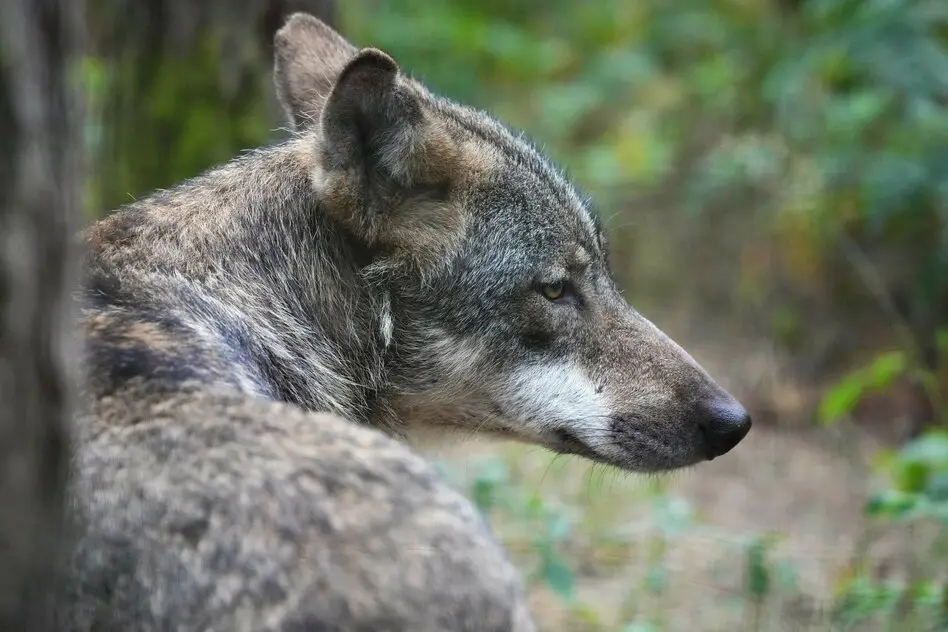
Brandenburg's wolves are likely to feel a little less safe soon: The Ministry of Agriculture and the Environment in Potsdam presented a general decree on Wednesday called "Cross-territory management plan for the hunting of the wolf species", which is expected to come into force before the end of the month. Their goal: “to minimize the damage caused by wolves in grazing livestock farming by responding quickly, pragmatically and legally.” There is criticism from conservationists, but also from the state hunting association.
“If a wolf becomes a threat and attacks despite appropriate herd protection measures, it must be removed quickly and in a targeted manner,” said Minister Hanka Mittelstädt (SPD) in explanation. “We have now created the basis for this.” Brandenburg is thus fulfilling a mandate of the Federal Hunting Act, into which the wolf was only included in April. This, in turn, was preceded by the lowering of its protection status by the EU in 2025: since then, the species canis lupus is no longer listed as “strictly protected” in the Flora-Fauna-Habitat Directive, but only as “protected”.
In the future, the following regulation will apply in the Mark: At the beginning of the “hunting year” on April 1st, the ministry, as the highest hunting authority, sets a maximum number of wolves that can be hunted - in the current hunting year there are still 10 animals. However, they may not be hunted at will. Rather, after every expert-confirmed wolf attack on a grazing animal, a procedure takes place in which the lower hunting authority authorizes hunting in a so-called intervention area for eight weeks. The area includes all hunting districts that are within a radius of 1.5 kilometers from the “site of damage” – or at least extend into this radius.
The wolf was extinct in Germany for around 150 years, but has been slowly returning since the 1990s. In 2000, offspring of wild wolves were recorded in Saxony for the first time.
Today it is estimated that up to 2,000 wolves live in Germany. According to preliminary data from the Ministry of the Environment, there are around 50 packs, 9 pairs and 3 territorial individuals in Brandenburg. Since a pack consists of around 5 to 10 animals, the total number is probably between 300 and 500 animals. According to the ministry, the population in Brandenburg is stable. It appears that the growth curve is “approaching an upper plateau”.
The number of livestock animals killed has, however, fallen significantly in Brandenburg in recent years. Also according to the ministry, 358 fatal attacks on grazing animals were counted in 2023, and 178 in 2025. From January to the end of September 2026, 133 cases were counted.
Another prerequisite for release is that the grazing animal could not be easily reached by the wolf. It can only be hunted if it has overcome “suitable herd protection measures” such as fences of a certain height. The ministry itself admits that a wolf that ends up in front of the gun under these circumstances was not necessarily the one that killed the grazing animal. But: “The close spatial and temporal connection to the damaging event increases the probability of killing the wolf that caused the damage,” is how Mittelstädt’s authority explains this practice.
The shooting of a wolf must then be communicated immediately, because the release ends at that moment. Only if another animal is killed within a week can another wolf be killed without a prior report. If the maximum number of wolves shot in the country has been reached, this automatic mechanism ends. However, the Federal Hunting Act still applies: According to it, the lower hunting authorities can, in individual cases, order the killing of a wolf that is considered a threat to animals or even people.
This wolf management plan is certainly miles away from what Mittelstädt's former State Secretary Gregor Beyer repeatedly called for last year. Beyer, himself an active hunter, brought numbers to the table in the debate that experts considered to be made up - he spoke of up to 2,000 wolves that already lived in Brandenburg and toyed with the idea of a general killing rate of up to 15 percent. However, it was also the dispute over the wolf that led to the minister and him ending their collaboration after less than a year. Beyer found further employment in the Ministry of Finance.
Against this background, it is not surprising that the Brandenburg hunters are not satisfied with the new regulation: The management plan is “a first step”, but falls “significantly short”, said the state hunting association (LJVB). “Real inventory regulation, however, remains a thing of the future.” LJVB President Dirk-Henner Wellershoff said that the removal of individual “harsh wolves” was not enough: “This plan can only be the beginning!”
Nature conservation groups direct a completely different criticism of the ministry. Although the wolf management plan emphasizes the importance of herd protection through effective fencing of pastures and stables, the BUND finds that this aspect is still neglected. Instead of relying on culling, the state government must provide even more support to animal owners financially and through advice in expanding protective measures. The wolf must be preserved as a protected species in the long term, and the respective nature conservation authorities must also be included in the decisions about shooting - but the management plan does not provide for this.
Joyce-Ann Syhre, political director of BUND Brandenburg, told the taz that the association saw that Minister Mittelstädt had tried to capture the debate that Beyer had started. Nevertheless, the management plan represents a concession to the state hunting association. “We view some points extremely critically,” said Syhre. These included the “intervention areas,” which were far too large and only appeared to represent a 1.5-kilometer radius around the damage event and could be much larger in individual cases. “But the larger the actual radius, the less likely it is that the wolf in question will be killed,” says Syhre.
The BUND is particularly dissatisfied with a statement at the back of the general decree: The state government is keeping a door open to introduce hunting that regulates the population in the future. If the number of cracks does not decrease significantly compared to previous years, the highest hunting authority could then define a number of wolves that “may be hunted at a maximum without reference to specific damaging events”. But that contradicts species protection, says Syhre. Sweden does it this way and is therefore in conflict with the EU Commission.
The nature conservation association also finds it wrong that Brandenburg hunters could nail wolf skins to the wall in the future. In contrast to the management plans of other federal states, the Brandenburg State Office for the Environment is allowed to scientifically examine a wolf carcass - but it is only allowed to keep it if the person "authorized to hunt" agrees. “This crosses red lines,” says Joyce-Ann Syhre. “Trophy hunting should be stopped as a motivator.”