
World · taz · · 59m
Global electricity production: solar energy overtakes nuclear power for the first time
Deutsch (original) · Auto-translated to English
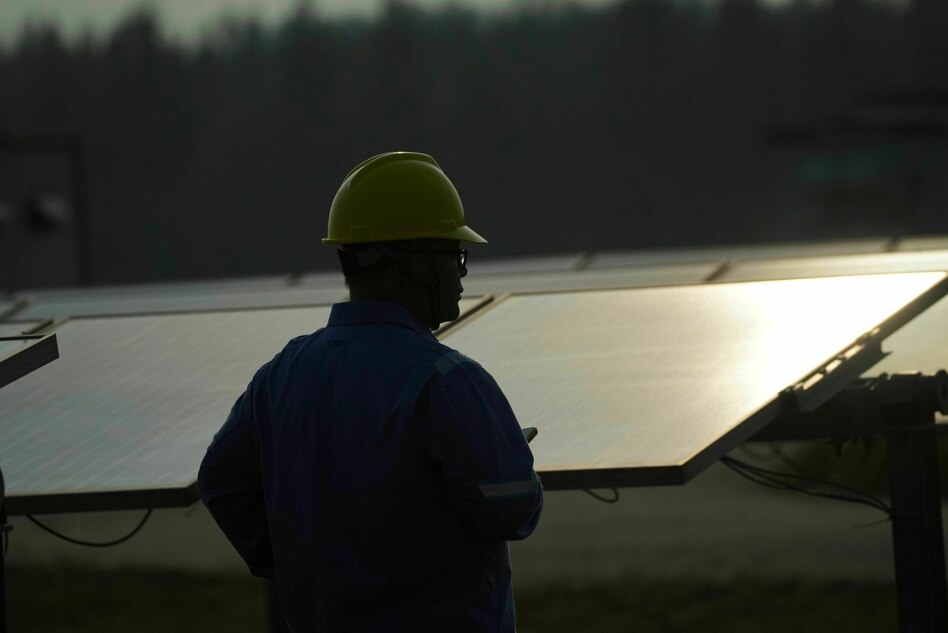
For the first time in history, solar energy surpassed nuclear power worldwide in 2025: after an increase of almost 30 percent compared to the previous year, 2,783 terawatt hours of solar power were generated, compared to 2,703 terawatt hours of nuclear power. One terawatt hour is equal to one billion kilowatt hours.
The figures come from the World Nuclear Industry Status Report presented on Tuesday. This report on the state of the global nuclear industry is prepared annually by an international team of experts, coordinated by Paris-based nuclear policy advisor Mycle Schneider.
Seven reactor units worldwide were decommissioned in 2025, but only four were put into operation after an average construction time of 8.1 years. Global electricity generation from nuclear power was 1.1 percent higher in the reporting year than in the previous year, almost reaching a new record. The reason for the increase is solely China's activities: While China grew by 7.6 percent, nuclear power generation outside China fell by 0.2 percent and thus stagnated at the level of 30 years ago.
The phenomenon that the expansion in China compensates for the decline in nuclear power in the rest of the world has been observed for years. In the two decades from 2006 to 2025, 104 reactors were commissioned worldwide, but 106 reactors were decommissioned. While there was a drastic net decline of 55 units outside of China during this period, China commissioned 53 plants but did not shut down any.
Because electricity consumption continues to rise, the contribution of nuclear fission to the global electricity mix is steadily decreasing. Their share fell to just 8.8 percent in 2025, the lowest value in four and a half decades. In the previous year it was 9 percent. The historic high was 17.5 percent in 1996.
There are currently 73 reactors under construction worldwide, around half of them in China. It is noticeable that 95 percent of all current construction projects - namely 69 - are either taking place in nuclear weapon states or are being implemented by companies that are controlled by nuclear weapon states. Of all 52 projects that began construction between 2020 and 2025, there is only one (in South Korea) that is not being implemented by state-controlled companies from China or Russia.
The report also reports on the small modular reactors (SMR), which have recently received a lot of media attention. There is currently only one design certification in Western countries (NuScale in the USA) and one active construction project (BWRX in Canada). There is currently not a single SMR under construction in either the EU or the United Kingdom.
The annual report now increasingly highlights the boom in renewables, not including hydropower. In 2025, these recorded an increase of 861 terawatt hours or 15.9 percent compared to 2024. This meant that for the first time the expansion of renewables was able to cover the entire growth in global gross electricity generation, which was 855 terawatt hours.
Due to its constantly growing size, which now totals 596 pages, the nuclear report, which two dozen experts from different countries worked on this year, is internally called “The Monster”. Thanks to its precise data analysis, the report has long been considered an important reference in the nuclear industry. And this despite the fact that among the financial supporters of the analysis there are actors critical of nuclear power, such as the Green Party in the European Parliament and the Swiss Energy Foundation SES.
Read the full story at the source
Source: taz